Artwork
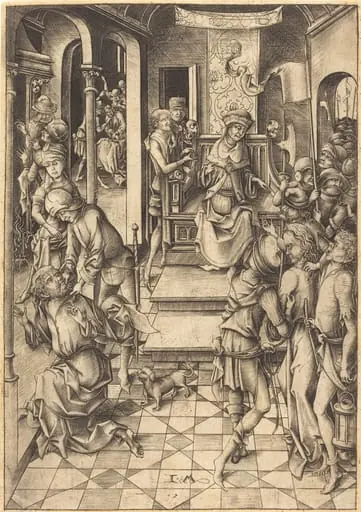
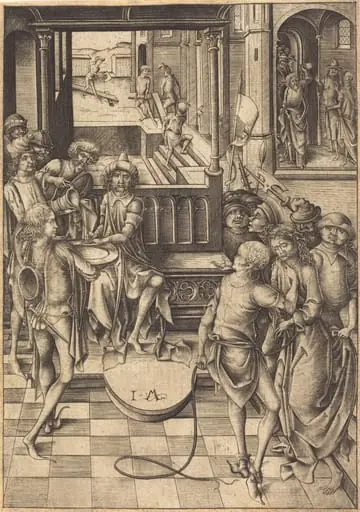
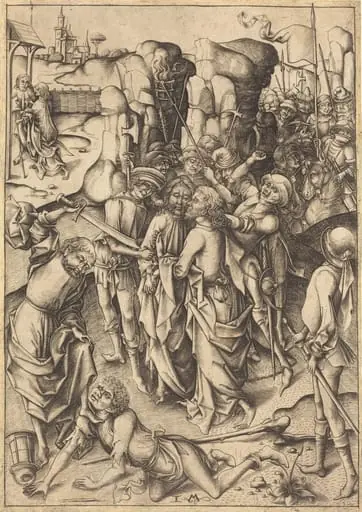
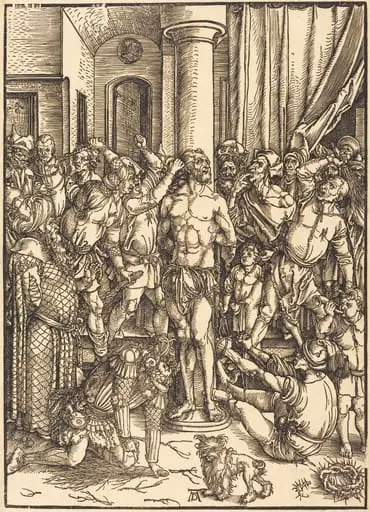
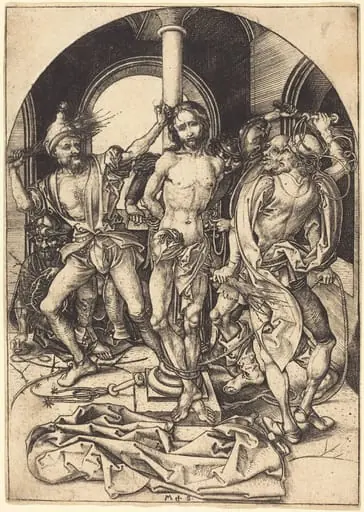
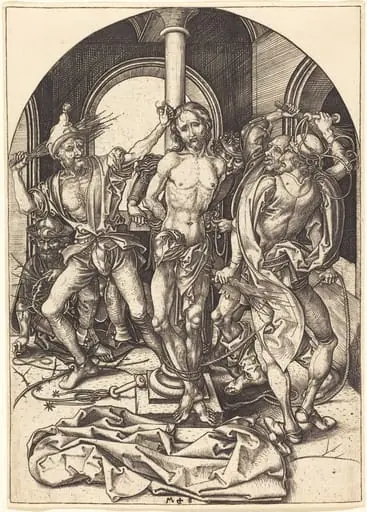
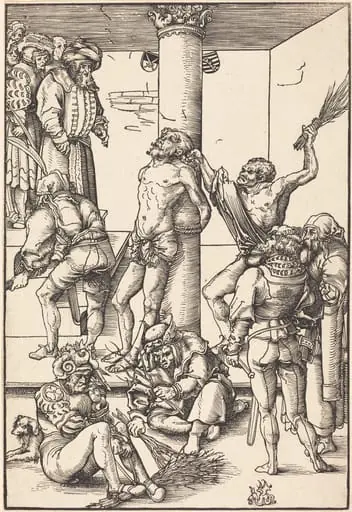
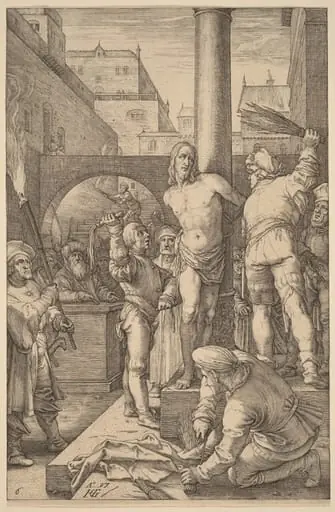
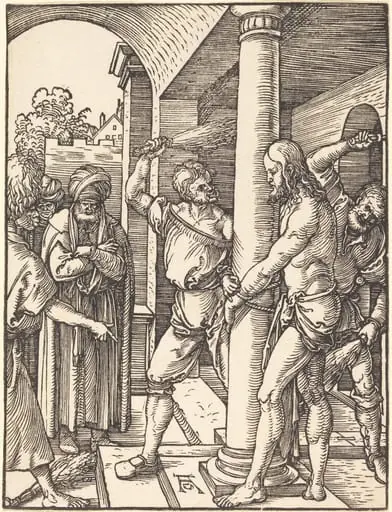
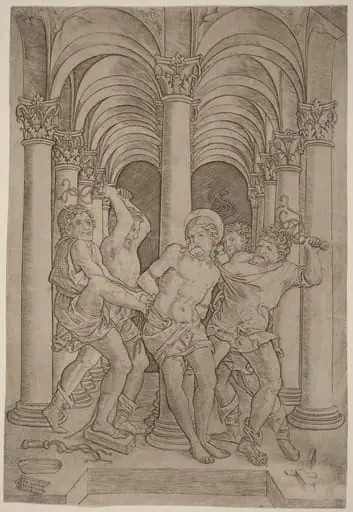
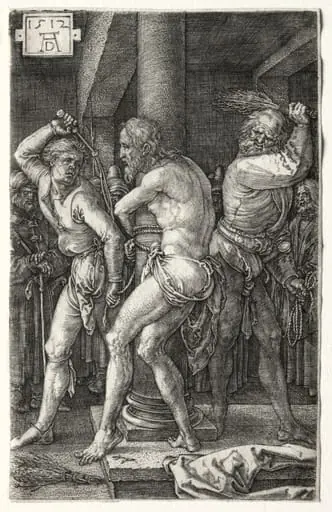
The Flagellation
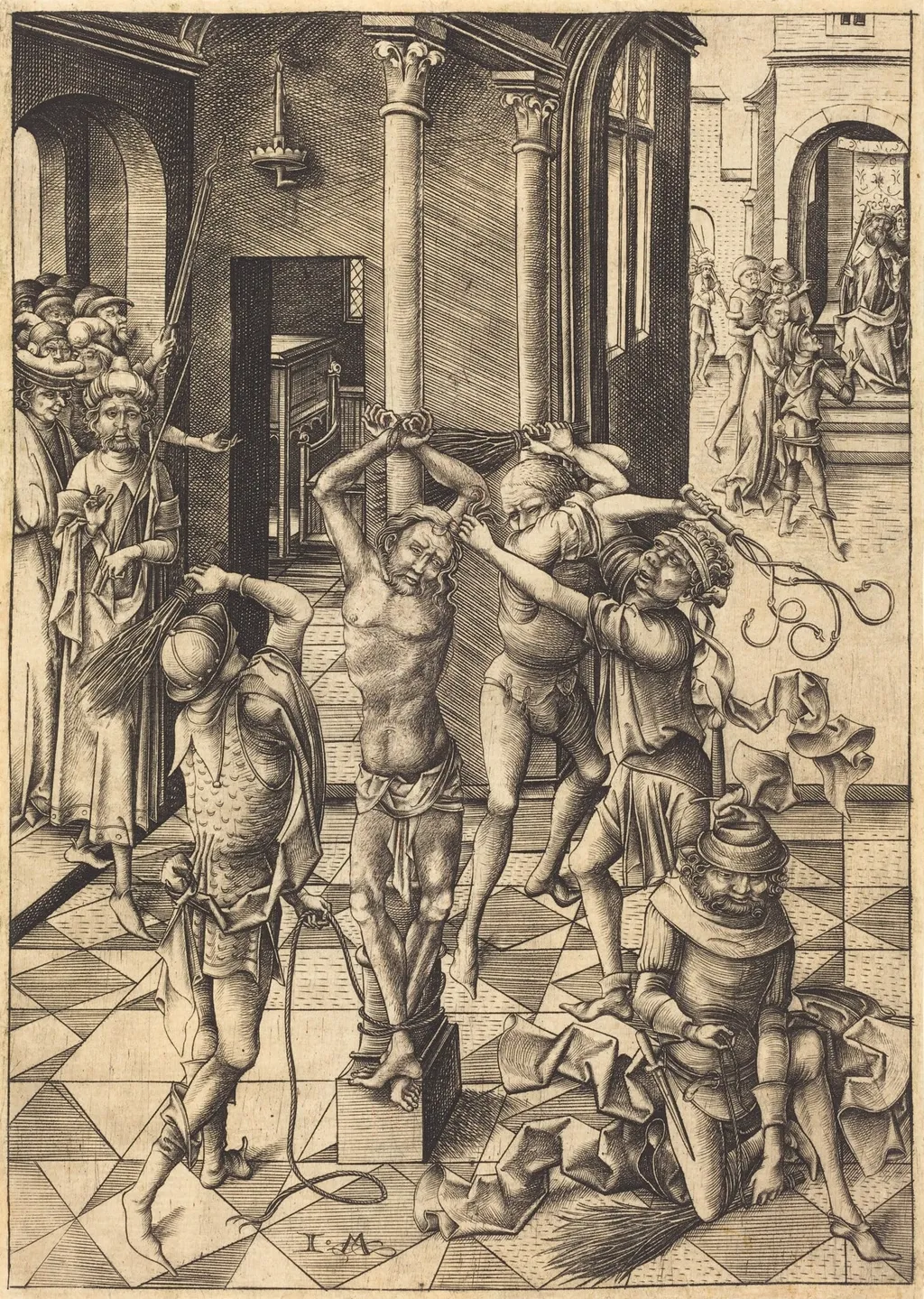
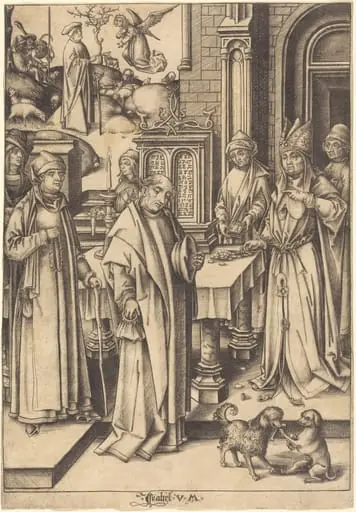
The Flagellation is an ink print by the Renaissance artist Israhel van Meckenem. It dates from 1480 and is held in the collection of the National Gallery of Art.
About this work
Overview
Israhel van Meckenem, a German goldsmith and printmaker active between 1465 and 1503, produced *The Flagellation* circa 1480 as an engraving.
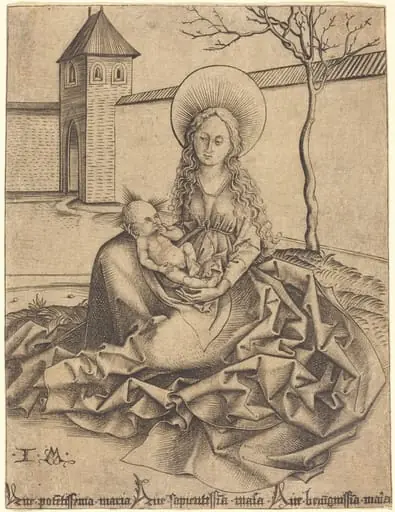
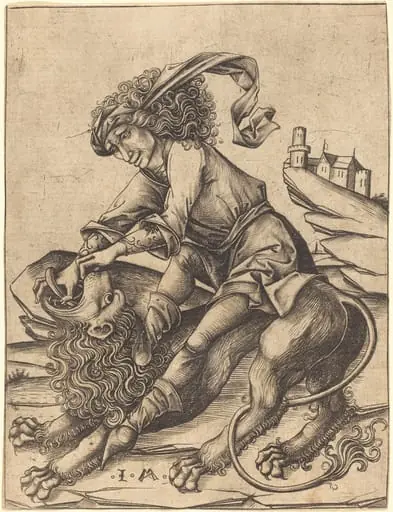
Israhel van Meckenem, a German goldsmith and printmaker active between 1465 and 1503, produced *The Flagellation* circa 1480 as an engraving. Among the most productive engravers of the 15th century, he created over 620 prints, often reinterpreting compositions by contemporaries. This work belongs to a series of religious subjects rendered in fine linear detail, typical of Northern European print culture of the period.
Subject & Meaning
The scene illustrates Christ’s scourging prior to his crucifixion, as described in the Gospels. He is bound to a pillar while Roman soldiers administer lashes, their movements tense and mechanical. Onlookers stand nearby, some indifferent, others engaged, emphasizing the brutality and isolation of the moment. The composition reflects devotional intent, inviting contemplation of suffering and sacrifice.
Technique & Style
The image is executed entirely in engraved lines, with varying density and direction to model form and shadow. No tonal washes or color are used—only ink pressed from a metal plate. The precision of the lines reveals Meckenem’s training as a goldsmith, with fine cross-hatching defining drapery, skin, and architectural elements. The lack of background detail focuses attention on the figures and their physical interaction.
History & Provenance
The print was made during the height of Meckenem’s career, when engraved plates were widely circulated across Europe. Copies of his works appear in multiple collections, suggesting commercial success and demand for devotional imagery. While the original plate survives, the exact early ownership of this impression is undocumented, though it likely passed through ecclesiastical or private collections in the Rhineland.
Context
In late 15th-century Germany, prints served as affordable religious aids for personal devotion and teaching. Engravings like this one allowed laypeople to engage with biblical narratives outside church settings. Meckenem’s output responded to this market, often adapting compositions from panel paintings or illuminated manuscripts, making sacred scenes accessible beyond elite audiences.
Legacy
Meckenem’s prolific output helped standardize the engraving technique in Northern Europe. Though his work was often derivative, his technical control influenced later printmakers. *The Flagellation* exemplifies how religious themes were translated into reproducible formats, contributing to the broader dissemination of visual theology before the Reformation.
Artist & collection
Artist
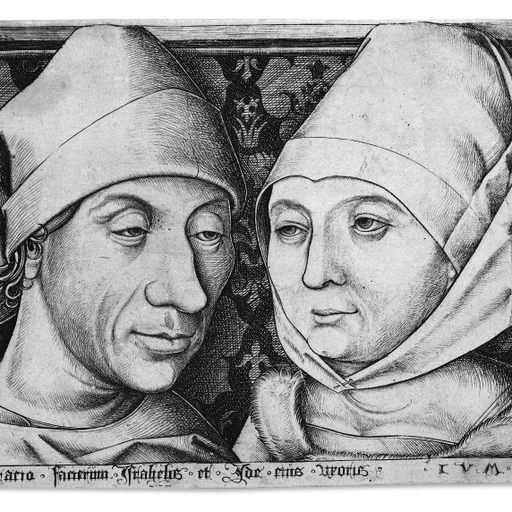
Israhel van Meckenem (c. 1445 – 10 November 1503), also known as Israhel van Meckenem the Younger, was a German printmaker and goldsmith, perhaps of a Dutch family origin. He was the most prolific engraver of the…