Artwork
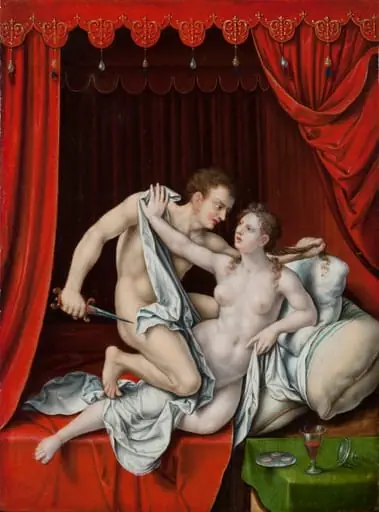
Tarquin and Lucretia
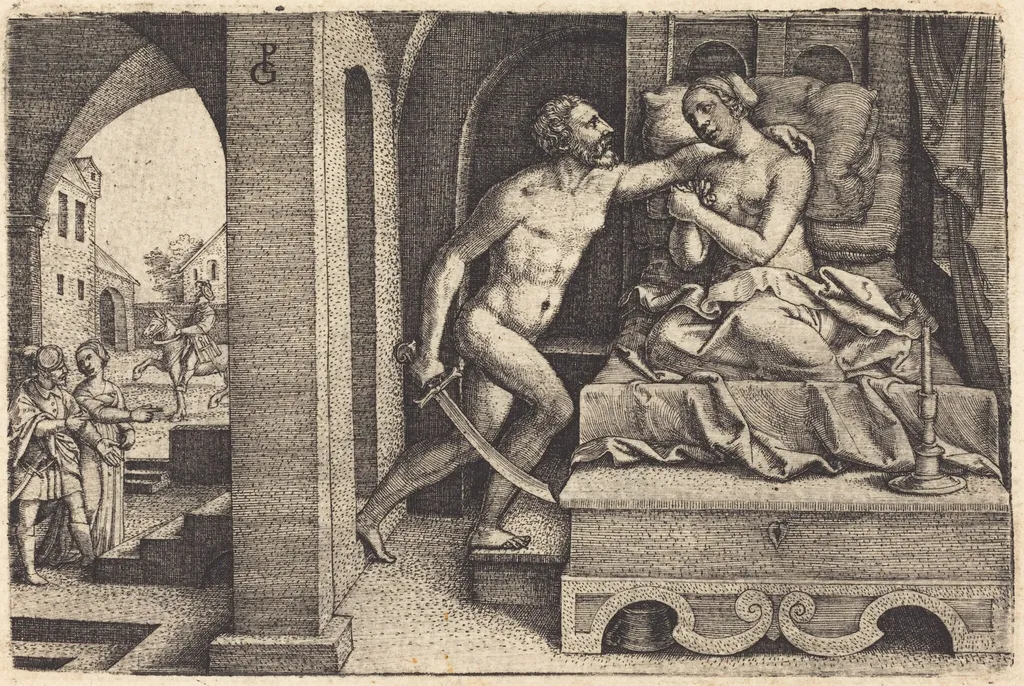
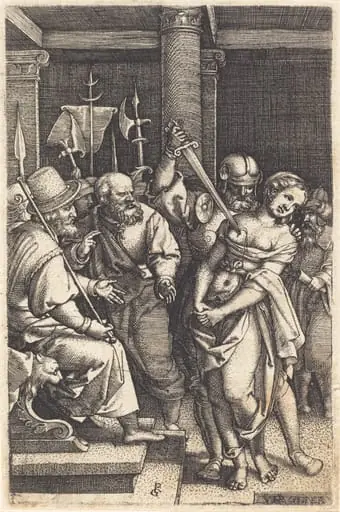
Tarquin and Lucretia is an ink print by the Renaissance artist Georg Pencz. It dates from 1525 and is held in the collection of the National Gallery of Art.
About this work
Overview
Tarquin and Lucretia is an engraving created by Georg Pencz in 1525. It is a black-and-white print that depicts a dramatic scene from classical Roman narrative.
Subject & Meaning
The engraving illustrates the story of Sextus Tarquinius's assault on Lucretia, a subject commonly used in Renaissance art to explore themes of virtue and violence. The scene is set in a room where a man stands over a woman on a bed, holding a bloody dagger.
Technique & Style
Pencz employed fine lines and shading to convey muscle and emotion, creating a tense atmosphere. The use of engraving techniques allowed for detailed rendering of the figures and their expressions, suggesting a narrative of betrayal and sorrow.
History & Provenance
Georg Pencz, born around 1500, trained in Nuremberg after joining Albrecht Dürer's workshop in 1523. His work was influenced by Venetian art and his association with Marcantonio Raimondi.
Artist & collection
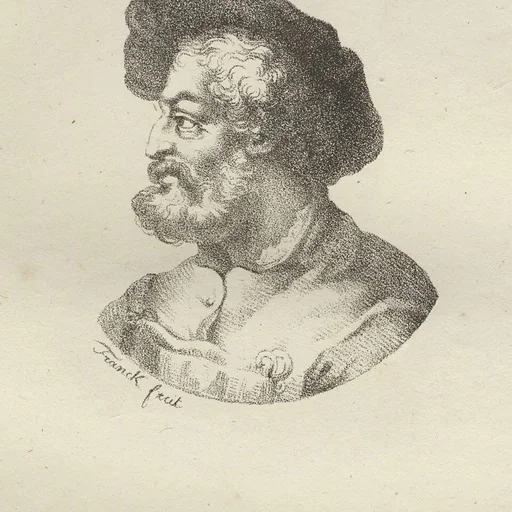
Artist
Georg Pencz (c. 1500 – 11 October 1550) was a German engraver, painter and printmaker. Pencz was probably born in Westheim near Bad Windsheim/Franconia. He travelled to Nuremberg in 1523 and joined Albrecht Dürer’s…

 Virginius Killing His Daughter
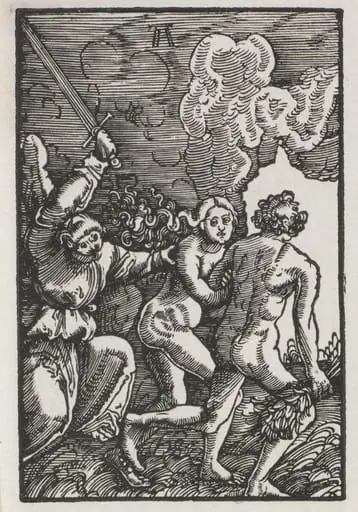 The Fall and Redemption of Man: The Expulsion from Eden
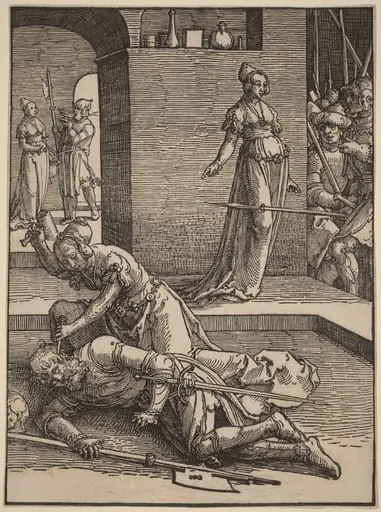 Jael Killing Sisera
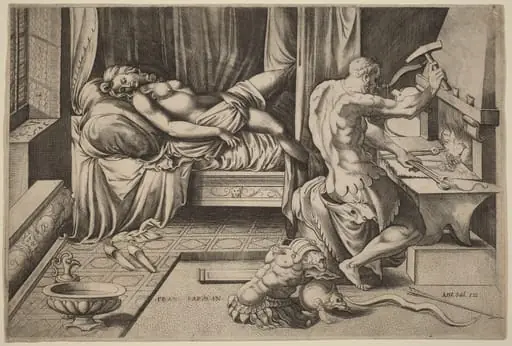 Venus Reclining with Vulcan at His Forge
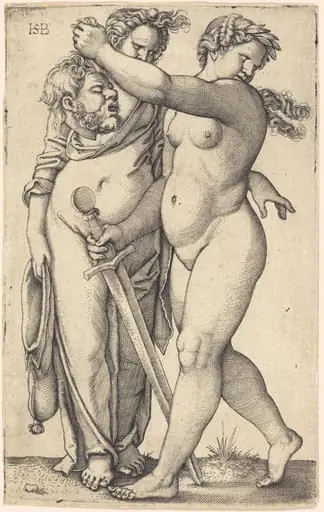 Judith Walking to the Left, and Her Servant
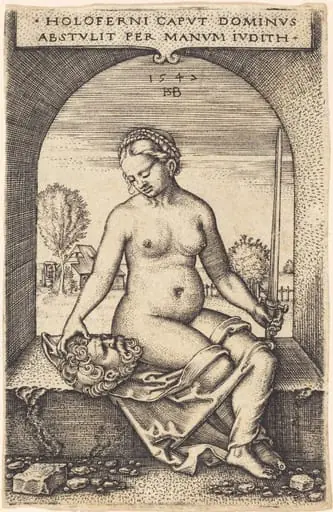 Judith Seated in an Arch
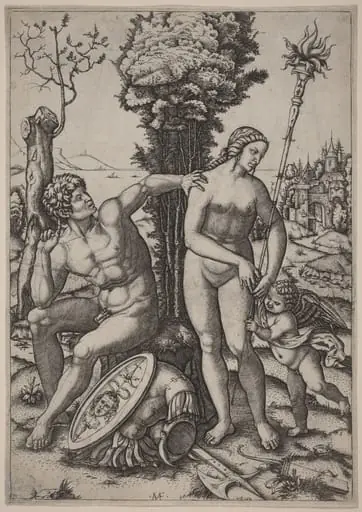 Mars, Venus, and Eros
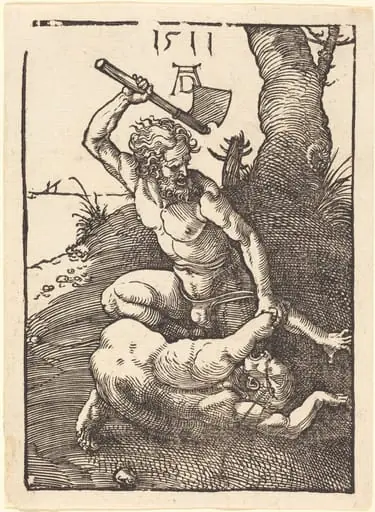 Cain Killing Abel
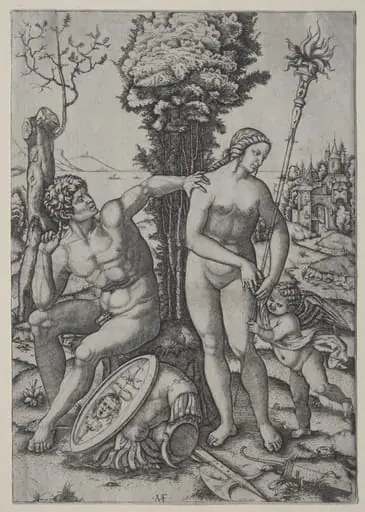 Venus, Mars and Cupid
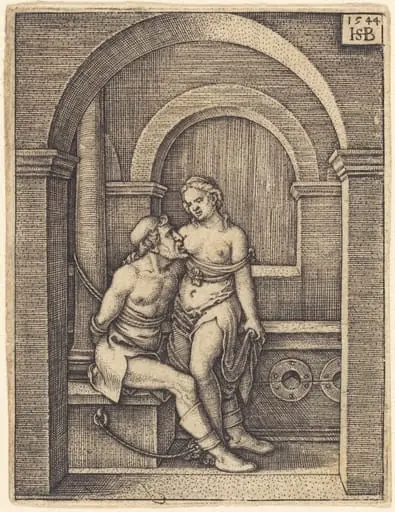 Cimon and Pero
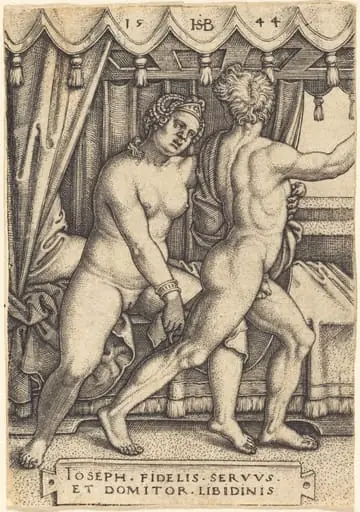 Joseph and Potiphar's Wife
 Tarquiniu și Lucreția