Artwork
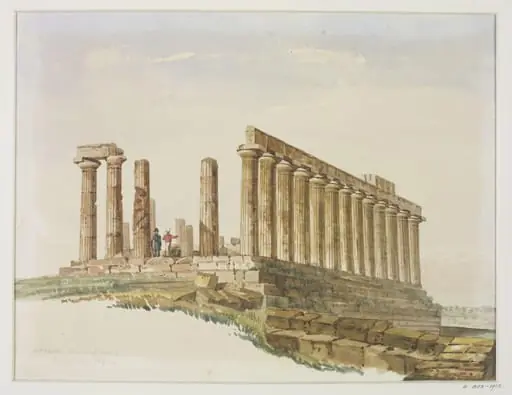
Girgenti (The Temple of Juno Lacinia at Agrigentum)
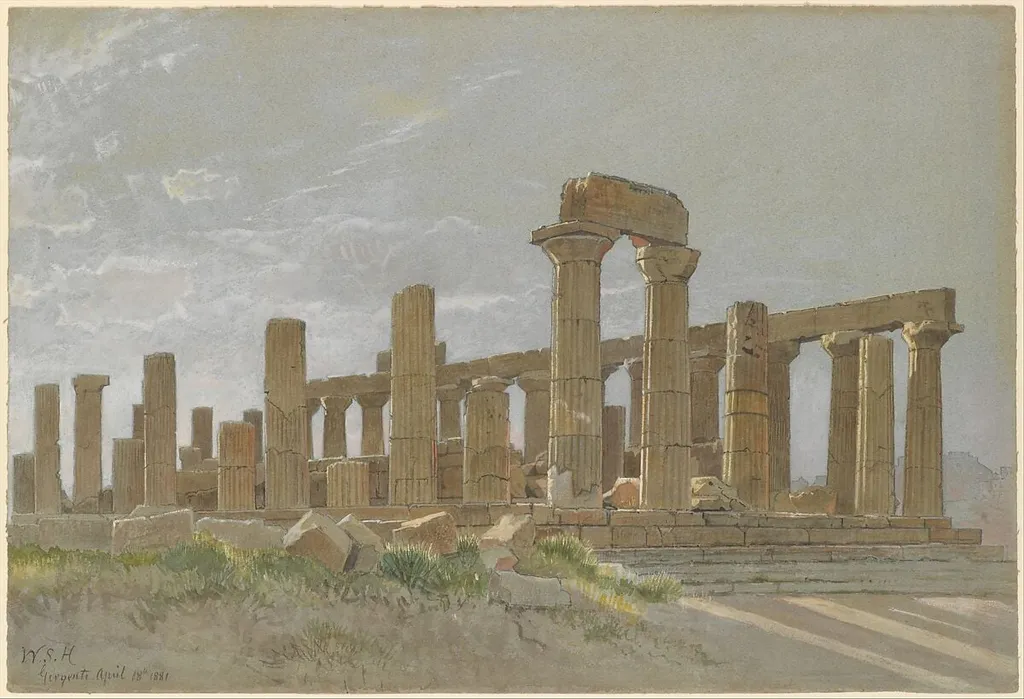
Girgenti (The Temple of Juno Lacinia at Agrigentum) is a watercolor work on paper by the American Impressionist artist William Stanley Haseltine. It dates from 1881 and is held in the collection of the Metropolitan Museum of Art.
About this work
Overview
William Stanley Haseltine’s 1881 watercolor, titled Girgenti (The Temple of Juno Lacinia at Agrigentum), presents a tranquil view of an ancient stone temple set upon a Sicilian hill. Rendered on blue paper with watercolor, gouache, and graphite, the composition balances muted blues, grays, and subtle greens, emphasizing the quiet atmosphere of the ruin under a pale sky.
Subject & Meaning
The work captures the Temple of Juno Lacinia, a classical ruin whose weathered columns rise amid sparse vegetation and grazing sheep. By foregrounding the decayed architecture in bright daylight, Haseltine underscores the passage of time while celebrating the enduring presence of the landscape.
Technique & Style
Haseltine employed a combination of watercolor and gouache to achieve soft tonal washes, while graphite adds delicate line work to define architectural details. The blue paper serves as a luminous ground, imparting a gentle glow that unifies sky, stone, and foliage without resorting to dramatic chiaroscuro.
History & Provenance
Created during Haseltine’s travels in Sicily, the piece reflects the American artist’s interest in Mediterranean antiquities. It entered the American Wing collection of the museum, where it remains displayed as an example of 19th‑century transatlantic landscape painting.
Artist & collection