Artwork
The Brussels Canal, A Modern Hobbema
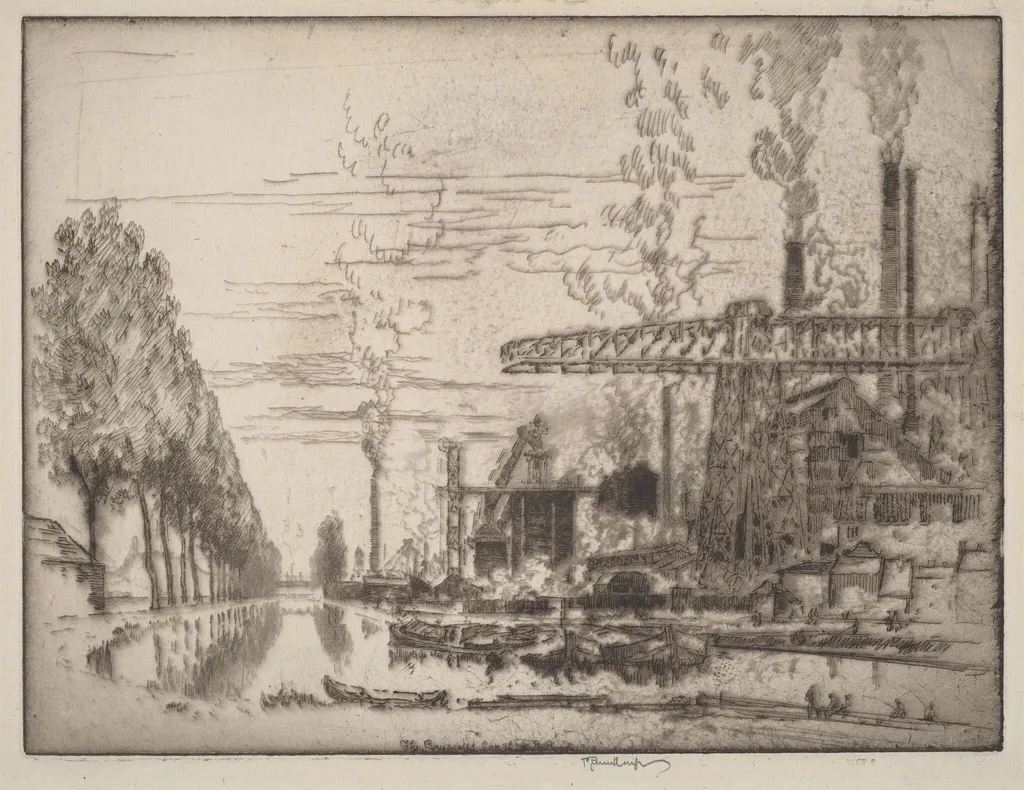
The Brussels Canal, A Modern Hobbema is an ink print by Joseph Pennell. It dates from 1910 and is held in the collection of the National Gallery of Art.
About this work
Overview
Joseph Pennell’s 1910 etching titled *The Brussels Canal, A Modern Hobbema* presents a compact view of an industrial waterway in Brussels. The composition captures a narrow canal flanked by a smokey factory, tangled trees, a low bridge and a railway line that disappears toward the chimney‑filled skyline, conveying the bustling atmosphere of an early‑twentieth‑century city.
Subject & Meaning
The print records a moment of urban labor, juxtaposing natural elements such as trees with the stark geometry of factory structures and transport infrastructure. By foregrounding smoke, steam and the rhythmic line of the tracks, Pennell emphasizes the interplay between the natural environment and the mechanized growth reshaping European cities at the time.
Technique & Style
Executed in traditional copper‑plate etching, the image relies on vigorous, irregular lines that suggest movement in the rising fumes and water’s surface. Pennell’s handling of light and shadow, as well as his preference for atmospheric effects, echo the tonal sensibilities of James McNeill Whistler, while retaining a distinctly American documentary impulse.
History & Provenance
Pennell, an American expatriate who spent much of his career abroad, produced a series of prints documenting European industrial scenes. This work was created during his extensive travels in Belgium and reflects his broader interest in recording the built environment. It entered public collections in the mid‑20th century and has since been exhibited as part of surveys of early modern printmaking.
Artist & collection
Artist
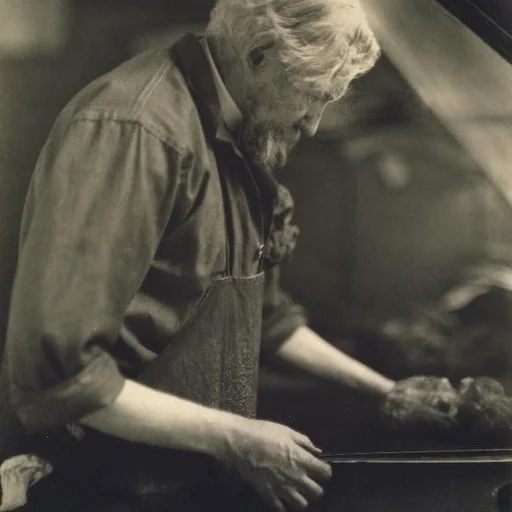
Joseph Pennell (July 4, 1857 – April 23, 1926) was an American draftsman, etcher, lithographer, and illustrator for books and magazines.

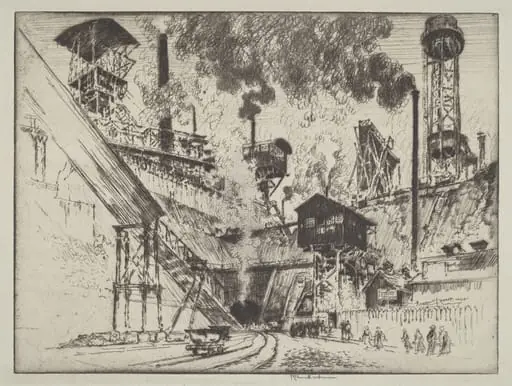 Mouth of the Mine, Ruhrort near Oberhausen
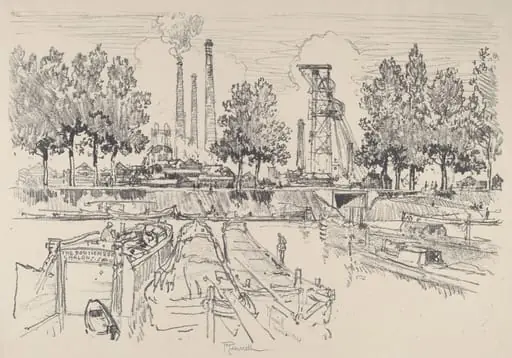 Coal Mines, Monceau, France
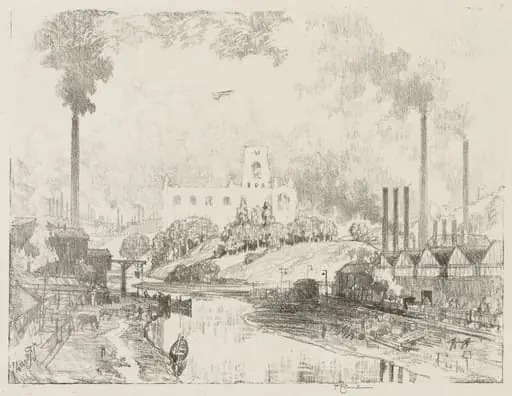 English War Work: Peace and War
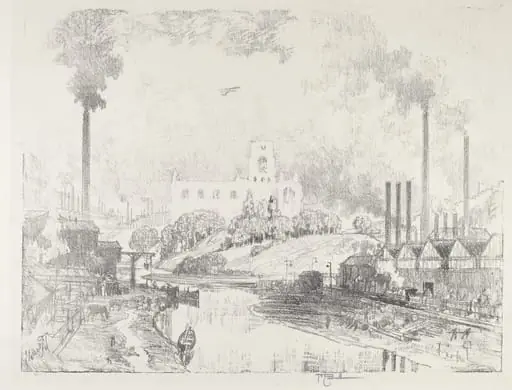 Peace and War
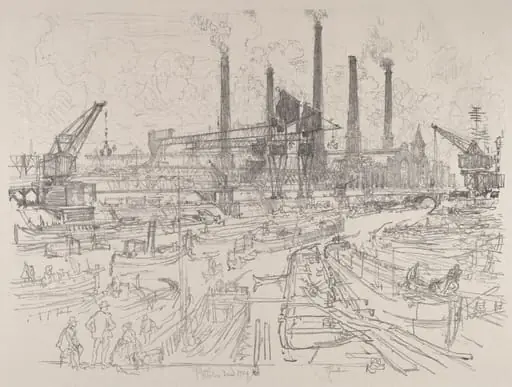 Power-House, Berlin
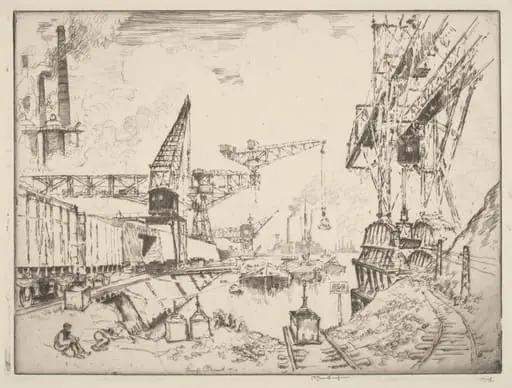 Cranes at Duisburg
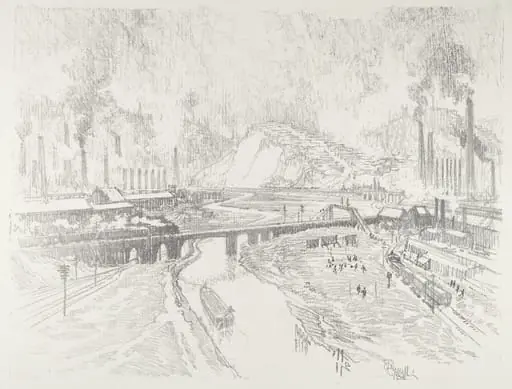 Munition Town
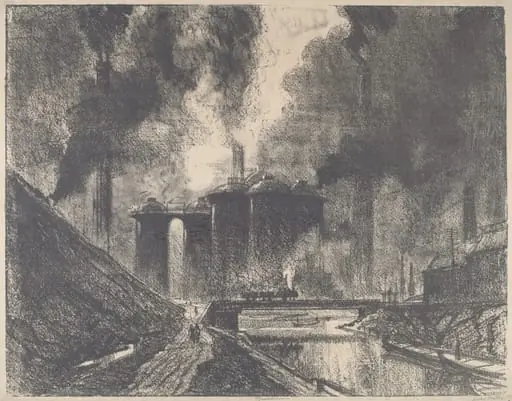 Work Castles, Wolverhampton
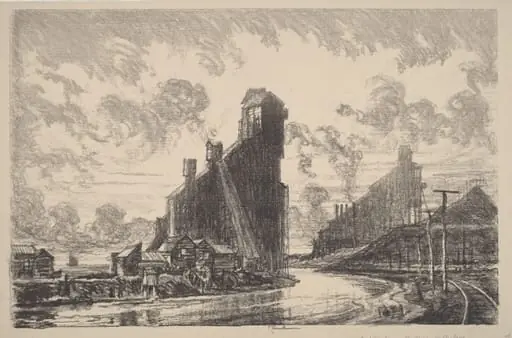 Coal Breaker on the River
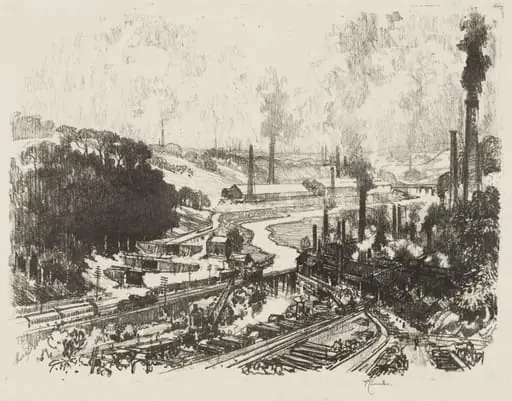 English War Work: Munition Works
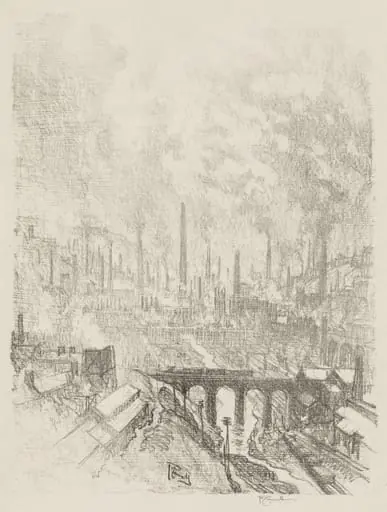 English War Work: Munitions City, No. 1
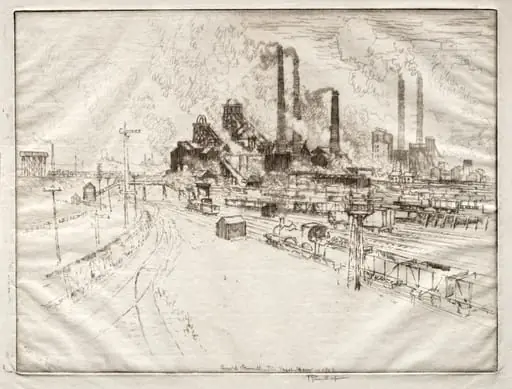 The Great Main, Near Sheffield