Artwork
Dinner Time, Gatun Lock
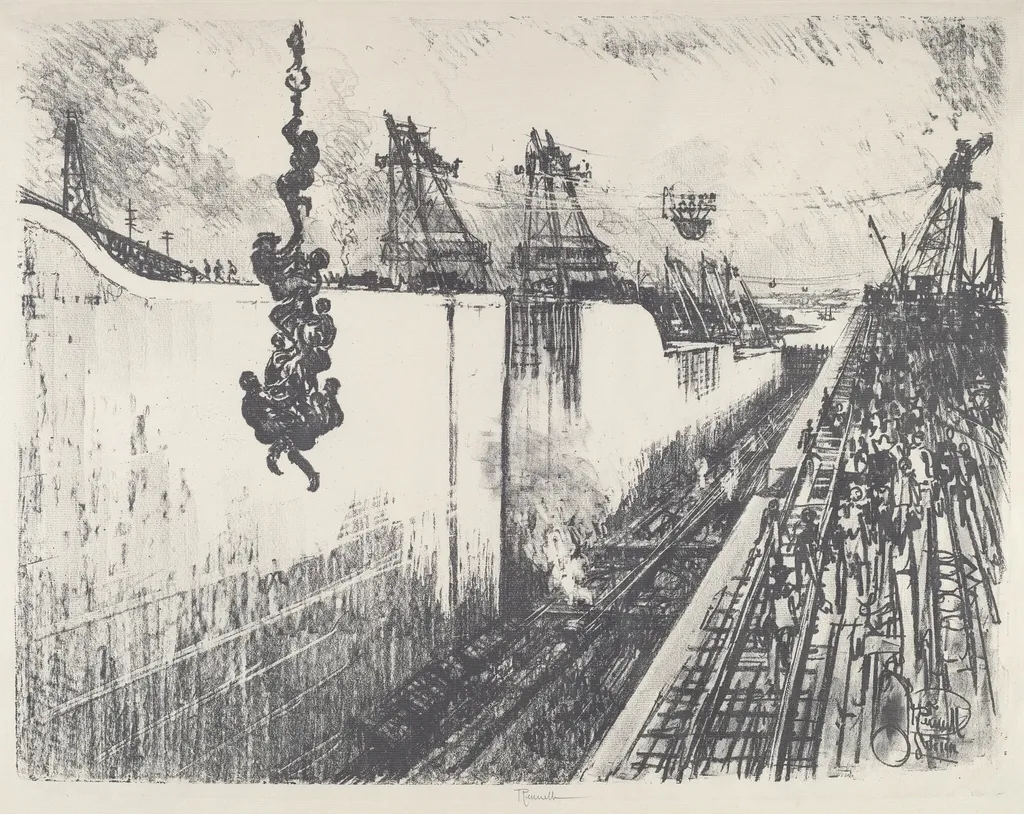
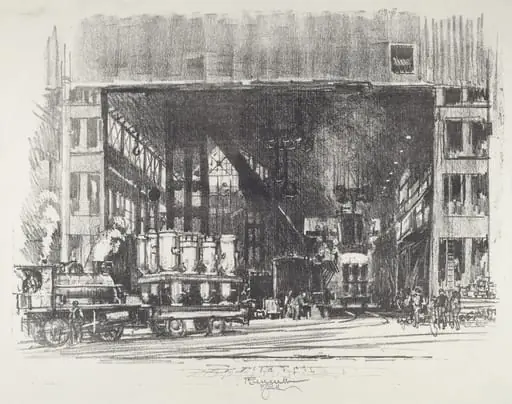
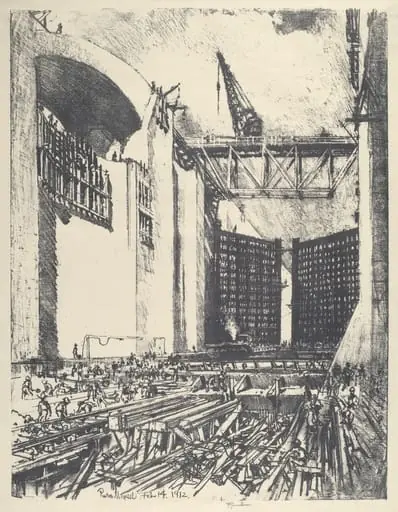
Dinner Time, Gatun Lock is an ink print by Joseph Pennell. It dates from 1912 and is held in the collection of the National Gallery of Art.
About this work
Overview
Pennell, an American printmaker with a focus on industrial subjects, used lithography to convey both the scale of the project and the human presence within it.
Joseph Pennell’s 1912 lithograph *Dinner Time, Gatun Lock* captures a moment of pause during the construction of the Panama Canal. Rendered entirely in black ink, the print portrays laborers at rest near a massive lock structure, surrounded by the skeletal framework of cranes and scaffolding. Pennell, an American printmaker with a focus on industrial subjects, used lithography to convey both the scale of the project and the human presence within it.
Subject & Meaning
The scene centers on workers sharing a meal on the edge of the lock, their postures relaxed amid the imposing machinery. The contrast between the human figures—simple, grouped, and quiet—and the towering, angular infrastructure suggests a tension between labor and industry. The moment is neither heroic nor tragic, but quietly ordinary, emphasizing the daily rhythm of those who built the canal.
Technique & Style
Pennell employed lithography to achieve a range of tonal textures, using dense black ink and sparse lines to define form without detail. The scaffolding and lock are rendered with sharp, angular strokes, while the workers are suggested with minimal contours, their faces and clothing left ambiguous. This restraint enhances the atmospheric weight of the scene, drawing attention to the interplay of mass and space.
History & Provenance
Pennell visited the Panama Canal construction site in 1912 as part of a commission to document the project. He produced numerous lithographs during this trip, many of which were later published in collaboration with his wife, Elizabeth Robins. *Dinner Time, Gatun Lock* was among the works that documented the canal’s progress for American audiences, offering a visual record of the labor behind the engineering feat.
Context
At the time of its creation, the Panama Canal was one of the most ambitious infrastructure projects in history, employing tens of thousands of workers under harsh conditions. Pennell’s focus on a meal break, rather than machinery or explosions, reflects a broader interest in the human dimension of industrialization. His work stood apart from celebratory narratives, instead offering a sober, unembellished view of labor.
Legacy
Pennell’s canal lithographs remain among the most direct visual records of the project’s construction phase. While not widely exhibited today, they influenced later documentary artists interested in labor and industry. His use of lithography to convey scale and quiet dignity helped establish printmaking as a viable medium for social observation in early 20th-century America.
Artist & collection
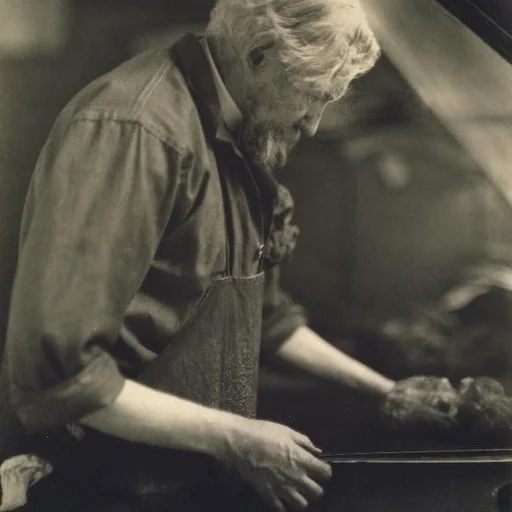
Artist
Joseph Pennell (July 4, 1857 – April 23, 1926) was an American draftsman, etcher, lithographer, and illustrator for books and magazines.