Artwork
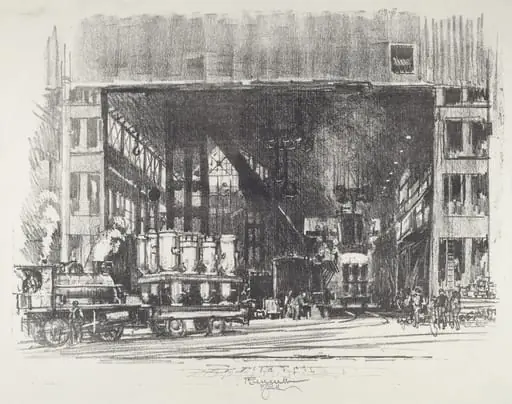
Shell Factory, No.I
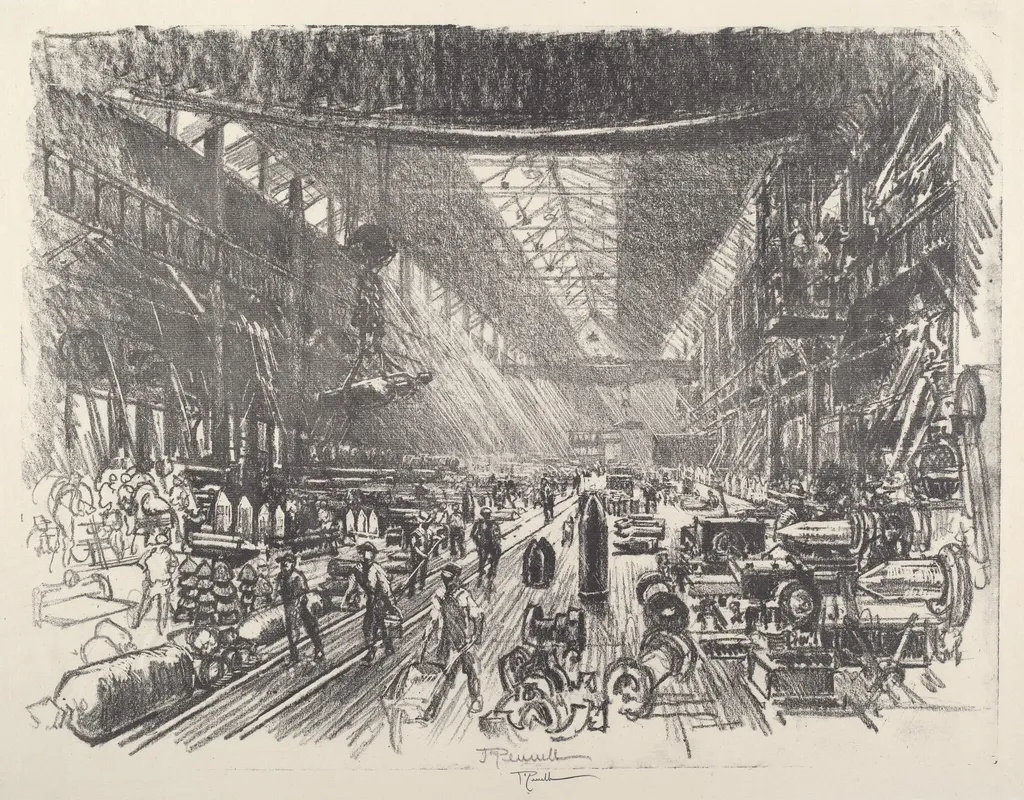
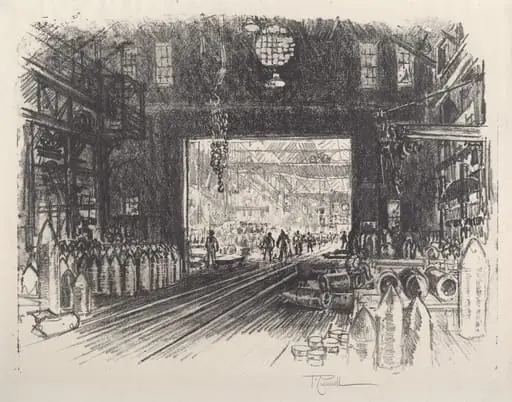
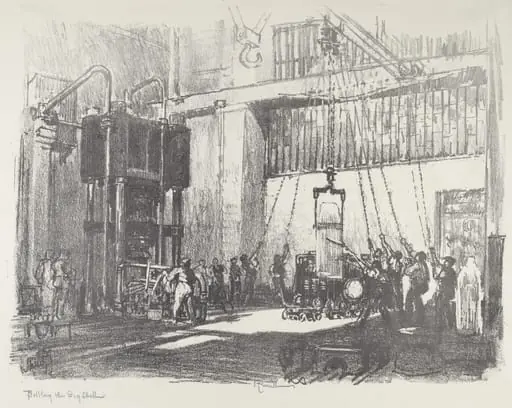
Shell Factory, No.I is an ink print by Joseph Pennell. It dates from 1917 and is held in the collection of the National Gallery of Art. Created in 1917, *Shell Factory, No.
About this work
Overview
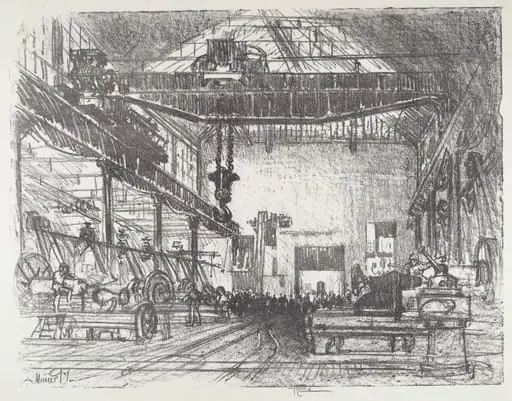
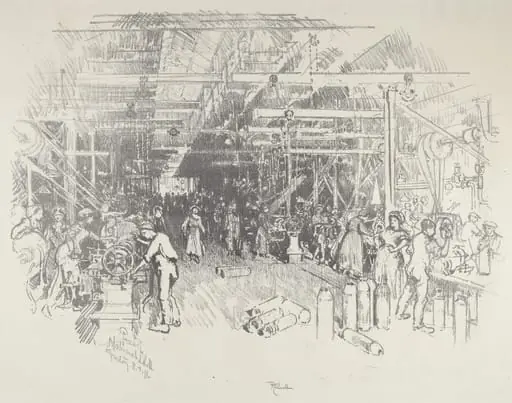
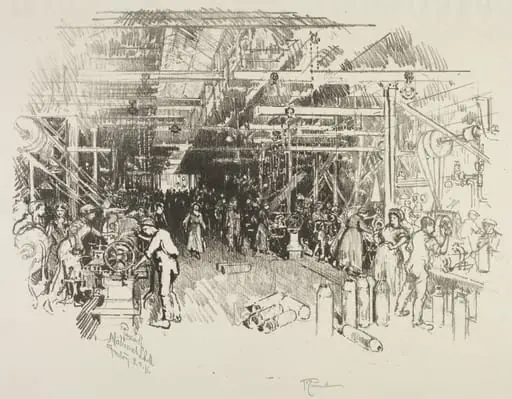
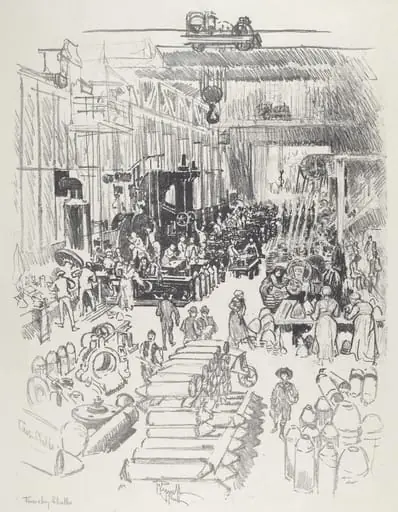
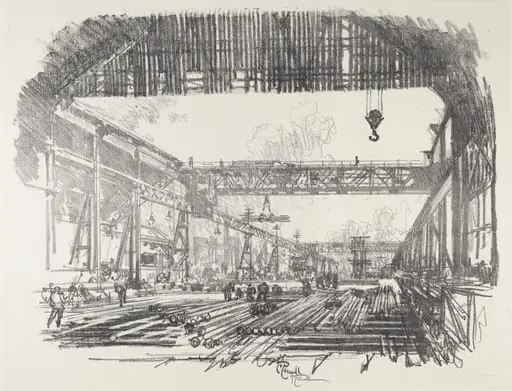
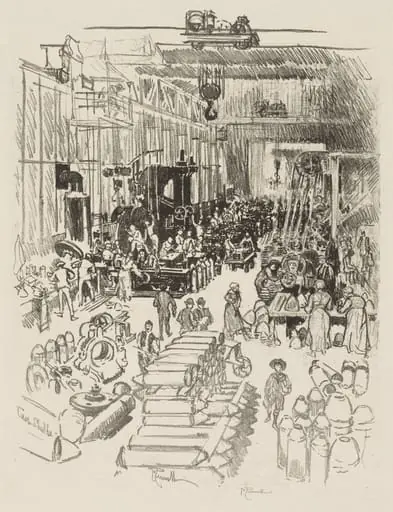
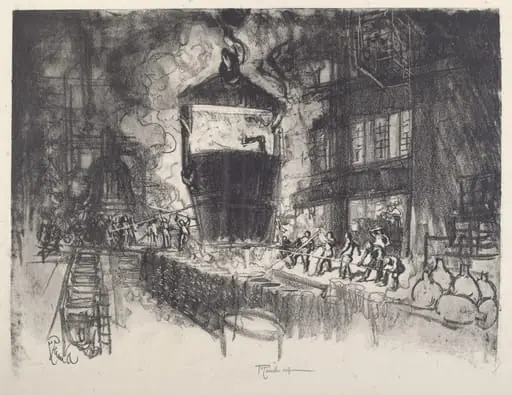
Created in 1917, *Shell Factory, No. I* is a lithographic print by American artist Joseph Pennell. The work presents a stark, industrial interior populated by laborers and machinery, rendered in the characteristic tonal range of the lithographic medium.
Subject & Meaning
The composition captures a bustling factory floor, emphasizing the gritty reality of early twentieth‑century industrial labor. By focusing on the everyday activity of workers amid heavy equipment, Pennell offers a documentary glimpse into a world rarely treated as fine‑art subject at the time.
Technique & Style
Executed in lithography, the print relies on the artist’s ability to draw directly onto a limestone surface, producing a range of dark shadows and delicate lines. Pennell’s handling of the medium yields a dense, atmospheric effect that reinforces the somber mood of the scene.
History & Provenance
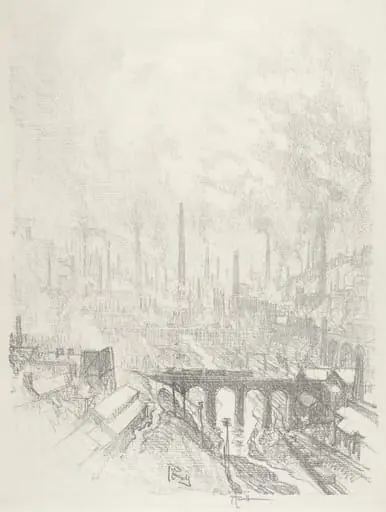
Pennell, a former student of James Lambdin and Thomas Eakins, developed his career largely in Europe, where he became known for depictions of industrial sites and architectural landmarks. *Shell Factory, No. I* reflects his sustained interest in such subjects, influenced by the aesthetic sensibilities of James McNeill Whistler.
Context
The print emerges from a period when modernist artists began to turn their attention to the mechanized landscape of the industrial age. Pennell’s focus on a shell‑manufacturing plant aligns with broader artistic explorations of technology, labor, and the transformation of urban environments.
Own this work as a print
Artist & collection
Artist
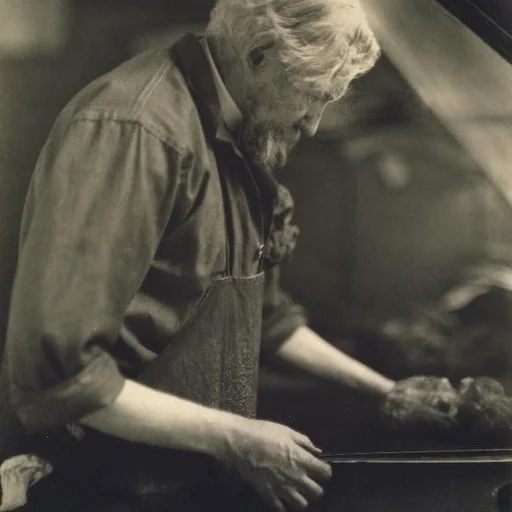
Joseph Pennell (July 4, 1857 – April 23, 1926) was an American draftsman, etcher, lithographer, and illustrator for books and magazines.