Artwork
The Transept, Beauvais
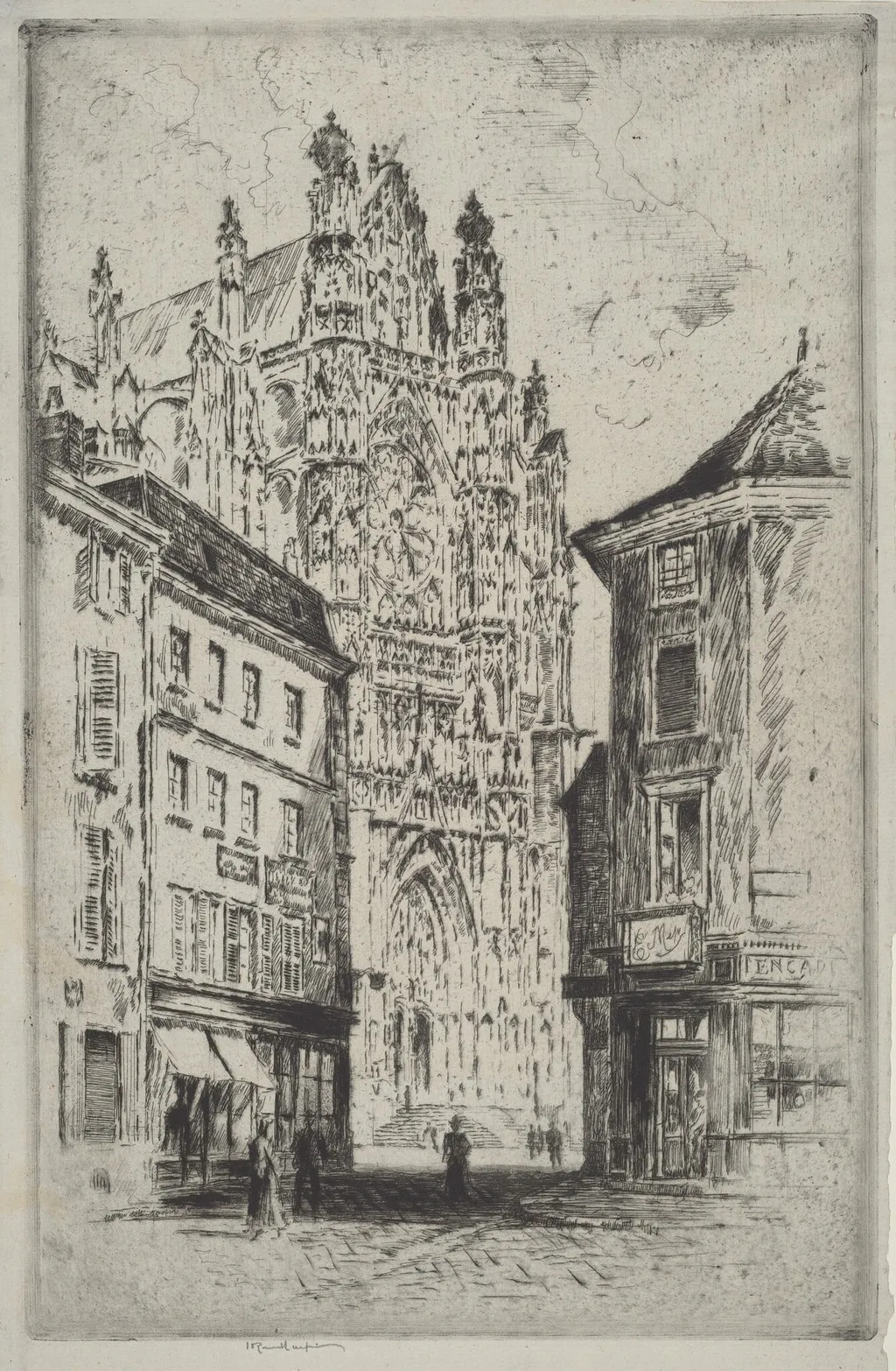
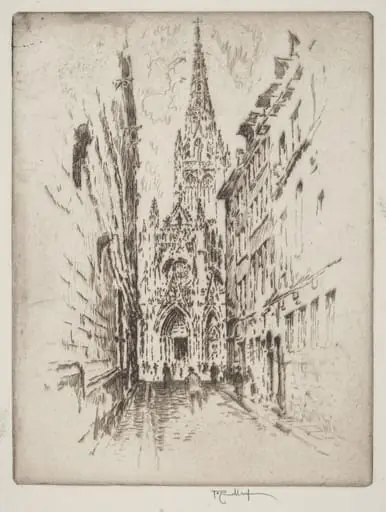
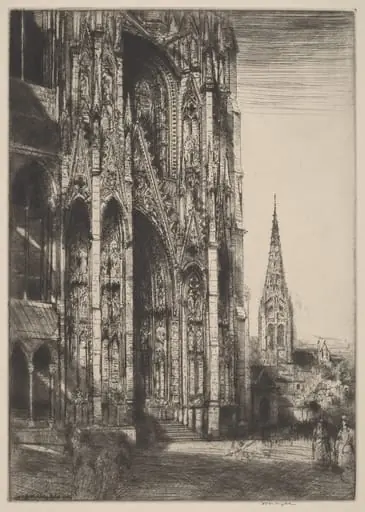
The Transept, Beauvais is an ink print by Joseph Pennell. It dates from 1907 and is held in the collection of the National Gallery of Art.
About this work
Overview
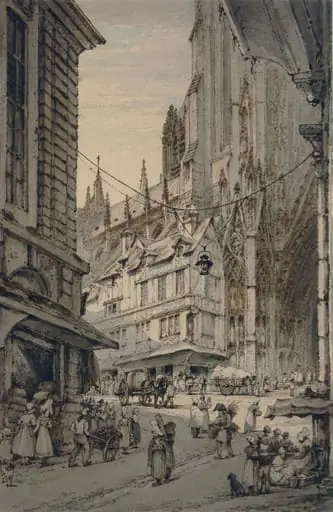
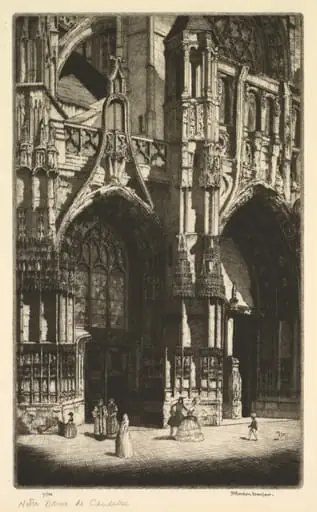
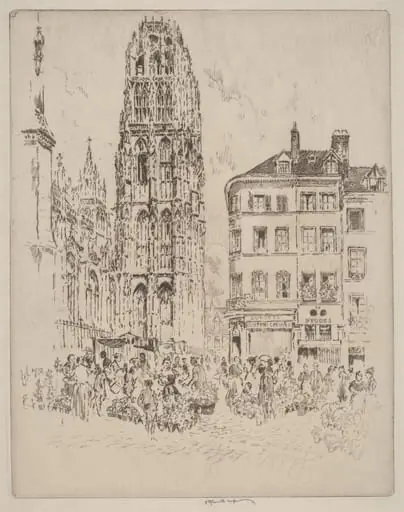
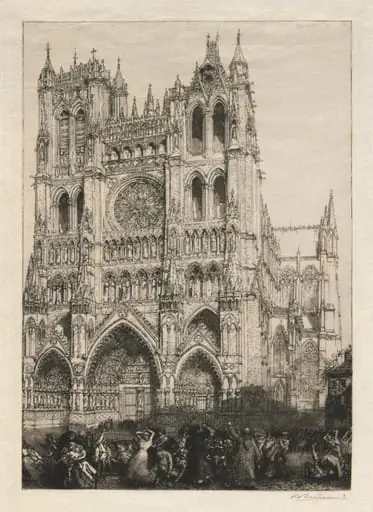
Joseph Pennell’s 1907 etching titled *The Transept, Beauvais* presents a view of the Gothic interior of Beauvais Cathedral. Executed in fine etched lines, the work captures the soaring arches and intricate stonework of the transept, while a modest group of figures occupies the foreground, suggesting everyday activity within the sacred space.
Subject & Meaning
The composition focuses on the cathedral’s transept as a monumental architectural setting, emphasizing the vertical thrust of the Gothic structure. The presence of a few passersby introduces a human scale, inviting contemplation of the relationship between built environment and daily life.
Technique & Style
Pennell employs a precise draftsmanship characteristic of his printmaking, using delicate line work to render texture and depth. The interplay of light and shadow, achieved through varied line density, creates a sense of atmosphere reminiscent of the tonal qualities found in the prints of James McNeill Whistler, an influence on Pennell’s approach.
History & Provenance
An American artist trained by James Lambdin and Thomas Eakins, Pennell spent much of his career working in Europe, where he produced a series of architectural etchings. *The Transept, Beauvais* was created during this period and reflects his ongoing interest in European Gothic architecture.
Context
The etching belongs to a broader body of work in which Pennell documented industrial and architectural subjects, often in collaboration with his wife, writer Elizabeth Robins. It illustrates his commitment to capturing the structural elegance of historic buildings through the medium of print.
Artist & collection
Artist
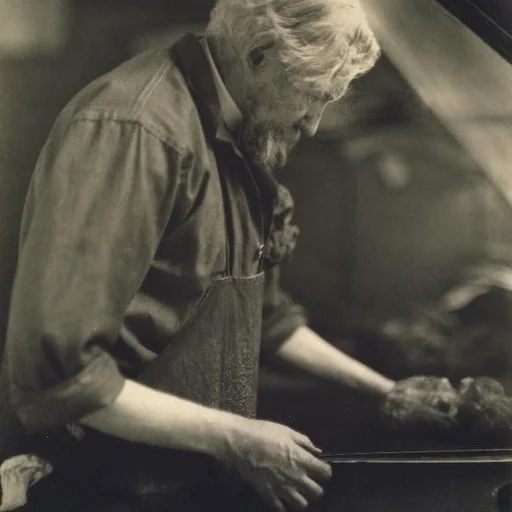
Joseph Pennell (July 4, 1857 – April 23, 1926) was an American draftsman, etcher, lithographer, and illustrator for books and magazines.