Artwork
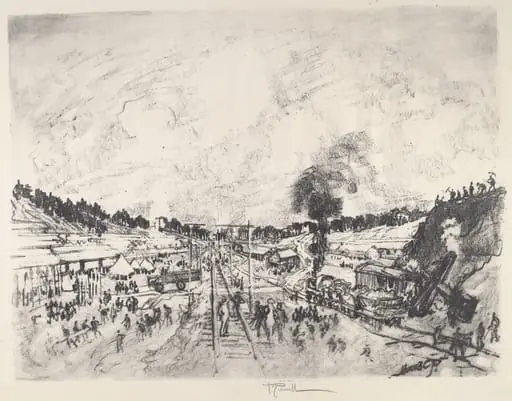
Steam Shovel at Work in Culebra Cut
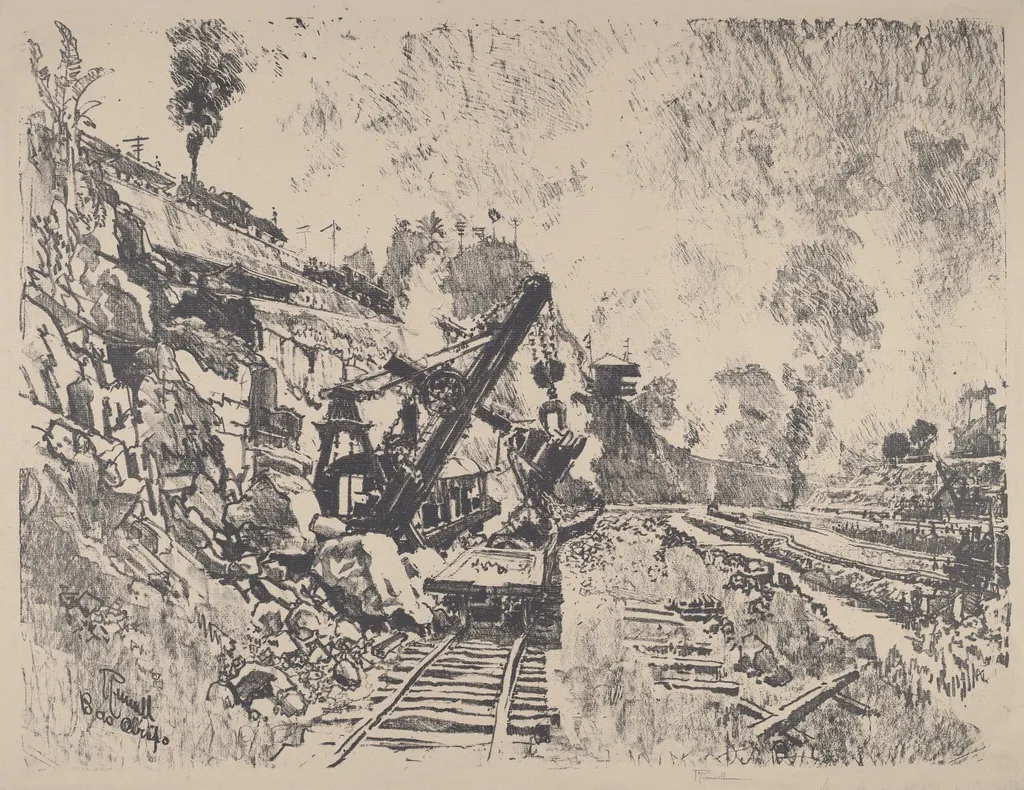
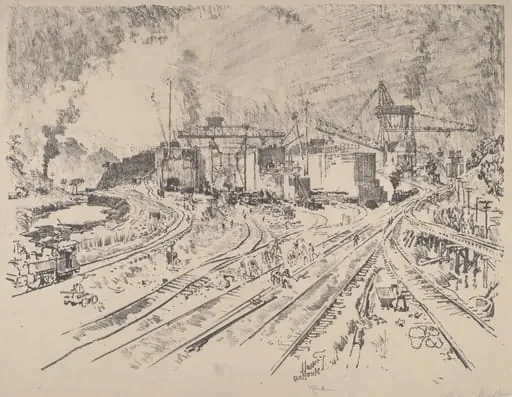
Steam Shovel at Work in Culebra Cut is an ink print by Joseph Pennell. It dates from 1912 and is held in the collection of the National Gallery of Art.
About this work
Overview
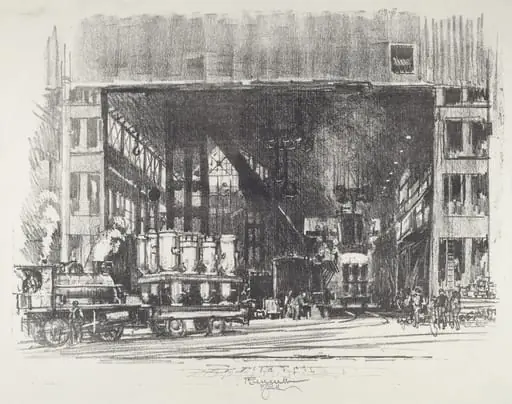
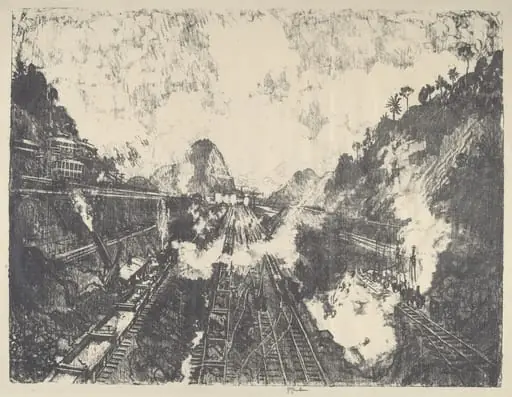
Steam Shovel at Work in Culebra Cut is a 1912 lithograph by Joseph Pennell, capturing a pivotal moment in industrial engineering. The print focuses on a steam shovel in operation within a vast excavation site, highlighting the machine's central role in transforming the landscape.
Subject & Meaning
The subject is a steam shovel excavating a rocky area, symbolizing the advent of mechanized construction. Pennell's depiction reflects his fascination with modern infrastructure and engineering advancements, documenting a transitional era in building practices.
Technique & Style
Executed in lithography, the work showcases Pennell's skill in this medium. Influences from his time with James McNeill Whistler in Europe may be subtly present, though the overall aesthetic is grounded in documentary realism, prioritizing the industrial subject's detail and activity.
History & Provenance
Created in 1912, the lithograph is part of Pennell's oeuvre focused on industrial and landmark subjects. While specific provenance details are not provided, its creation aligns with Pennell's broader thematic interests during his career, which spanned both American and European landscapes.
Context
The work is set against the backdrop of early 20th-century industrialization, where machines like the steam shovel were revolutionizing construction. Culebra Cut, a significant engineering challenge during the Panama Canal's construction, provides the setting, underscoring the global impact of such technological advancements.
Own this work as a print
Artist & collection
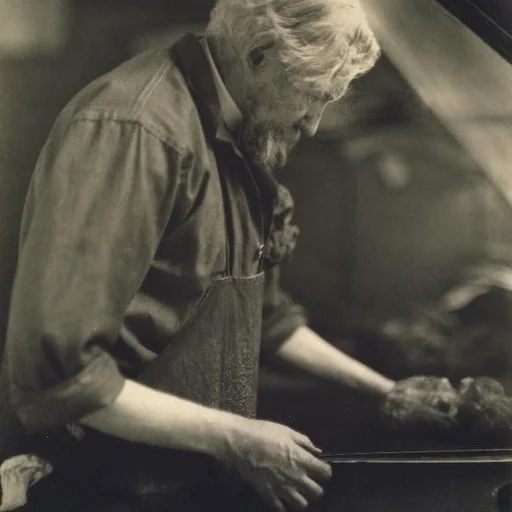
Artist
Joseph Pennell (July 4, 1857 – April 23, 1926) was an American draftsman, etcher, lithographer, and illustrator for books and magazines.