Artwork
The Iron Mine
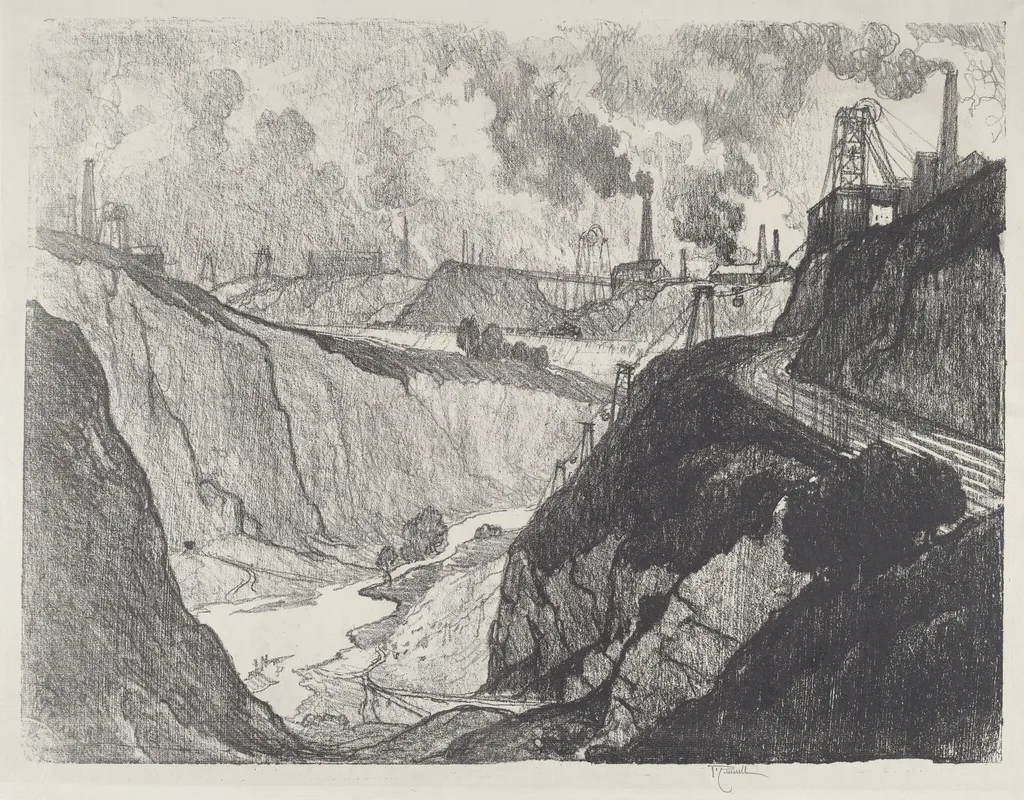
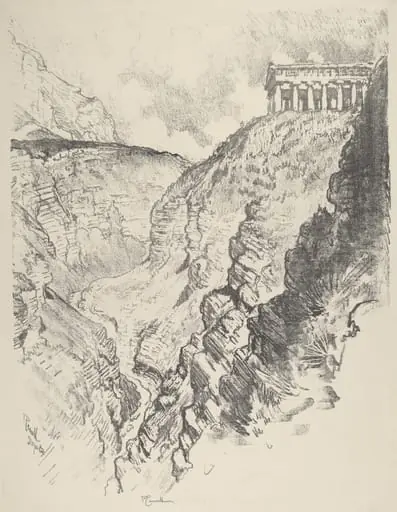
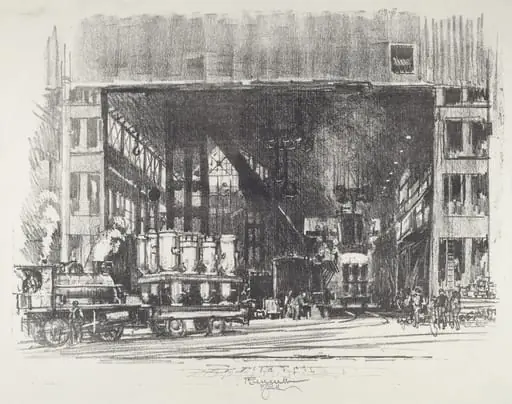
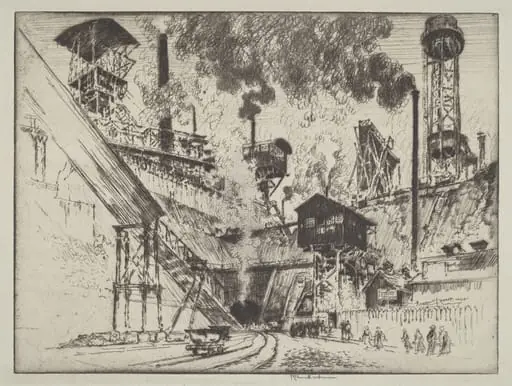
The Iron Mine is an ink print by Joseph Pennell. It dates from 1916 and is held in the collection of the National Gallery of Art.
About this work
Overview
Though trained in traditional drawing and etching, he turned to lithography to capture the scale and texture of modern industry.
Joseph Pennell produced *The Iron Mine* in 1916 as a lithograph, part of his broader engagement with industrial subjects. Though trained in traditional drawing and etching, he turned to lithography to capture the scale and texture of modern industry. This print reflects his commitment to recording the physical presence of industrial infrastructure, particularly during his travels in Europe and the United States.
Subject & Meaning
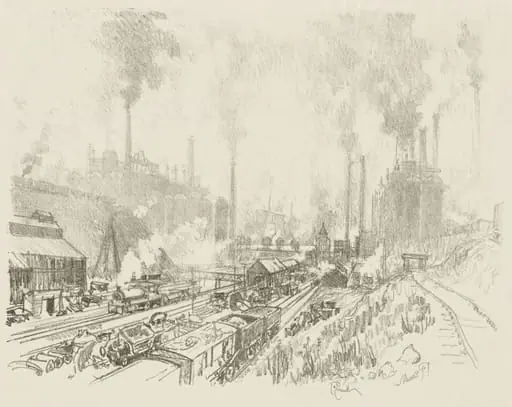
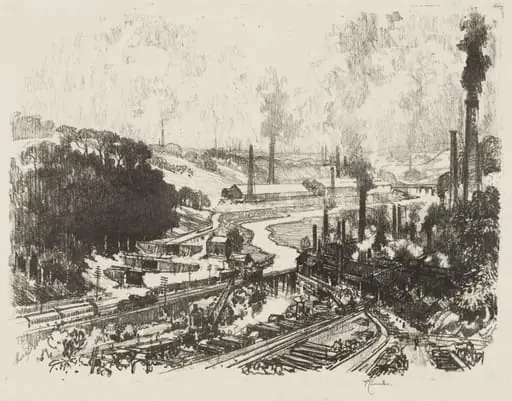
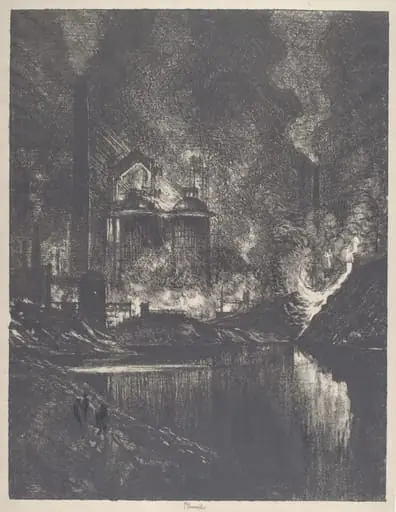
The image centers on a massive iron mine, its towering structure dominating the composition. Workers appear as minuscule figures, emphasizing the overwhelming scale of the machinery and earthworks. The scene conveys no narrative of labor or progress, instead presenting industry as an imposing, almost geological force—silent, enduring, and indifferent to human presence.
Technique & Style
Pennell employed lithography, using greasy crayons to draw directly on a limestone surface, then treating it with acid to fix the image. Thick, deliberate lines define the mine’s bulk, while stark contrasts between light and shadow enhance its solidity. The print’s tonal range is controlled and restrained, relying on the medium’s capacity for sharp, graphic definition rather than subtle gradation.
History & Provenance
Created during World War I, the print emerged from Pennell’s documented travels to industrial sites in Europe and America. Though not commissioned, it aligns with his long-standing practice of sketching factories, bridges, and mines as they transformed the landscape. The work entered public collections shortly after its production, reflecting contemporary interest in industrial documentation through fine art.
Context
Pennell’s focus on industrial sites coincided with broader cultural shifts in the early 20th century, as cities expanded and mechanization reshaped labor. His work stood apart from romanticized rural scenes, instead embracing the raw aesthetics of steel, stone, and smoke. He was influenced by Whistler’s tonal discipline and Eakins’s attention to structure, applying these to modern subjects.
Legacy
Pennell’s industrial prints, including *The Iron Mine*, contributed to a genre of American printmaking that valued documentary precision over sentiment. His approach influenced later artists who sought to represent modern infrastructure with formal clarity. Though less celebrated than his contemporaries, his work remains a quiet record of industrial America’s physical transformation.
Own this work as a print
Artist & collection
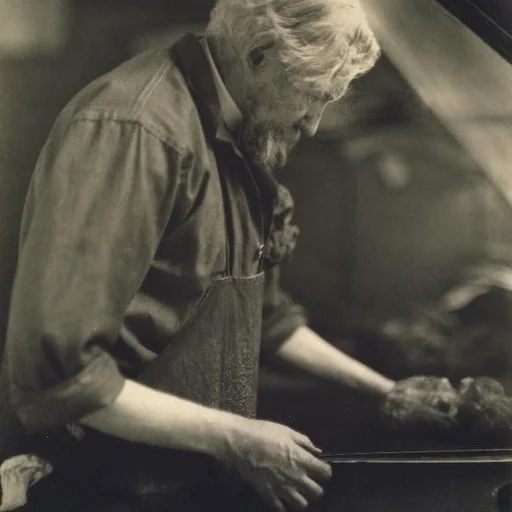
Artist
Joseph Pennell (July 4, 1857 – April 23, 1926) was an American draftsman, etcher, lithographer, and illustrator for books and magazines.