Artwork
Large Landscape with a Ruined Abbey
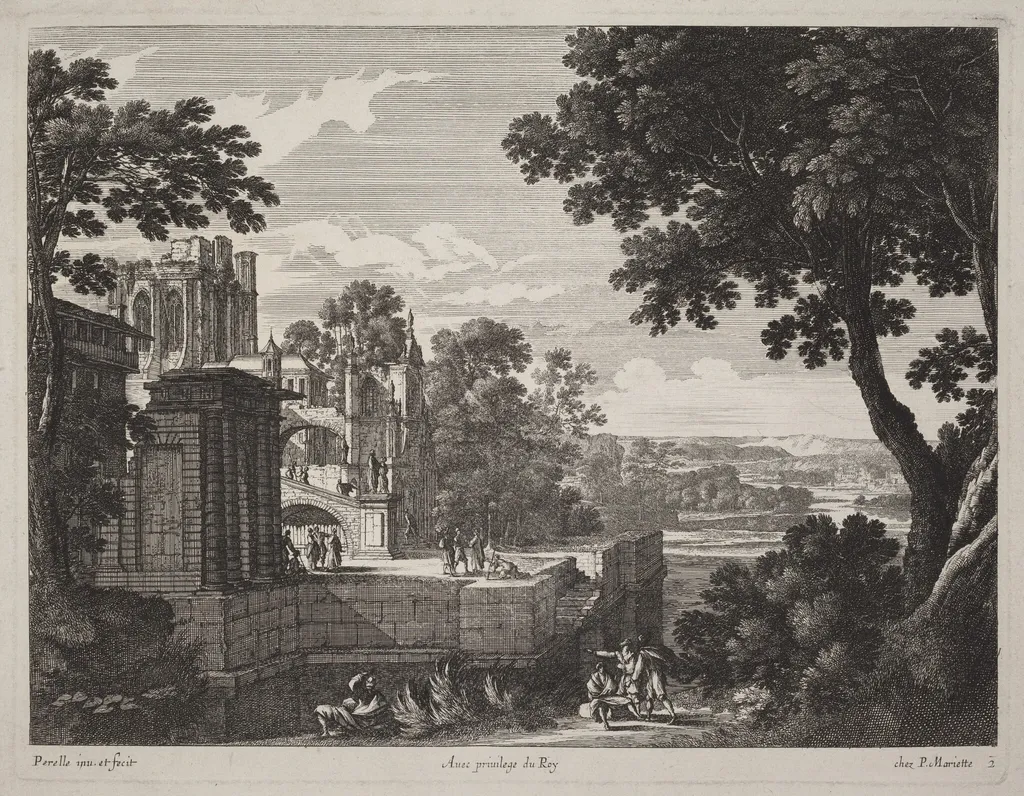
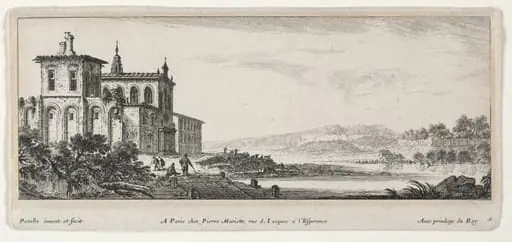
Large Landscape with a Ruined Abbey is an ink print by the Baroque artist Gabriel Perelle. It dates from 1640 and is held in the collection of the National Gallery of Art.
About this work
Overview
His workshop, which included his sons Nicolas and Adam, often collaborated on such compositions, blending observation with artistic convention.
Gabriel Perelle, a French artist born in 1604, produced this etching in 1640 as part of his exploration of landscape imagery. Executed on laid paper, the work reflects his training under Simon Vouet and his engagement with topographic and idealized views common in 17th-century printmaking. His workshop, which included his sons Nicolas and Adam, often collaborated on such compositions, blending observation with artistic convention.
Subject & Meaning
The scene centers on a crumbling abbey nestled within a vast, undulating landscape. Figures—some walking, others resting—interact subtly with the ruins, suggesting quiet contemplation rather than narrative drama. The presence of nature reclaiming architecture implies themes of time, decay, and solitude. The dramatic sky and distant horizon amplify a sense of stillness, evoking a mood of serene melancholy without overt symbolism.
Technique & Style
Perelle employed etching to incise fine lines into a metal plate, allowing for nuanced tonal gradations through controlled acid biting. The composition uses layered shading to suggest depth, with dense foliage and shadowed ruins receding into a hazy distance. His style merges precise architectural detail with loose, atmospheric rendering, characteristic of his approach to idealized natural settings rather than strict topography.
History & Provenance
Created during Perelle’s mature period, the print circulated among collectors of landscape imagery in France and beyond. While specific early ownership records are sparse, its production within his family workshop indicates it was part of a broader commercial output of topographic prints. The work survives in multiple impressions, attesting to its continued demand in the decades following its creation.
Context
In mid-17th-century France, landscape prints gained popularity as both artistic expressions and records of place. Perelle’s work aligned with a trend favoring romanticized ruins and pastoral scenes, influenced by Italianate models and the growing interest in antiquity. His prints served not only as art but also as visual references for travelers, architects, and patrons seeking idealized visions of the countryside.
Legacy
Perelle’s etchings, including this one, contributed to the development of French landscape printmaking by bridging documentary observation with aesthetic idealization. His workshop’s output influenced later generations of printmakers who pursued similar themes. Though not widely celebrated in his lifetime, his technical precision and compositional balance secured his place in the history of early modern European print culture.
Artist & collection

Artist
Gabriel Perelle (born 1604 in Vernon, Eure, died 1677 in Paris) was a French draftsman and printmaker of topographic views and landscapes.

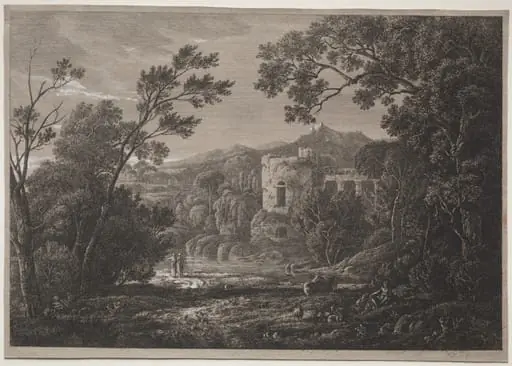 An Italian View
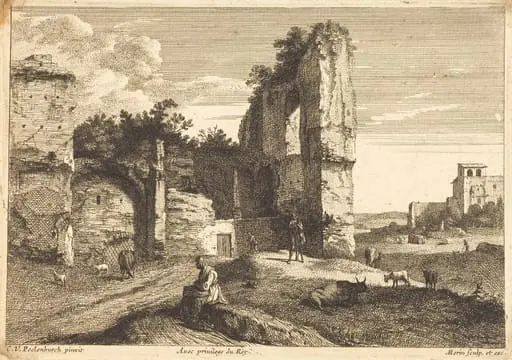 Old Woman Seated
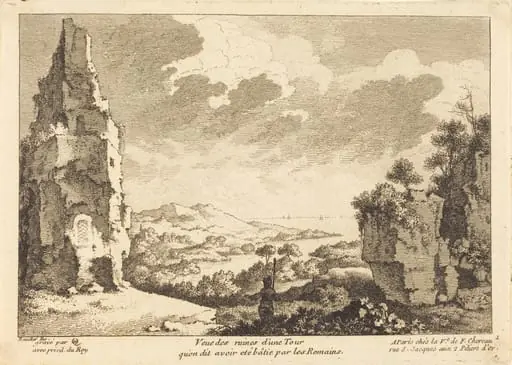 Veue des ruines d'une Tour qu'on dit avoir ete batie par les Romains
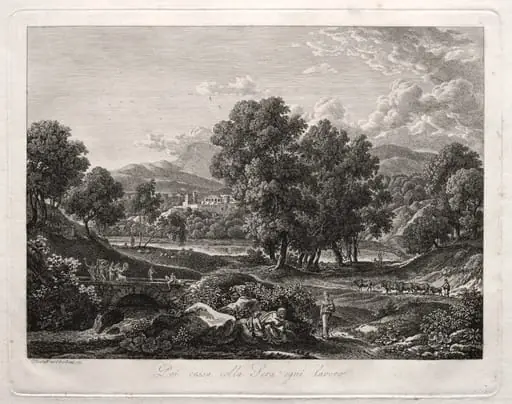 Heroic Landscape: The Shepherd's Dance on the Bridge
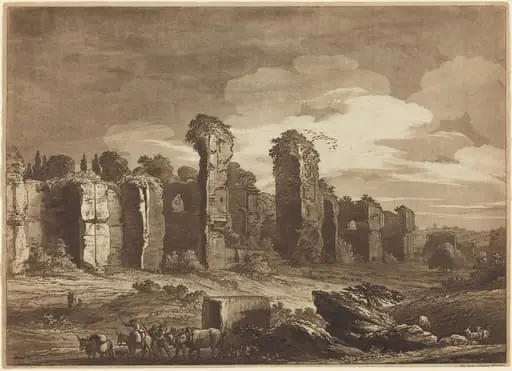 View of the Remains of Caracalla's Baths, Taken from the Jesuits Gardens at Rome
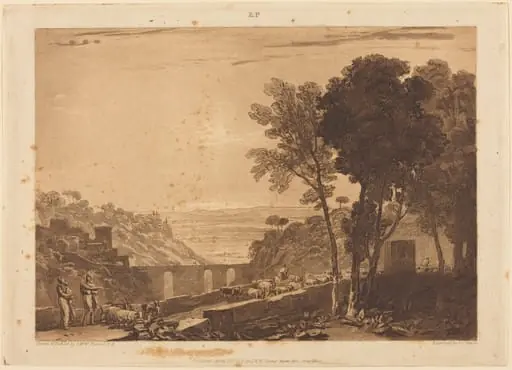 The Bridge and Goats
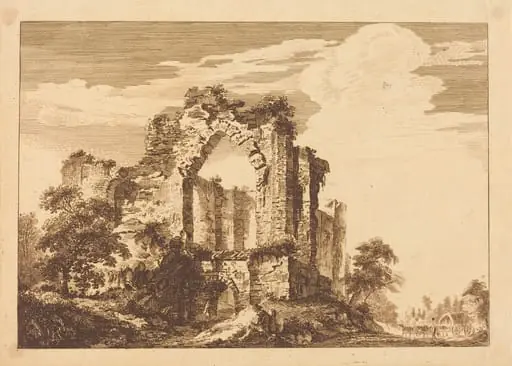 Ruins with a Seated Man, and a Covered Wagon in the Distance
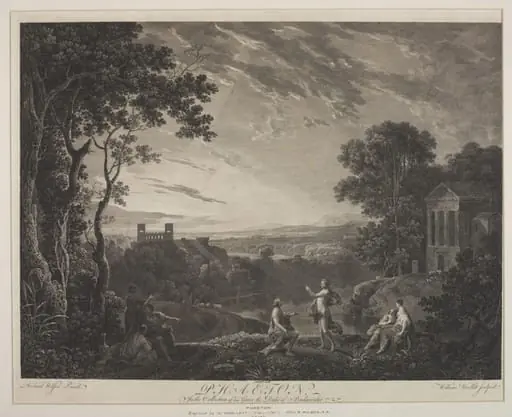 Phaeton
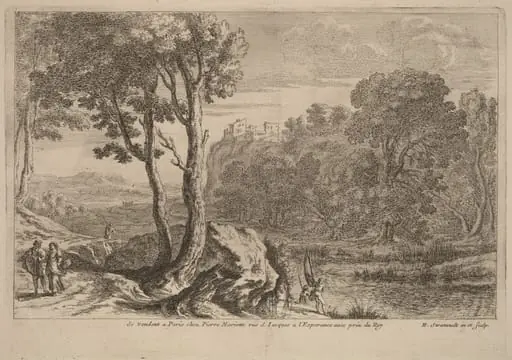 The Fishermen
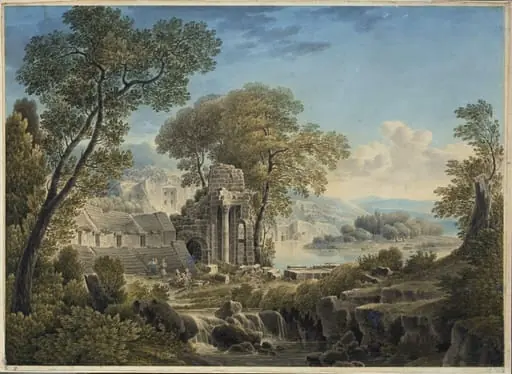 Theatre of Myra, now Demre, in Lycia