Artwork
a) The Baptism of Christ; b) Draped Figure Holding a Book and Man Wielding an Ax with a Figure
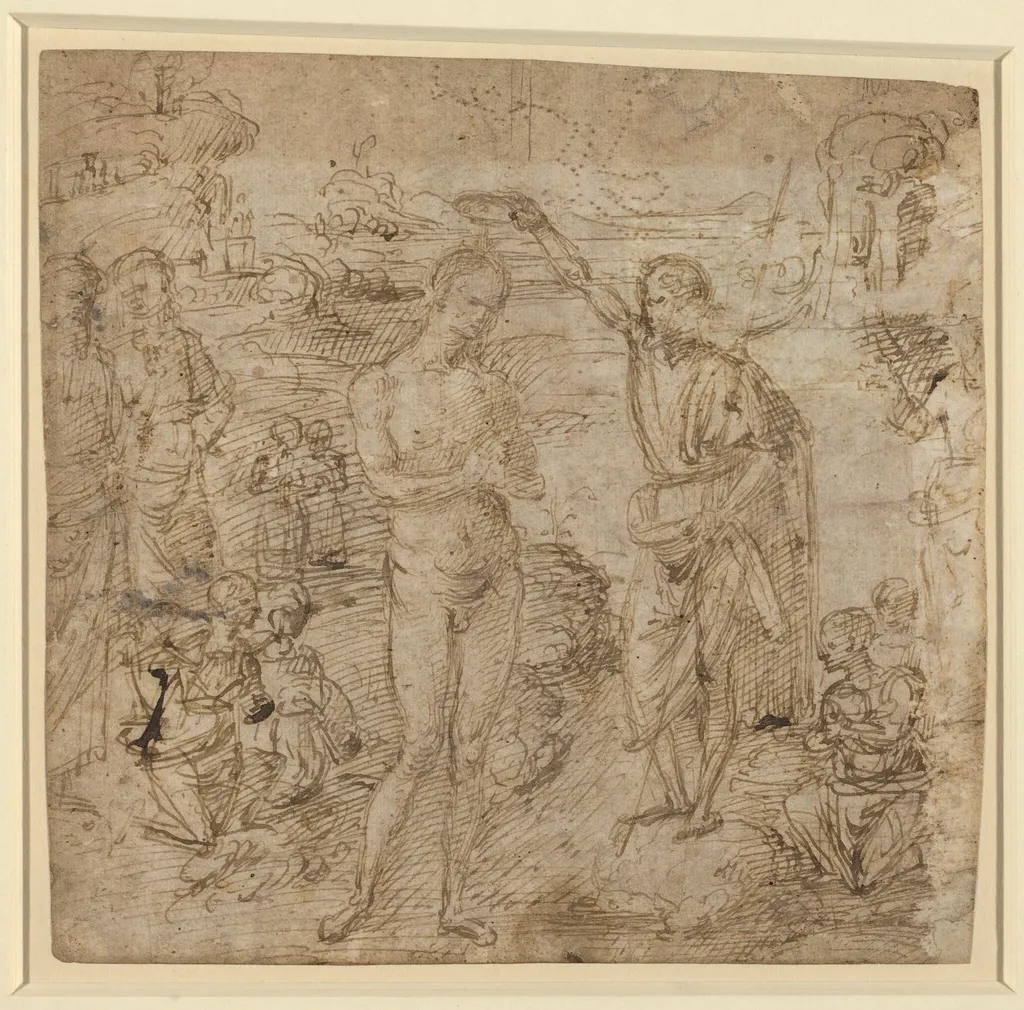
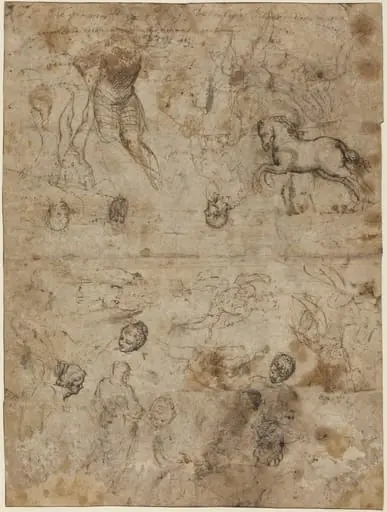
a) The Baptism of Christ; b) Draped Figure Holding a Book and Man Wielding an Ax with a Figure is an ink drawing by the Renaissance artist Pietro Perugino. It dates from 1475 and is held in the collection of the National Gallery of Art.
About this work
Overview
Two pen and ink drawings, one with black chalk, date to around 1475 and are attributed to Pietro Perugino.
Two pen and ink drawings, one with black chalk, date to around 1475 and are attributed to Pietro Perugino. Both are preparatory studies, not finished works. They depict religious and figural compositions in loose, exploratory lines, suggesting the artist was testing arrangements and forms before committing to a larger piece. The medium—ink and chalk—allowed for rapid, layered mark-making suited to early-stage planning.
Subject & Meaning
One drawing illustrates the Baptism of Christ, a common biblical scene involving John the Baptist and Jesus. The other shows a draped figure holding a scroll beside a man with an ax, possibly a symbolic or narrative moment from scripture or hagiography. Neither drawing presents a complete narrative; instead, they capture fragments of composition, indicating the artist’s focus on figure placement and gesture rather than storytelling clarity.
Technique & Style
Perugino used pen and brown ink with black chalk to build form through rapid, overlapping strokes. Cross-hatching and varying line density create subtle tonal shifts, suggesting volume without full shading. The sketchy quality reveals an active process: figures are suggested, not defined, and backgrounds remain ambiguous, filled with half-formed shapes. This method prioritized movement and spatial relationships over polish.
History & Provenance
These drawings originate from Perugino’s workshop during his early career in Umbria, likely created as studies for a commissioned altarpiece or fresco cycle. Their survival suggests they were valued as working documents, preserved alongside other preparatory materials. No definitive record traces their path from the studio to modern collections, but their condition implies careful handling over centuries.
Context
In the 1470s, Florentine and Umbrian artists increasingly relied on preparatory drawings to plan complex compositions. Perugino, influenced by Pollaiuolo and Verrocchio, used quick studies to resolve figure groupings and spatial depth. These sketches reflect a broader shift toward systematic design in Renaissance practice, where the artist’s hand was central to translating ideas into final works.
Legacy
These drawings exemplify the Renaissance workshop tradition, where sketches served as vital tools for artistic development. They offer insight into Perugino’s method and the iterative nature of Renaissance art-making. Though not publicly exhibited as finished works, they remain key to understanding how major compositions evolved from initial ideas to completed paintings.
Artist & collection


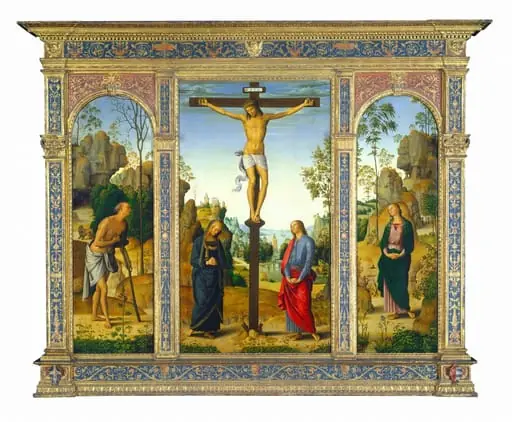 The Crucifixion with the Virgin, Saint John, Saint Jerome, and Saint Mary Magdalene
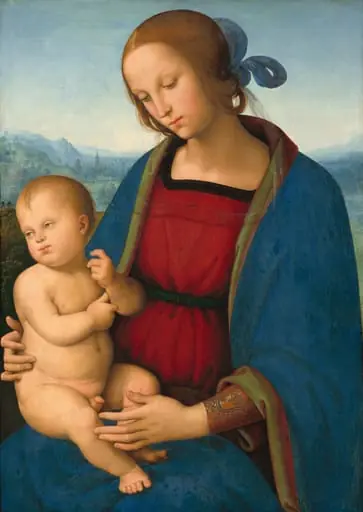 Madonna and Child
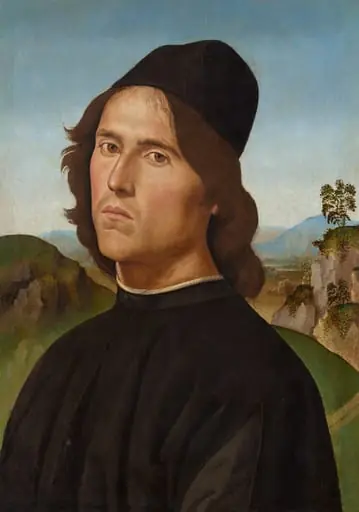 Portrait of Lorenzo di Credi
![The Crucifixion with the Virgin, Saint John, Saint Jerome, and Saint Mary Magdalene [right panel], by Pietro Perugino](https://artifactworldgallery.com/img/pietro-perugino--the-crucifixion-with-the-virgin-saint-john-saint-jerome-and--7d9a2b1f47b9fc9b-w320.webp) The Crucifixion with the Virgin, Saint John, Saint Jerome, and Saint Mary Magdalene [right panel]
The Crucifixion with the Virgin, Saint John, Saint Jerome, and Saint Mary Magdalene [right panel]![The Crucifixion with the Virgin, Saint John, Saint Jerome, and Saint Mary Magdalene [left panel], by Pietro Perugino](https://artifactworldgallery.com/img/pietro-perugino--the-crucifixion-with-the-virgin-saint-john-saint-jerome-and--1017dec17318baa5-w320.webp) The Crucifixion with the Virgin, Saint John, Saint Jerome, and Saint Mary Magdalene [left panel]
The Crucifixion with the Virgin, Saint John, Saint Jerome, and Saint Mary Magdalene [left panel]![The Crucifixion with the Virgin, Saint John, Saint Jerome, and Saint Mary Magdalene [middle panel], by Pietro Perugino](https://artifactworldgallery.com/img/pietro-perugino--the-crucifixion-with-the-virgin-saint-john-saint-jerome-and--a9b4c312771e3f71-w320.webp) The Crucifixion with the Virgin, Saint John, Saint Jerome, and Saint Mary Magdalene [middle panel]
The Crucifixion with the Virgin, Saint John, Saint Jerome, and Saint Mary Magdalene [middle panel]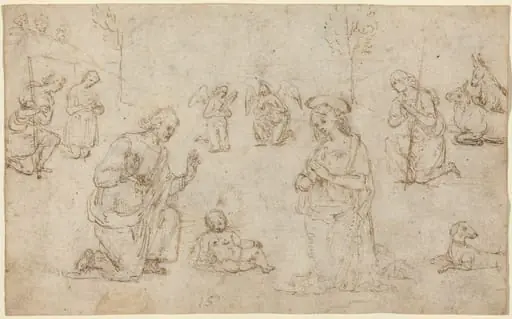 The Adoration of the Shepherds
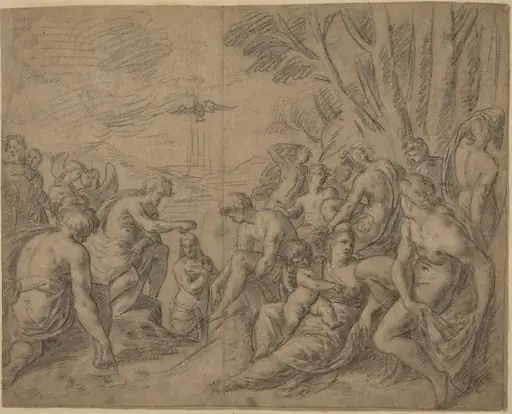 The Baptism of Christ
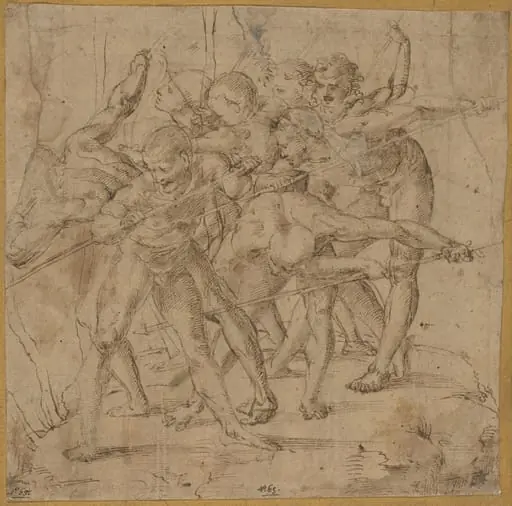 Battle Scene
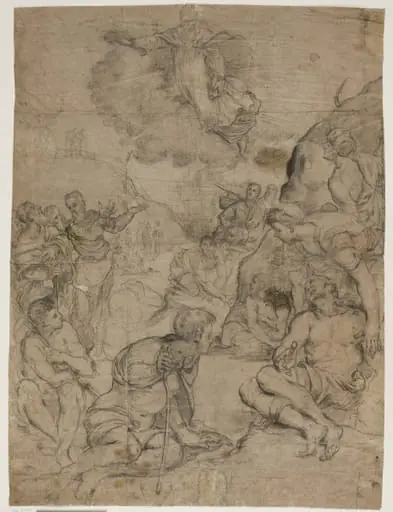 St Augustine healing the paralytics, after Tintoretto’s painting in the Museo Civico, Vicenza
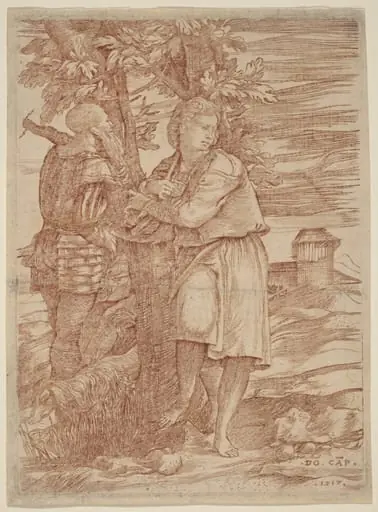 The Shepherd and the Old Warrior
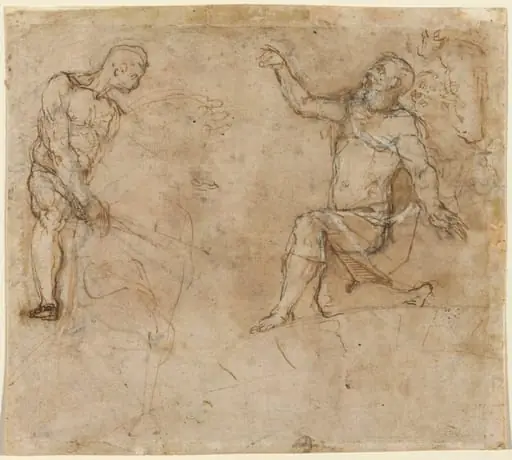 Figure Studies
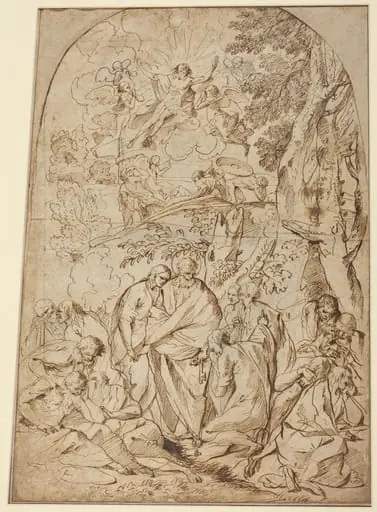 The Resurrection
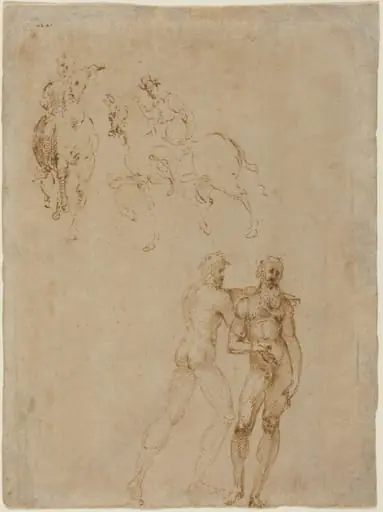 Two Horsemen and Two Male Nudes
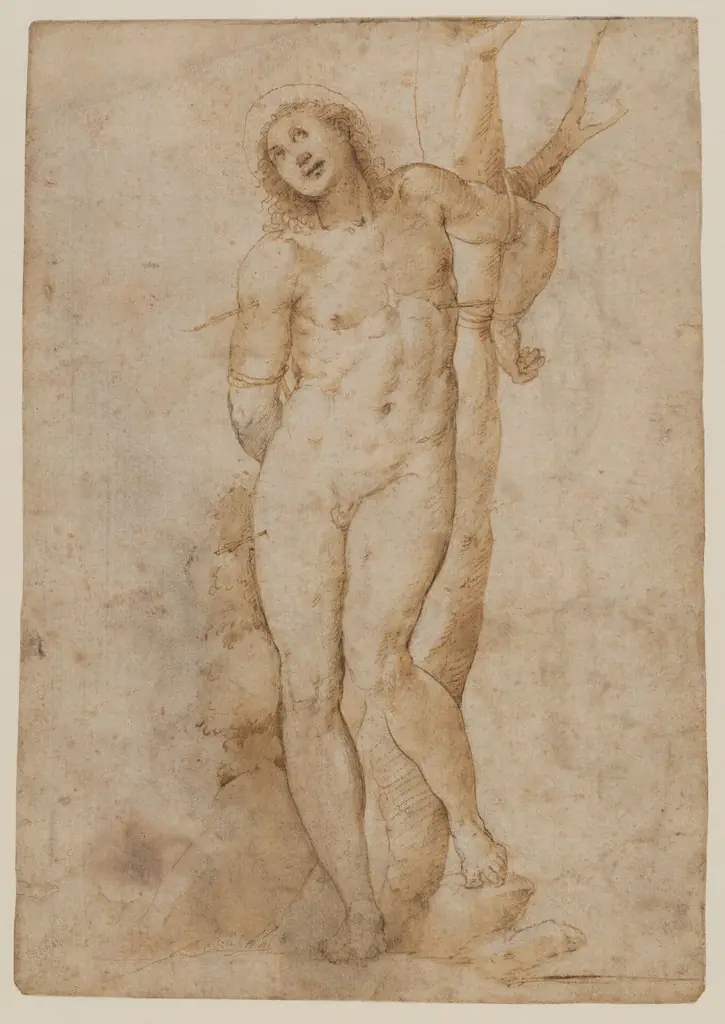 Drawing
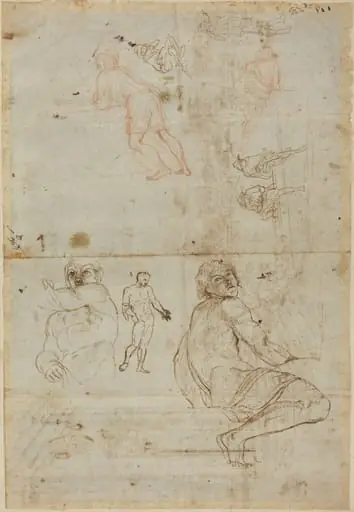 Figures from the Farnese Palace and from Life
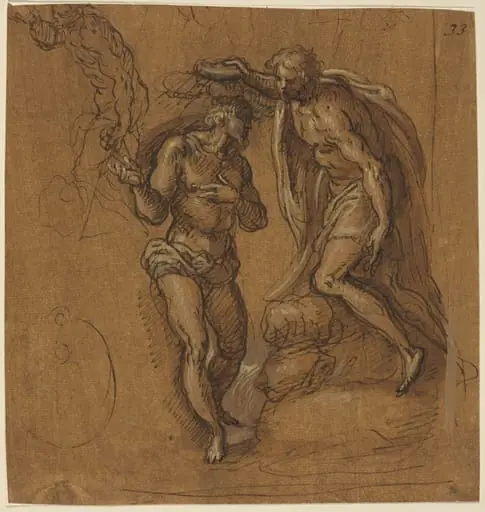 Sketch for a Baptism of Christ
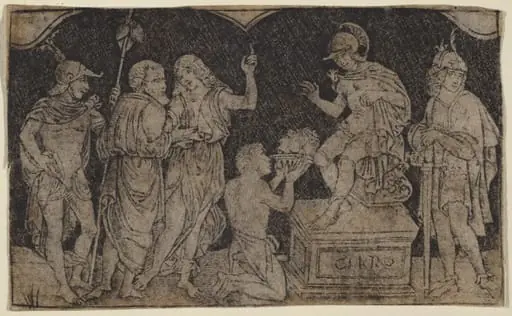 Artaxerxes Receiving the Head of Cyrus
 Sheet of Studies