Artwork
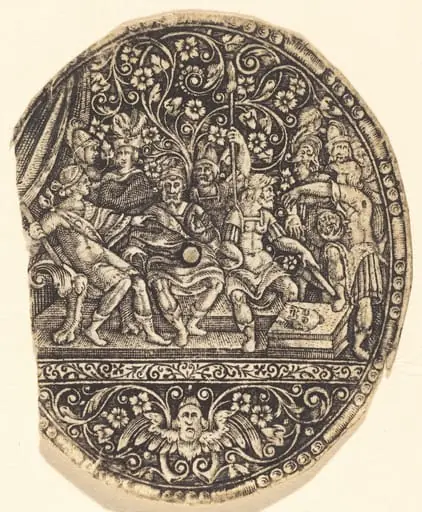
Artaxerxes Receiving the Head of Cyrus
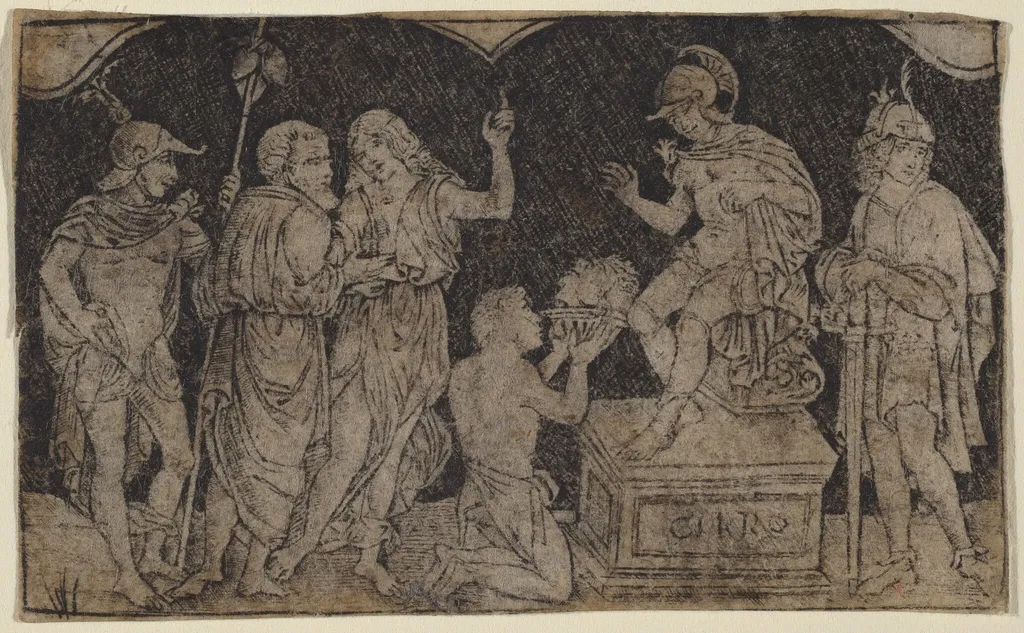
Artaxerxes Receiving the Head of Cyrus is a print by the Renaissance artist Peregrino da Cesena. It dates from 1500 and is held in the collection of the National Gallery of Art.
About this work
Overview
The composition centers on Artaxerxes I seated on a pedestal, receiving the severed head of his brother Cyrus the Younger.
Created around 1500 by Peregrino da Cesena, this niello print depicts a moment from ancient Persian history. The composition centers on Artaxerxes I seated on a pedestal, receiving the severed head of his brother Cyrus the Younger. The scene is rendered in high-contrast black and white, typical of niello’s engraved metalwork technique, with sharp lines and dense shadows defining the figures and their garments.
Subject & Meaning
The print illustrates the aftermath of the Battle of Cunaxa in 401 BCE, when Cyrus the Younger’s rebellion against his brother Artaxerxes I ended in defeat. The presentation of Cyrus’s head symbolizes the consolidation of royal authority and the brutal consequences of treason. The figures’ poses and arrangement emphasize power dynamics, with the seated ruler as the silent arbiter of justice and death.
Technique & Style
Executed in niello, a method involving inlaying black metallic alloy into engraved silver or copper, the print achieves dramatic tonal contrast through precise incisions. The figures are rendered with classical drapery and armor, their forms sharply outlined against a flat background. The style reflects Renaissance interest in antiquity, blending detailed anatomy with stylized spatial depth typical of early printmaking traditions.
History & Provenance
Peregrino da Cesena, an Italian engraver active in the early 16th century, produced this work likely for a scholarly or aristocratic audience familiar with classical narratives. The print survives in limited numbers, with known examples held in European collections. Its survival suggests it was valued as both artistic and historical artifact, circulating among collectors interested in ancient history and graphic arts.
Context
During the Renaissance, classical stories were frequently reinterpreted through print media to appeal to humanist tastes. Niello prints like this one served as visual references to ancient texts, often commissioned to illustrate historical or mythological episodes. The choice of this particular scene reflects contemporary fascination with themes of power, betrayal, and legitimacy in political succession.
Legacy
Though Peregrino da Cesena is not widely known today, this print exemplifies the role of small-scale graphic art in transmitting classical narratives during the Renaissance. Its technical precision and narrative clarity influenced later engravers working in historical subjects. The work remains a rare surviving example of niello’s use in print form, illustrating the transition from metalwork to paper-based dissemination of imagery.
Artist & collection


 Mucius Scaevola
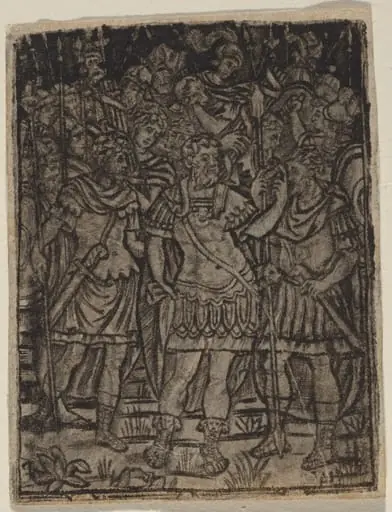 Roman General Addressing His Troops
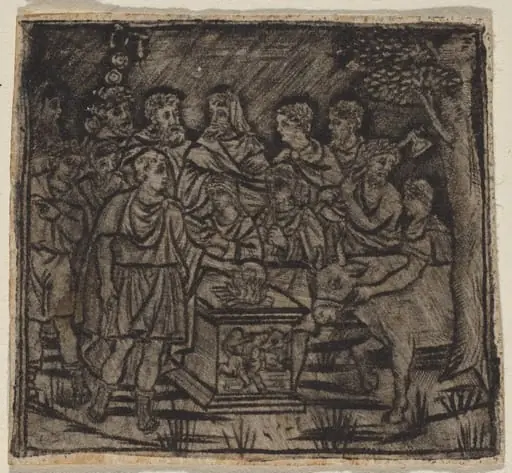 Sacrifice
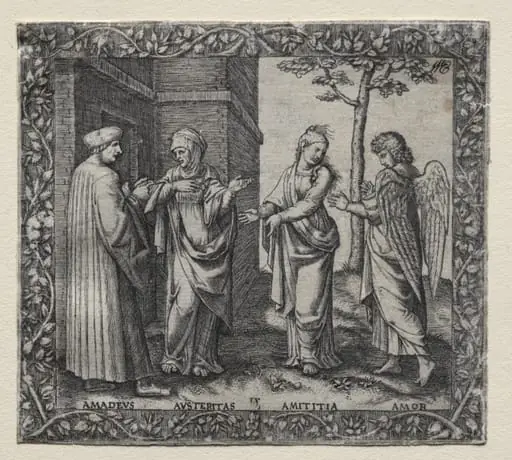 Illustration to Amadeo Berruti's Dialogue on Friendship, Rome, 1517
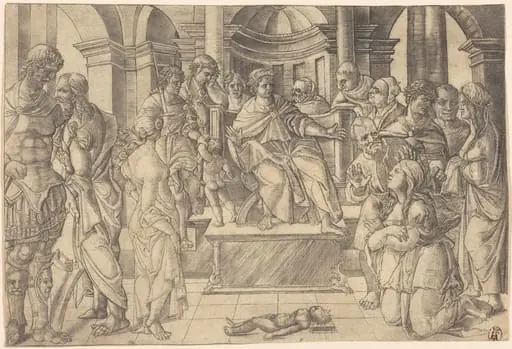 The Judgment of Solomon
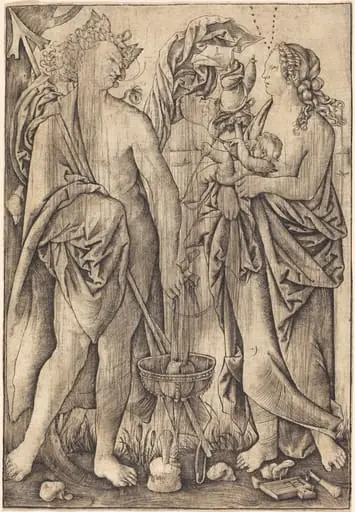 Mars and Venus (Mercury and Venus?)
 Execution
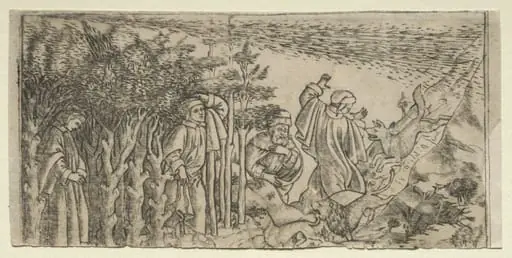 Dante Lost in the Wood: Escaping and Meeting Virgil, Canto I
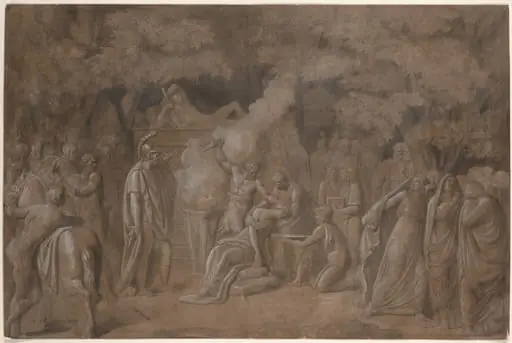 Death of Iphigenia (?)
 The Prodigal Son Squandering His Inheritance on Harlots
 Masinissa and Sophonisba
 The Capture of Troy