Artwork
St Augustine healing the paralytics, after Tintoretto’s painting in the Museo Civico, Vicenza
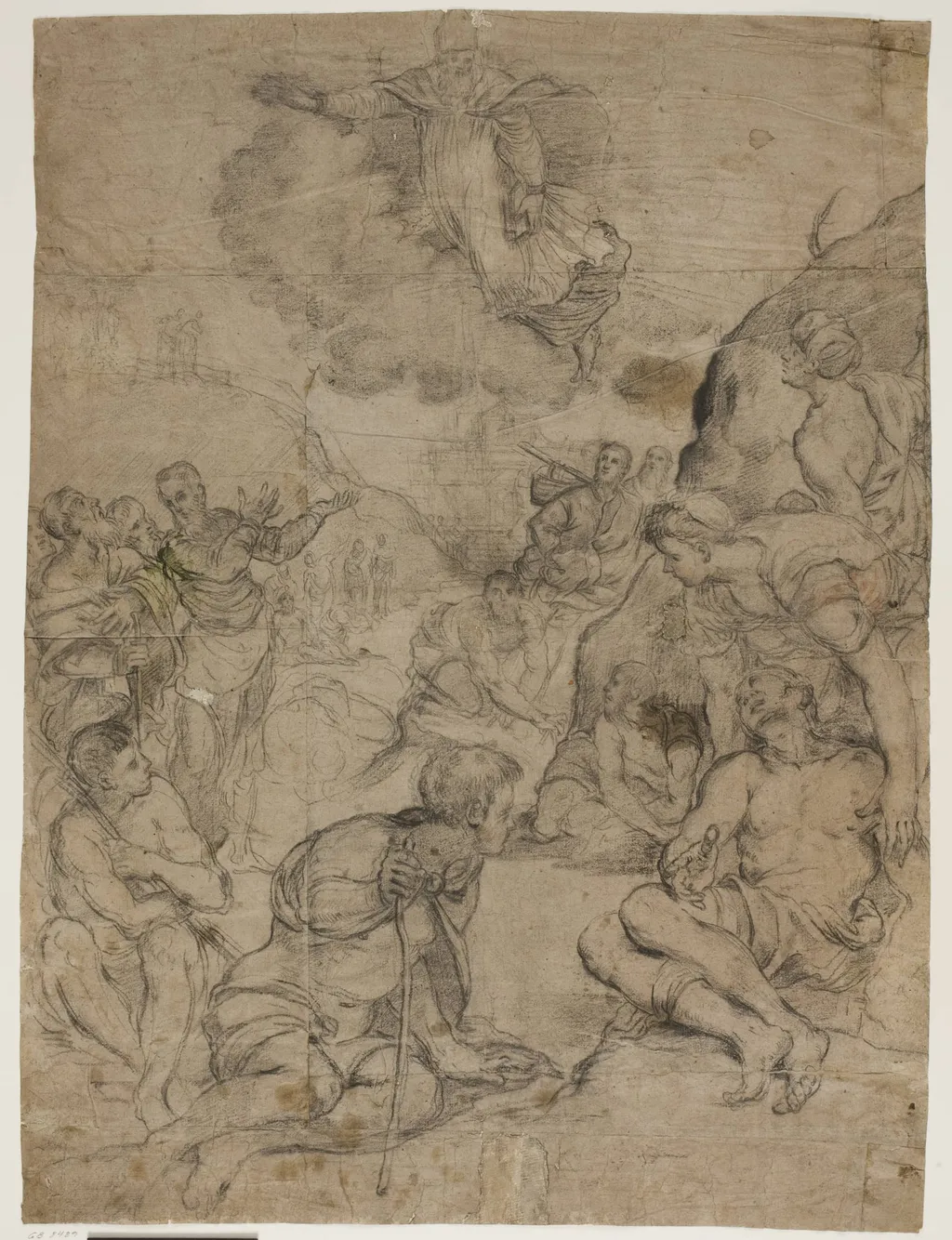
St Augustine healing the paralytics, after Tintoretto’s painting in the Museo Civico, Vicenza is an unspecified painting by Unknown. It dates from 1649 and is held in the collection of the Statens Museum for Kunst. This drawing replicates a composition by Tintoretto depicting St.
About this work
Overview
This drawing replicates a composition by Tintoretto depicting St. Augustine’s miraculous healing of paralytics. Executed around 1649, it resides in the Museum of Ethnography. The sheet functions as a rapid visual notation rather than a polished tableau, employing swift, unmodulated lines to capture the episode’s urgency and collective agitation.
Subject & Meaning
The scene illustrates the moment St. Augustine restores mobility to afflicted supplicants. Bodies writhe, limbs stretch toward the saint, and musicians accompany the tumult. The drawing condenses the narrative into a single, surging instant, emphasizing the miraculous transformation through physical and emotional upheaval rather than doctrinal exposition.
Technique & Style
The artist deploys loose, overlapping contours on a light ground, omitting color and tonal modulation. Figures are rendered through abbreviated strokes, privileging gesture and spatial compression over anatomical precision. This approach aligns with preparatory studies, where immediacy of observation supersedes finished detail.
History & Provenance
Created as a copy after Tintoretto’s painting in Vicenza’s Museo Civico, the sheet likely served as a studio exercise or aide-mémoire. Its subsequent inclusion in the Museum of Ethnography’s holdings suggests a shift in curatorial focus, where the work’s documentary value outweighs its original function.
Context
Mid-seventeenth-century artists frequently engaged with earlier Venetian models, particularly Tintoretto’s dynamic compositions. Such drawings circulated within workshops, allowing practitioners to internalize compositional strategies and figural arrangements. The sketch’s energetic shorthand reflects broader Baroque preoccupations with movement and theatricality.
Artist & collection

 Domestic Scene
 Giacomo and Cardinal Marco, investing Andrea, Abbot of San Zeno, with his Benefice
 The Nymph of Fontainebleau
 Portrait of a Woman
 Madonna and Child with Saints in the Enclosed Garden
 Venus and Minerva
 Family Group of Four on Sofa
 Wall painting from Room H of the Villa of P. Fannius Synistor at Boscoreale
 The Resurrection
 The Baptism of Christ
 Saint Jerome
![Presentation of the Virgin in the Temple [verso], by Antonio Zanchi](https://artifactworldgallery.com/img/antonio-zanchi--presentation-of-the-virgin-in-the-temple-verso--450080eaf8685583-w320.webp) Presentation of the Virgin in the Temple [verso]
Presentation of the Virgin in the Temple [verso] The Adoration of the Shepherds
 The Verification of the True Cross
 The Sacrifice of Iphigenia
 The Resurrection
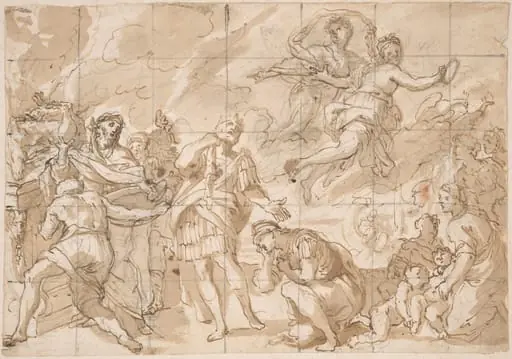 The Sacrifice of Iphigenia
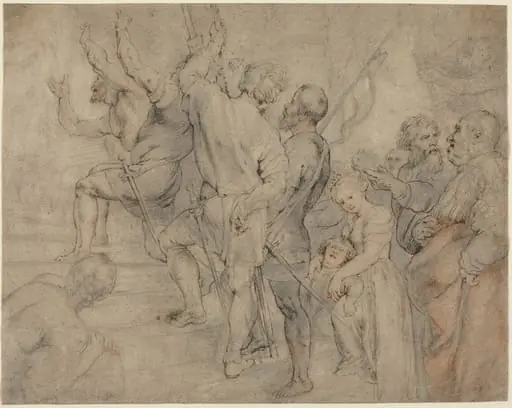 Part of the Crowd at the Ecce Homo
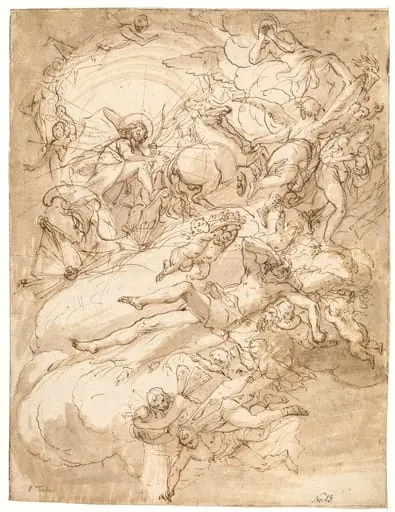 Apollo in his chariot, design for a ceiling painting
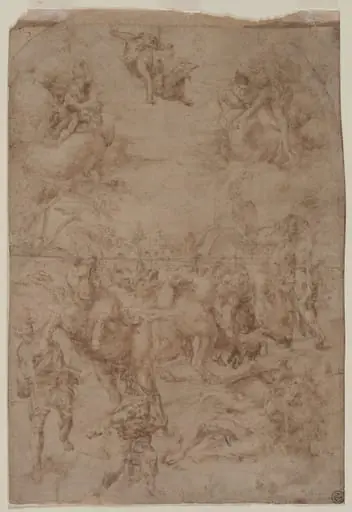 The Conversion of St. Paul