Artwork
Neath Abbey
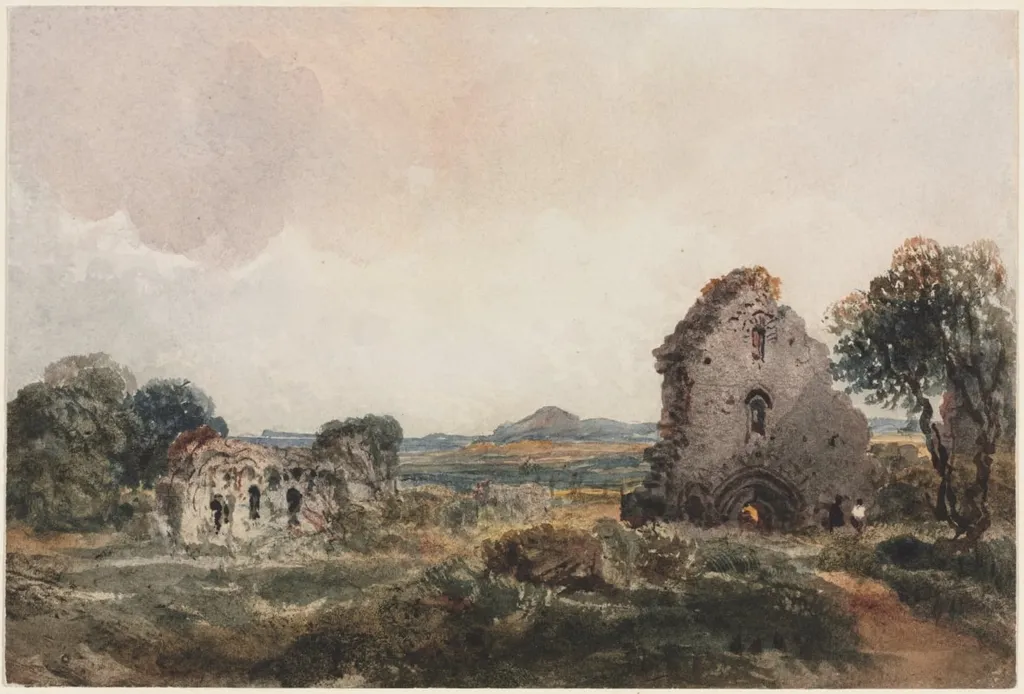
Neath Abbey is a drawing by the Romanticist artist Peter De Wint. It dates from 1844 and is held in the collection of the Cleveland Museum of Art.
About this work
Overview
Peter DeWint's watercolor drawing, Neath Abbey, presents a serene depiction of the ruined Cistercian monastery in south Wales, characterized by soft earth tones and subtle play of light and shadow.
Subject & Meaning
The work focuses on the abbey's natural reclamation, with vegetation engulfing the structure. Notably, DeWint omits the industrial activities that had transformed the site, instead emphasizing the quiet, organic decay of the historical landmark.
Technique & Style
DeWint employs thin, transparent washes, allowing the paper to show through, and utilizes sfumato to create soft, blurred edges, capturing the interplay of light and shadow on the crumbling architecture.
History & Provenance
Neath Abbey, founded in the early 12th century, had been surrounded by industrial operations, including the Neath Abbey Iron Company, by the time of DeWint's depiction. The exact date of the drawing and its provenance are not specified in the provided information.
Context
Created during the golden age of English watercolor painting, the work reflects DeWint's penchant for panoramic, everyday landscapes, while its subject matter touches on the contrast between nature's reclamation and the burgeoning Industrial Revolution.
Artist & collection
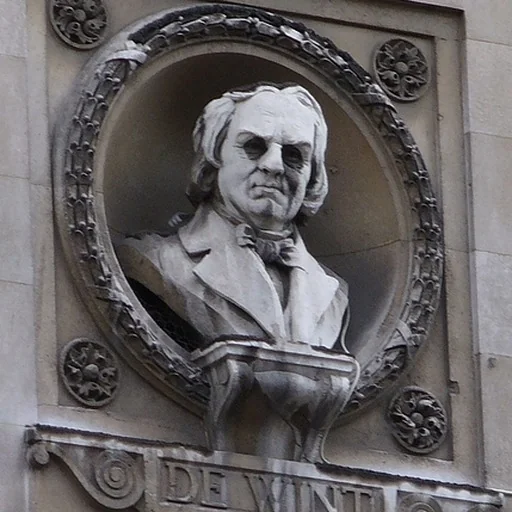
Artist
Peter De Wint was a prolific English painter, mostly in landscape painting in oils and watercolour. A number of his pictures are in Tate Britain, the Victoria and Albert Museum and The Collection, Lincoln. He died in London.

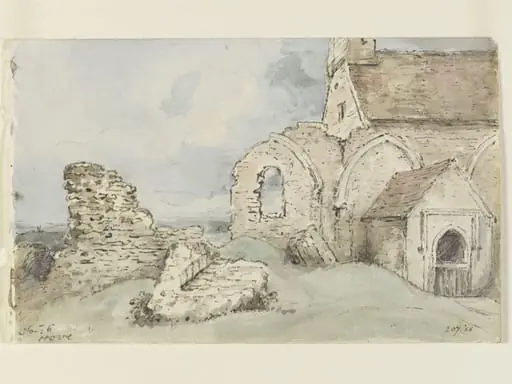 The Old Parish Church at Hove
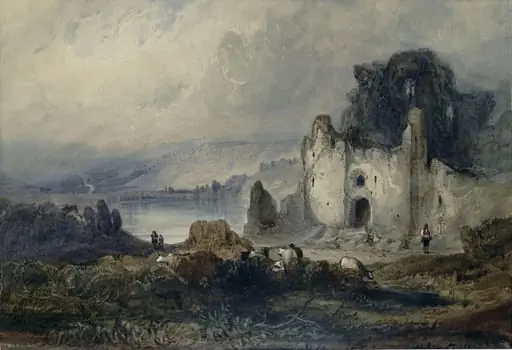 Ruined castle and lake
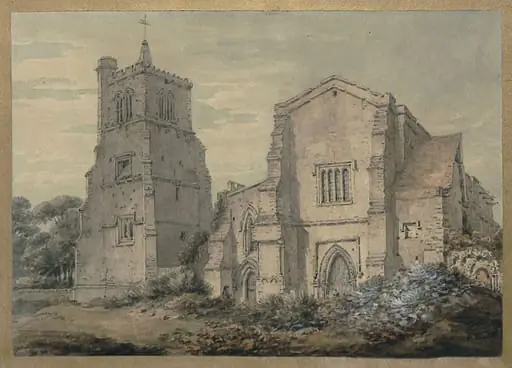 Priory church, Elstow, Bedfordshire
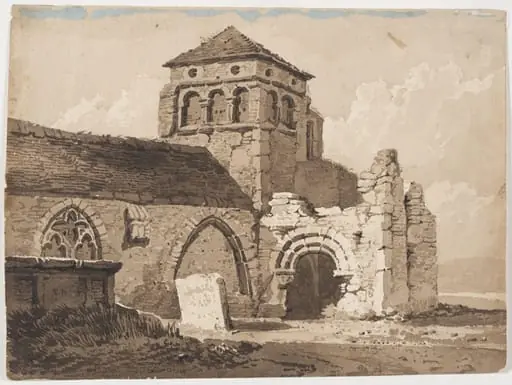 Old Shoreham Church, Sussex
![Deserted Tin-Mine, Cornwall. [ 1938 ], by Hardie](https://artifactworldgallery.com/img/hardie--deserted-tin-mine-cornwall-1938--abfeba7bb57d1e54-w320.webp) Deserted Tin-Mine, Cornwall. [ 1938 ]
Deserted Tin-Mine, Cornwall. [ 1938 ]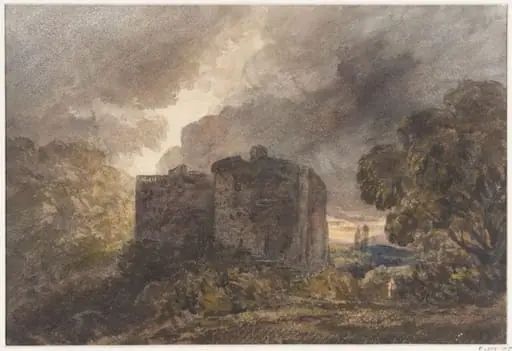 Landscape with Ruined Castle
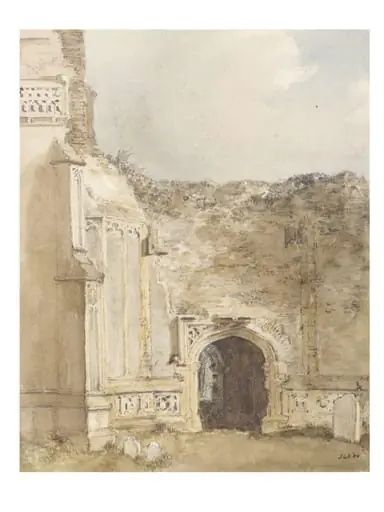 East Bergholt Church: north archway of the ruined tower
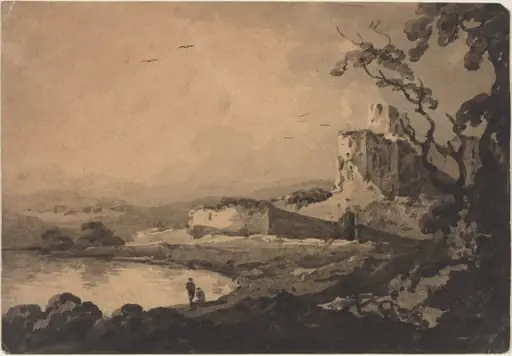 Landscape
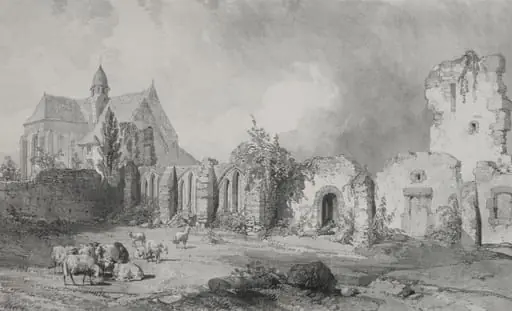 Voyages pittoresques et romantiques dans l'ancienne France. Bretagne: Abbaye de Relec
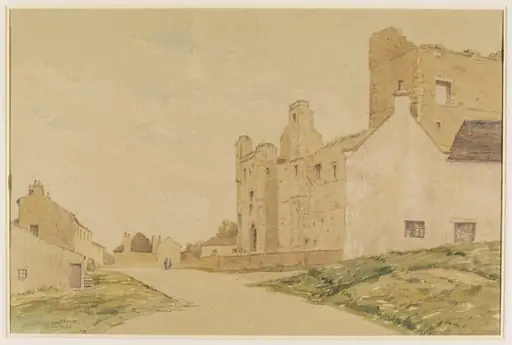 Middleham Castle