Artwork
On the Severn near Newnham

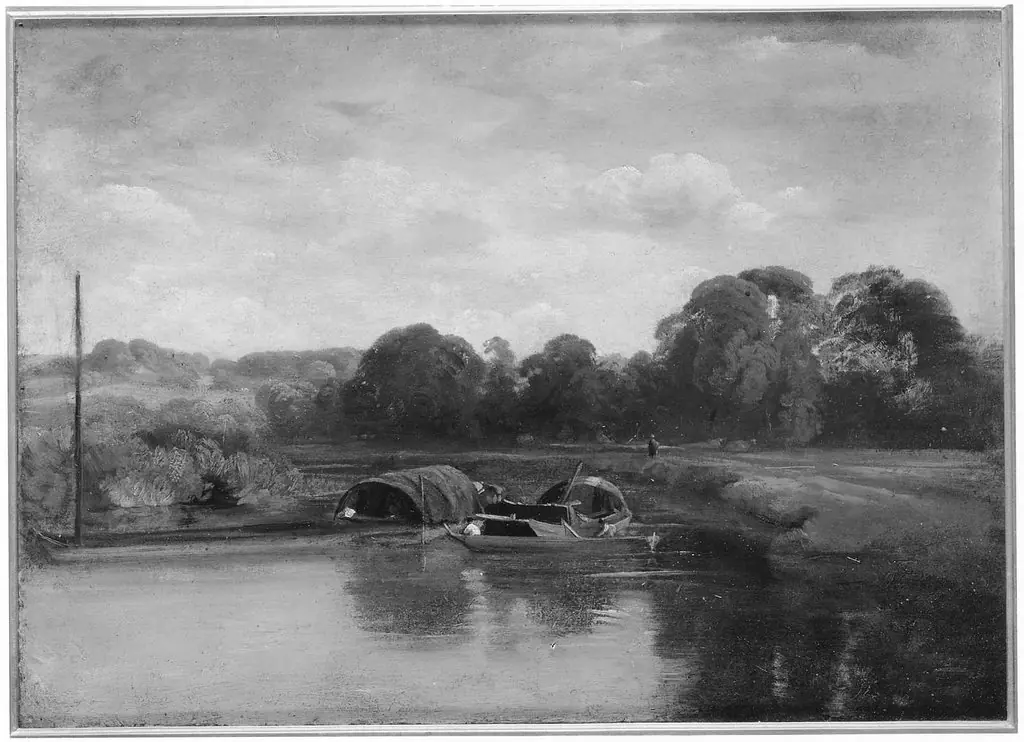
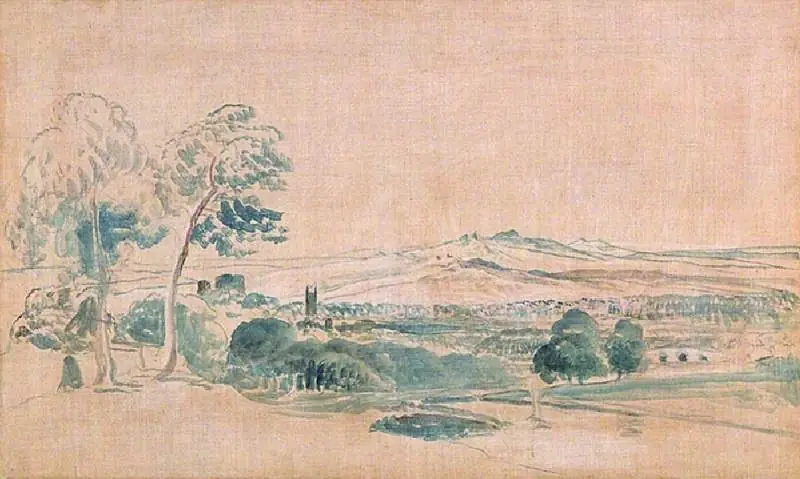
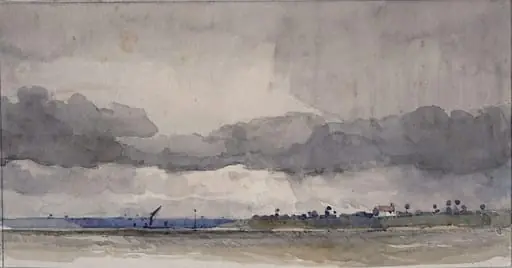
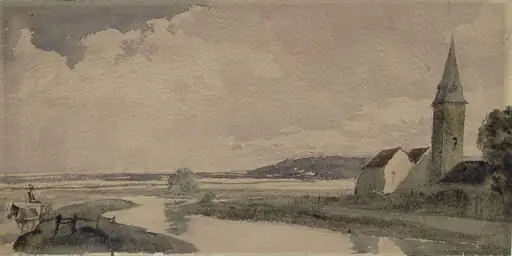
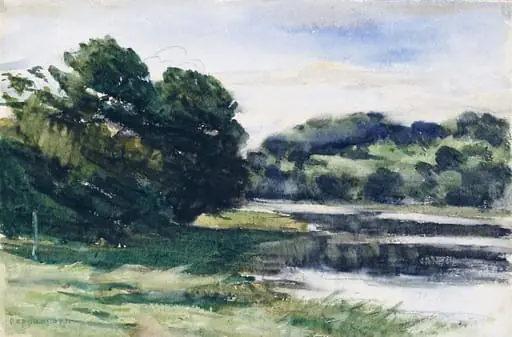
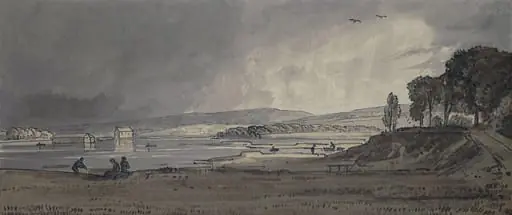
On the Severn near Newnham is a watercolor work on paper by Peter De Wint. It is held in the collection of the Victoria and Albert Museum.
About this work
Overview
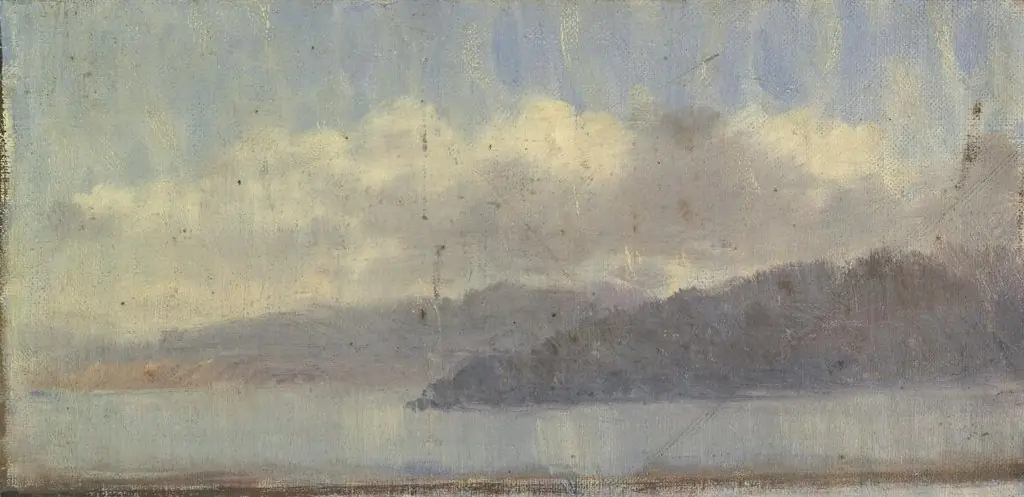
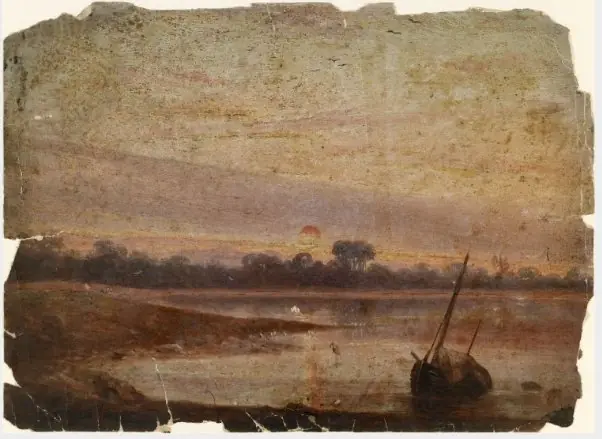
Painted in 1850, Peter De Wint’s watercolour depicts a tranquil stretch of the River Severn near the village of Newnham. The composition emphasizes stillness and spatial depth, with the river receding toward a hazy horizon. Delicate washes of pigment capture the subtle interplay of light and atmosphere, avoiding sharp definition in favor of a contemplative mood.
Subject & Meaning
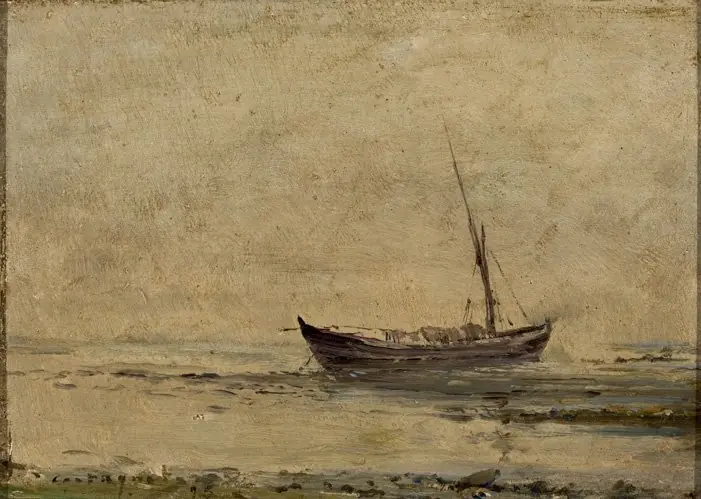
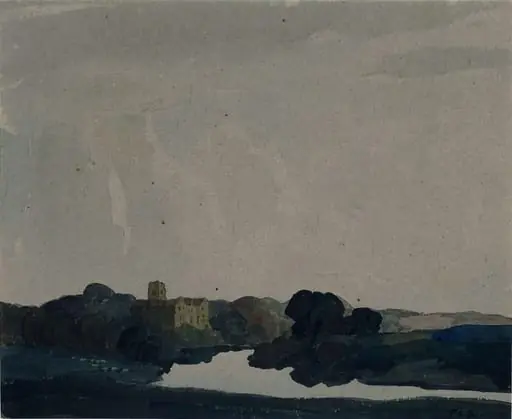
The scene presents a quiet moment along the river: an anchored vessel rests near a line of trees, while a distant village, marked by a church steeple, suggests human presence without intrusion. The absence of activity or dramatic elements conveys a sense of solitude and continuity, reflecting the rural pace of life in mid-19th century England.
Technique & Style
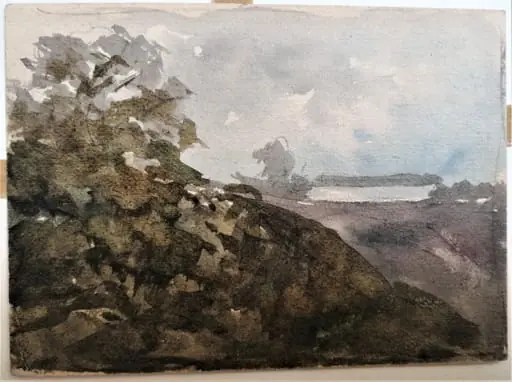
De Wint employed loose, transparent watercolour washes to suggest form rather than define it. The muted palette—soft blues, greys, and ochres—enhances the atmospheric quality. Brushwork is fluid and economical, with minimal detail, allowing the paper’s texture to contribute to the sense of light and air, characteristic of his mature style.
History & Provenance
Created in the final decade of De Wint’s life, the work aligns with his later focus on English landscapes, particularly along the Severn and other rural waterways. It likely originated as a private study or travel sketch, later retained within his personal collection before entering broader circulation through posthumous sales and institutional acquisitions.
Context
In the mid-1800s, watercolour was increasingly valued for its ability to capture fleeting natural effects. De Wint, a leading figure in the medium, contributed to its elevation beyond mere sketching. His depictions of the English countryside resonated with contemporary tastes for serene, unidealized views of rural life.
Legacy
De Wint’s approach influenced later generations of British watercolourists through his emphasis on tonal harmony and atmospheric realism. Works like this one helped establish watercolour as a serious medium for landscape expression, distinct from oil painting, and remain referenced in studies of 19th-century British art practices.
Artist & collection
Artist
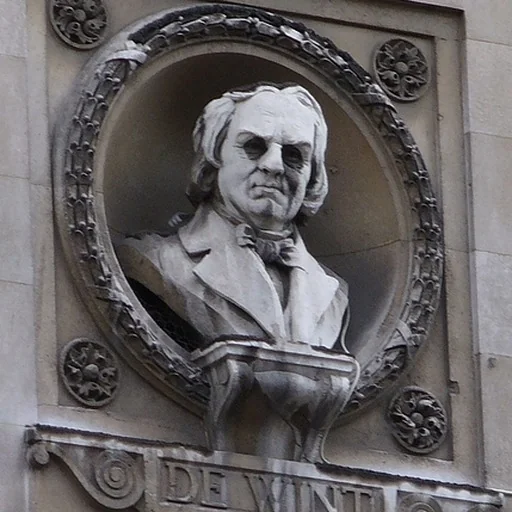
Peter De Wint was a prolific English painter, mostly in landscape painting in oils and watercolour. A number of his pictures are in Tate Britain, the Victoria and Albert Museum and The Collection, Lincoln. He died in London.