Artwork
A gaming board
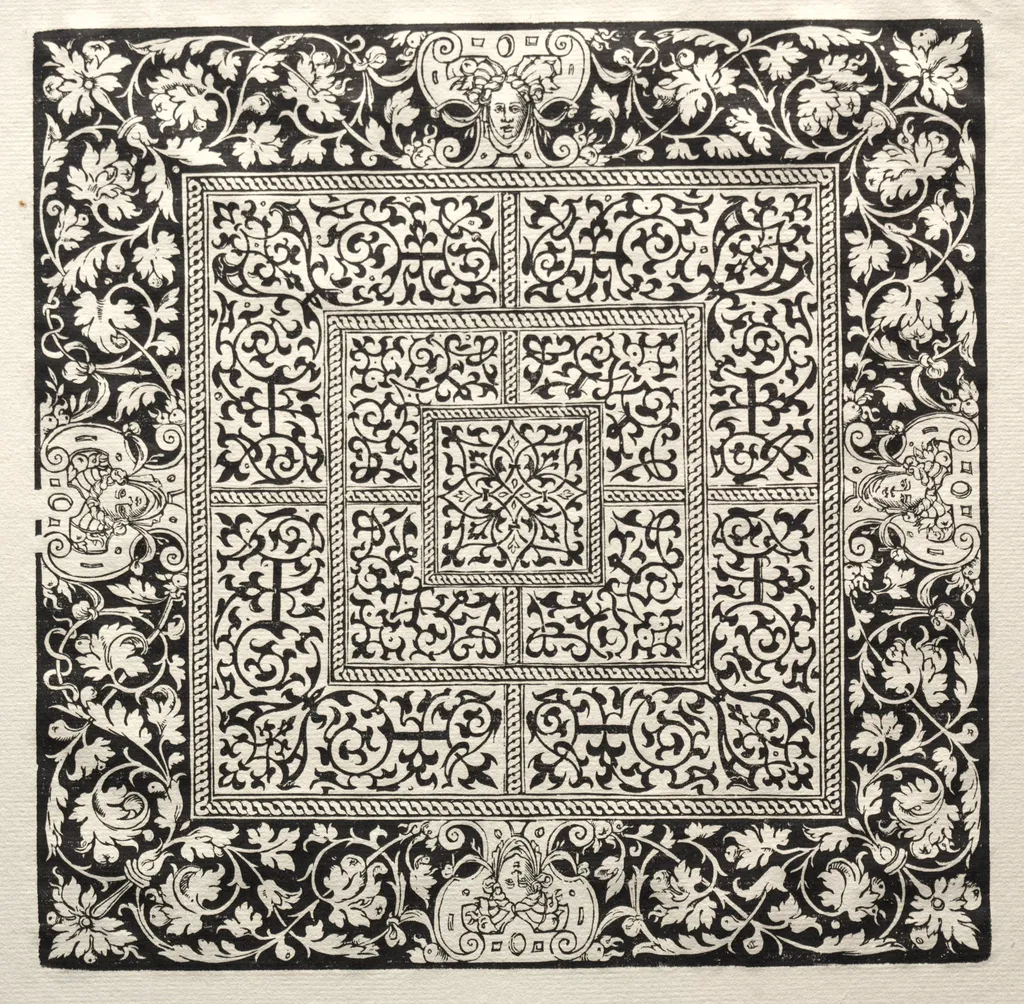
A gaming board is a print by Peter Flötner. It dates from 1525 and is held in the collection of the Cleveland Museum of Art.
About this work
Overview
Though primarily recognized for sculpture and metalwork, Flötner also produced prints for decorative objects.
Created around 1525, this gaming board is a woodcut print attributed to Peter Flötner, a Nuremberg-based artist known for blending Italian Renaissance motifs with German craft traditions. Though primarily recognized for sculpture and metalwork, Flötner also produced prints for decorative objects. This piece exemplifies his ability to translate architectural and ornamental ideas into functional design, reflecting the period’s growing interest in refined, symmetrical aesthetics.
Subject & Meaning
The design features a central square surrounded by four smaller squares, each containing a cross, framed by alternating black and white floral patterns. The symmetry and repetition suggest a structured, possibly ritualized use, common in Renaissance games and divinatory practices. The floral motifs, rendered in high contrast, may reference classical ideals of order and harmony, though no specific symbolic narrative is documented. The board’s function remains practical, yet its ornamentation elevates it beyond mere utility.
Technique & Style
Executed as a woodcut, the board employs bold black-and-white contrasts to achieve visual clarity and balance. Flötner’s precision in carving fine linear details—leaves, petals, and crosses—demonstrates mastery of the medium. The design’s geometric regularity and bilateral symmetry reflect Renaissance principles of proportion, while the absence of color aligns with the monochrome tradition of printed designs intended for later hand-coloring or inlay.
History & Provenance
The gaming board entered the Cleveland Museum of Art’s collection as part of its broader holdings of Northern Renaissance prints. While its early ownership is undocumented, its survival suggests it was valued as a decorative object rather than a disposable game item. Flötner’s prints were circulated among artisan circles in southern Germany, and this piece likely belonged to a wealthy urban household interested in fashionable, humanist-inspired design.
Context
In early 16th-century Nuremberg, artists like Flötner responded to Italian Renaissance ideals by integrating classical ornament into everyday objects. Gaming boards, once simple, became canvases for artistic expression as the middle class sought to emulate elite tastes. This piece aligns with a broader trend of translating architectural and manuscript decoration into functional art, bridging the gap between fine art and craft in a period of cultural transition.
Legacy
Flötner’s gaming board illustrates how Renaissance aesthetics permeated domestic life beyond painting and sculpture. Though his larger sculptural projects were often unrealized or lost, his prints endured as templates for craftsmen. This object remains a rare surviving example of how printmaking facilitated the dissemination of sophisticated design across social classes, influencing later German decorative arts well into the 16th century.
Artist & collection
Artist
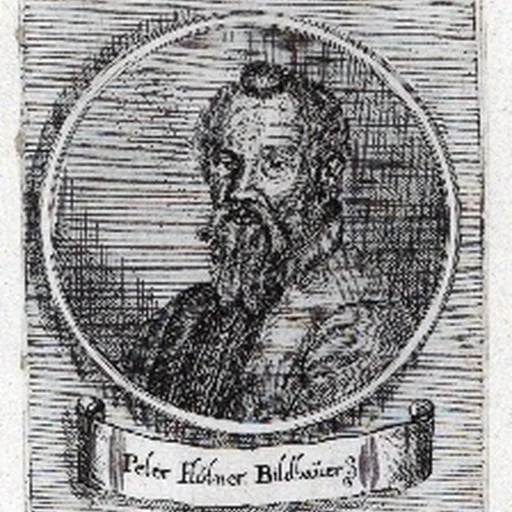
Peter Flötner, also Flatner, Flettner, or Floetner (c. 1490 in Thurgau – 23 October 1546, in Nuremberg), was a German designer, sculptor, and printmaker. He was a leading figure in the introduction of Italianate…

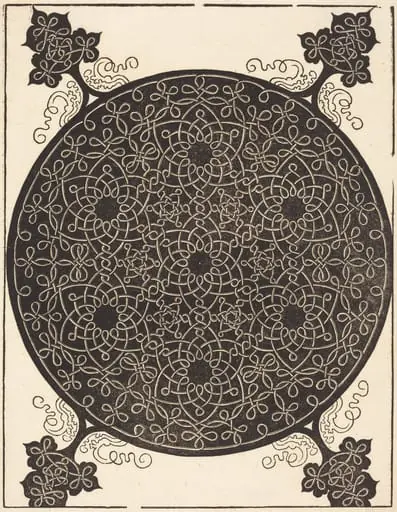 The Sixth Knot (combining seven small systems of knots with black centers)
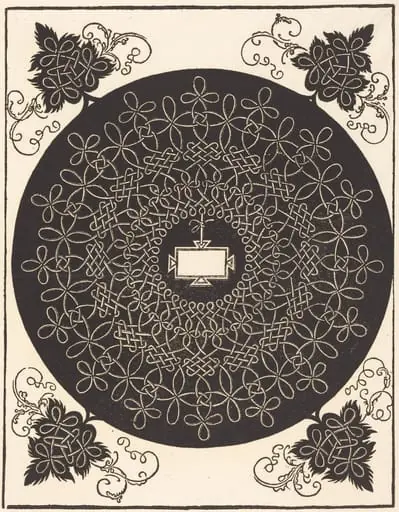 The Second Knot (with an oblong tablet)
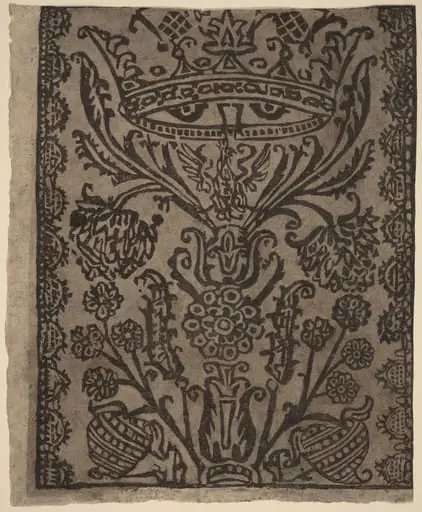 White Eagle and Crown of Poland
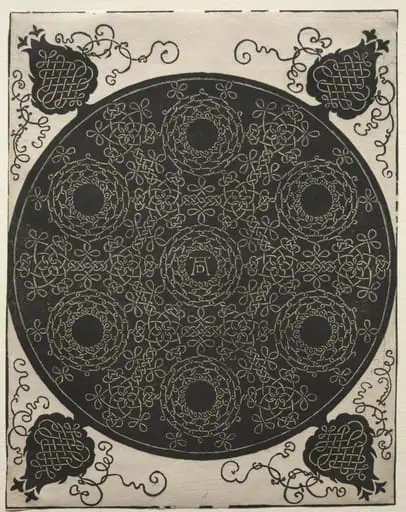 Fourth Knot
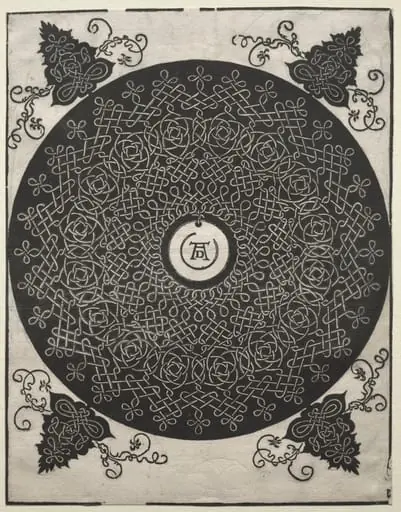 Third Knot
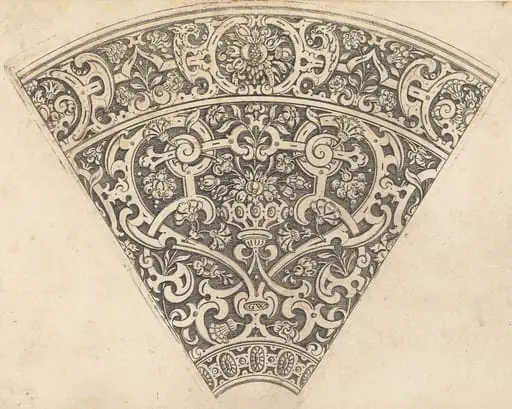 Goblet Design
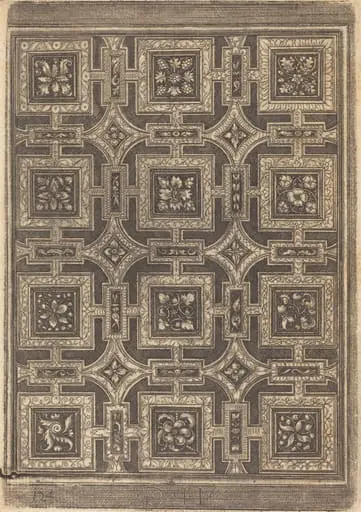 Ornamental Design for Coffered Ceiling
 Goldsmith's Ornament in Square
 The Third Knot (with a black circle on a white medallion)
 The First Knot (with a heart-shaped shield)
 Bow Embellished with Flowers