Artwork
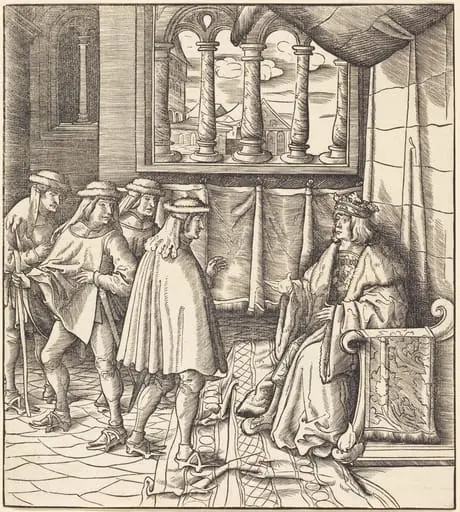
A king Enthroned
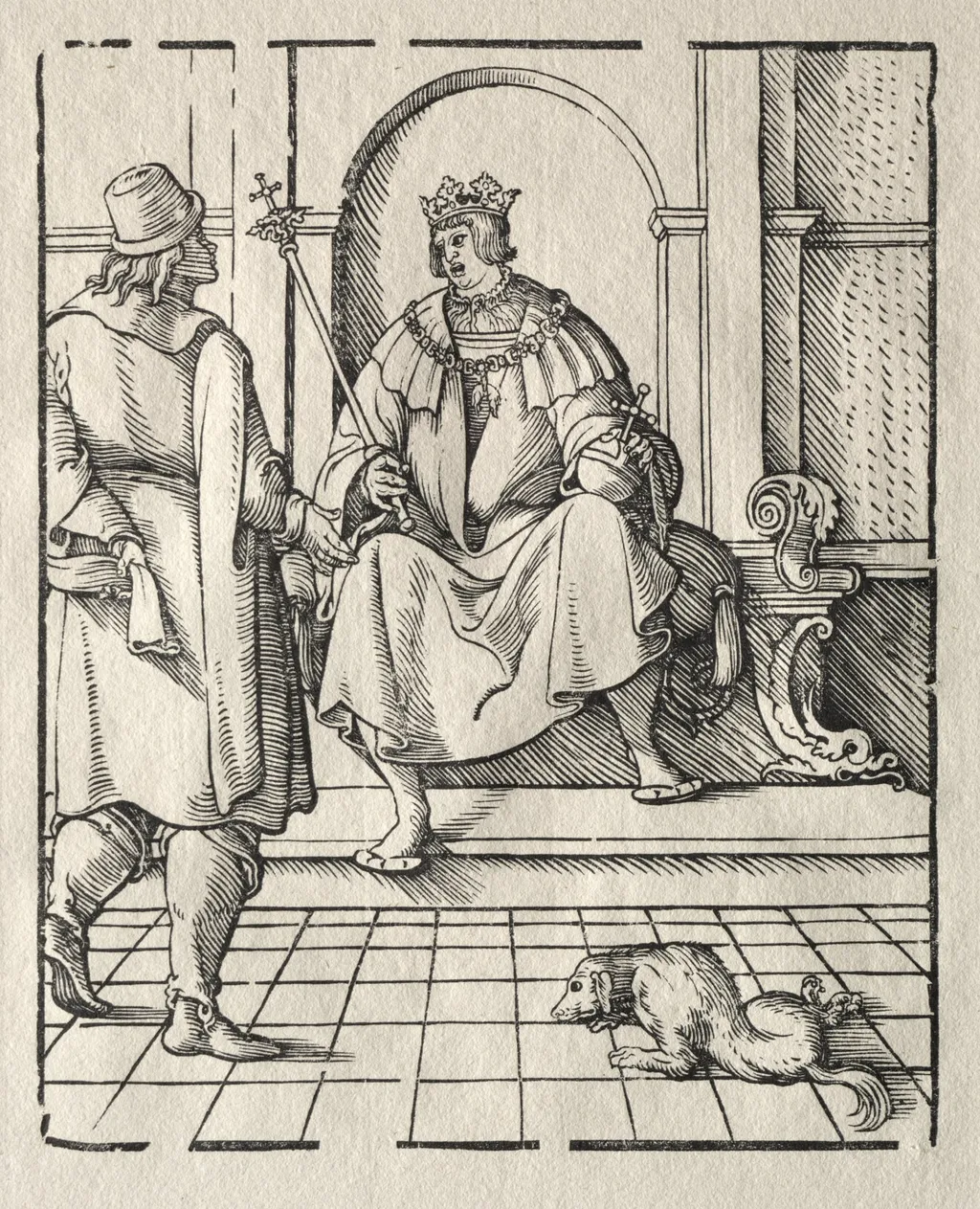
A king Enthroned is a print by Peter Flötner. It dates from 1525 and is held in the collection of the Cleveland Museum of Art.
About this work
Overview
Created around 1525 by the German artist Peter Flötner, this print depicts a sovereign seated in formal repose, surrounded by symbols of authority.
Created around 1525 by the German artist Peter Flötner, this print depicts a sovereign seated in formal repose, surrounded by symbols of authority. Flötner, active in Nuremberg, was known for integrating Italian Renaissance motifs into Northern European decorative arts. Though primarily a sculptor and designer, he produced prints that disseminated his stylistic innovations. The work resides in the Cleveland Museum of Art, reflecting its significance in early 16th-century print culture.
Subject & Meaning
The image portrays a monarch seated on a throne, crowned and robed, holding a scepter and sword—emblems of temporal power. Before him stands a figure in formal attire, also bearing a sword, suggesting a ceremonial act of homage or submission. A small dog at the king’s feet introduces a quiet, domestic note, softening the formality. The scene conveys order and hierarchy, aligning with Renaissance ideals of rulership as both divine and structured.
Technique & Style
Flötner employed precise line work characteristic of Northern Renaissance engraving, with careful attention to texture in fabric, metal, and tile. The composition draws on Italianate spatial logic—symmetrical, grounded by a tiled floor and architectural backdrop—yet retains Germanic attention to detail. The figures are rendered with restrained elegance, avoiding theatricality. The balance between grandeur and intimacy reflects Flötner’s synthesis of Southern and Northern traditions.
History & Provenance
Flötner worked in Nuremberg during a period of intense artistic competition, notably with the Vischer family of bronze founders. Though his designs influenced decorative arts across Germany, surviving records indicate he received modest compensation. This print likely served as a model for other artisans or as a standalone image for elite collectors. It entered the Cleveland Museum of Art’s collection through documented acquisitions in the 20th century.
Context
In early 16th-century Germany, Renaissance ideas arrived through prints and imported objects, not direct travel. Flötner’s work responded to this cultural shift, translating Italianate forms into local media. His imagery of authority coincided with rising imperial consciousness under Charles V. The print’s formal dignity mirrors contemporary courtly rituals, even as religious upheaval reshaped political symbolism across the Holy Roman Empire.
Legacy
Flötner’s prints helped standardize Renaissance visual language in Northern Europe, influencing sculptural decoration and graphic arts. Though less celebrated than contemporaries like Dürer, his contributions to stylistic transmission were substantial. 'A King Enthroned' exemplifies how printmaking served as a vehicle for disseminating ideals of power and order beyond elite circles, embedding Renaissance aesthetics into broader visual culture.
Artist & collection
Artist
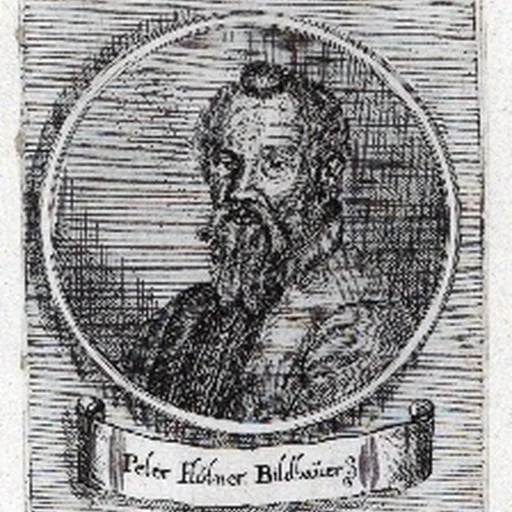
Peter Flötner, also Flatner, Flettner, or Floetner (c. 1490 in Thurgau – 23 October 1546, in Nuremberg), was a German designer, sculptor, and printmaker. He was a leading figure in the introduction of Italianate…

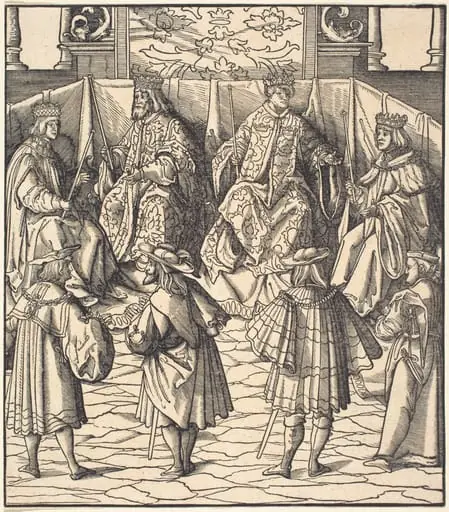 Assembly of Four Kings, in the foreground Four Men
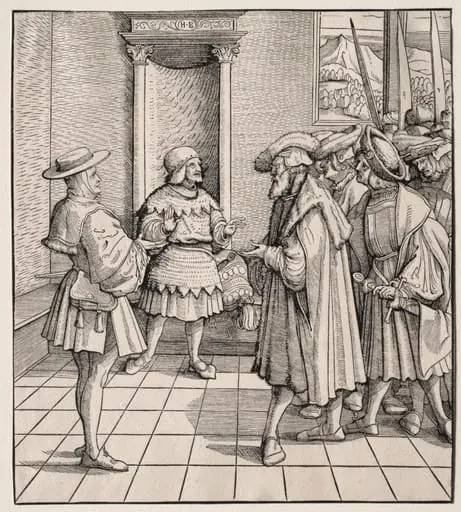 The Bad Advice of One Little Man to Another
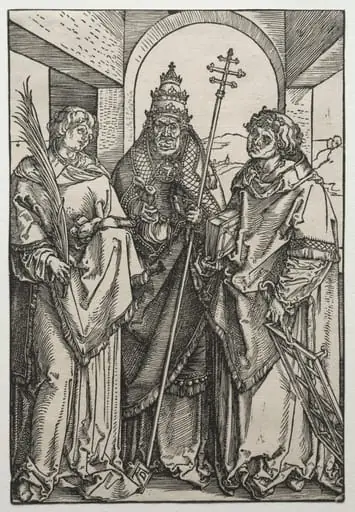 Saints Stephen, Sixtus and Laurence
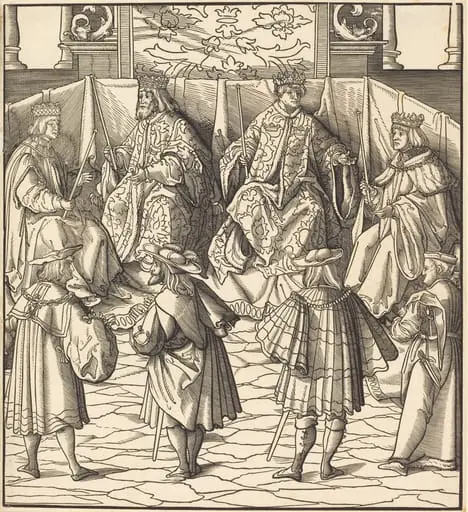 Assembly of Four Kings, in the foreground Four Men
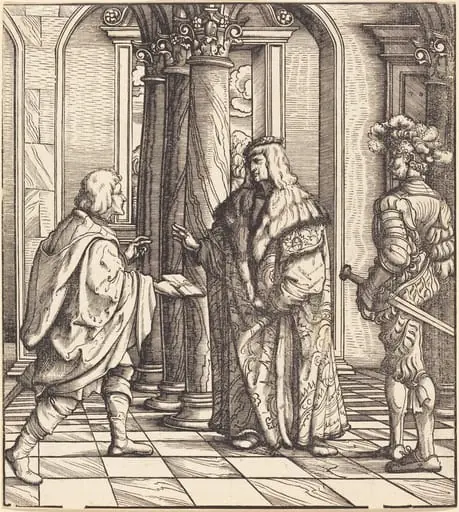 A Message Concerning the White King's Marriage
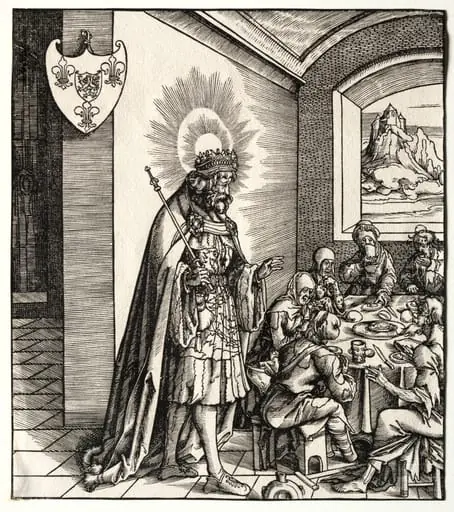 Saints Connected with the House of Habsburg: A General Account of the Ancestry of Emperor Maximilian I
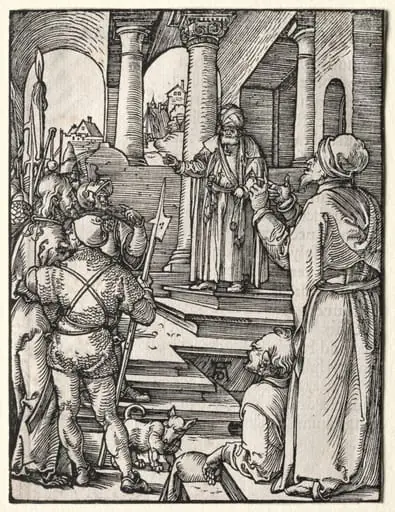 The Small Passion: Christ Before Pilate
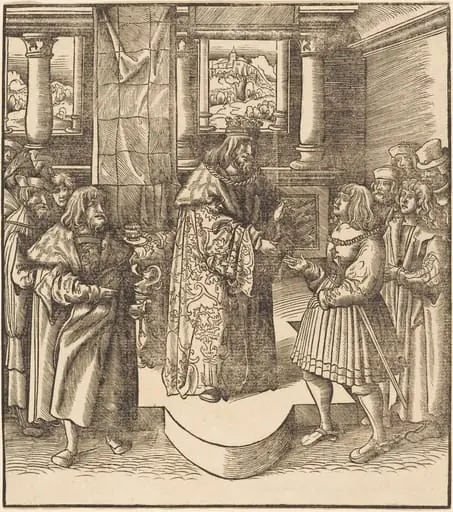 The Old White King Sending His Messengers to Portugal
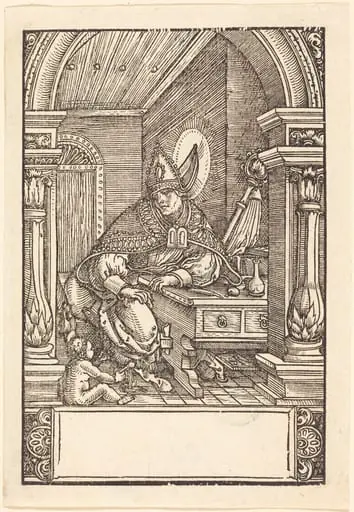 Saint Augustine
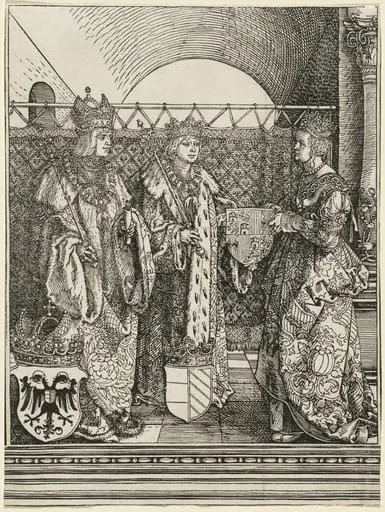 The Betrothal of Philip the Fair with Joan of Castile
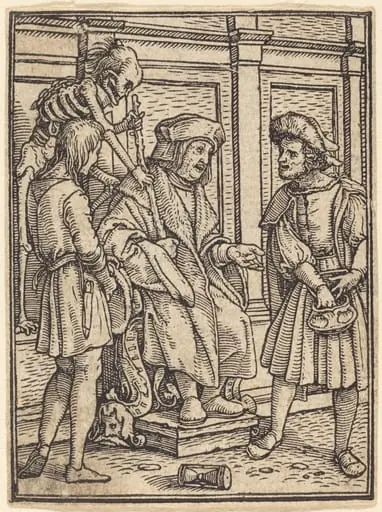 The Judge
 A King on a Throne, before him Four Men