Artwork
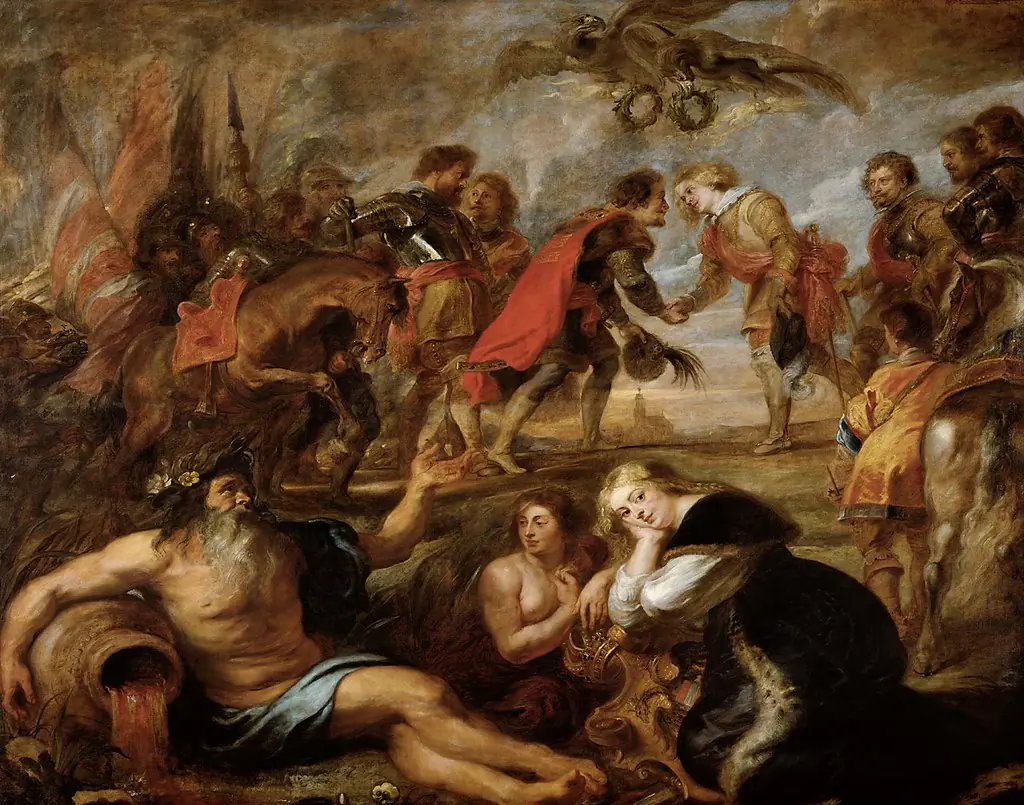
Meeting of King Ferdinand of Hungary and the Cardinal-Infante Ferdinand of Spain at Nördlingen
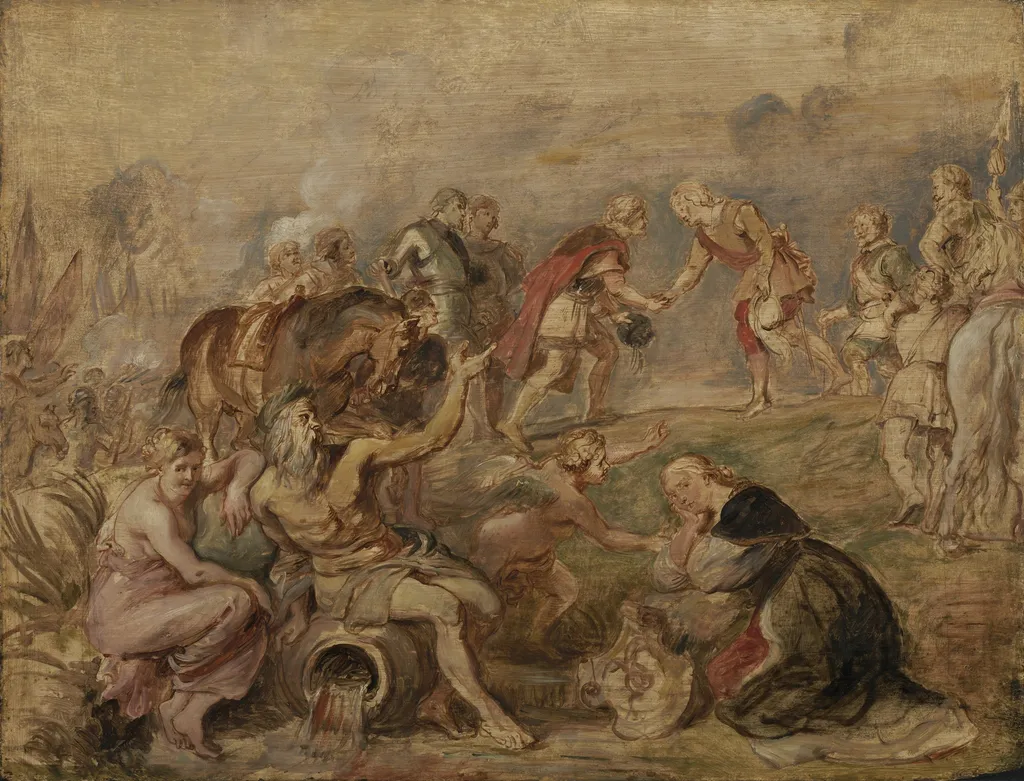
Meeting of King Ferdinand of Hungary and the Cardinal-Infante Ferdinand of Spain at Nördlingen is an oil painting by the Flemish Baroque painting artist Peter Paul Rubens. It dates from 1635 and is held in the collection of the J. Paul Getty Museum.
About this work
Overview
Rubens, known for his dual role as artist and diplomat, used the occasion to convey the gravity and spectacle of Habsburg unity.
Painted in 1635 by Peter Paul Rubens, this oil work captures a diplomatic meeting between King Ferdinand of Hungary and the Cardinal-Infante Ferdinand of Spain near Nördlingen. Executed in the Flemish Baroque style, the painting serves as a record of political alliance during the Thirty Years' War. Rubens, known for his dual role as artist and diplomat, used the occasion to convey the gravity and spectacle of Habsburg unity.
Subject & Meaning
The scene centers on the formal greeting of two Habsburg rulers, symbolizing the cohesion of Spanish and Hungarian branches of the dynasty. Figures surrounding them include nobles, soldiers, and attendants, reinforcing the event’s political weight. The composition emphasizes hierarchy and mutual respect, with the central figures framed by gestures and attire that signal status. The gathering reflects broader efforts to stabilize the empire amid ongoing conflict.
Technique & Style
Rubens employed dynamic brushwork and rich, warm pigments to animate the crowd and landscape. Figures are rendered with fluid motion, their garments catching light to suggest texture and volume. The foreground’s red cloak draws the eye, anchoring the composition while contrasting with earthy tones in the background. Atmospheric perspective and layered brushstrokes create depth, characteristic of Rubens’s mature Baroque approach.
History & Provenance
Commissioned to commemorate a 1634 military alliance, the painting was likely intended for a Habsburg collection. It remained in Spanish royal holdings before entering a private collection in the 19th century. Its documented history traces through European aristocratic circles, reflecting its role as both political artifact and artistic commission. No public record indicates significant alterations after its completion.
Context
Created during the Thirty Years' War, the painting responds to the Habsburgs’ need to project unity across their fragmented territories. Nördlingen, a strategic site in southern Germany, had recently seen a decisive Catholic victory. Rubens, acting as an envoy, used art to reinforce diplomatic narratives. The scene aligns with other works of the period that merged statecraft with visual spectacle.
Legacy
Though less widely exhibited than Rubens’s mythological scenes, this painting exemplifies his ability to translate political events into compelling visual narratives. It influenced later court painters in their treatment of ceremonial gatherings. Scholars value it for its documentation of early 17th-century dress, military presence, and the role of art in sustaining dynastic legitimacy.
Own this work as a print
Artist & collection
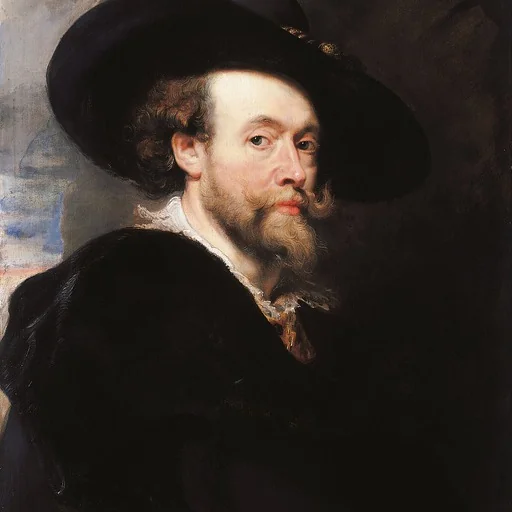
Artist
Sir Peter Paul Rubens ( ROO-bənz; Dutch: ; 28 June 1577 – 30 May 1640) was a Flemish artist and diplomat.

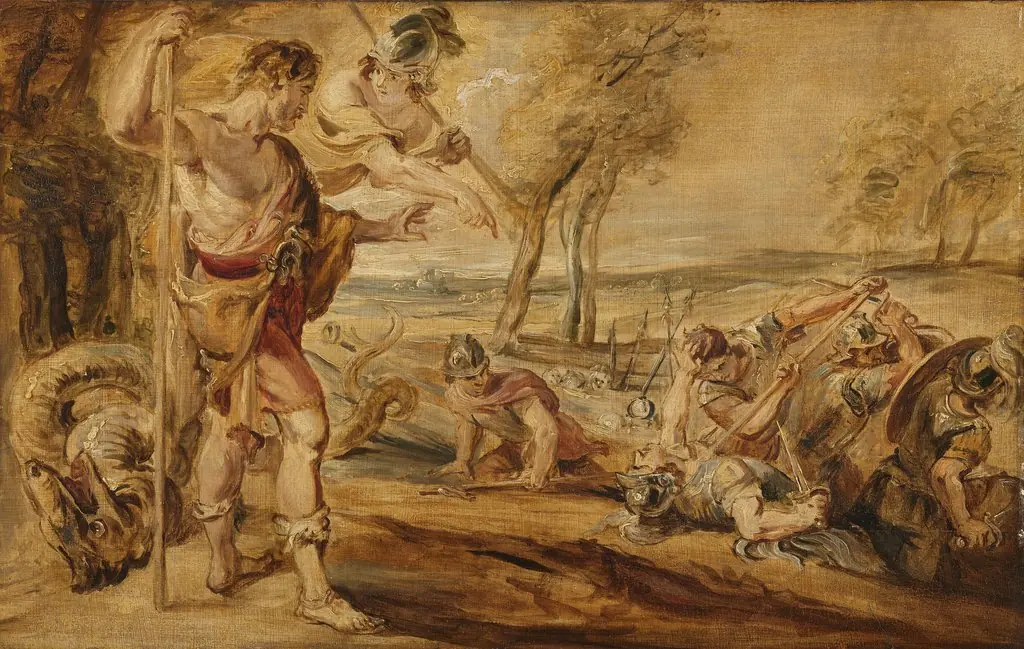 Cadmus sowing dragon's teeth
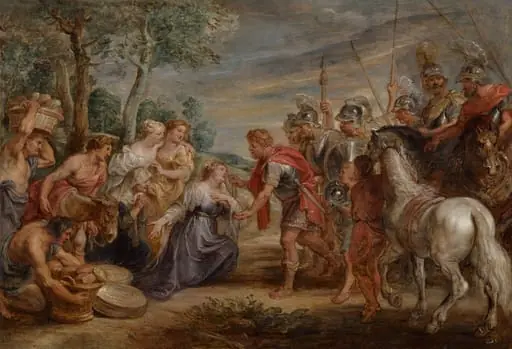 The Meeting of David and Abigail
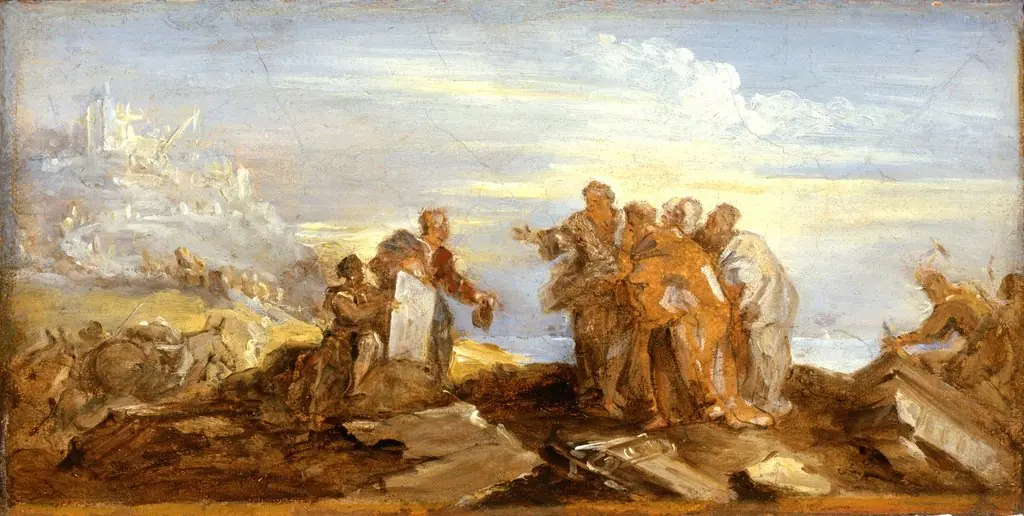 Scene from Ancient History
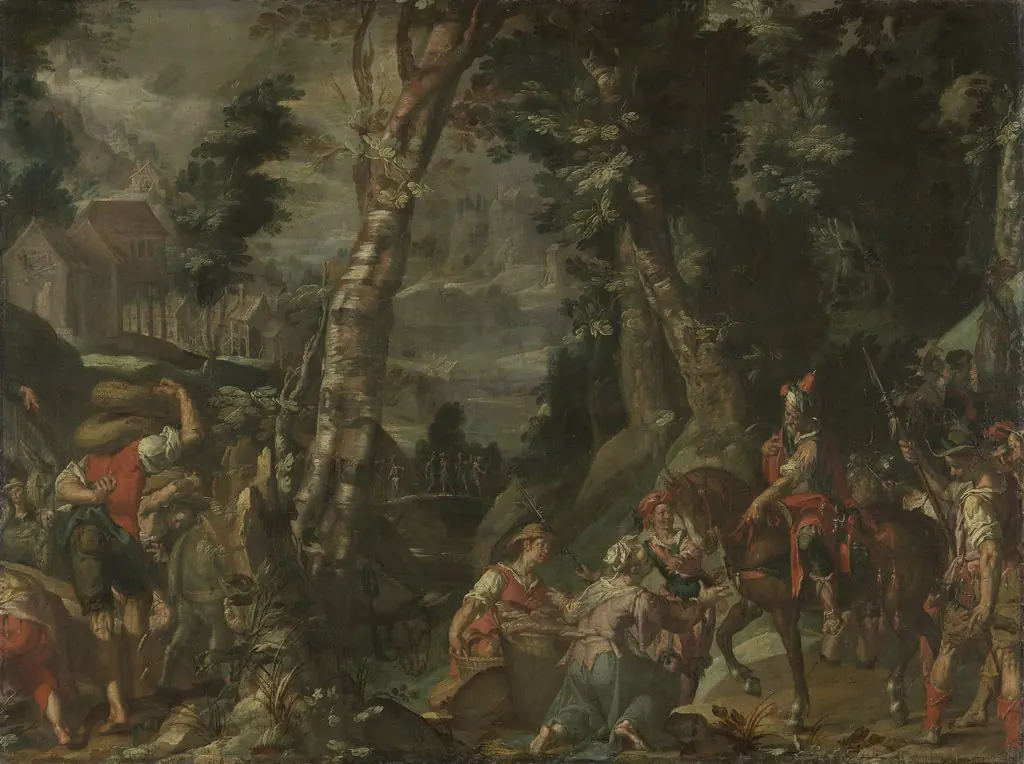 Meeting between David and Abigail
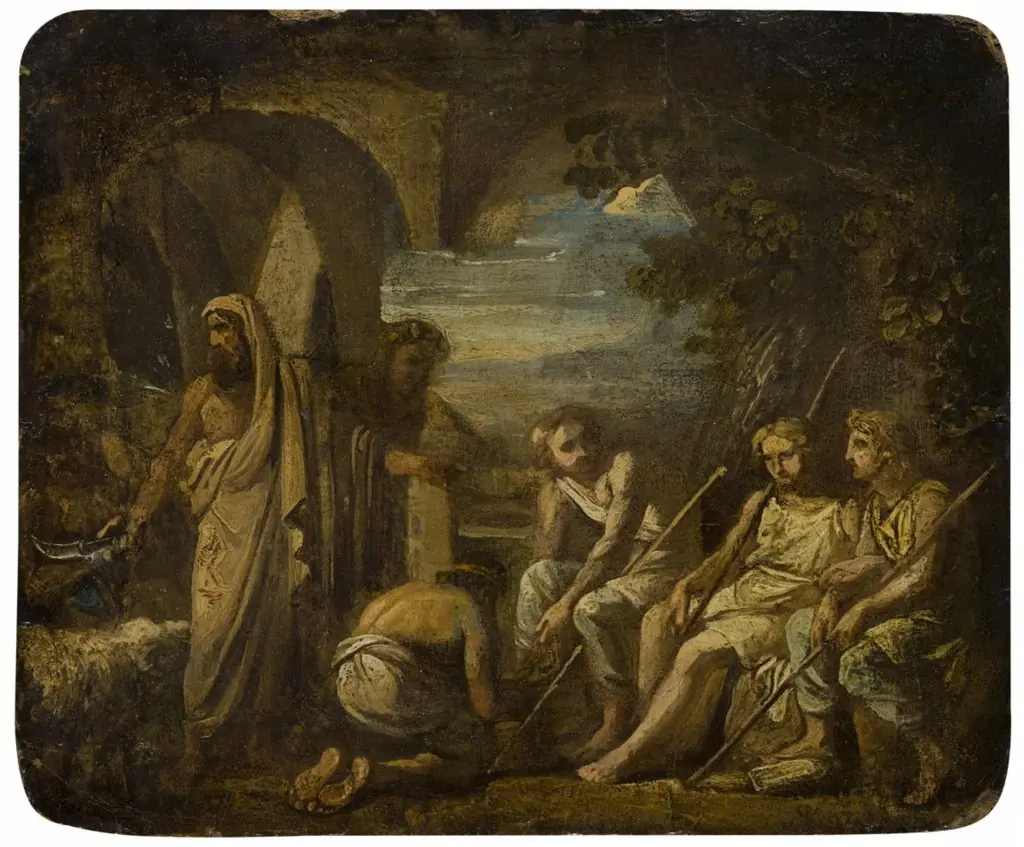 Sketch on the Subject of the Trinity Beneath the Oak of Mambre
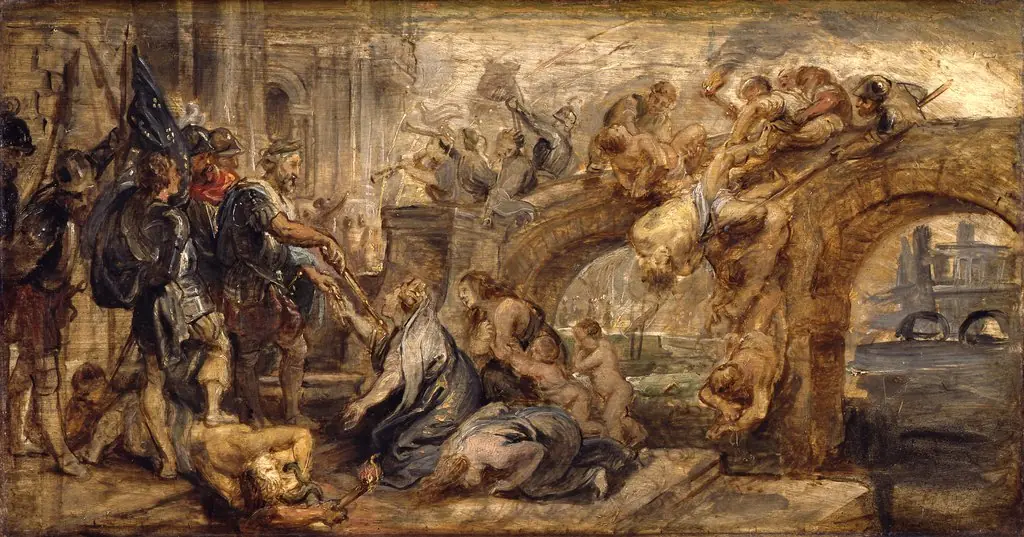 The Entry in Paris by Henry IV
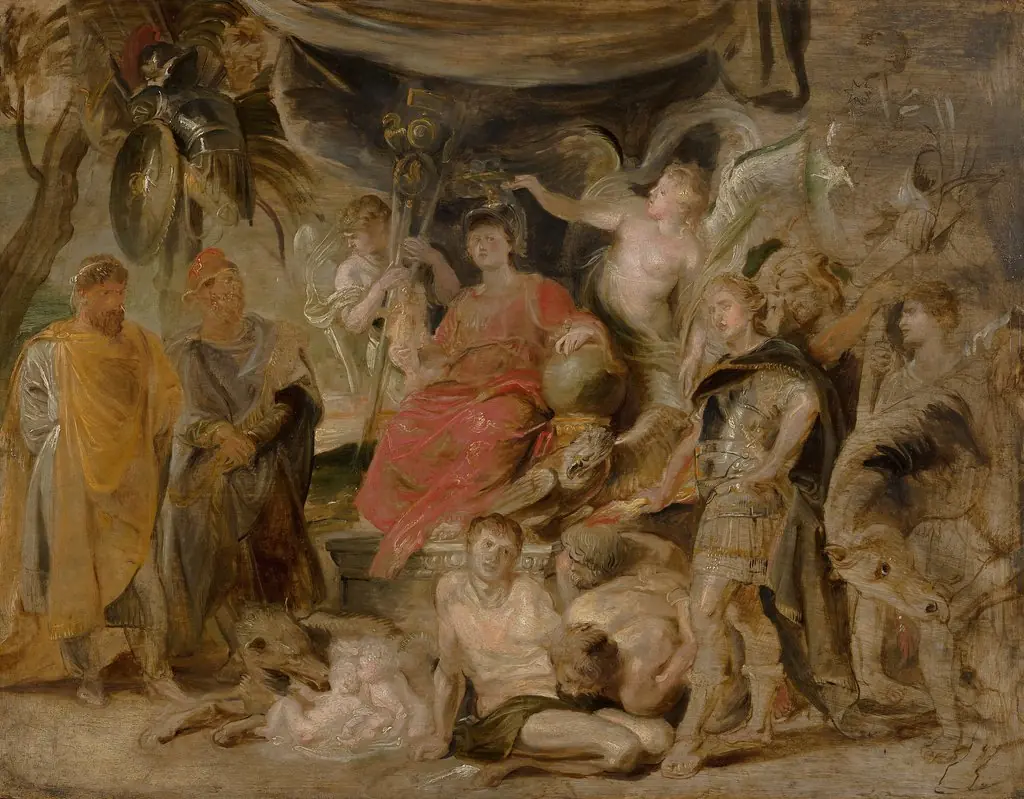 The Triumph of Rome: The Youthful Emperor Constantine Honouring Rome
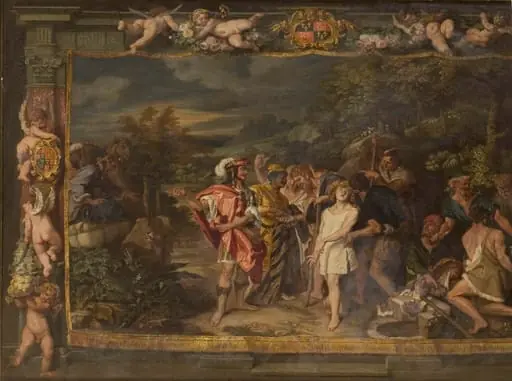 Joseph sold by his brothers
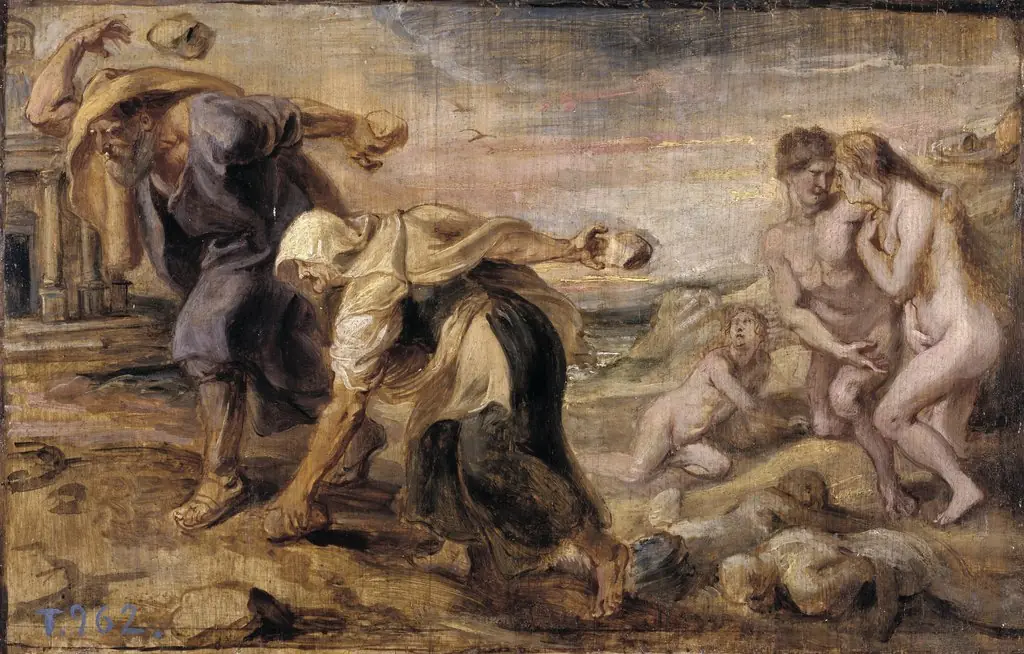 Deucalion and Pyrrha
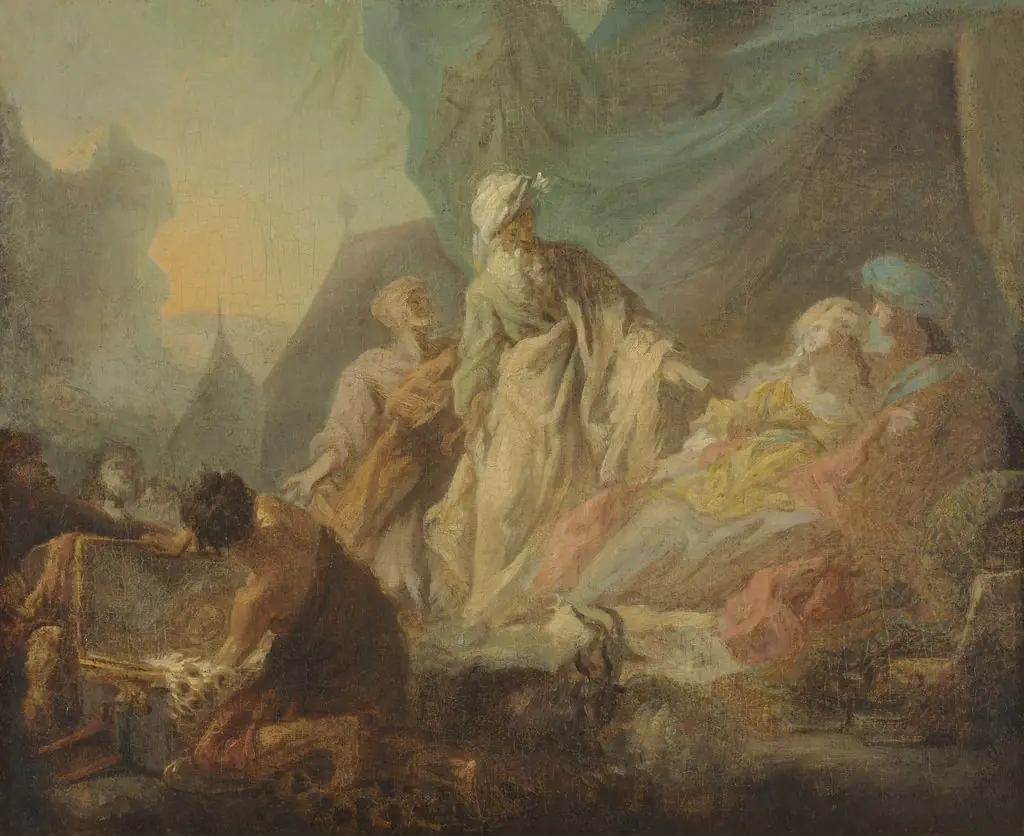 Laban Searching for His Stolen Gods
 Tomyris ordering to immerse the head of Cyrus in a bowl of blood (Herodotus, Histories, I, 214)
 Meeting of King Ferdinand and Cardinal-infante Ferdinand at Nördlingen