Artwork
Tomyris ordering to immerse the head of Cyrus in a bowl of blood (Herodotus, Histories, I, 214)
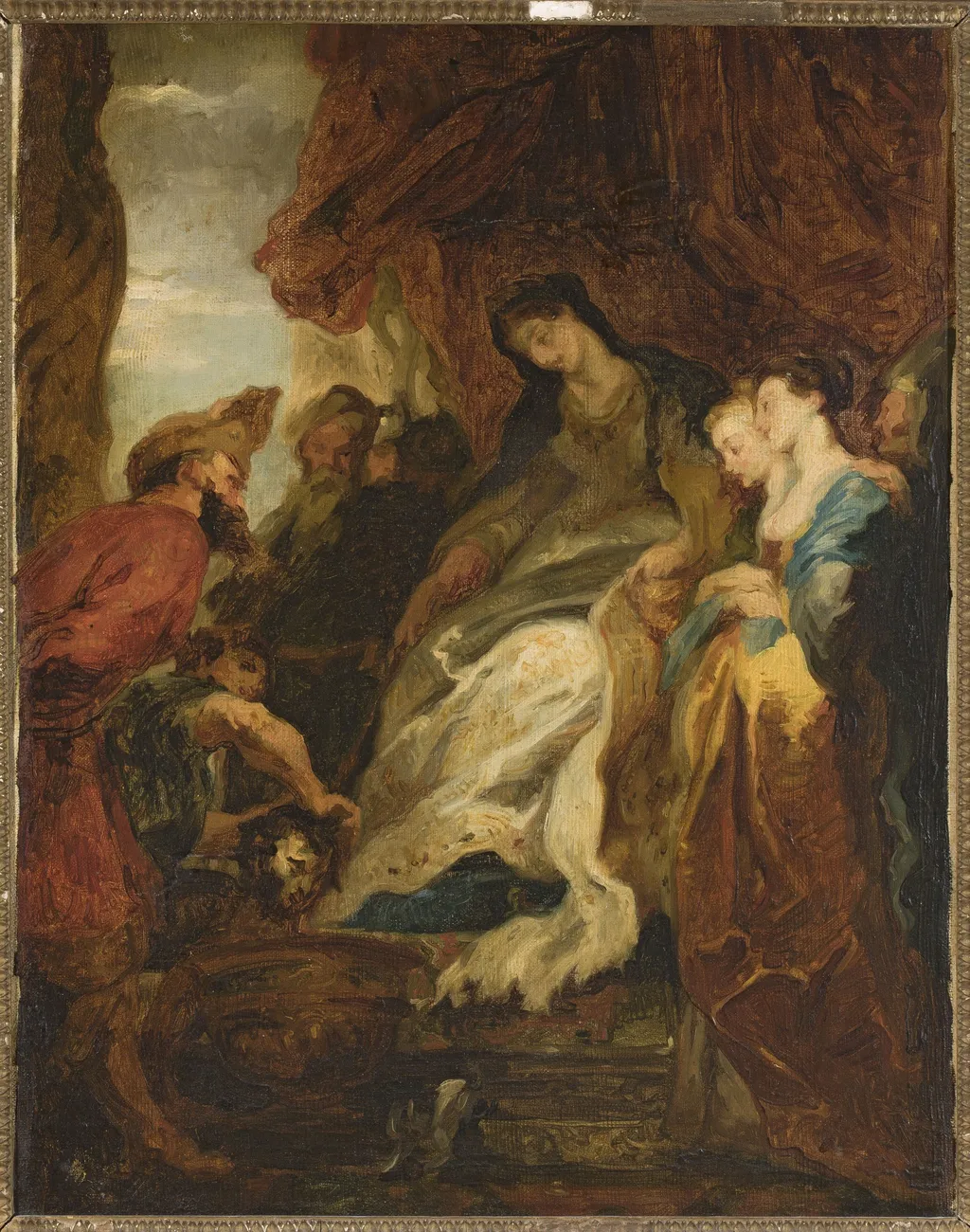
Tomyris ordering to immerse the head of Cyrus in a bowl of blood (Herodotus, Histories, I, 214) is an oil painting by Unknown. It is held in the collection of the National Museum in Warsaw. The canvas captures a tense tableau set against a storm‑filled sky.
About this work
Overview
The canvas captures a tense tableau set against a storm‑filled sky. A group surrounds a supine figure swathed in white linen, while a woman in a luminous white garment lifts a dark‑filled bowl, poised to pour its contents over the corpse. Nearby, a blue‑dressed woman leans forward in distress and a man in red kneels, heightening the drama of the moment.
Subject & Meaning
The scene illustrates the legendary retribution of Tomyris, queen of the Massagetae, who, according to Herodotus, ordered the head of the Persian king Cyrus the Great to be immersed in a bowl of blood as vengeance for his defeat. The composition emphasizes the moral reversal of power, with the victor’s blood becoming the instrument of the vanquished ruler’s humiliation.
Technique & Style
Rendered in oil, the work employs a muted palette punctuated by the stark whites of the garments and the deep, almost black liquid, creating visual contrast. Loose, atmospheric brushwork conveys the turbulent sky, while the figures are modeled with tighter, more defined strokes, drawing focus to the ritual act at the center of the composition.
Context
The narrative derives from Herodotus’s Histories (Book I, 214), which recount Tomyris’s retaliation after Cyrus’s army was defeated near the River Araxes. The painting translates this ancient account into a visual form, reflecting 19th‑century European fascination with exotic historical episodes and the moral lessons they were thought to embody.
History & Provenance
Details of the painting’s ownership history are not recorded in the supplied information. Its medium and subject suggest it may have been produced during a period when Orientalist themes were popular among academic painters, but further research would be needed to confirm its exhibition or collection record.
Artist & collection

 Domestic Scene
 Giacomo and Cardinal Marco, investing Andrea, Abbot of San Zeno, with his Benefice
 The Nymph of Fontainebleau
 Portrait of a Woman
 Madonna and Child with Saints in the Enclosed Garden
 Venus and Minerva
 Family Group of Four on Sofa
 Wall painting from Room H of the Villa of P. Fannius Synistor at Boscoreale
 Esther and Ahasuerus
 Meeting of King Ferdinand of Hungary and the Cardinal-Infante Ferdinand of Spain at Nördlingen
 Achilles Lamenting the Death of Patroclus
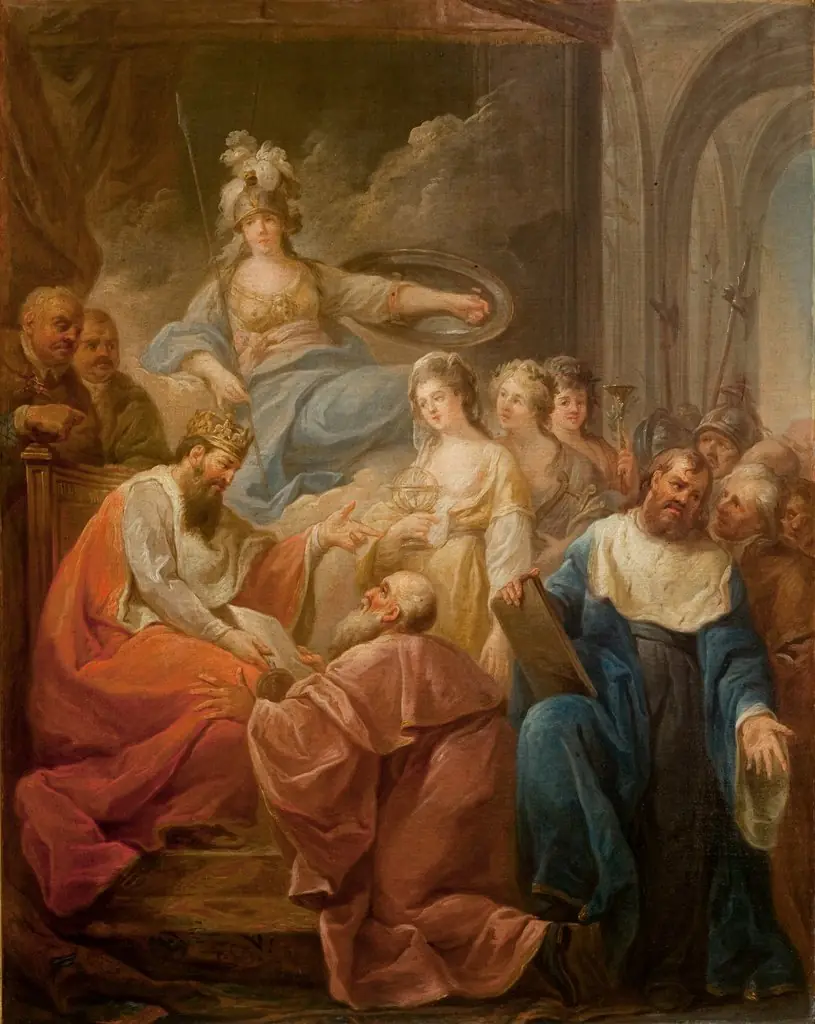 Granting of Privileges to Academy of Krakow
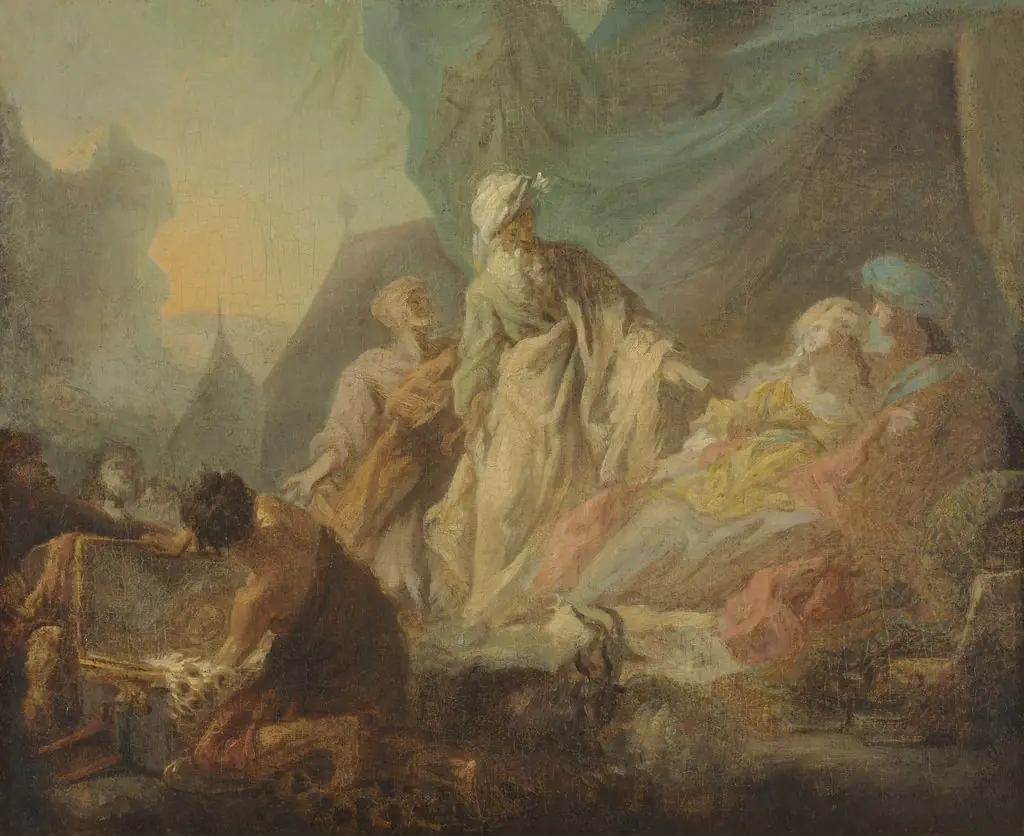 Laban Searching for His Stolen Gods
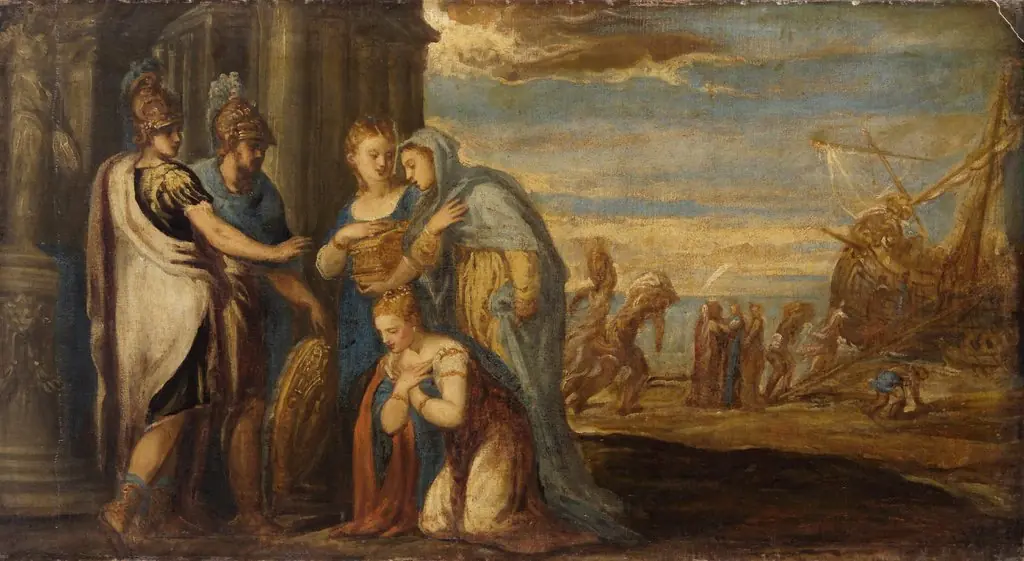 Aeneas Takes Leave of Dido
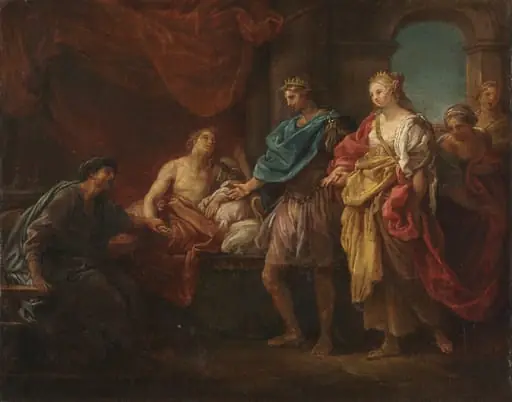 Study for "Antiochus and Stratonice"
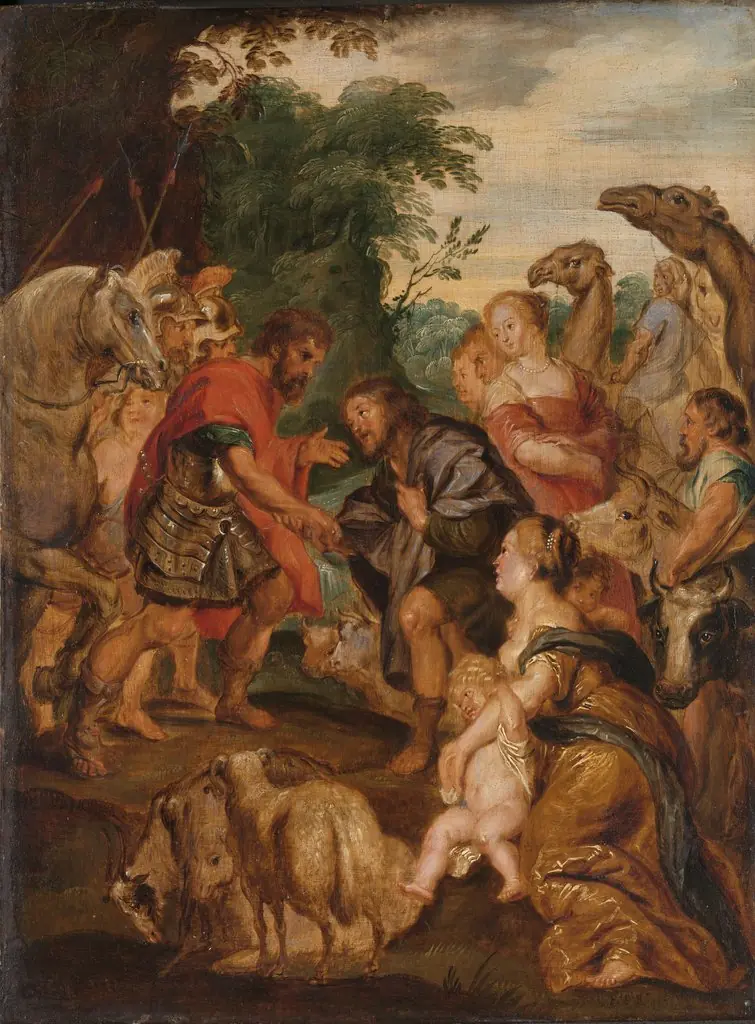 The reconciliation of Jacob and Esau
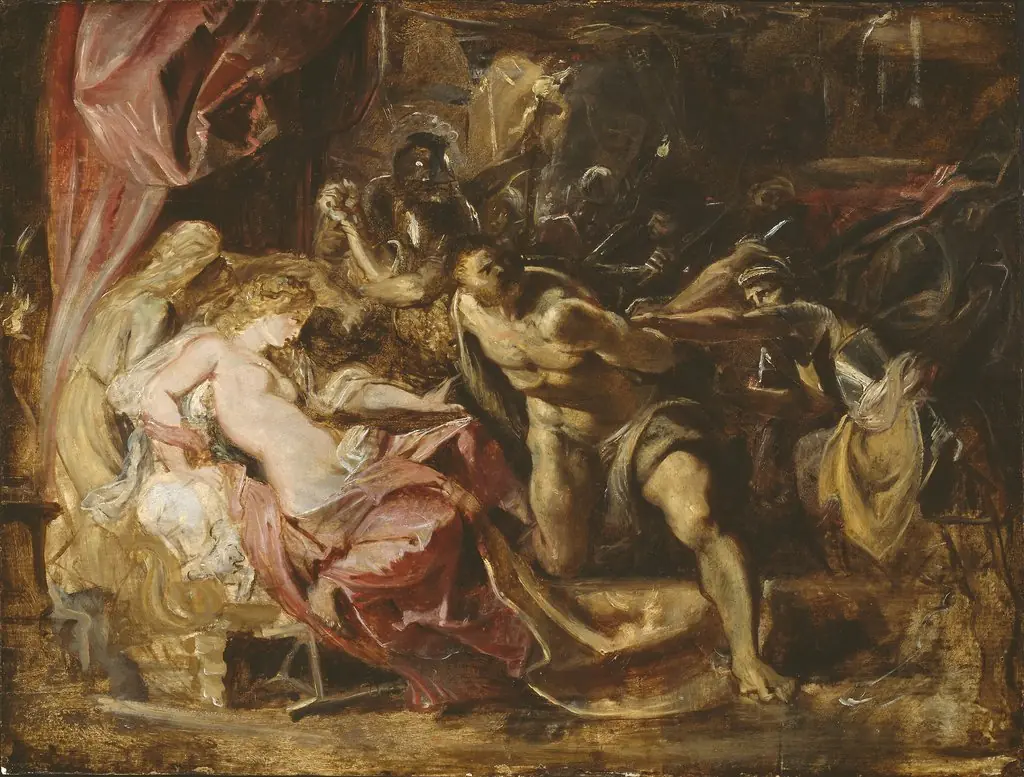 The Capture of Samson
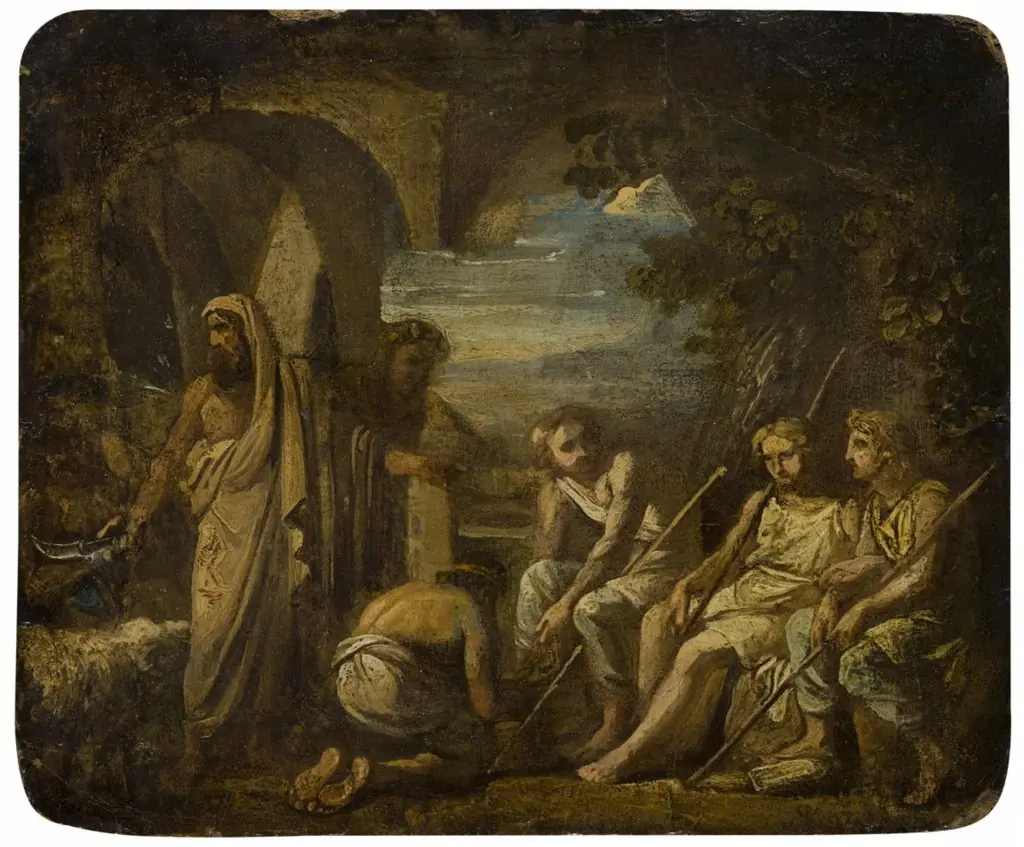 Sketch on the Subject of the Trinity Beneath the Oak of Mambre
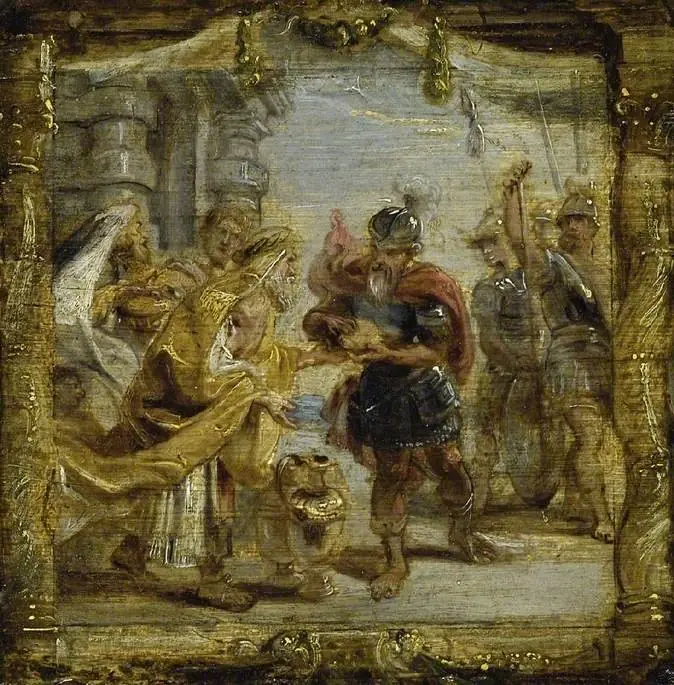 The meeting of Abraham and Melchisedek
 Alexander at the Tomb of Cyrus