Artwork
The relief of Louvain, 24 June-4 July, 1639, by Ottavio Piccolomini
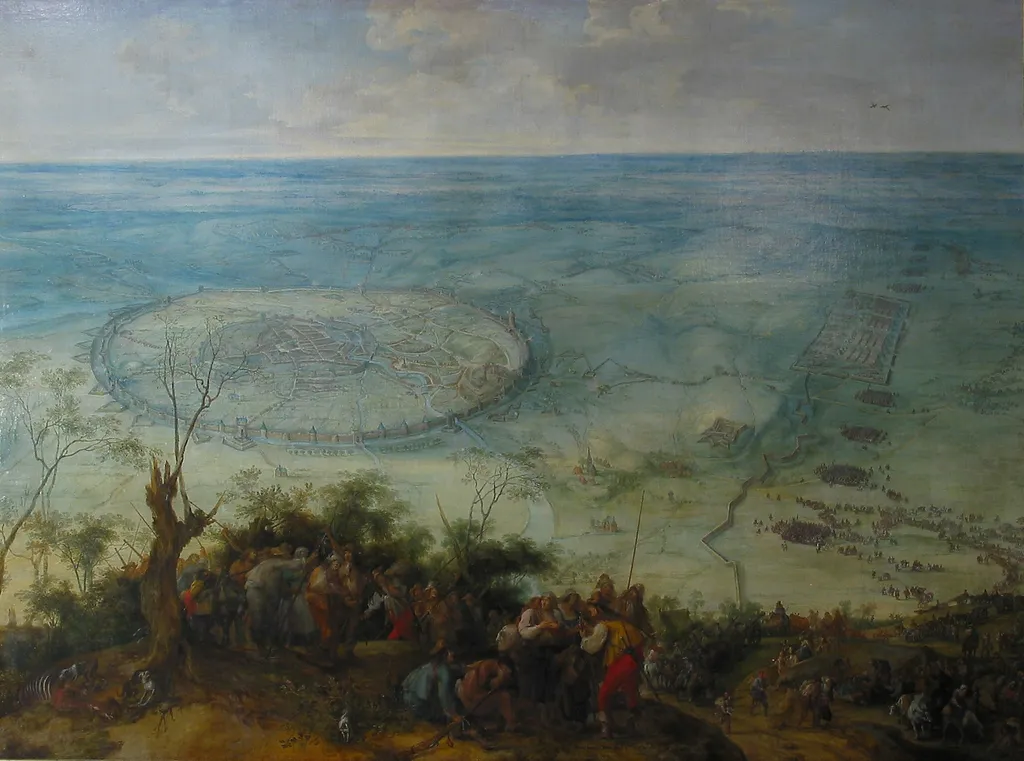
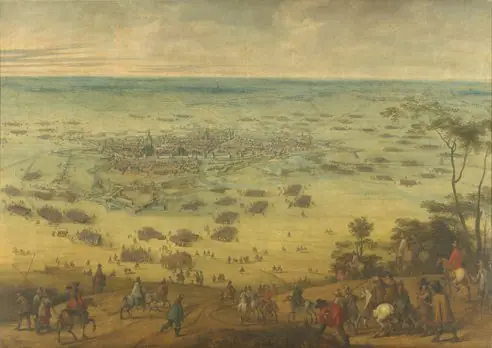
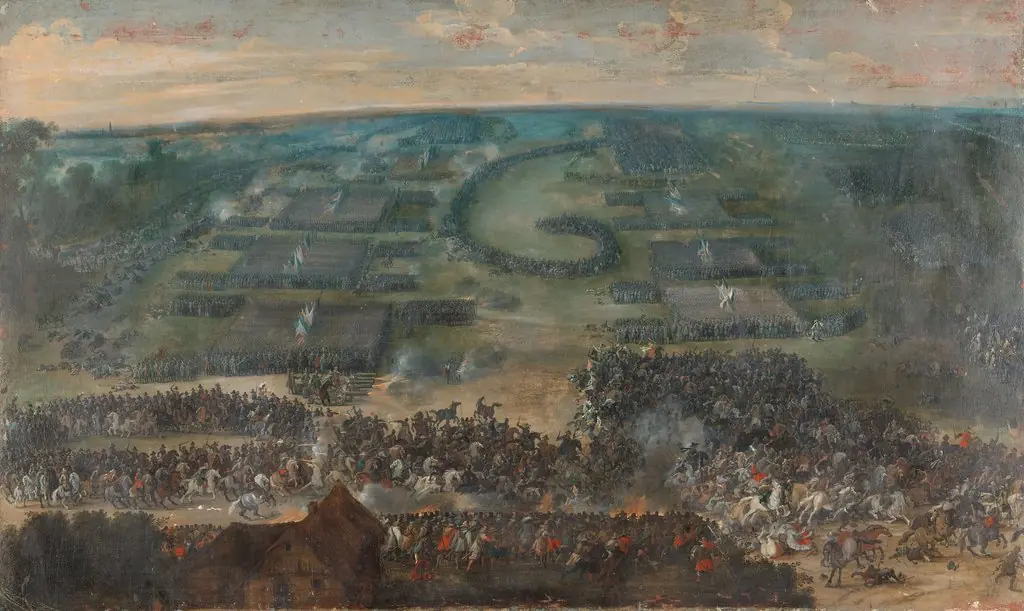
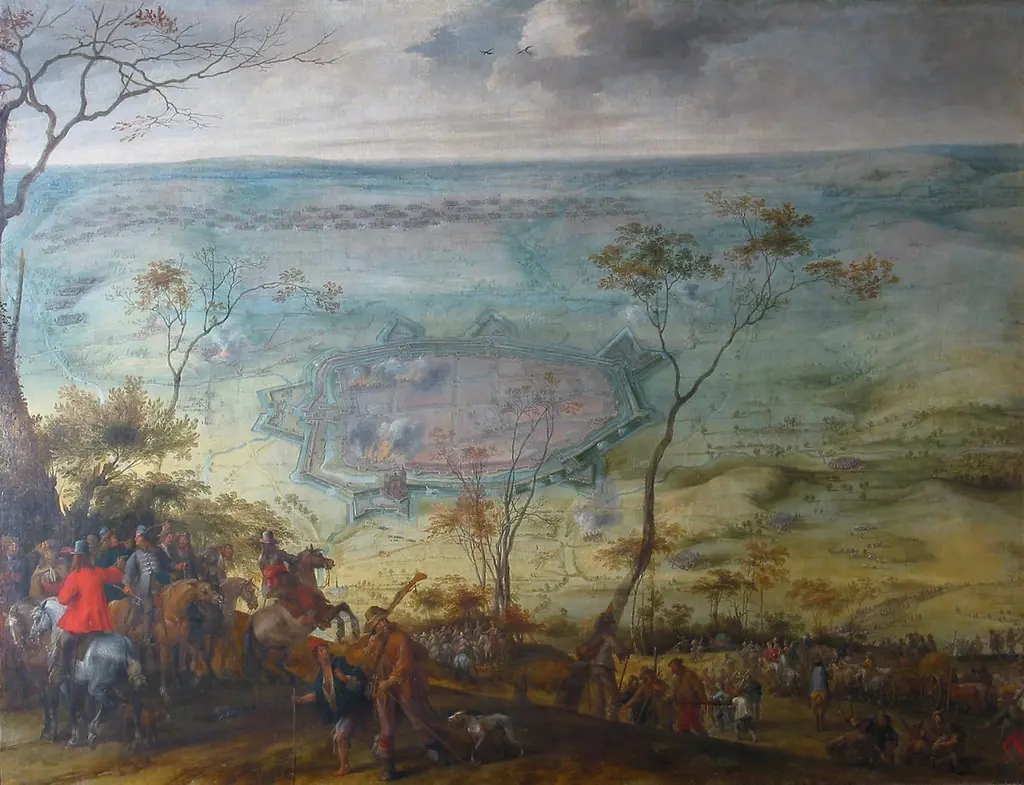
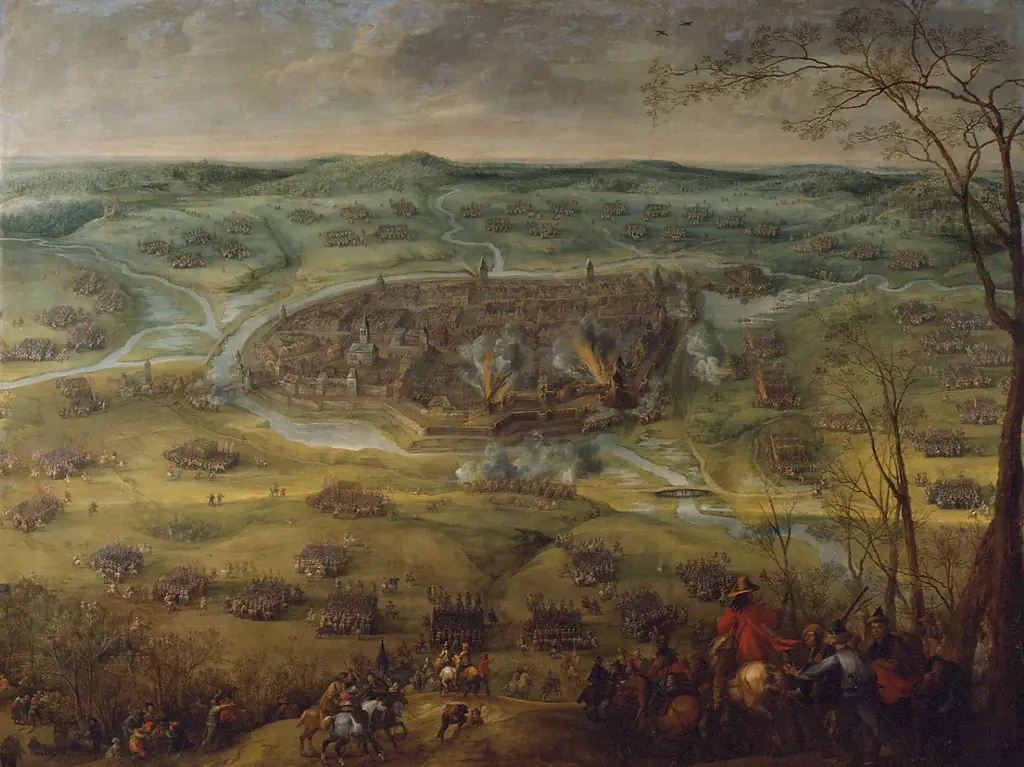
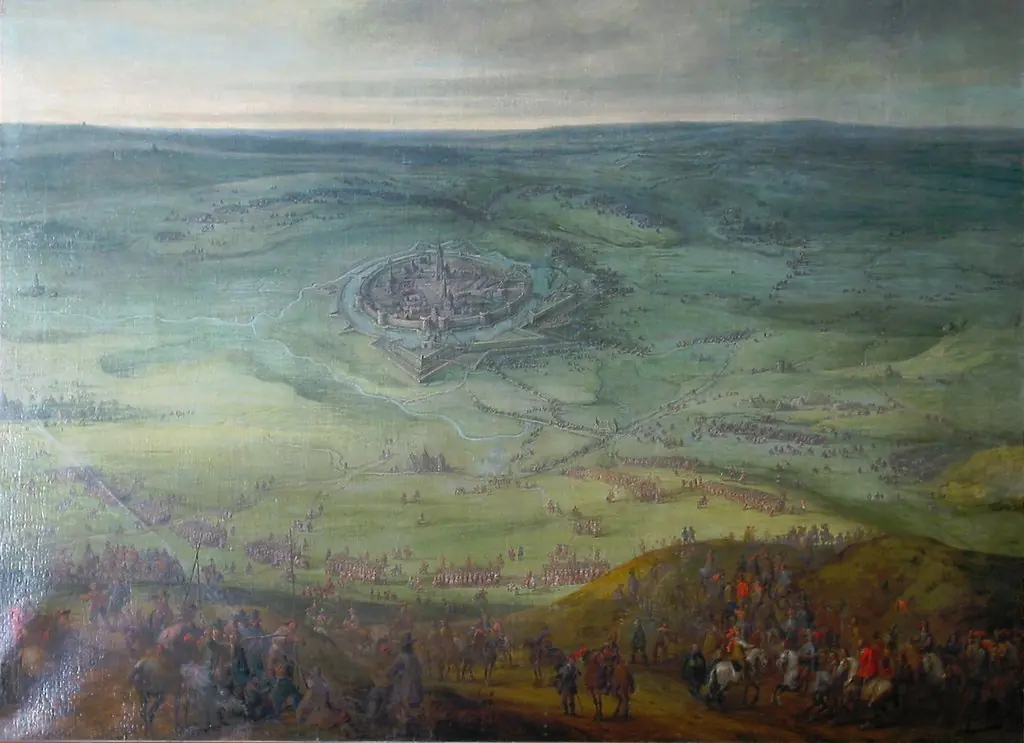
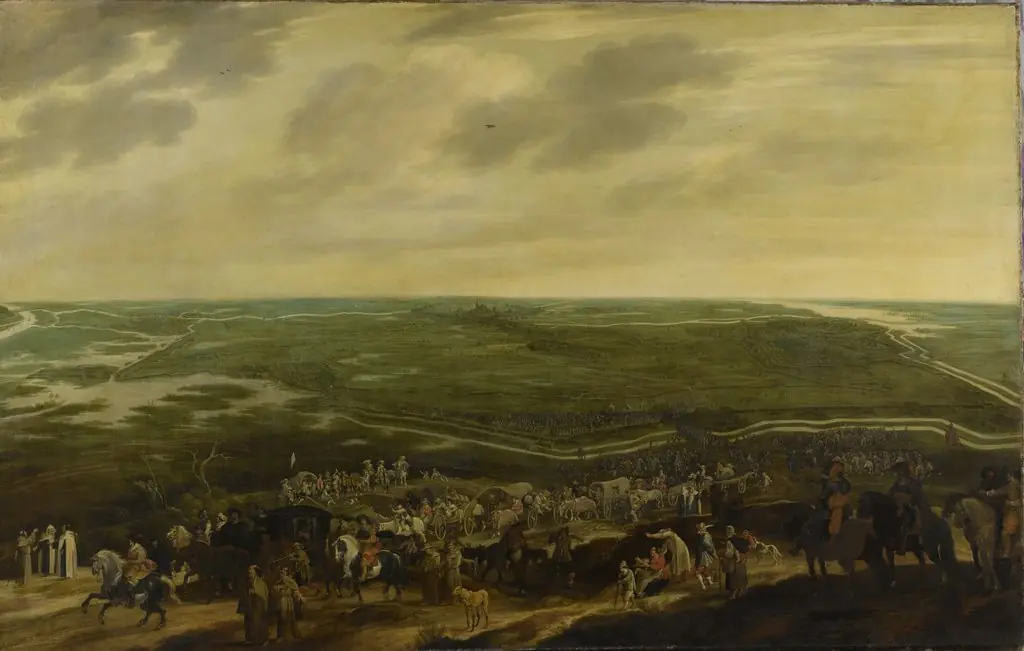
The relief of Louvain, 24 June-4 July, 1639, by Ottavio Piccolomini is an oil painting by the Flemish Baroque painting artist Peter Snayers. It dates from 1639 and is held in the collection of the Kunsthistorisches Museum. This oil painting depicts the military campaign to relieve the city of Louvain in the summer of 1639.
About this work
Overview
Attributed to Peter Snayers, it captures a specific moment in the Eighty Years' War through a detailed, elevated viewpoint.
This oil painting depicts the military campaign to relieve the city of Louvain in the summer of 1639. Attributed to Peter Snayers, it captures a specific moment in the Eighty Years' War through a detailed, elevated viewpoint. The composition presents the city under siege with surrounding forces engaged in coordinated maneuvers, reflecting the artist’s specialization in documenting contemporary warfare with topographic accuracy.
Subject & Meaning
The scene illustrates the Habsburg forces lifting the French siege of Louvain, a strategic Flemish city. Snayers emphasizes the complexity of the operation—troops advancing, artillery firing, and observers on elevated ground—without dramatizing individual heroism. The painting functions as a record of military logistics and spatial control, aligning with the interests of its patrons who valued precise documentation over narrative spectacle.
Technique & Style
Snayers employed a high vantage point to render the battlefield with cartographic clarity. Figures are rendered in miniature scale, yet individually distinct, suggesting meticulous observation. The palette favors earth tones—olive greens, muted browns, and grayish skies—enhancing the sense of realism. Brushwork is restrained, prioritizing clarity of form over expressive texture, characteristic of Flemish military topography of the period.
History & Provenance
Commissioned likely by a member of the Habsburg administration or military elite, the painting was produced in Brussels, where Snayers worked after relocating from Antwerp. Its creation coincided with a period of intense military activity in the Spanish Netherlands. The work remained within aristocratic or institutional collections, preserving its role as a historical document rather than a public decoration.
Context
Painted during the Thirty Years' War and the concurrent Dutch Revolt, the image reflects the broader struggle for control over the Low Countries. Snayers’s approach—combining battlefield detail with geographic fidelity—responded to a demand among ruling elites for visual records that affirmed authority and strategic competence. His works were part of a broader tradition of war documentation in the Southern Netherlands.
Legacy
Snayers’s paintings, including this one, influenced later military illustrators by establishing a visual language for documenting campaigns with precision. Though not widely exhibited today, his oeuvre remains a key resource for historians studying early modern warfare. The painting’s value lies in its function as an archival image, offering insight into the organization and appearance of 17th-century siege operations.
Own this work as a print
Artist & collection
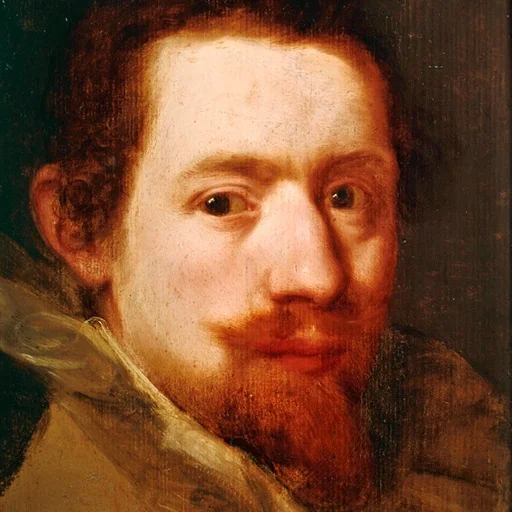
Artist
Peter Snayers or Pieter Snayers (1592–1667) was a Flemish painter known for his panoramic battle scenes, depictions of cavalry skirmishes, attacks on villages, coaches and convoys and hunting scenes.