Artwork
An Iron Forge
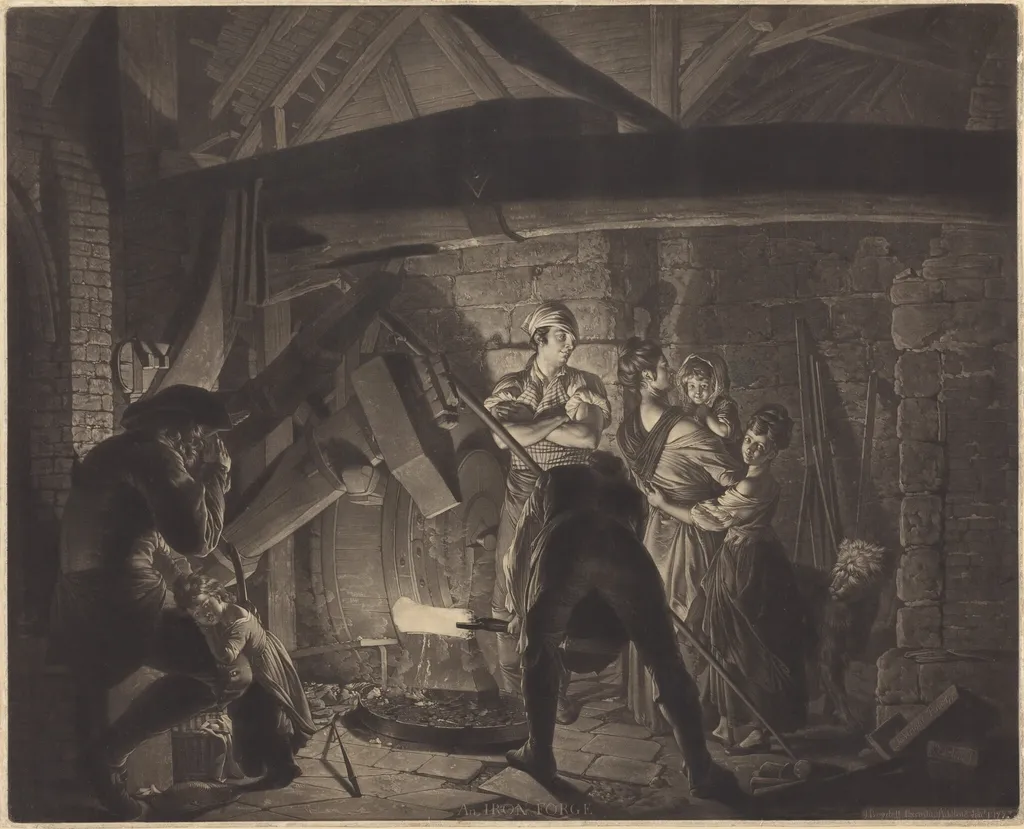
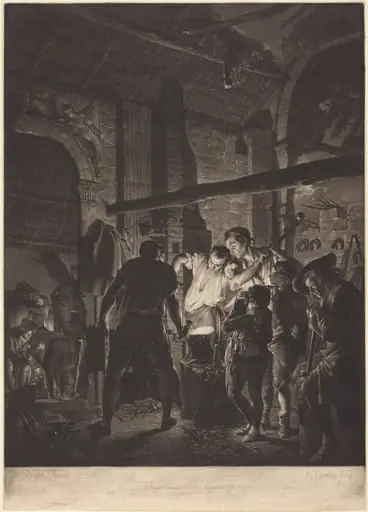
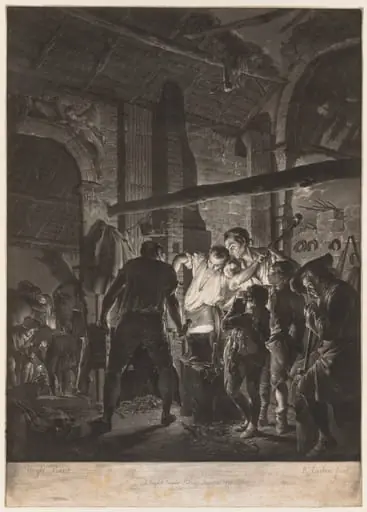
An Iron Forge is an ink print by the Romanticist artist Richard Earlom. It dates from 1773 and is held in the collection of the National Gallery of Art.
About this work
Overview
The technique allowed for rich, velvety blacks and subtle transitions, making it ideal for conveying the weight and heat of industrial labor.
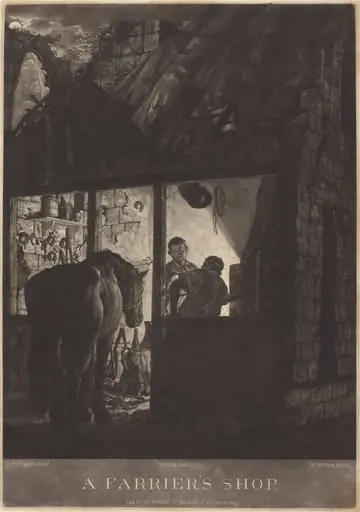
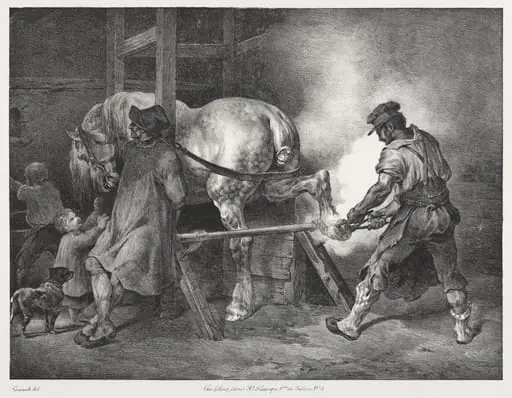
An Iron Forge is a mezzotint print produced by Richard Earlom in 1773. It captures the interior of a blacksmith’s workshop, rendered in tonal gradations that emphasize texture and atmosphere. The technique allowed for rich, velvety blacks and subtle transitions, making it ideal for conveying the weight and heat of industrial labor. Unlike line engravings, mezzotint’s ability to hold deep shadow gave Earlom a unique tool to evoke the physicality of the scene.
Subject & Meaning
The scene depicts five figures engaged in or observing the labor of forging iron. A central figure strikes red-hot metal while others manage tools, stoke the fire, or care for children. The presence of women and children among the workers suggests a domestic dimension to industrial life. The composition avoids idealization, presenting labor as unglamorous and physically demanding, rooted in the everyday realities of 18th-century craft.
Technique & Style
Earlom employed mezzotint, a process involving roughening a metal plate to hold ink, then smoothing areas to create light. This method enabled him to build dense shadows and delicate gradations, mimicking the smoky, dim interior of the forge. The contrast between the glowing metal and the near-black surroundings heightens the sense of heat and confinement. The style prioritizes mood over detail, using tone to suggest rather than define forms.
History & Provenance
Created in 1773, the print was part of Earlom’s series reproducing works from the collection of the Duke of Devonshire. Though originally a reproductive print, An Iron Forge stands out for its original subject matter, diverging from the typical classical or aristocratic themes of the time. Its survival in multiple institutional collections indicates early recognition of its atmospheric power and technical skill.
Context
In late 18th-century Britain, industrial labor was becoming more visible, yet rarely depicted in fine art. Earlom’s print aligns with a growing interest in the lives of working people, influenced by Enlightenment ideals and early social observation. While not overtly political, the image quietly documents the conditions of manual labor, offering a counterpoint to the polished scenes favored by academic art.
Legacy
An Iron Forge contributed to the acceptance of mezzotint as a medium capable of conveying emotional depth and social realism. Its influence can be seen in later 19th-century prints that sought to portray labor with dignity and authenticity. Though not widely known today, it remains a significant example of how printmaking could extend the boundaries of subject matter in visual culture.
Artist & collection