Artwork
An Academy by Lamplight
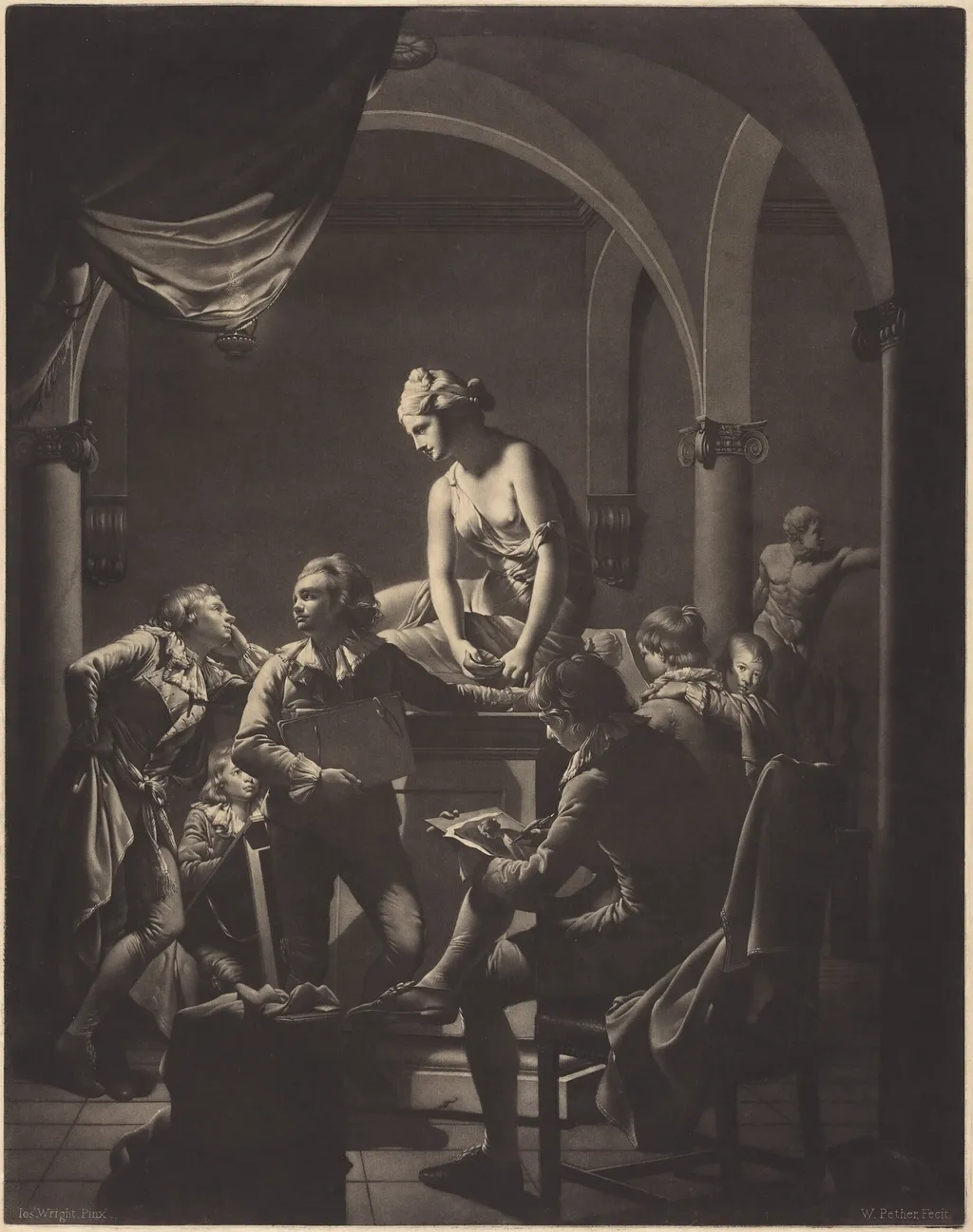
An Academy by Lamplight is an ink print by the Romanticist artist William Pether. It dates from 1772 and is held in the collection of the National Gallery of Art.
About this work
Overview
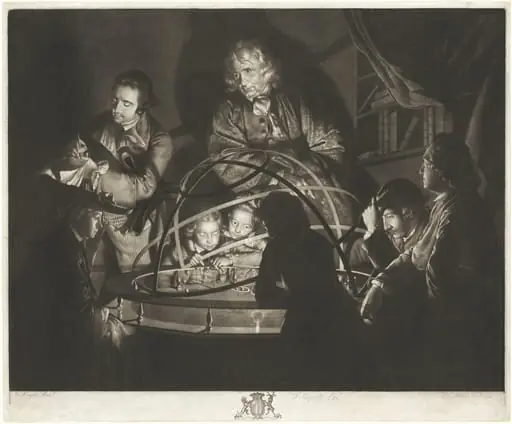
William Pether’s 1772 mezzotint, titled An Academy by Lamplight, depicts an intimate interior scene illuminated by a solitary lamp.
William Pether’s 1772 mezzotint, titled An Academy by Lamplight, depicts an intimate interior scene illuminated by a solitary lamp. A woman in a loosely draped gown sits upon a raised platform, while five figures—three adults and two children—gather around her, some reaching out or holding books. Dark walls, an arched doorway, and a heavy curtain frame the composition, emphasizing the contrast between light and shadow.
Subject & Meaning
The central female figure, poised calmly, serves as a focal point amid the animated group surrounding her. The surrounding participants appear eager, their gestures suggesting study or instruction, hinting at an academic or instructional setting. The interplay of the lamp’s illumination on the woman’s face and hands against the dim surroundings underscores themes of enlightenment and the transmission of knowledge within a private, perhaps domestic, learning environment.
Technique & Style
Executed as a mezzotint on laid paper, the work employs the chiaroscuro effect characteristic of the medium, using subtle gradations of tone to render deep shadows and luminous highlights. The single lamp source creates a dramatic contrast, allowing Pether to model forms with soft transitions while preserving crisp detail on the illuminated areas, particularly the woman’s visage and hands, thereby enhancing the three‑dimensional illusion.
History & Provenance
Created in 1772, the print is attributed to English engraver William Pether, known for his skill in mezzotint reproduction. While specific ownership records are limited, the work has been catalogued among Pether’s oeuvre and appears in collections focusing on 18th‑century British printmaking, reflecting the period’s interest in domestic scenes and the pedagogical role of art.
Artist & collection


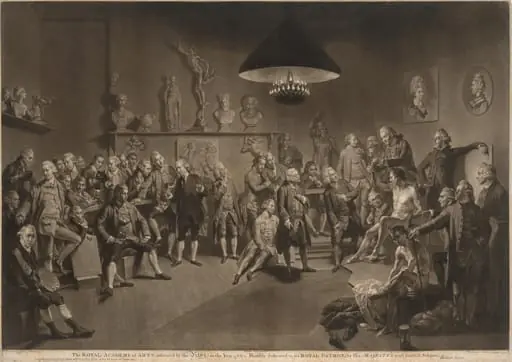 The Royal Academy of Arts
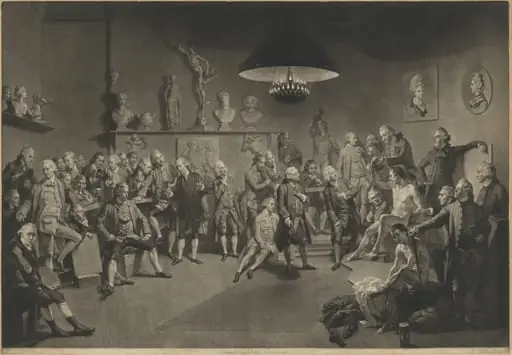 The Royal Academy of Arts
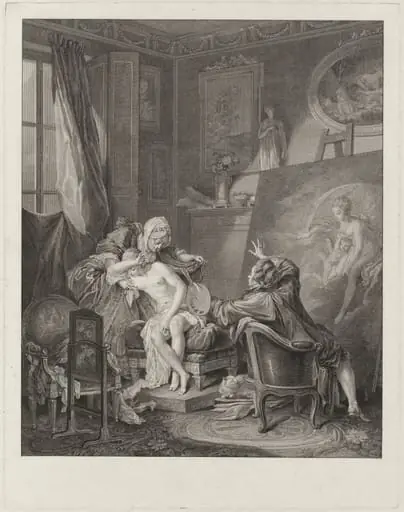 Le modèle honnête
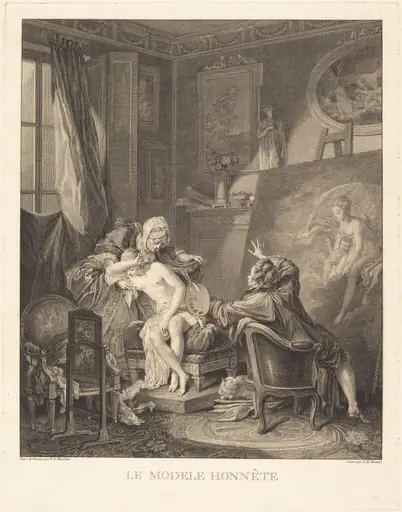 Le modèle honnête
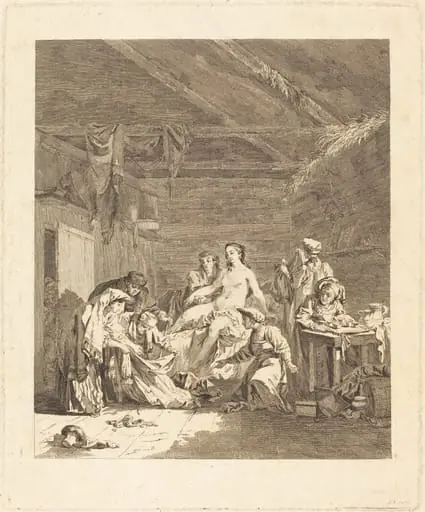 Le lever de la mariée russe (Custom of the Russians after the Marriage Ceremony and before the Wedding Feast)
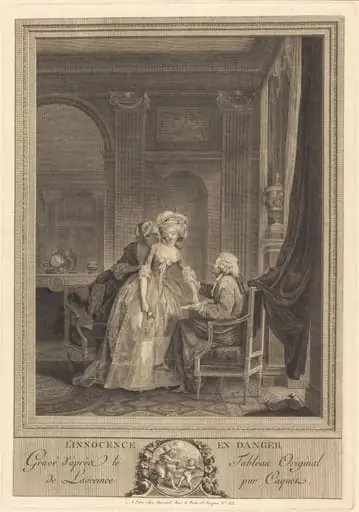 L'innocence en danger
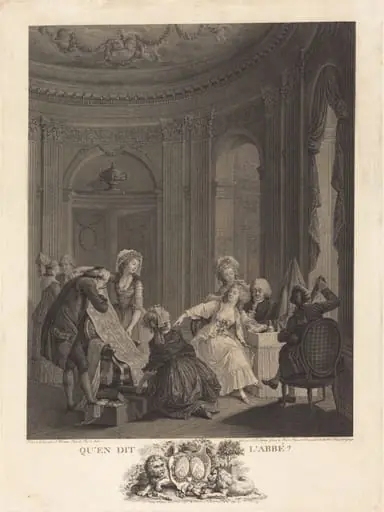 Qu'en dit l'Abbé?
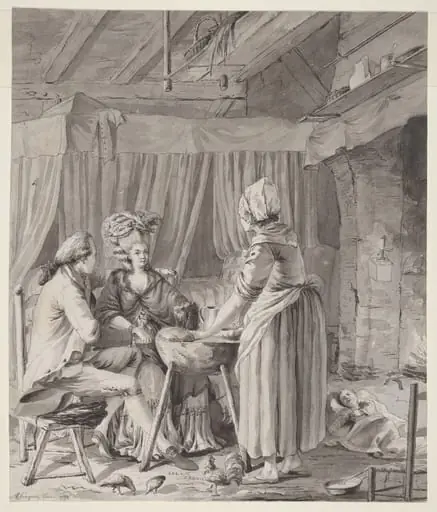 Elegant Couple Lunching in a Country Cottage
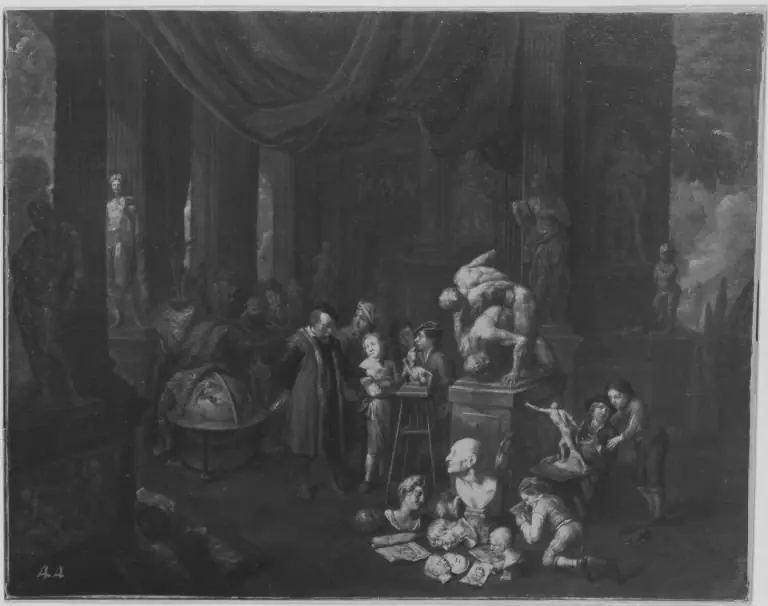 Bildhaueratelier
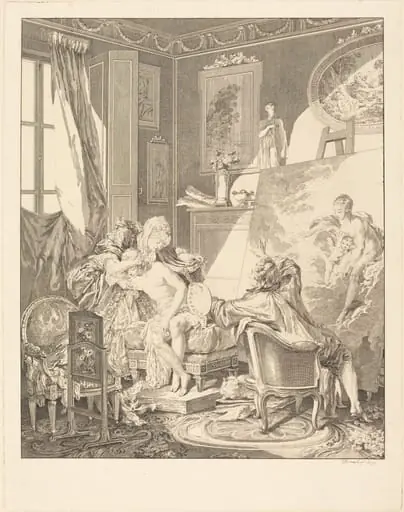 Le modèle honnête