Artwork
The Shed with Children Fighting
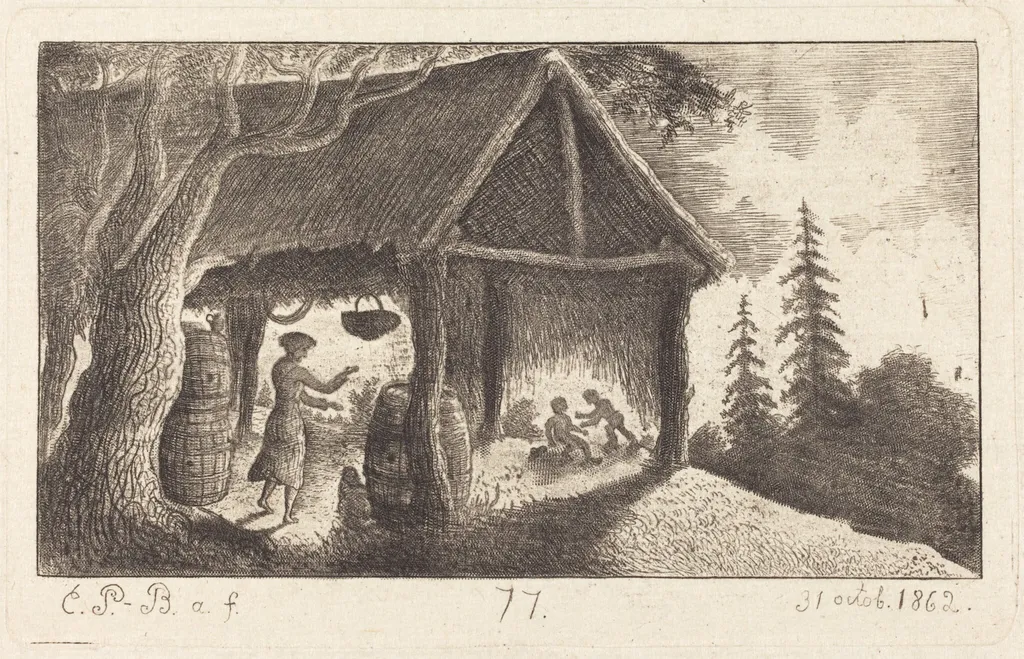
The Shed with Children Fighting is an ink print by the Impressionist artist Emmanuel Phélippes-Beaulieu. It dates from 1862 and is held in the collection of the National Gallery of Art.
About this work
Overview
Created in 1862 by Emmanuel Phélippes-Beaulieu, this print combines etching and roulette techniques on chine collé mounted to wove paper. It depicts a modest wooden shed nestled among trees, with three children engaged in a quiet, intimate moment of play and observation. The composition balances stillness and motion, capturing a fleeting scene of rural childhood without overt drama.
Subject & Meaning
The scene centers on two children wrestling on the shed’s floor, while a third sits nearby, seemingly uninvolved, and a fourth leans against the doorway, observing. The arrangement suggests a natural, unposed moment of childhood interaction—conflict, detachment, and attention coexisting. There is no moralizing tone; instead, the work presents ordinary life with quiet authenticity.
Technique & Style
The chine collé technique allowed delicate paper to be bonded to a stronger support, preserving fine detail while maintaining a soft, atmospheric quality.
Phélippes-Beaulieu employed fine, controlled etched lines to render textures: the roughness of tree bark, the uneven thatch of the roof, and the folds of children’s clothing. The roulette tool added subtle tonal variations, enhancing the sense of depth and materiality. The chine collé technique allowed delicate paper to be bonded to a stronger support, preserving fine detail while maintaining a soft, atmospheric quality.
History & Provenance
The work was produced in 1862 during a period when French artists increasingly turned to intimate, everyday subjects. Though not widely exhibited in its time, the print survives in a limited number of impressions, primarily held in institutional collections. Its modest scale and technique suggest it was made for private circulation rather than public display.
Context
Emerging in the mid-19th century, this print reflects a broader interest in rural life and childhood innocence among European printmakers. Unlike grand historical or mythological themes, Phélippes-Beaulieu focused on unidealized domestic moments. His work aligns with contemporaries who sought truth in ordinary scenes, influenced by realism and the growing accessibility of printmaking techniques.
Legacy
The print remains a quiet example of 19th-century French graphic art, valued for its sensitivity to detail and emotional restraint. While not widely known outside specialized circles, it contributes to the understanding of how printmakers captured everyday life with technical precision and psychological nuance, influencing later generations focused on intimate narrative imagery.
Artist & collection


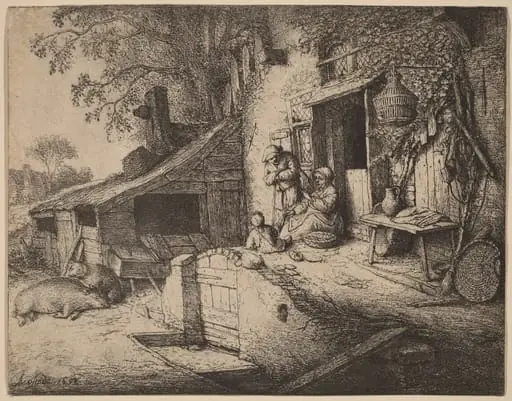 Farmstead wtih a Peasant Family Outside the Front Door, the Woman Spinning
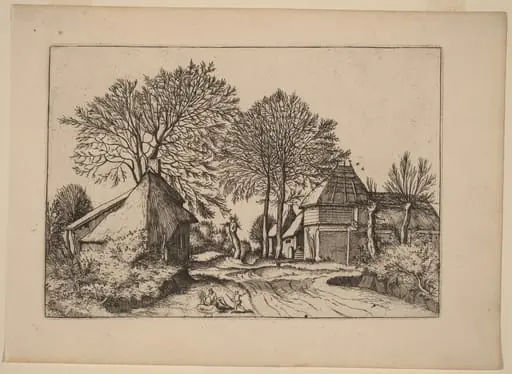 Road with Barn and Cottages
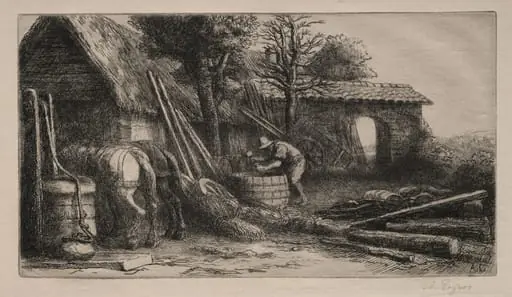 Le Tonnelier
 Road with Barn and Cottages
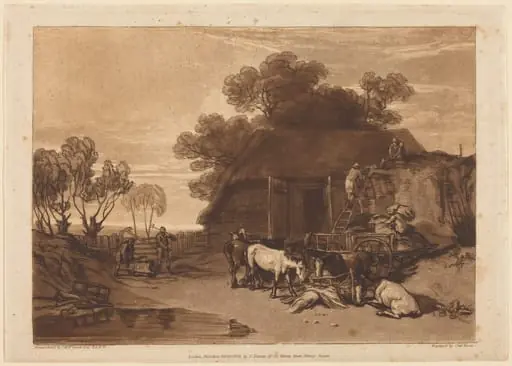 The Straw Yard
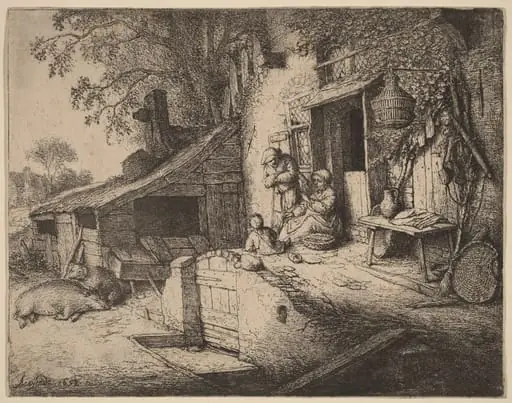 Farmstead wtih a Peasant Family Outside the Front Door, the Woman Spinning
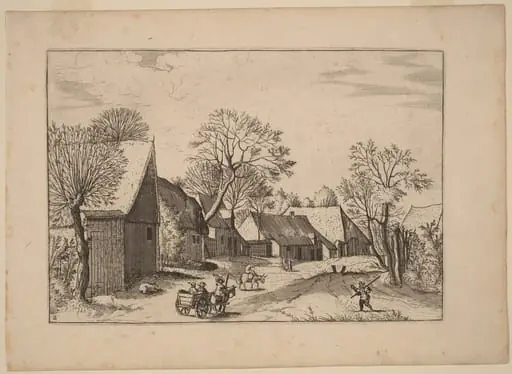 Farms and Shed
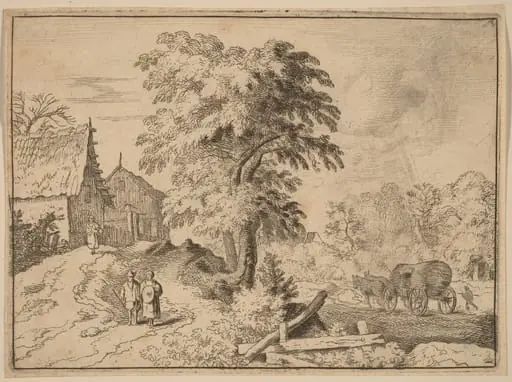 Cart with Two Draft Horses
 Mill below a Waterfall
 Some Pleasing Landscapes and Ruins of Ancient Monuments: Dilapidated Farm
 The Swann's Inn with Farms