Artwork
The Young Peasant Woman
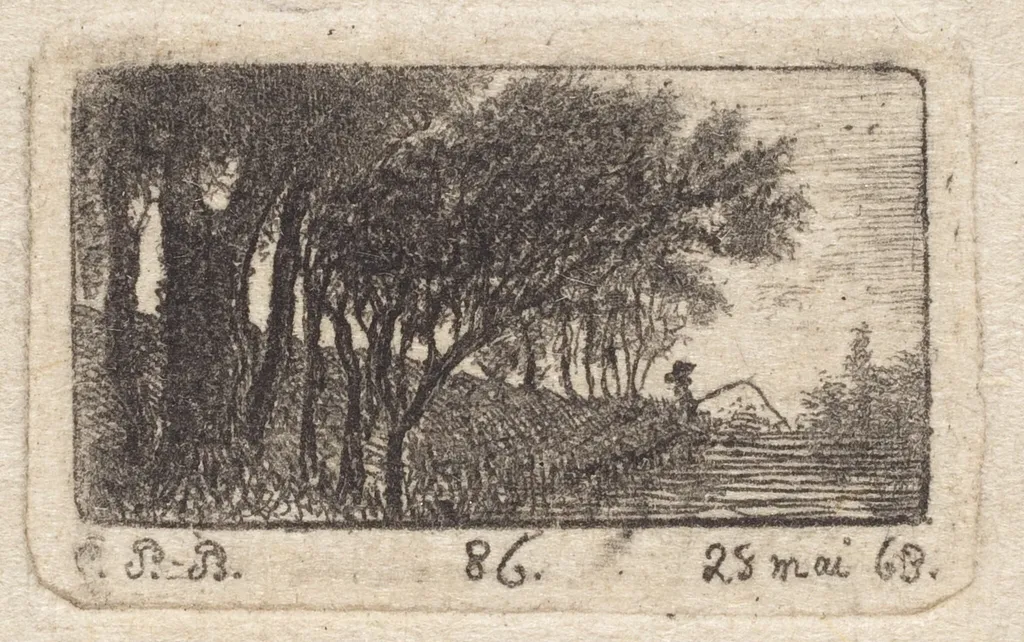
The Young Peasant Woman is an ink print by the Impressionist artist Emmanuel Phélippes-Beaulieu. It dates from 1863 and is held in the collection of the National Gallery of Art.
About this work
The date "25 mai 63" (May 25, 1863) is written in the corner, hinting this was made over 150 years ago.
This image shows a dark, tangled forest with thick trees and a small clearing. The branches twist together, blocking most of the light. In the distance, a faint building or house sits near the edge of the trees, barely visible. The whole scene is drawn in black lines on a light background, giving it a scratchy, textured look.
The date "25 mai 63" (May 25, 1863) is written in the corner, hinting this was made over 150 years ago. The artist used a technique that creates fine, detailed lines—likely to capture the mood of the woods.
Look up etching to see how artists like this one carved their designs into metal plates.
Overview
Created in 1863, this print by Emmanuel Phélippes-Beaulieu is an etching and roulette work on chine collé, mounted on wove paper. It depicts a dense woodland scene with minimal human presence, rendered in fine linear detail. The artist inscribed the date '25 mai 63' in the corner, anchoring the work to a specific moment in time. The contrast between dark, intricate foliage and the pale background emphasizes texture and atmosphere over narrative clarity.
Subject & Meaning
The scene portrays a secluded forest, its tangled branches obscuring light and forming a nearly impenetrable canopy. A distant, faint structure near the tree line suggests human habitation, but it remains ambiguous and remote. The absence of figures shifts focus to the environment itself, evoking solitude and quiet endurance. The mood is introspective, inviting contemplation of nature’s persistence rather than human activity.
Technique & Style
Phélippes-Beaulieu employed etching and roulette to achieve fine, scratchy lines and varied tonal textures. The etched lines define the dense undergrowth, while the roulette tool added stippled effects to suggest shadow and depth. Chine collé, a delicate paper layer bonded to a heavier support, enhanced the print’s subtlety. The monochrome palette and linear precision reflect a focus on atmospheric effect over realism.
History & Provenance
The work dates from 1863, a period when French artists increasingly turned to intimate, natural subjects outside academic traditions. Though little is documented about the print’s early ownership, its technical execution aligns with mid-19th-century printmaking circles interested in landscape and mood. The inscription of the date suggests the artist treated it as a direct record of observation, possibly made en plein air.
Context
In the 1860s, French printmakers were exploring personal, non-narrative landscapes as alternatives to grand historical themes. Phélippes-Beaulieu’s focus on a quiet forest aligns with broader trends in Romantic and early Realist printmaking, where nature was rendered with emotional nuance. This work reflects a shift toward intimate observation, away from idealized scenery, mirroring contemporary literary and artistic interests in solitude and the natural world.
Legacy
Though not widely exhibited or reproduced, this print exemplifies the quiet experimentation in 19th-century French printmaking. Its emphasis on texture and atmosphere influenced later artists seeking to convey mood through line and tone rather than detail. The work remains a modest but significant example of how etching could capture the subtleties of natural environments without overt symbolism.
Artist & collection


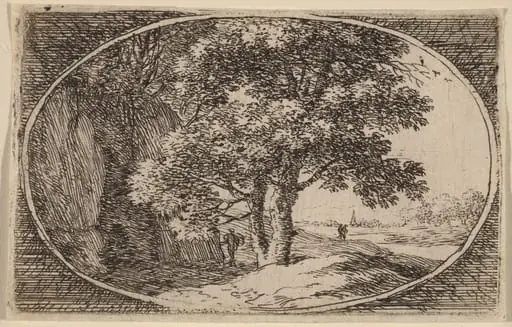 The Tree with a Double Trunk
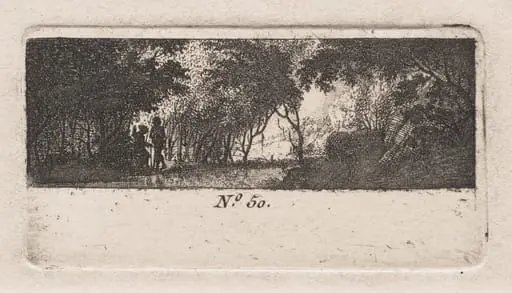 View of a Woods
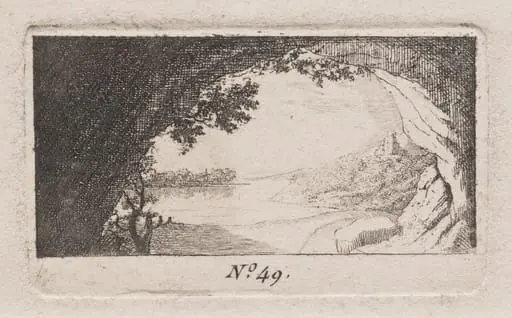 Landscape with Arched Rocks
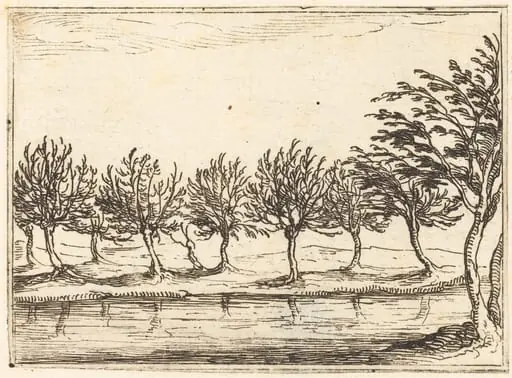 Willows by the Water's Edge
 Landscape with House
 Banks of the Loire (Bord de la Loire)
 Landscape
 Landscape (Un Paysage)
 Turtle Dove Flying in the Desert
 Turtle Dove Flying in the Desert
 Path to Left of a Large Tree and a Stump
 Milford Bridge