Artwork
Le Menuet de la Mariée
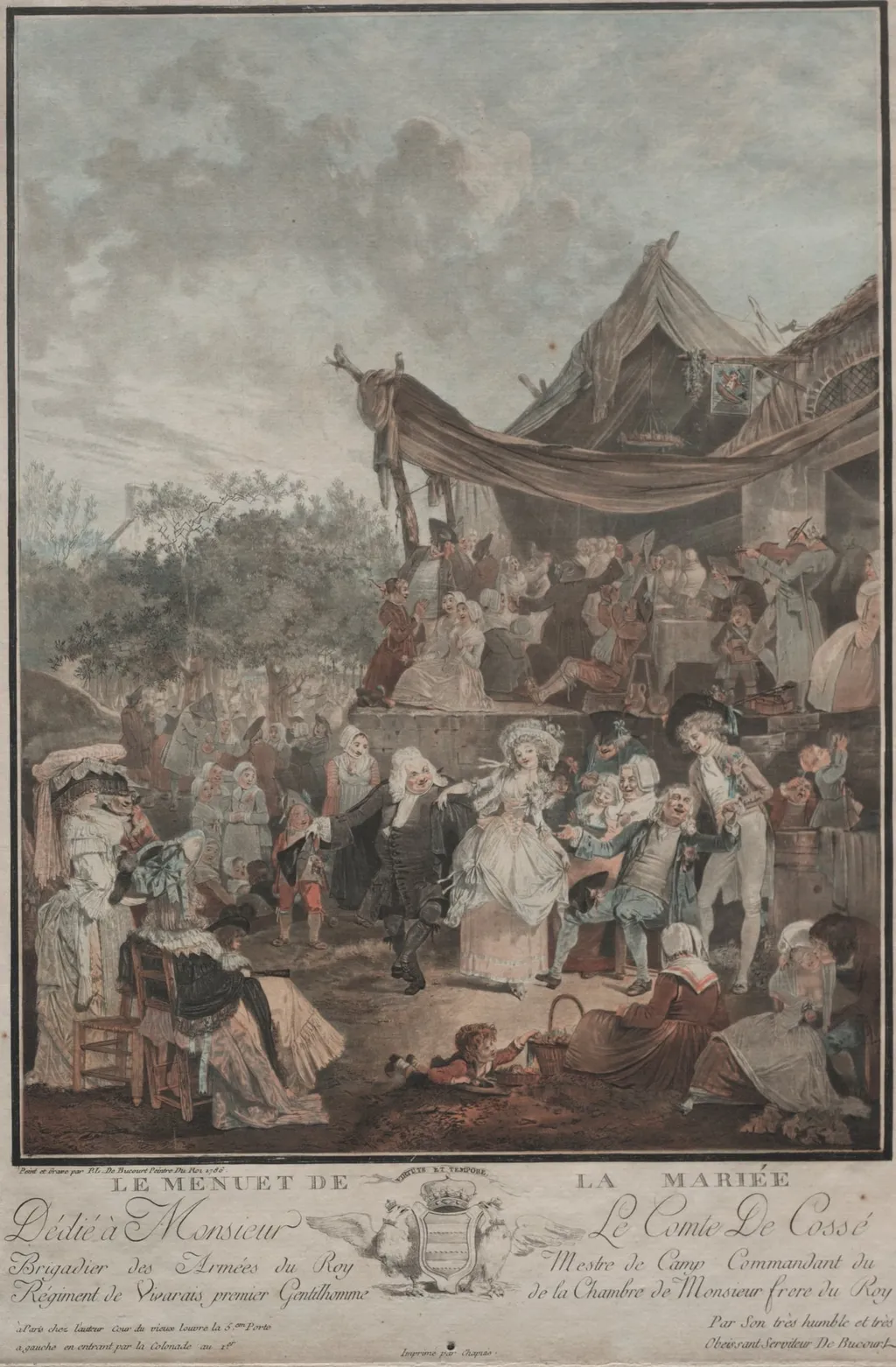
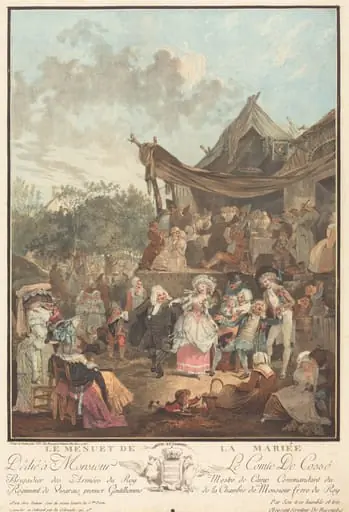
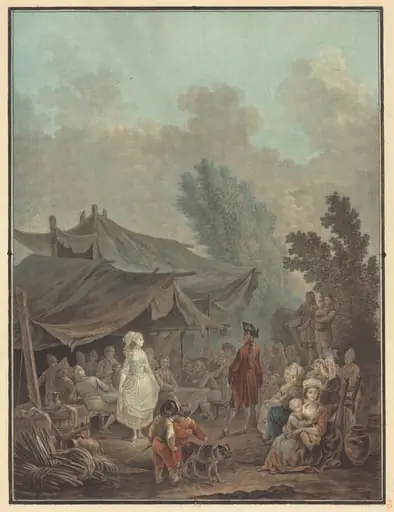
Le Menuet de la Mariée is a print by the Romanticist artist Philibert-Louis Debucourt. It dates from 1786 and is held in the collection of the Cleveland Museum of Art.
About this work
Overview
Le Menuet de la Mariée is an 18th-century color print by French artist Philibert Louis Debucourt, completed in 1786.
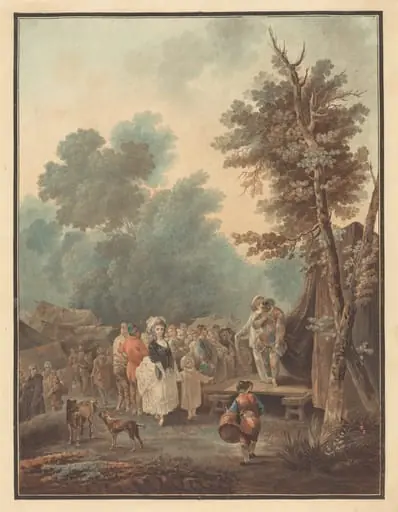
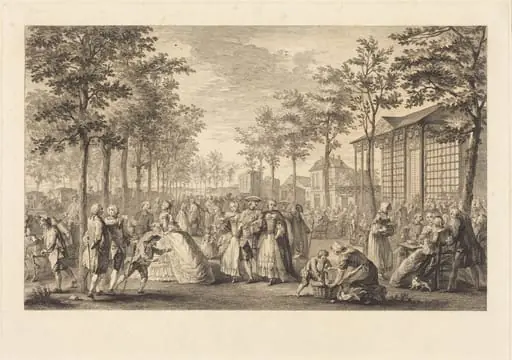
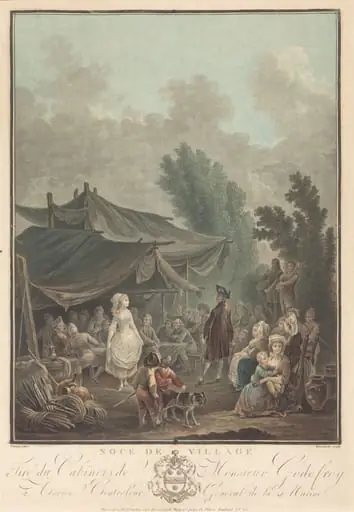
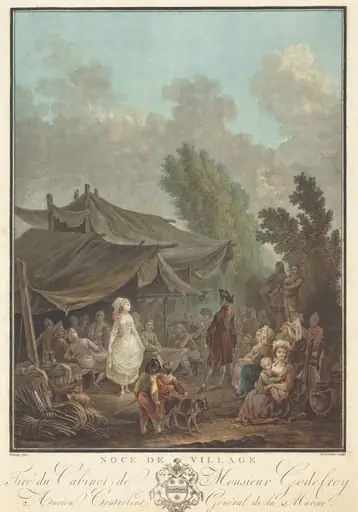
Le Menuet de la Mariée is an 18th-century color print by French artist Philibert Louis Debucourt, completed in 1786. It depicts a festive outdoor gathering centered on a bridal couple dancing a minuet. The work is part of the collection at The Cleveland Museum of Art and exemplifies Debucourt’s skill in capturing social life through layered aquatint and hand-coloring techniques, blending precision with atmospheric warmth.
Subject & Meaning
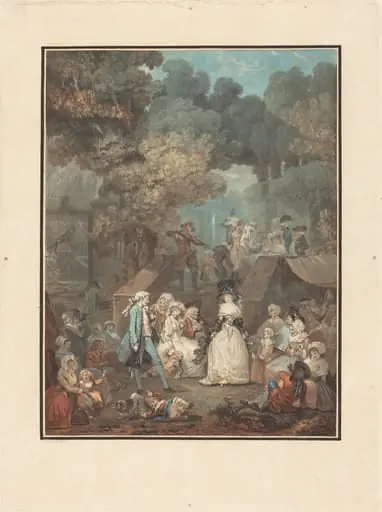
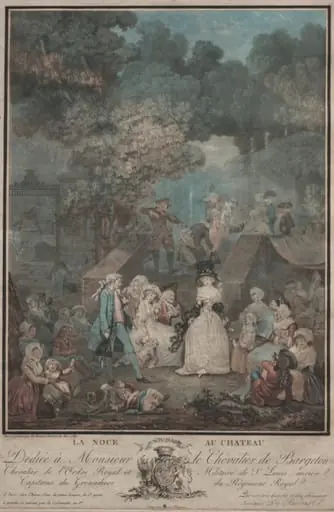
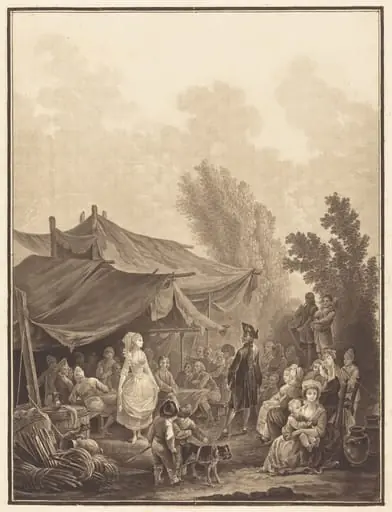
The scene portrays a wedding celebration in a public garden, with the bride and groom as the focal point of a lively, multi-generational crowd. Their dance symbolizes social ritual and communal joy, while the surrounding figures—observers, seated guests, and children—reflect the broader cultural importance of marriage as a public event. The atmosphere conveys intimacy within a collective setting, typical of bourgeois leisure in pre-revolutionary France.
Technique & Style
Debucourt employed multi-plate aquatint with meticulous hand-coloring to achieve subtle gradations of light and texture. The print’s soft tones and delicate shading render fabric, foliage, and skin with lifelike nuance. Unlike sharp line engravings, this method allows for atmospheric depth, creating a sense of movement and spontaneity. The composition directs the eye toward the dancers through diagonal groupings and layered spatial recession.
History & Provenance
Created in 1786, the print was produced during a period of rising demand for affordable, high-quality reproductive imagery among the French middle class. It circulated widely as a decorative piece, reflecting contemporary tastes in domestic interiors. The Cleveland Museum of Art acquired it as part of a broader collection of 18th-century French prints, preserving its historical and artistic significance.
Context
The work emerges from a time when public gardens and outdoor festivities were central to Parisian social life. Debucourt’s scenes align with the genre of modern life painting, influenced by Watteau and Fragonard, but with greater attention to individualized figures and naturalistic detail. Unlike Romanticism’s emotional intensity, this print captures quiet, observed moments of everyday ritual, rooted in Enlightenment ideals of observation and order.
Legacy
Debucourt’s prints, including Le Menuet de la Mariée, helped bridge the gap between fine art and popular imagery in late 18th-century France. His technical innovations in color printing influenced later generations of printmakers. While not widely known today, his work remains a valuable record of pre-revolutionary social customs and the evolving role of print culture in shaping public taste.
Artist & collection
Artist
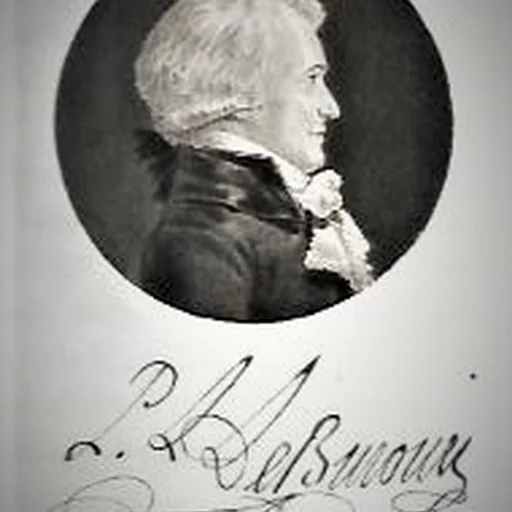
Philibert-Louis Debucourt (1755–1832) was a French artist, born in Paris.