Artwork
Members of the Carrow Abbey
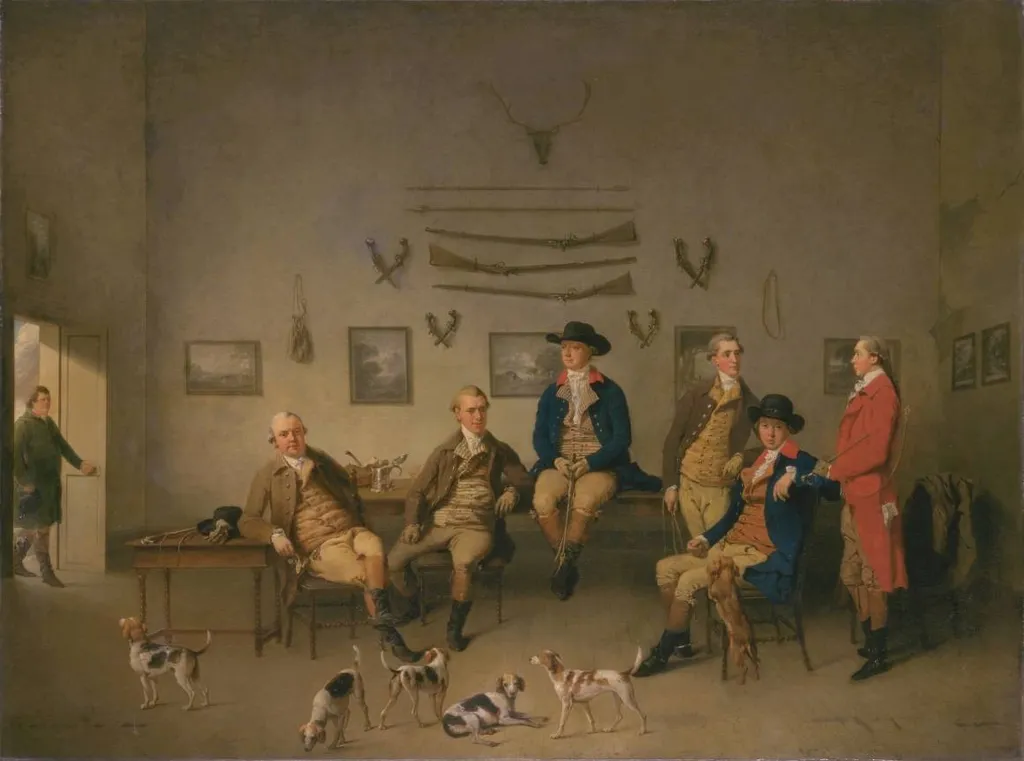
Members of the Carrow Abbey is an oil painting by the Rococo painting artist Philip Reinagle. It dates from 1790 and is held in the collection of the Tate Britain.
About this work
Overview
Reinagle, an English artist with expertise in animals and rural scenes, rendered this scene with attention to detail and atmospheric nuance.
Painted in 1790 by Philip Reinagle, *Members of the Carrow Abbey* is an oil-on-canvas work depicting a group of men in a domestic interior. Reinagle, an English artist with expertise in animals and rural scenes, rendered this scene with attention to detail and atmospheric nuance. The painting is part of Tate Britain’s collection and reflects the cultural habits of the British gentry during the late 18th century.
Subject & Meaning
The painting portrays a gathering of men, likely landowners or hunters, in a furnished room adorned with hunting trophies and equipment. Dogs rest at their feet, while firearms, antlers, and wall-mounted artworks suggest a space dedicated to leisure and sport. The composition conveys a sense of quiet camaraderie, emphasizing social bonds formed through shared pursuits rather than overt action.
Technique & Style
Reinagle employed oil paint with a restrained palette and soft modeling to capture textures of wool, leather, and fur. The lighting is even, avoiding dramatic contrasts, which supports the calm, intimate tone. Details such as the dogs’ fur and the grain of wooden furniture are rendered with precision, reflecting his background in naturalistic observation and botanical illustration.
History & Provenance
Commissioned for Carrow Abbey, a country estate in Norfolk, the painting remained in private hands until entering the Tate Britain collection. Reinagle, trained in London after 1763 and later a Royal Academy associate, was known for his depictions of animals and rural life. The work’s survival and institutional acquisition reflect its value as a record of aristocratic pastimes in Georgian England.
Context
In late 18th-century England, hunting was both a sport and a social ritual among the landed class. Interiors like the one depicted often served as venues for post-hunt gatherings, where status was displayed through possessions and companionship. Reinagle’s work aligns with a broader tradition of genre painting that documented elite lifestyles without idealization.
Legacy
Though not widely exhibited today, the painting endures as a quiet testament to the material and social culture of its time. Reinagle’s focus on everyday moments among the gentry, rather than grand narratives, offers insight into the rhythms of rural aristocratic life. His attention to animal and environmental detail influenced later naturalist painters in Britain.
Artist & collection
Artist
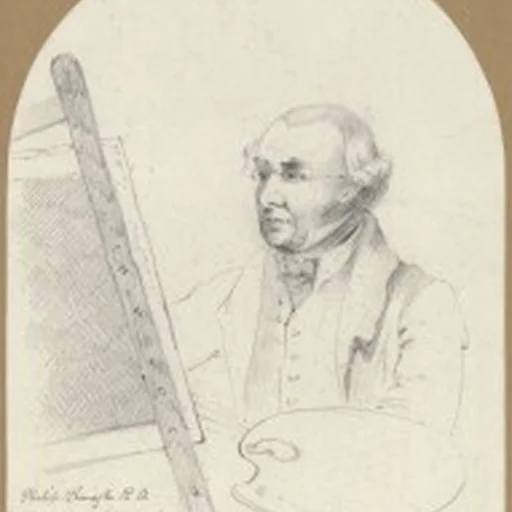
Philip Reinagle (1749 – 27 November 1833) was an English painter of animals, landscapes, and botanical scenes.

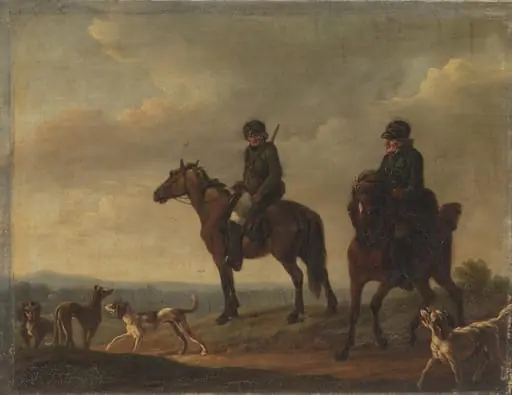 To jægere til hest
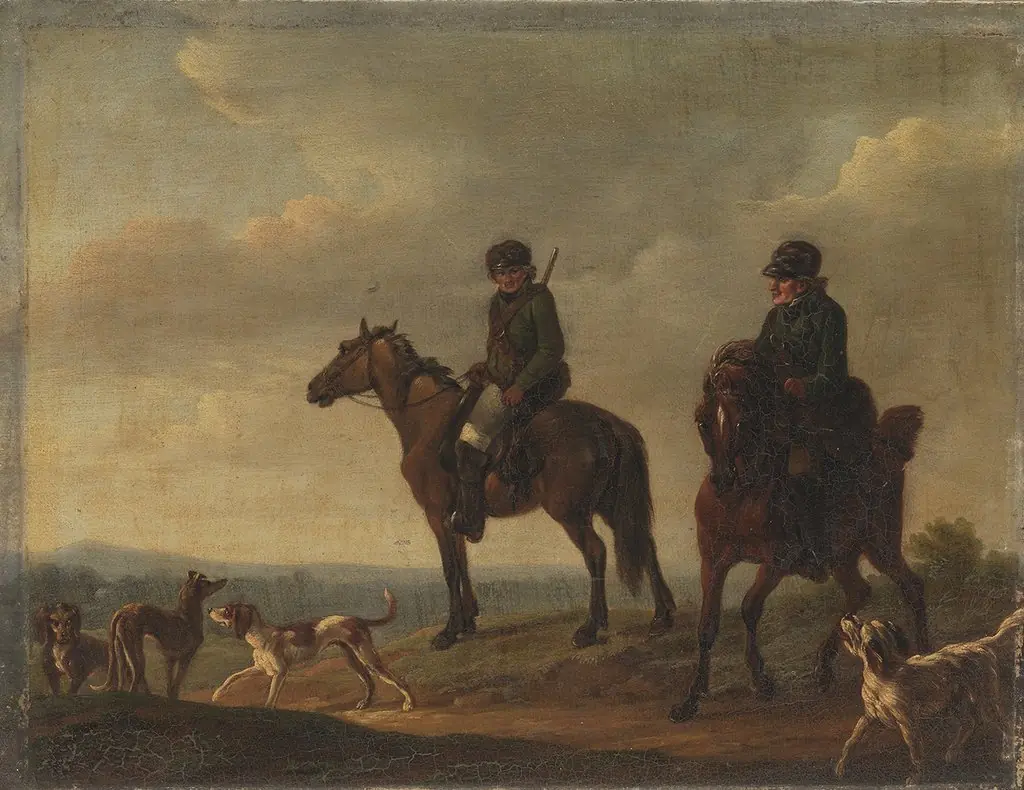 To jægere til hest
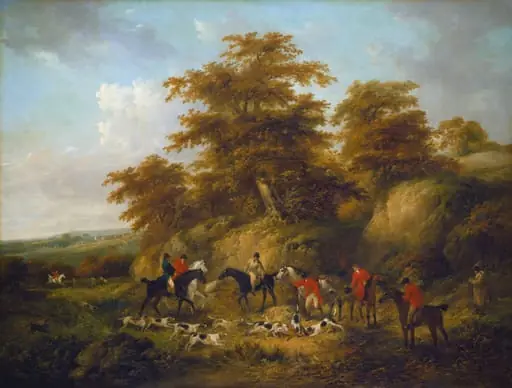 The Death of the Fox
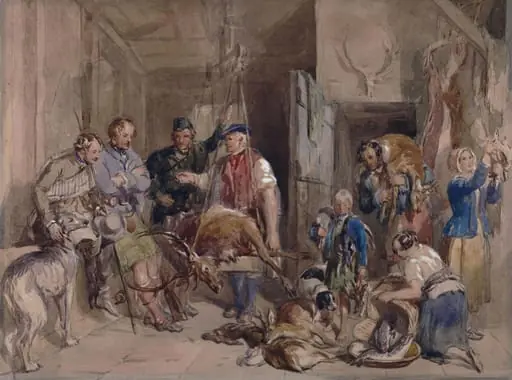 Study for Weighing the Deer
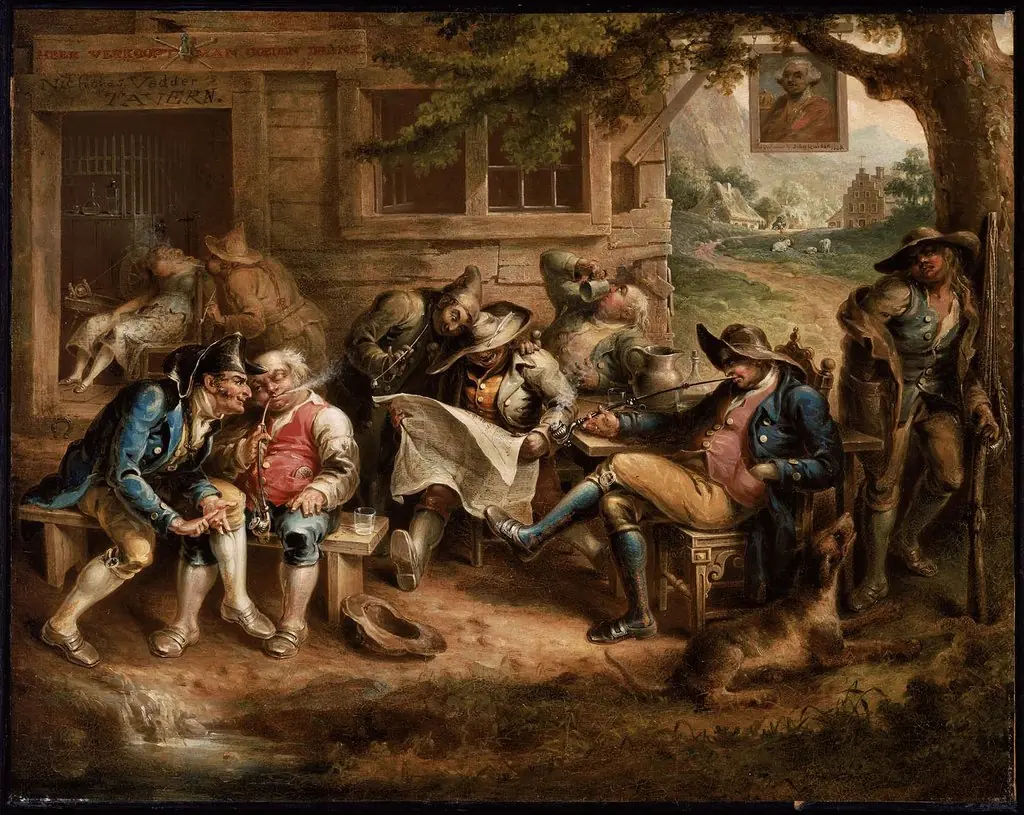 Rip Van Winkle and His Companions at the Inn Door of Nicholas Vedder
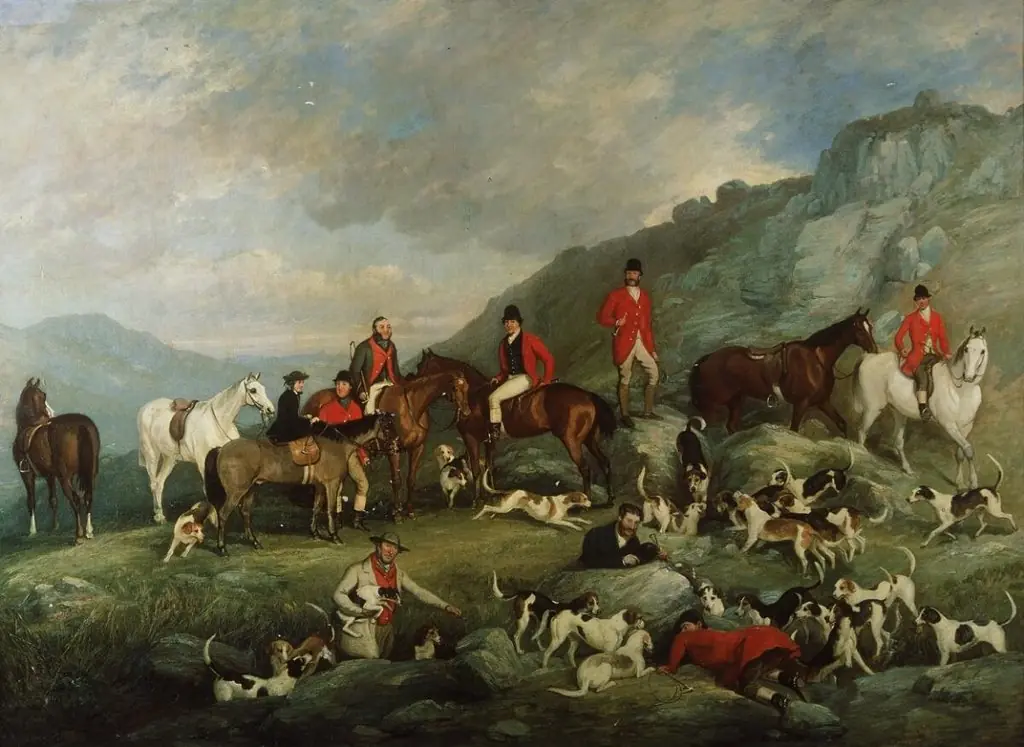 Gogerddan hunt
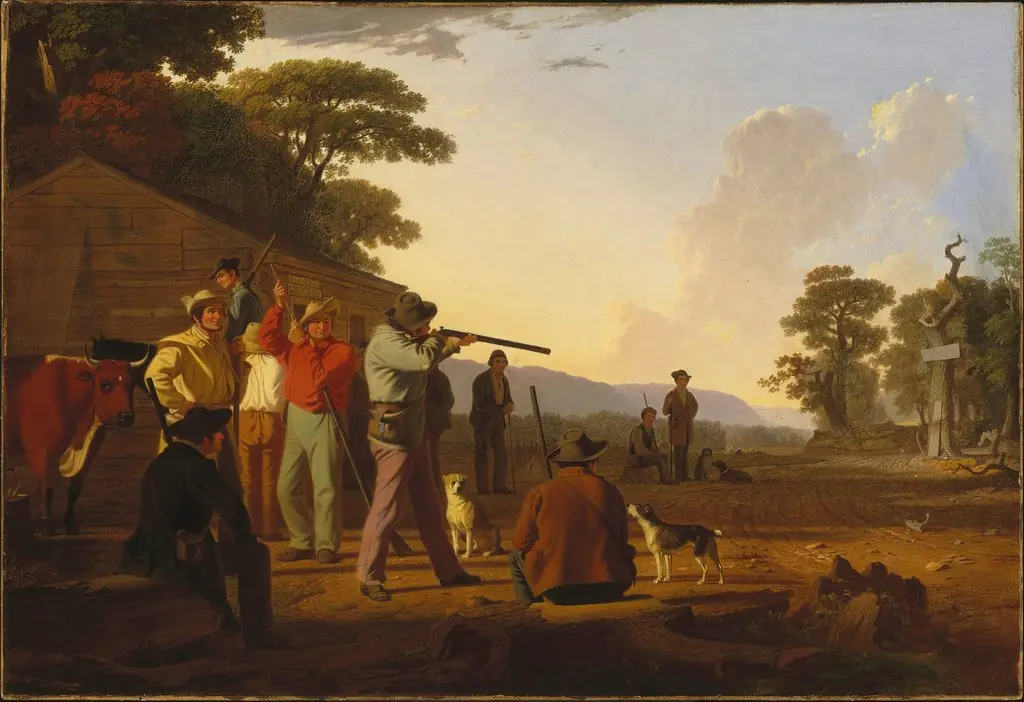 Shooting for the Beef
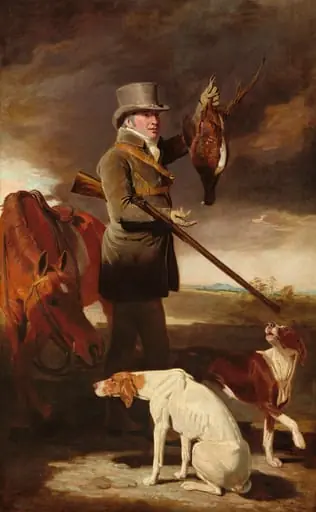 J.G. Shaddick, the Celebrated Sportsman
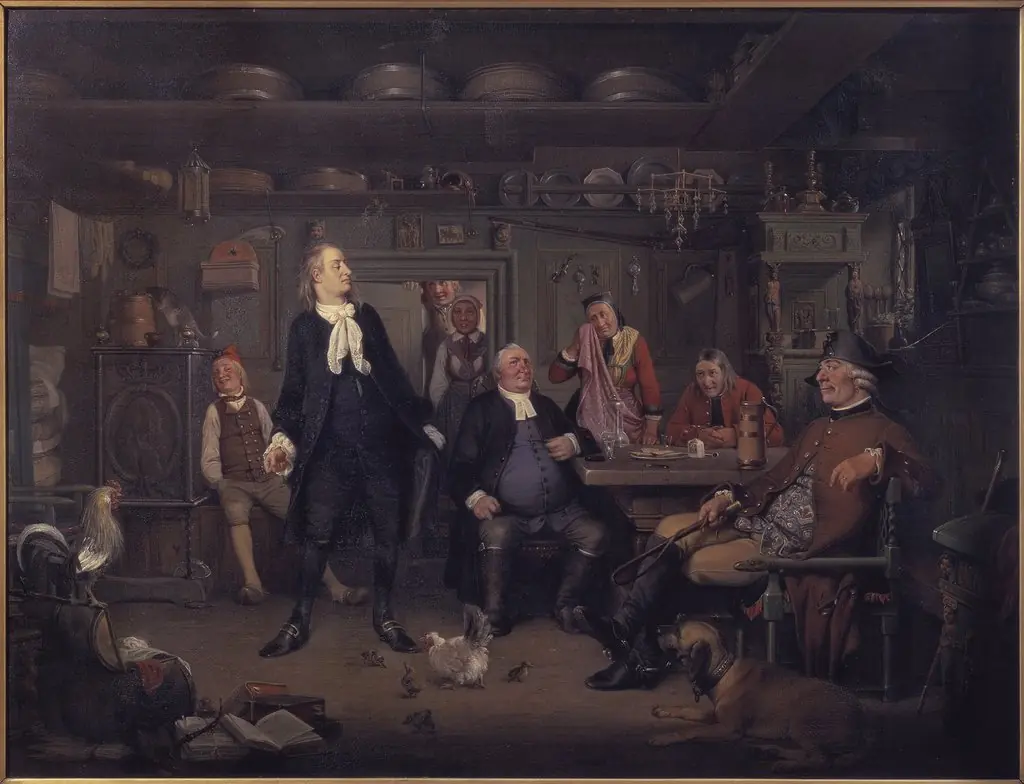 Fra Ludvig Holbergs "Erasmus Montanus", III akt, 3. scene
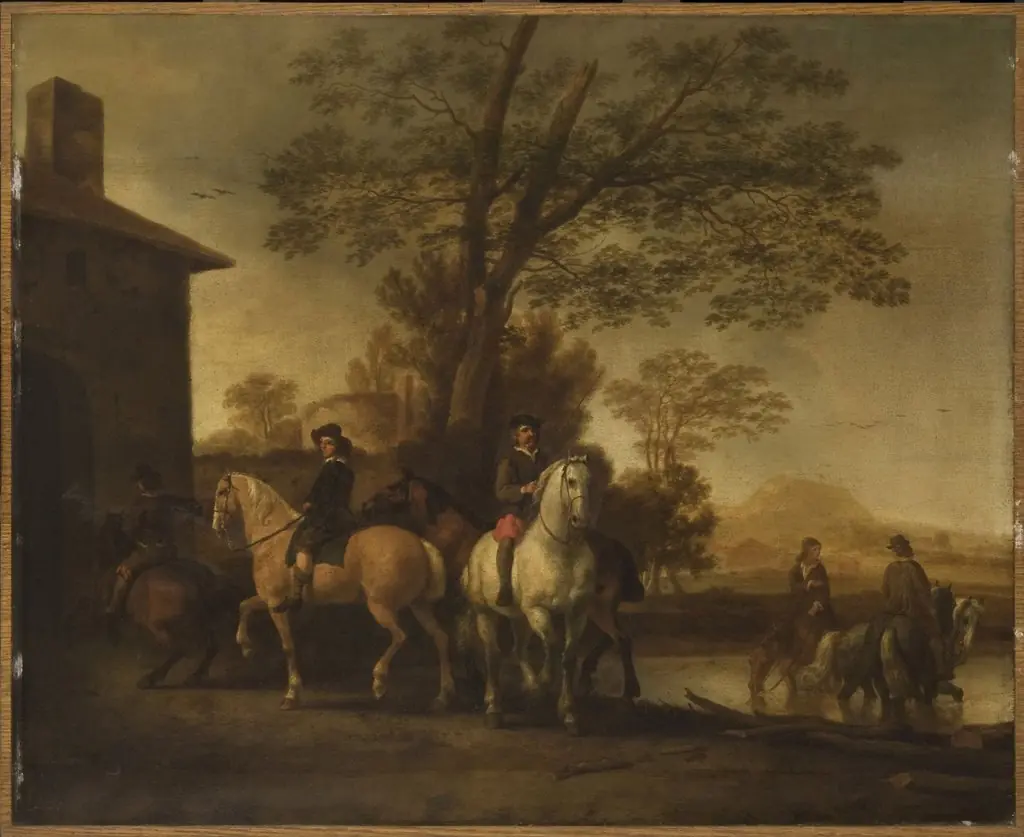 Horsemen Watering Their Horses
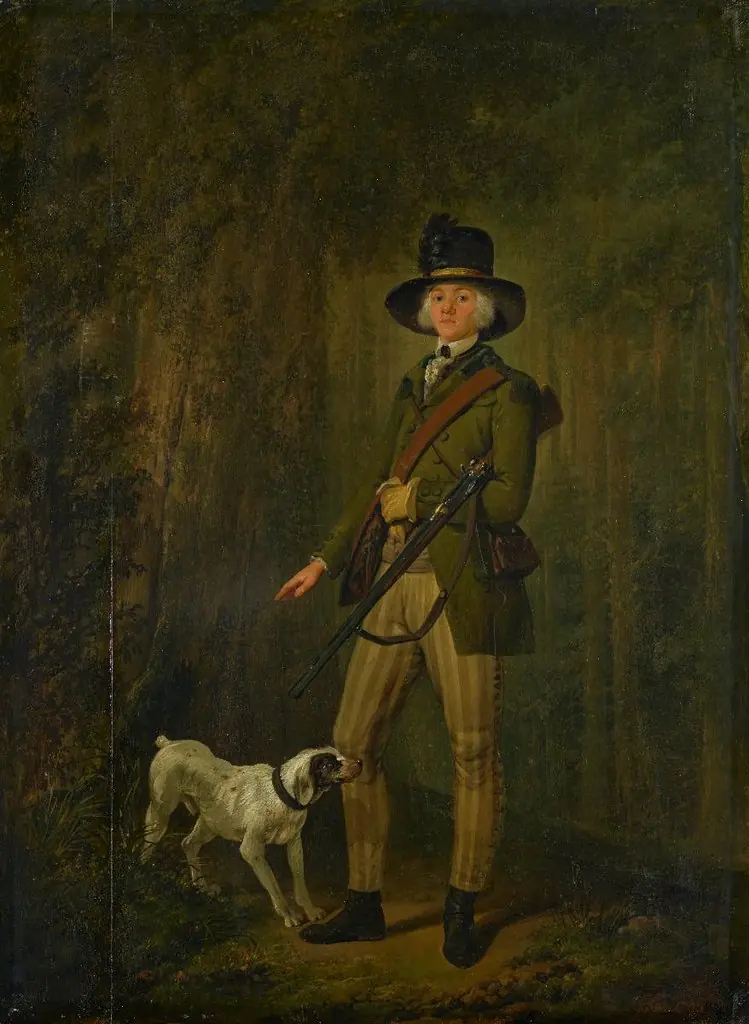 Paulus Usteri als Jäger im Walde
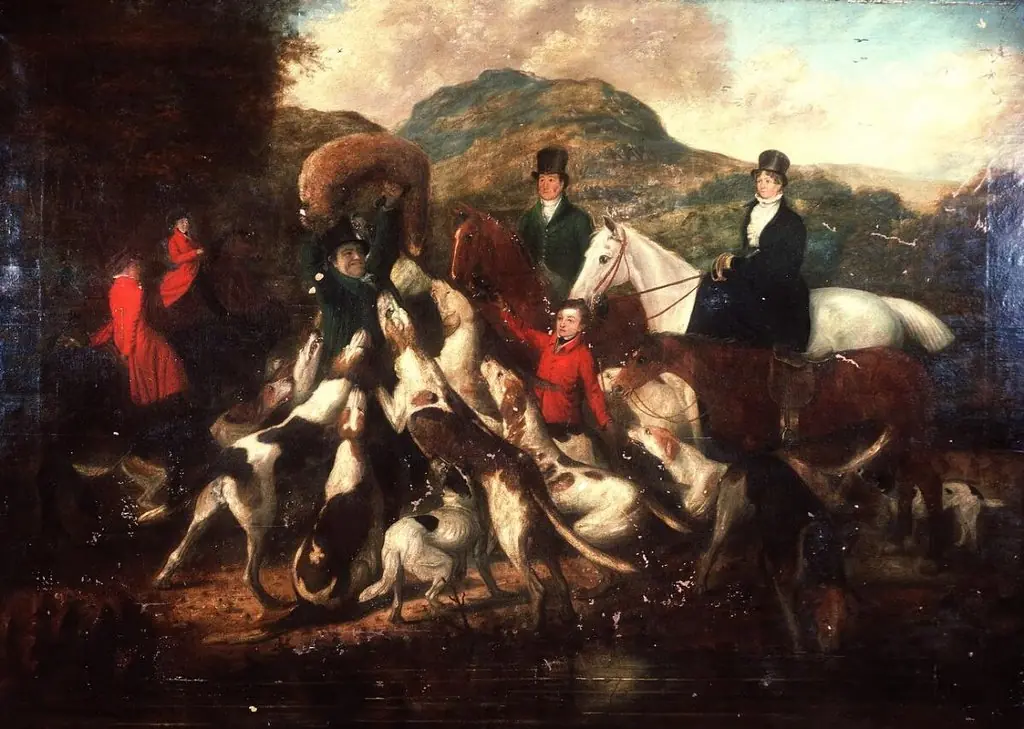 Gogerddan hunt