Artwork
Day
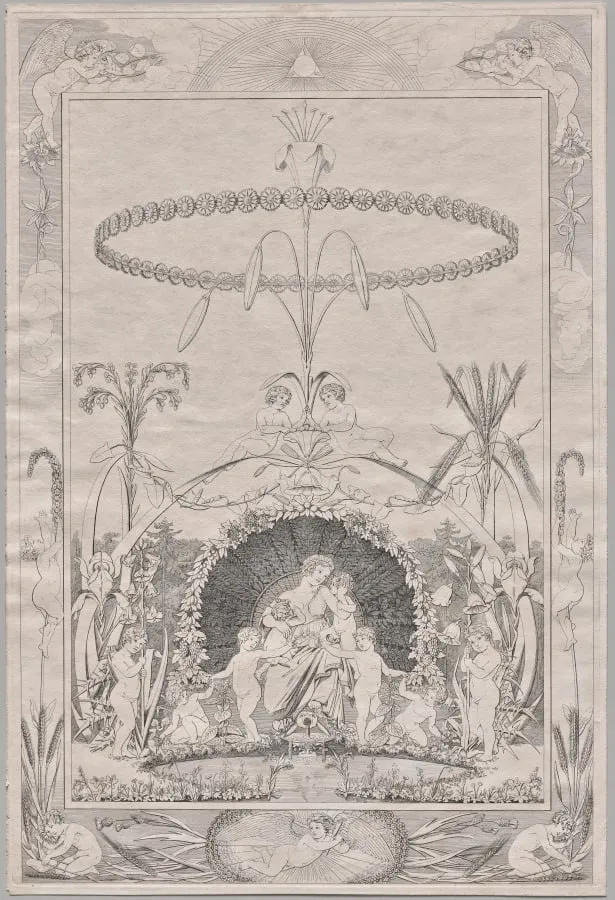
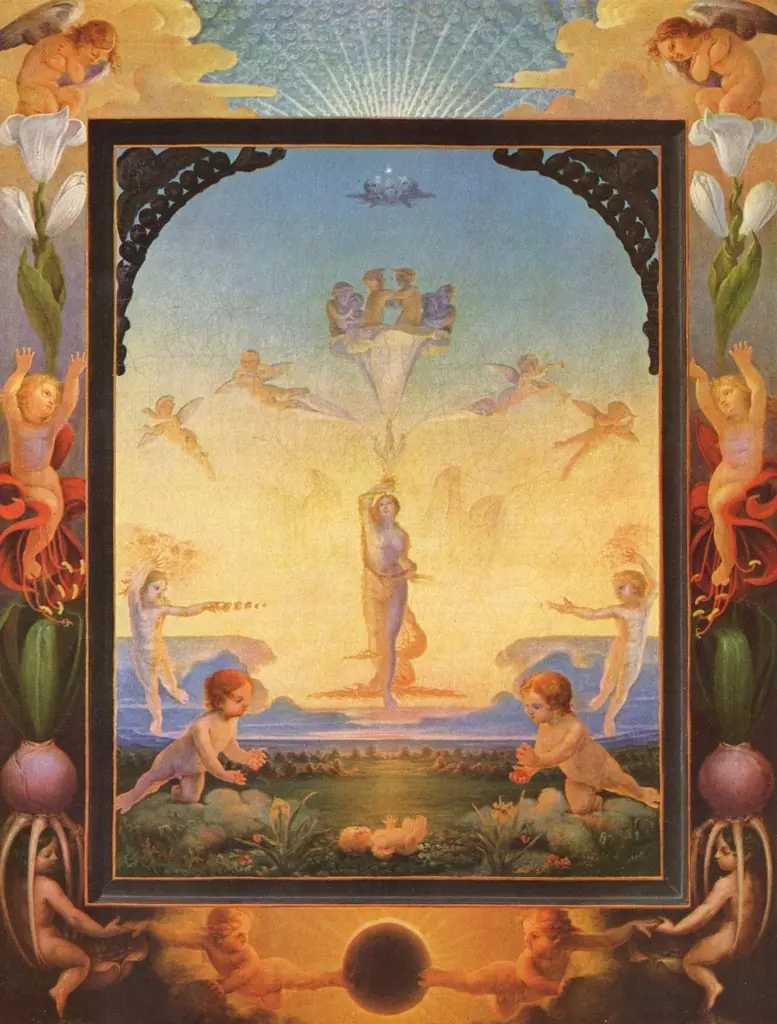
Day is a print by the Romanticist artist Philipp Otto Runge. It dates from 1804 and is held in the collection of the Cleveland Museum of Art. Phillip Otto Runge’s Tageszeiten is a series of four large woodcuts that map the passage of time through natural and human cycles.
About this work
Overview
The series was intended as a unified whole, meant to be viewed sequentially to evoke contemplation of existence beyond the material.
Phillip Otto Runge’s Tageszeiten is a series of four large woodcuts that map the passage of time through natural and human cycles. Each print—Morning, Noon, Evening, Night—corresponds not only to a time of day but also to a season and a stage of life. Runge conceived the work as a visual theology, where nature’s rhythms reflect divine order. The series was intended as a unified whole, meant to be viewed sequentially to evoke contemplation of existence beyond the material.
Subject & Meaning
The prints encode a metaphysical narrative: birth, growth, decline, and death unfold through imagery of plants, children, and a recurring female figure, possibly representing Nature or the Divine Feminine. Seedlings bloom, children age, and figures recline in sleep-like repose, suggesting mortality within an eternal cycle. Borders contain symbolic motifs—biblical, mythological, and alchemical—that contrast with the central scenes, reinforcing the tension between transient human life and enduring cosmic order.
Technique & Style
Runge employed woodcut with careful tonal gradations, using ink washes and layered printing to achieve subtle light effects. His use of chiaroscuro creates a luminous, dreamlike atmosphere, where pale dawn light and deep night shadows are rendered with emotional precision. The compositions are symmetrical and stylized, avoiding naturalism in favor of symbolic clarity. Fine lines and flattened space elevate the scenes into allegorical realms, distancing them from literal representation.
History & Provenance
Executed between 1803 and 1808, the series was part of Runge’s broader project to reform German art through spiritual symbolism. He planned a larger illustrated book that never materialized due to his early death in 1810. Only the four prints were completed and published in limited editions. The original plates were lost, and surviving impressions are rare. The series was later recognized as foundational to German Romantic printmaking, influencing later symbolic artists.
Context
Runge developed Tageszeiten alongside Caspar David Friedrich and other Romantics who rejected Enlightenment rationalism in favor of emotional and spiritual engagement with nature. His work responded to contemporary theological debates and the rise of nature philosophy, drawing from mysticism, Lutheran thought, and Goethean science. Unlike contemporaries who depicted nature as sublime wilderness, Runge sought to reveal its hidden, sacred structure through symbolic harmony.
Legacy
Though largely overlooked in his lifetime, Tageszeiten gained scholarly attention in the 19th and 20th centuries as a pioneering synthesis of visual art, theology, and natural philosophy. Its integration of symbolic form, sequential narrative, and emotional tone prefigured later developments in Symbolism and expressionist printmaking. The series remains a touchstone for understanding how German Romanticism sought to unify art, science, and spirituality through visual allegory.
Artist & collection
Artist
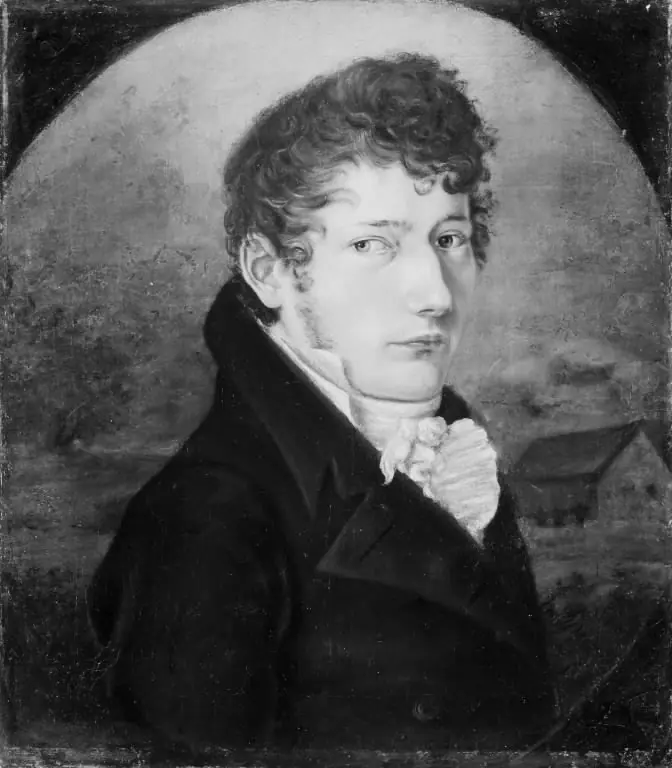
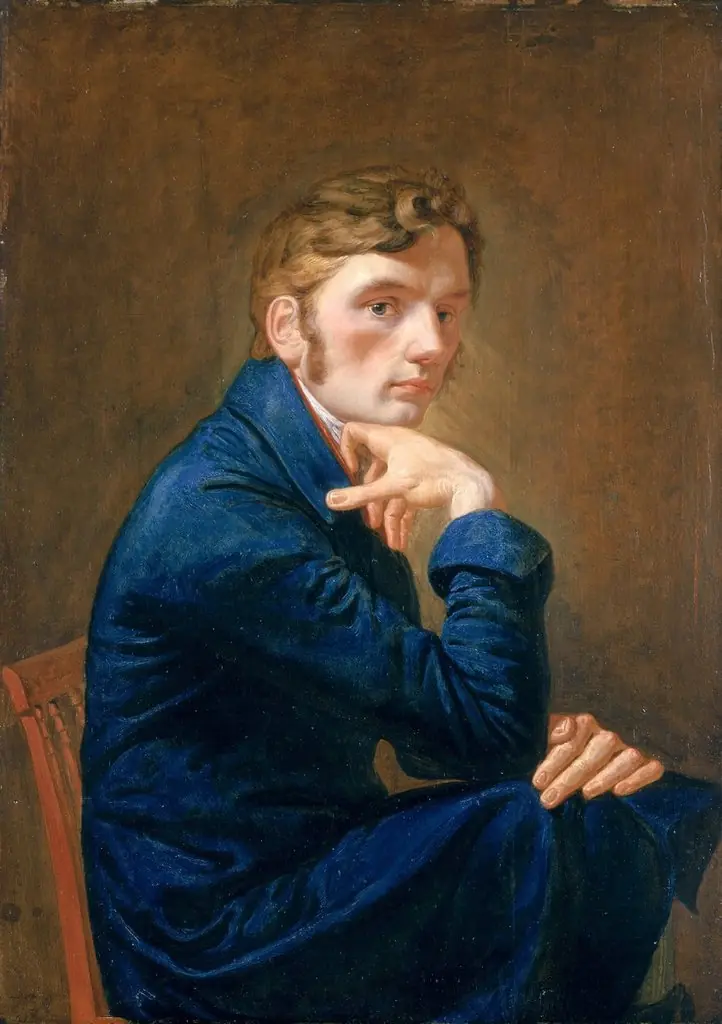
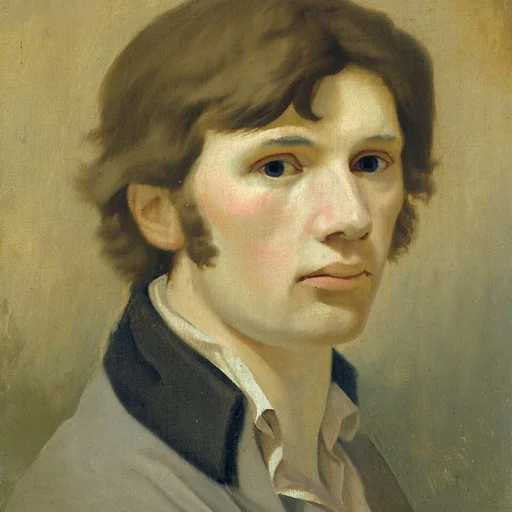
Philipp Otto Runge (German: ; 1777–1810) was a German artist, draftsman, painter, and color theorist.