Artwork
The Gallant
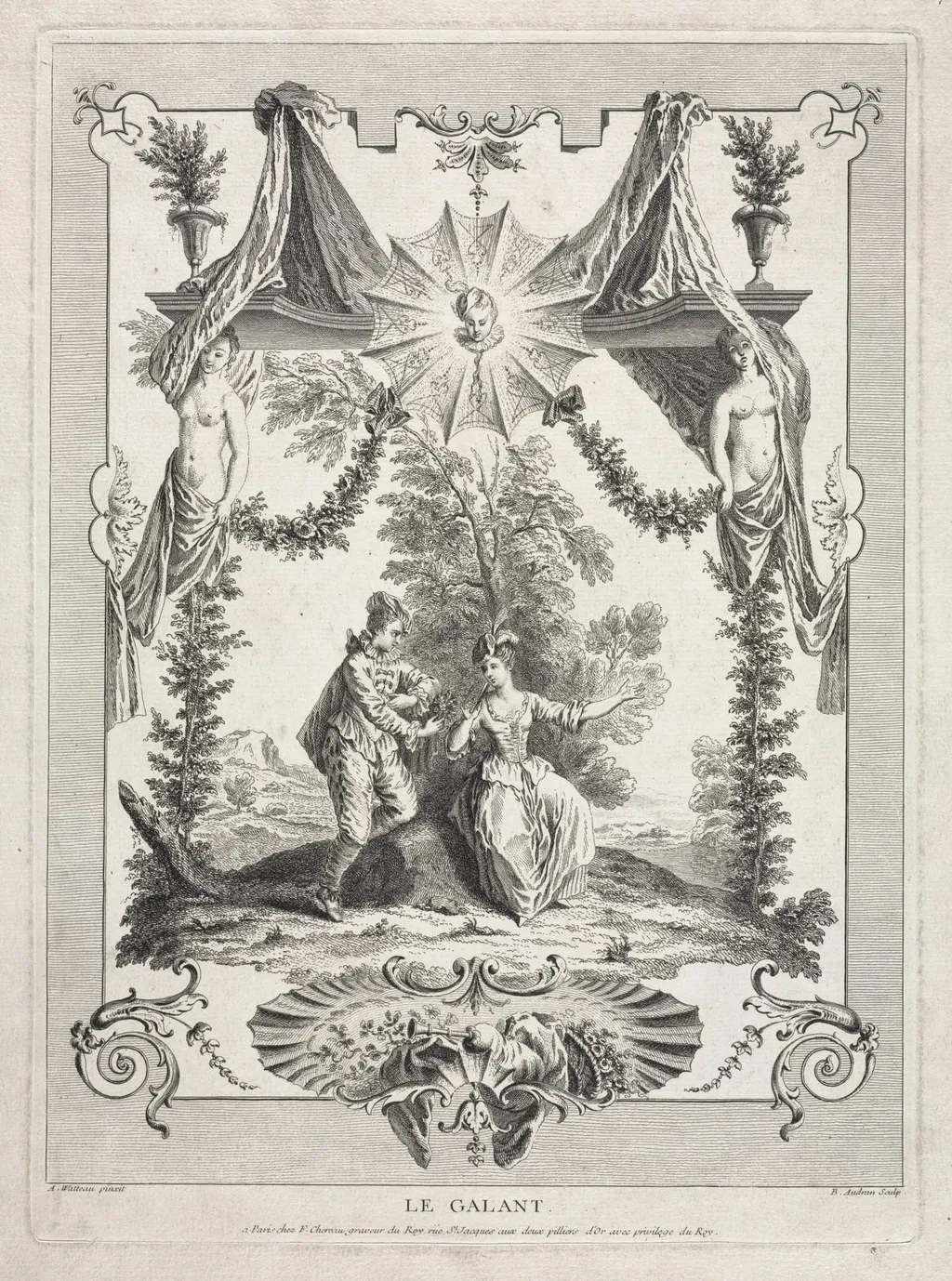
The Gallant is a print by the Baroque artist Benoit II Audran. It dates from 1742 and is held in the collection of the Cleveland Museum of Art.
About this work
Overview
Created in 1742 by Benoit II Audran, this engraved print is part of the collection at The Cleveland Museum of Art.
Created in 1742 by Benoit II Audran, this engraved print is part of the collection at The Cleveland Museum of Art. It presents a symbolic scene with figures arranged in a theatrical composition, framed by ornamental elements. The title, Le Galant, suggests themes of elegance or courtly behavior, though its narrative remains ambiguous. The work exemplifies the decorative sensibilities of mid-18th-century French printmaking.
Subject & Meaning
A woman kneels beside a tree, cradling a child as another figure leans toward her. Winged attendants hold back drapery to reveal a radiant sunburst above, evoking celestial favor. The rocky terrain and distant structures ground the scene in a terrestrial world. While the title implies gallantry or charm, the exact allegory is unconfirmed—possibly referencing virtue, maternal devotion, or idealized nobility within a moralizing tradition.
Technique & Style
Executed in fine line engraving, the print displays meticulous detail in fabric folds, foliage, and architectural elements. Dramatic contrasts of light and shadow enhance the luminous sunburst, while the ornate border frames the scene with classical motifs. The composition reflects the Baroque emphasis on movement and grandeur, though softened by the refined restraint typical of French academic engraving of the period.
History & Provenance
The print was produced during Benoit II Audran’s active years as a reproductive engraver in Paris, known for translating paintings into prints for elite collectors. It entered the Cleveland Museum of Art’s collection through established acquisition channels, likely as part of a broader 19th-century interest in European graphic arts. Its preservation reflects its status as a well-crafted example of 18th-century print culture.
Context
Produced in the decades following the death of Louis XIV, the print aligns with the transition from Baroque grandeur to Rococo delicacy. Its theatrical staging and symbolic imagery echo the allegorical prints popular in French salons and royal circles. Though less overtly ornate than earlier Baroque works, it retains the period’s preference for moralizing narratives rendered with technical precision.
Legacy
Benoit II Audran’s prints, including this one, contributed to the dissemination of visual allegories among educated audiences. While not widely reproduced today, the work remains a representative artifact of French engraving’s role in shaping cultural ideals. Its presence in major collections underscores its historical value as a document of aesthetic and intellectual trends in pre-Revolutionary France.
Artist & collection

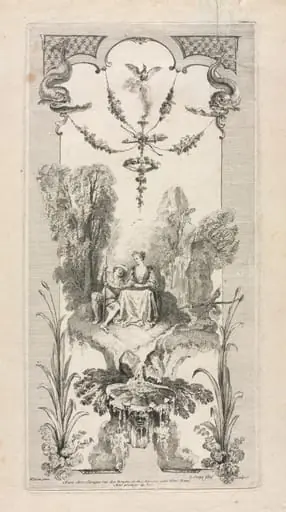 Pastoral, Arabesque
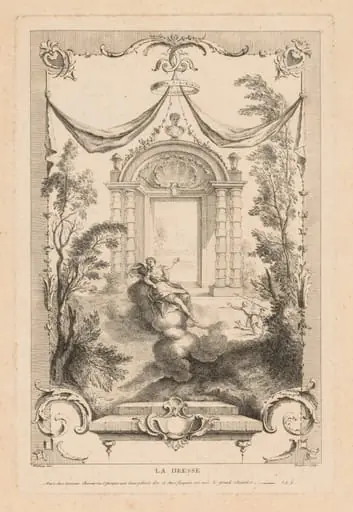 The Goddess, Diana on the Clouds
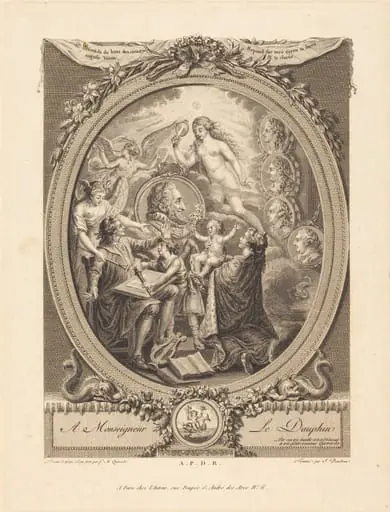 Allegory in Honor of Henri IV
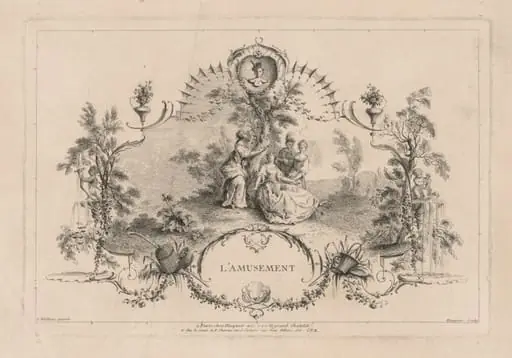 Amusement, Arabesque
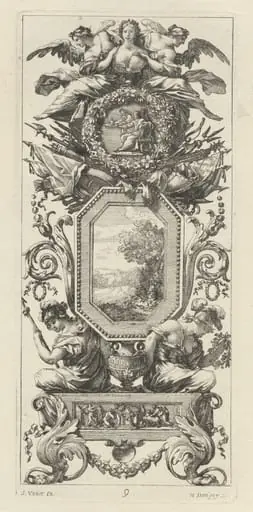 Ornamental Panel Surmounted with Two Figures Leaning on the Bust of a Woman
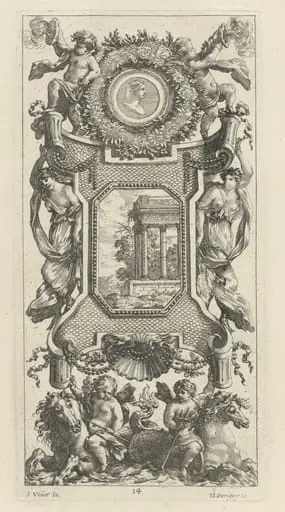 Ornamental Panel Surmounted by a Bust of a Woman and Two Putti with Flaming Trumpets
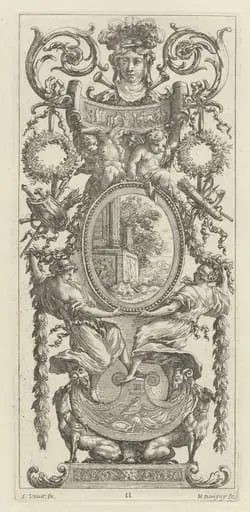 Ornamental Panel Surmounted with a Head Flanked by Foliage
![Renouvellement d'Alliance avec les Suisses 1663 (Renewal of Alliance with the Swiss 1663) [pl. 18], by Jean-Baptiste Massé](https://artifactworldgallery.com/img/jean-baptiste-masse--renouvellement-d-alliance-avec-les-suisses-1663-renewal-of-a--b0549fa383211be6-w320.webp) Renouvellement d'Alliance avec les Suisses 1663 (Renewal of Alliance with the Swiss 1663) [pl. 18]
Renouvellement d'Alliance avec les Suisses 1663 (Renewal of Alliance with the Swiss 1663) [pl. 18]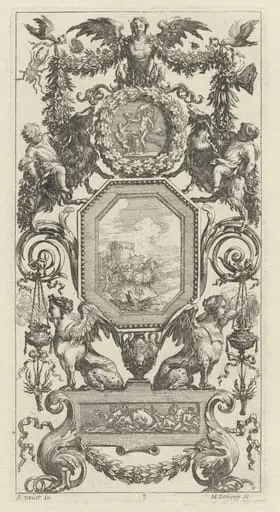 Ornamental Panel Surmounted by a Winged Harpy
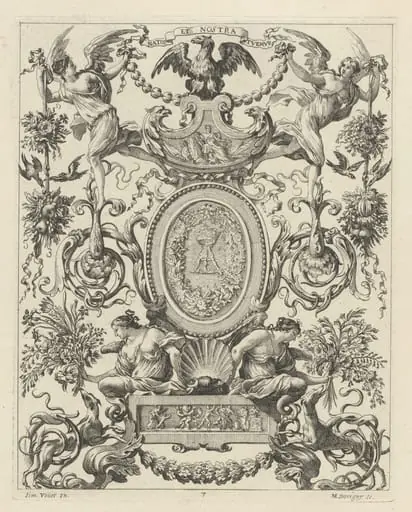 Ornamental Panel Surmounted by an Eagle and the Motto NATOS ET NOSTRA TUEMUR
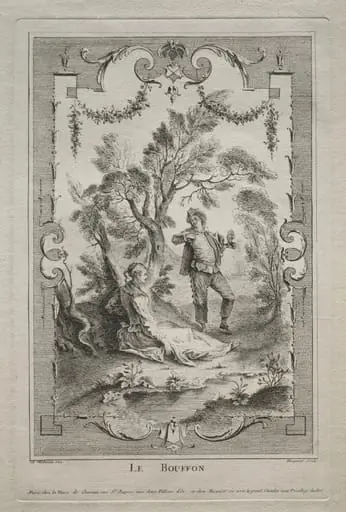 The Buffoon, Arabesque
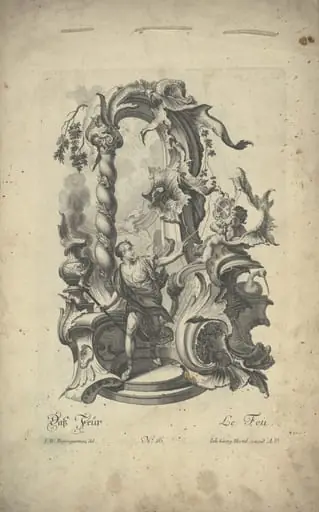 Das Feur