Artwork
A Huntsman
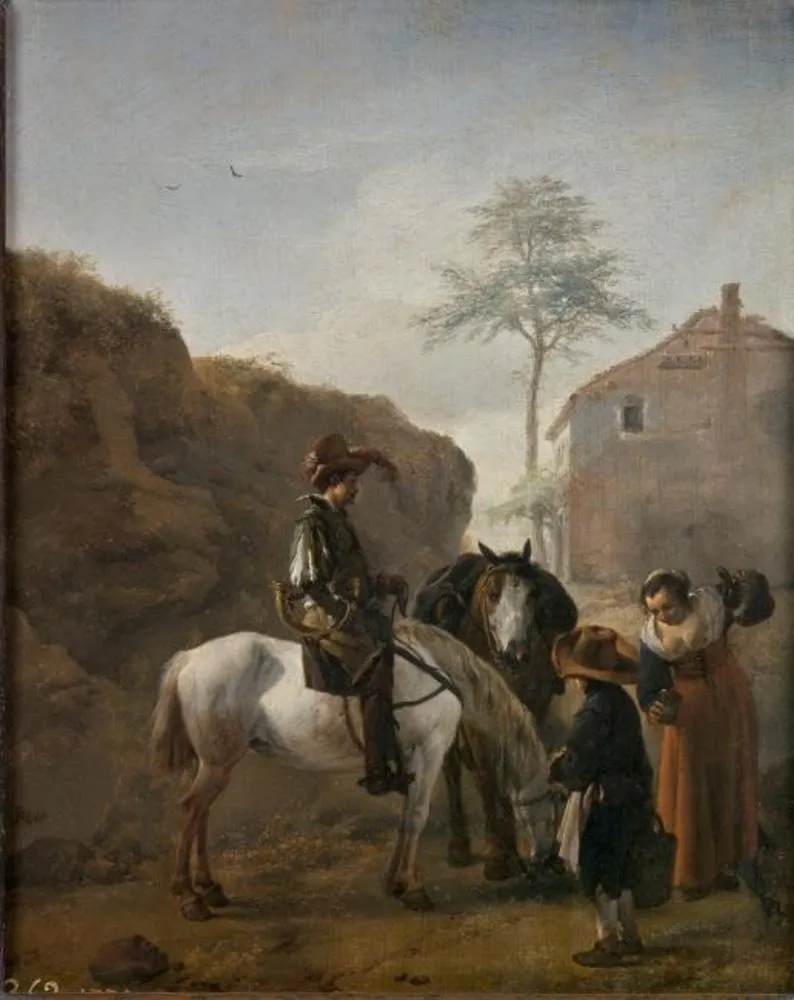
A Huntsman is an oil painting by the Dutch Golden Age artist Philips Wouwerman. It dates from 1650 and is held in the collection of the Museo del Prado.
About this work
Overview
It captures a quiet moment of transition, blending landscape with human narrative in the manner typical of Dutch genre painting of the era.
Painted around 1650 by Philips Wouwerman, *A Huntsman* is an oil on canvas work from the Dutch Golden Age. Created during Wouwerman’s most active period in Haarlem, where he was a member of the Guild of St. Luke, the painting reflects his focus on rural and equestrian scenes. It captures a quiet moment of transition, blending landscape with human narrative in the manner typical of Dutch genre painting of the era. The work is now part of the Museo del Prado’s collection.
Subject & Meaning
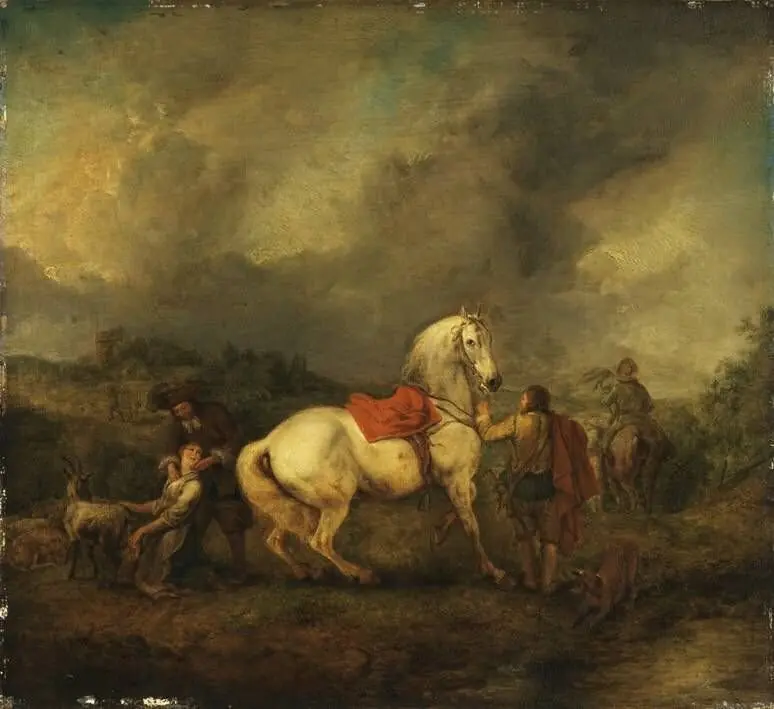
The painting portrays a huntsman on horseback, equipped with a horn and firearm, suggesting preparation for or return from a hunt. Behind him, a woman in an orange dress and a child in dark clothing stand near a second horse, possibly family members awaiting his return. The scene conveys domestic continuity amid the transient nature of hunting life. No overt drama is present; instead, the quiet interaction between figures implies routine, duty, and the rhythms of rural existence.
Technique & Style
Wouwerman employs fine brushwork to render textures of fabric, leather, and foliage with precision. The composition balances the central figure with a restrained landscape—rock, tree, and distant building—creating depth without clutter. Light is soft and even, enhancing the naturalism of the scene. His palette is muted yet deliberate: earth tones dominate, with the woman’s orange dress and the horse’s white coat providing subtle contrast. The style reflects the Dutch preference for observed reality over idealization.
History & Provenance
The painting entered the Museo del Prado’s collection in the 19th century, likely through acquisition from Spanish royal or noble holdings. Its presence in Spain suggests circulation of Dutch art beyond the Netherlands during the Baroque period. While specific ownership records before the 1800s are sparse, its inclusion in the Prado’s catalog confirms its recognized status among European collections by the early modern era.
Context
During the mid-17th century, Dutch painters increasingly turned to scenes of everyday life, including hunting, travel, and rural labor. Wouwerman’s work aligned with this trend, appealing to collectors who valued detailed, relatable imagery. Unlike grand historical or religious subjects, his paintings offered intimate glimpses into the lives of common people, reflecting the cultural priorities of a prosperous, secular society.
Legacy
Wouwerman’s influence extended through his prolific output and the popularity of his equestrian and hunting themes among contemporaries and later collectors. While not as widely studied today as Rembrandt or Vermeer, his work remains a representative example of Dutch genre painting’s quiet realism. *A Huntsman* endures as a testament to the period’s fascination with the interplay between human activity and the natural world.
Artist & collection
Artist
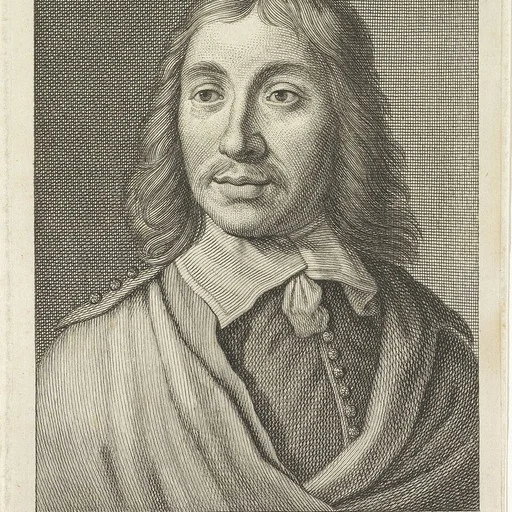
Philips Wouwerman (also Wouwermans) (24 May 1619 (baptized) – 19 May 1668) was a Dutch painter of hunting, landscape and battle scenes. He became prolific during the Dutch Golden Age and joined the Haarlem Guild of St. Luke.

 La potcovar
 Halt zweier Reiter
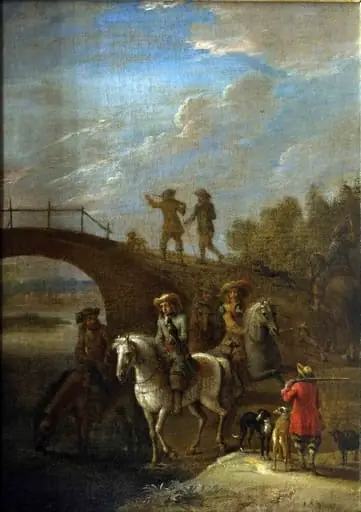 Plecarea la vânătoare
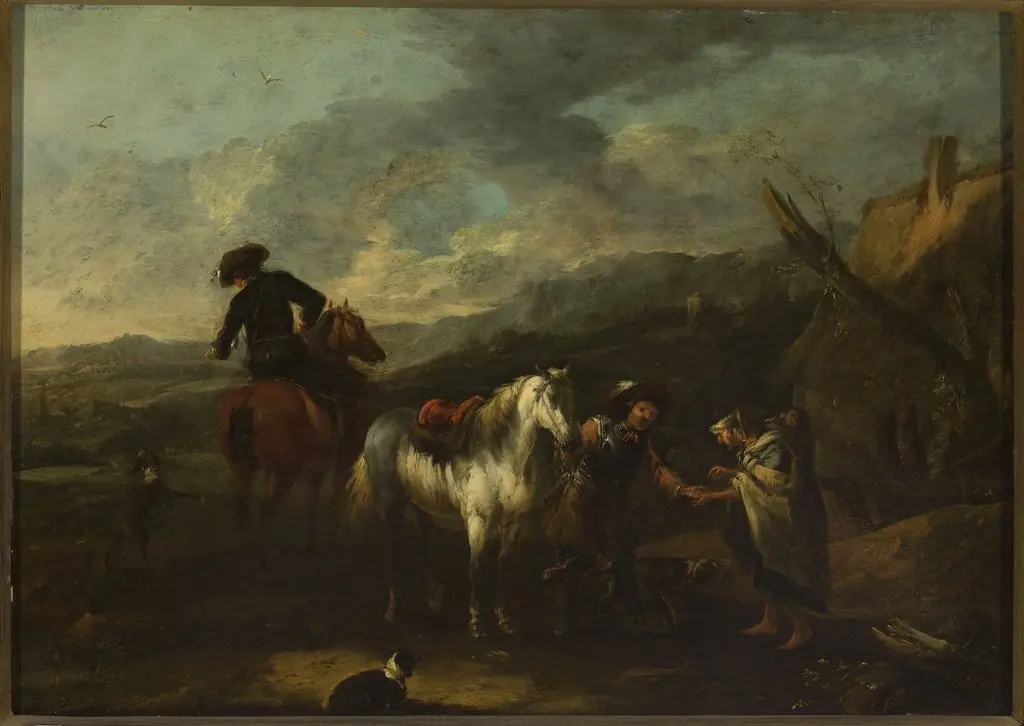 Horsemen and a beggar woman against landscape
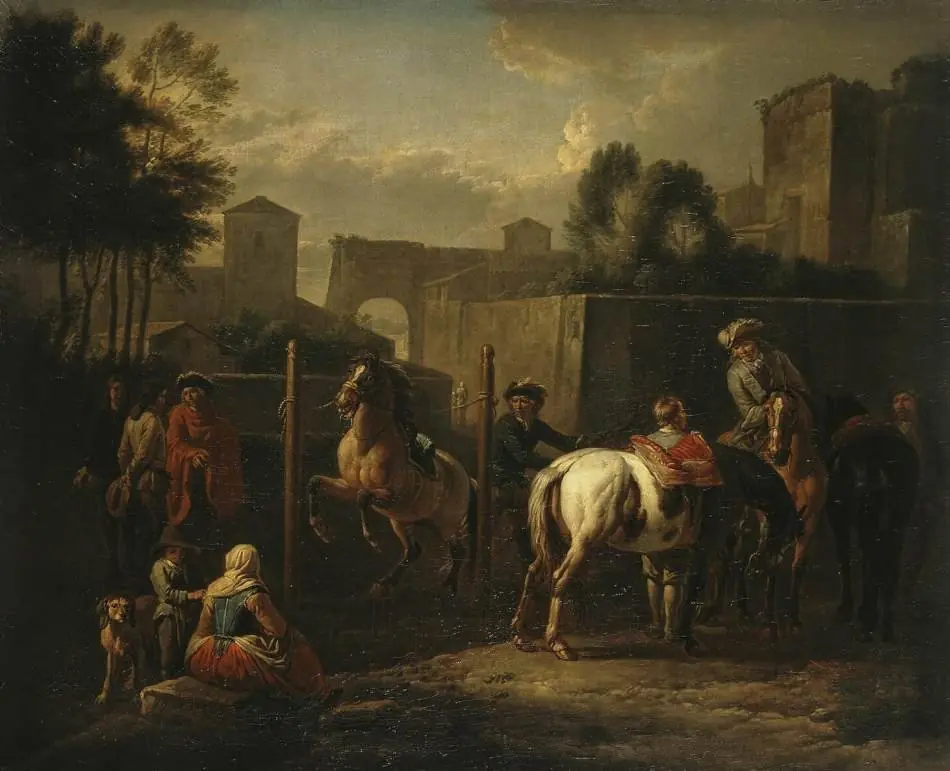 Open-Air Manege
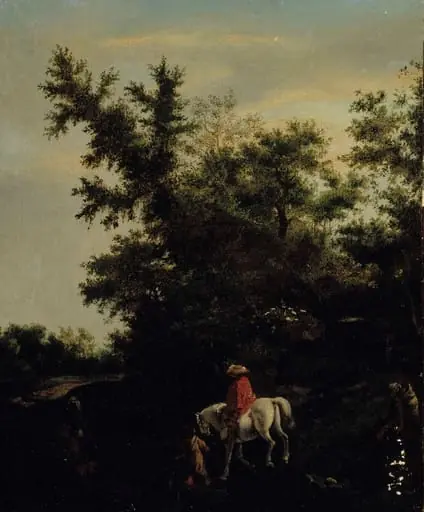 Kulkijoita metsätiellä
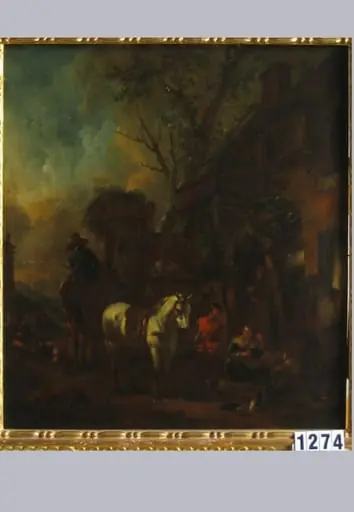 Popas lângă cârciumă (în registrul inventar: Lângă cârciumă)
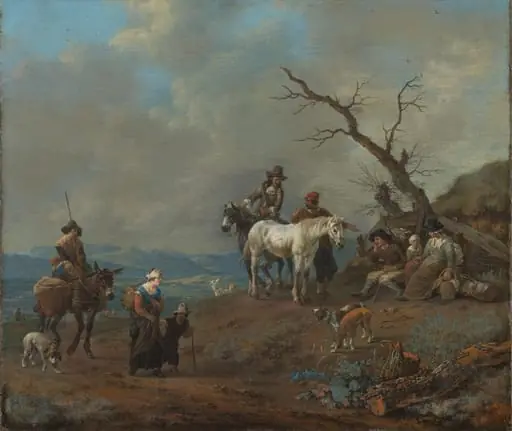 Country Road with Hunter and Peasants
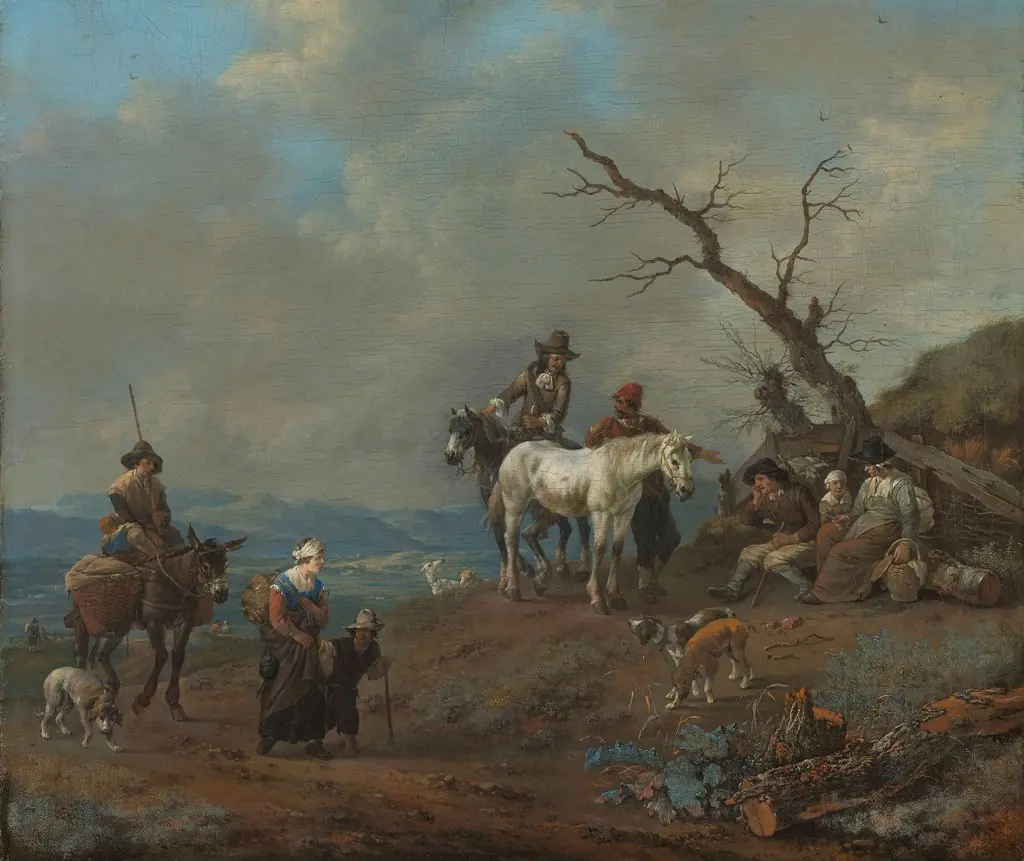 Country road with hunter and peasants
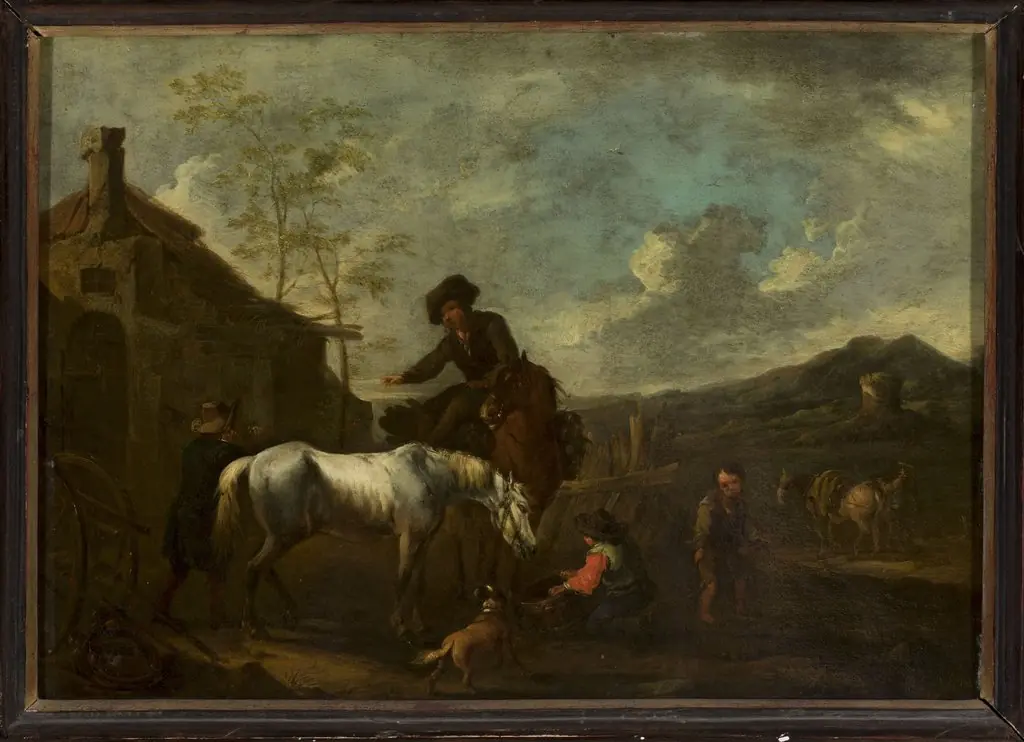 Watering the horses
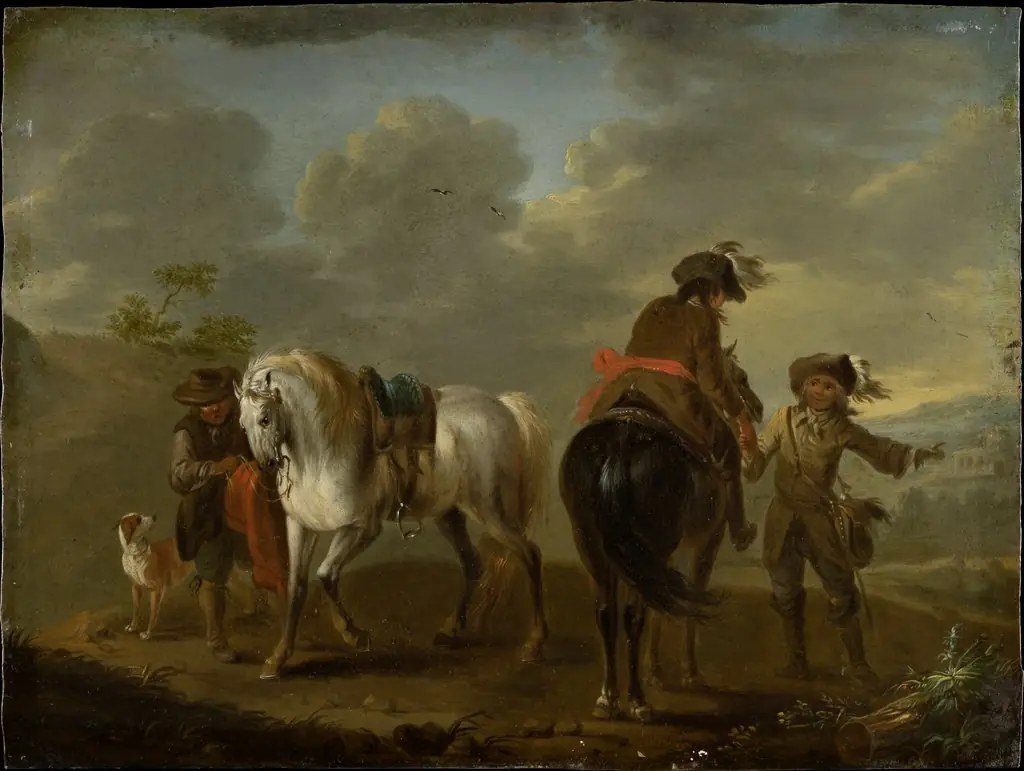 Landscape with Riders
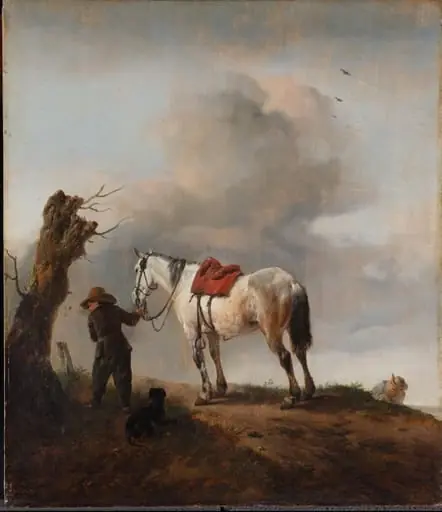 De schimmel