Artwork
Plecarea la vânătoare
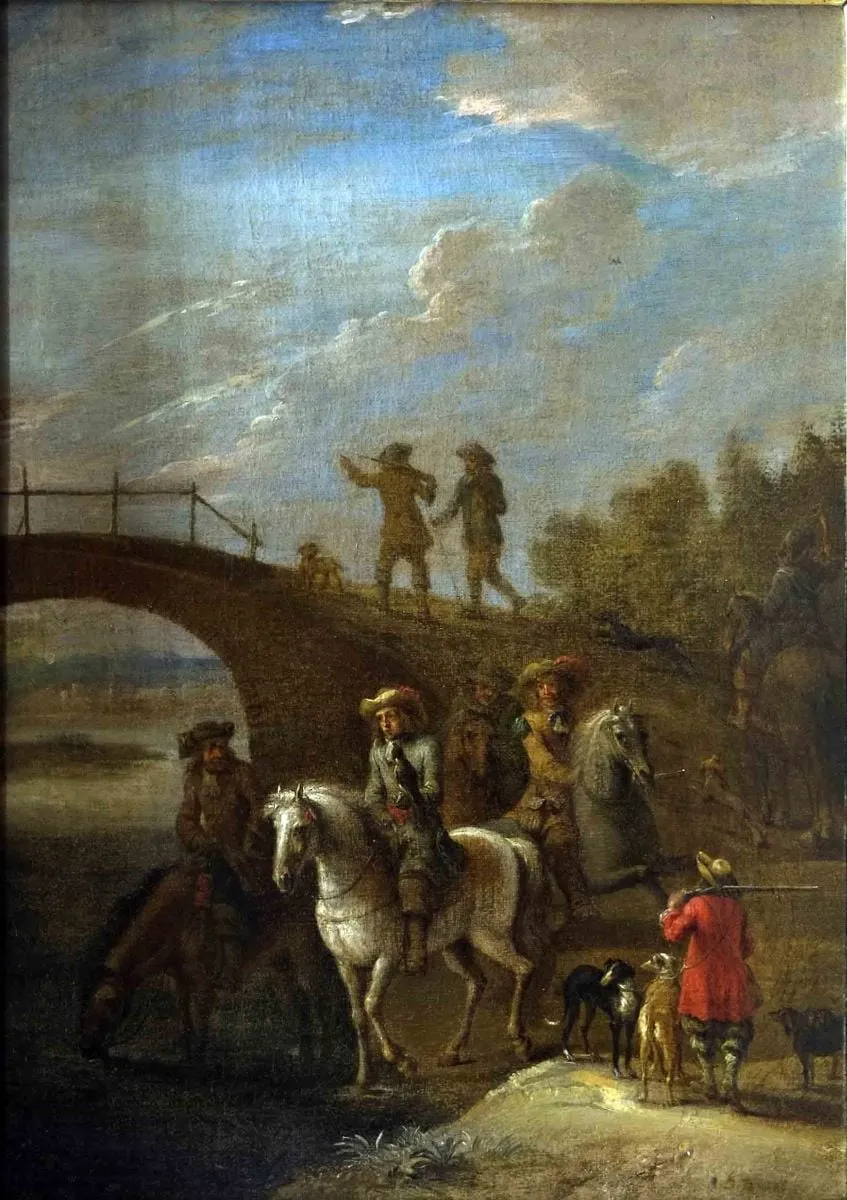
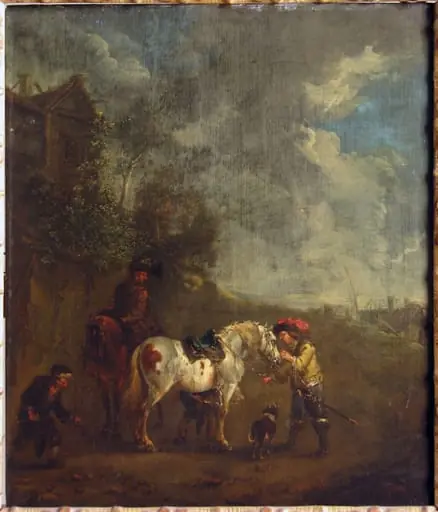
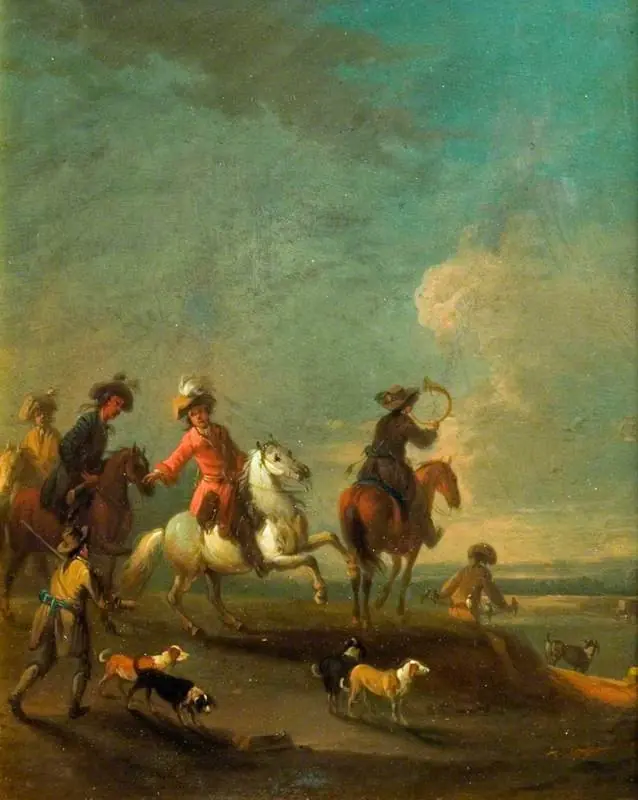
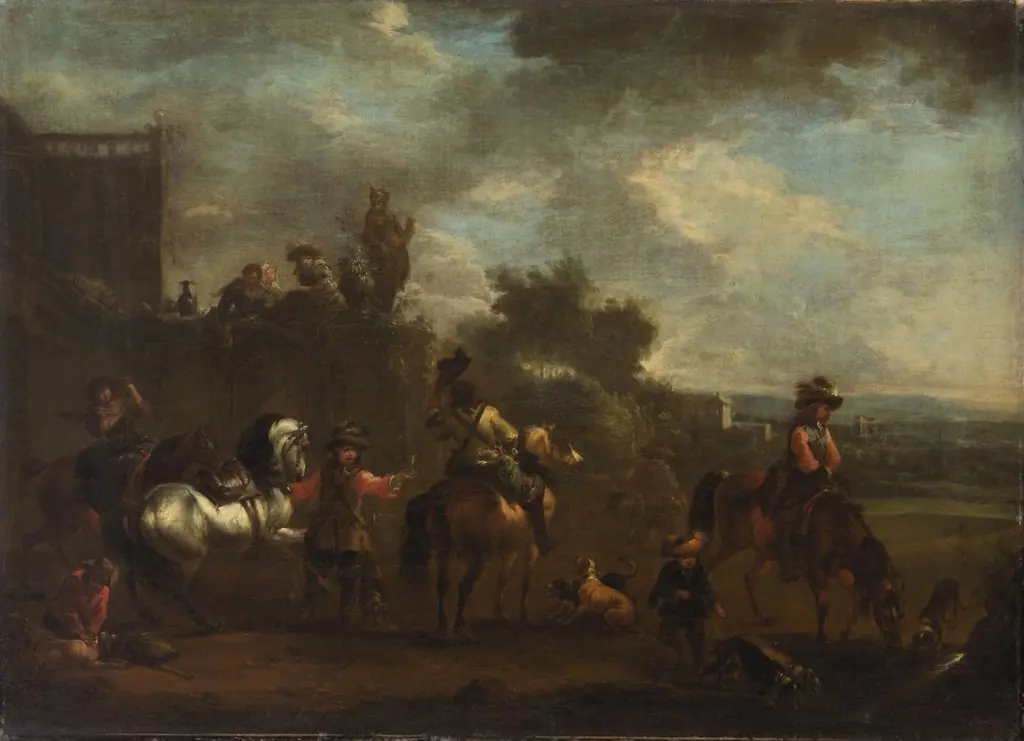
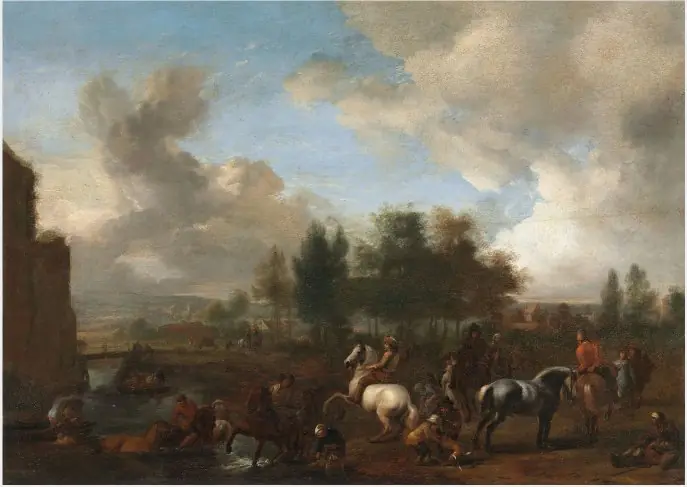
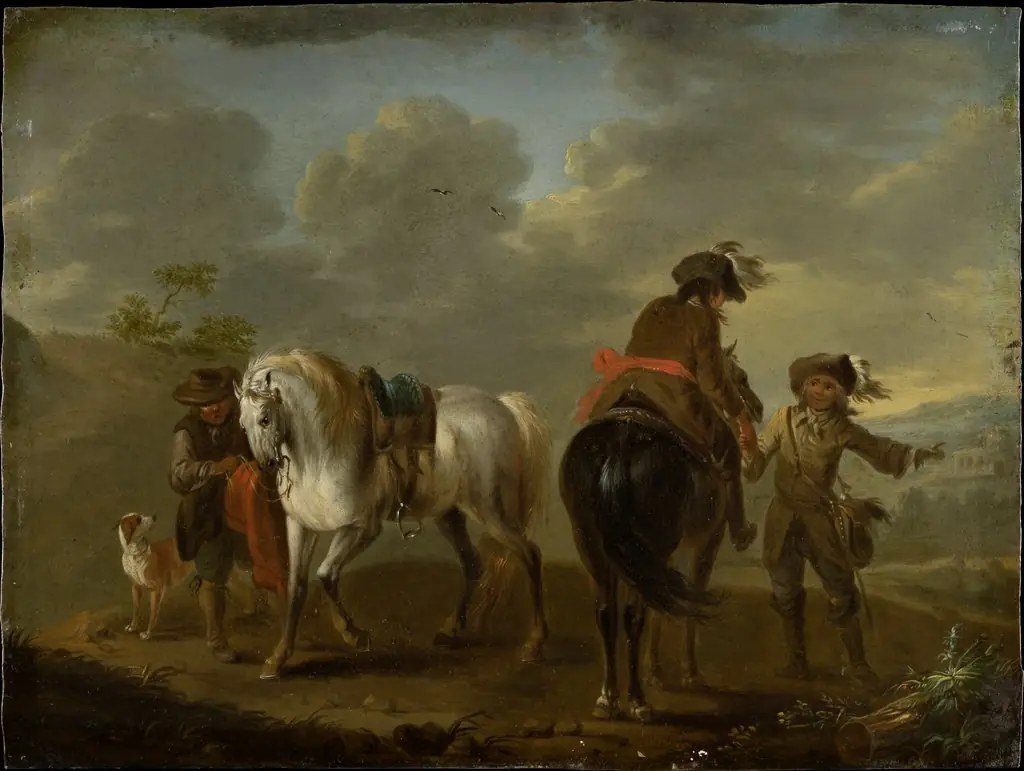
Plecarea la vânătoare is a print by the Baroque artist David cel Tânăr Teniers. It is held in the collection of the National Museum of Art of Romania. This painting depicts a rural hunting party in a landscape setting, centered around a bridge.
About this work
Overview
Four horseback riders, dressed in 18th-century attire with broad hats, dominate the foreground.
This painting depicts a rural hunting party in a landscape setting, centered around a bridge. Four horseback riders, dressed in 18th-century attire with broad hats, dominate the foreground. A fifth figure in red stands nearby, guiding two dogs on a leash. The composition draws attention to the interaction between figures and environment, with a subtle narrative suggested by the distant walkers on the bridge who appear to be observing something beyond the frame.
Subject & Meaning
The scene captures a moment of preparation or pause in a hunting expedition, common in rural European life during the 1700s. The presence of dogs and riders suggests a coordinated activity, while the two figures on the bridge may indicate observers or fellow participants. The painting avoids overt drama, instead conveying quiet anticipation, possibly reflecting social customs tied to land use and leisure among the rural elite.
Technique & Style
The artist employs chiaroscuro to model forms through contrasting light and shadow, particularly on faces and fabric, enhancing three-dimensionality. Brushwork is precise yet fluid, with attention to the texture of wool, leather, and horsehide. The sky is rendered with dynamic, swirling clouds that add motion and tension, grounding the scene in a specific time of day and weather, reinforcing the naturalism of the setting.
History & Provenance
The painting’s origins are tied to regional traditions of rural portraiture in Eastern Europe, likely created in the late 18th or early 19th century. Its early ownership remains undocumented, but its style aligns with local artists who documented everyday life without idealization. It entered institutional collections in the 20th century, valued for its unembellished depiction of provincial customs.
Context
During the period it was made, hunting was both a practical activity and a social ritual among landowners and their retainers. Paintings of such scenes often served as records of status and land use. Unlike grand historical works, this piece reflects a quieter, more intimate tradition — one that valued observation over spectacle, capturing moments of daily life with quiet dignity.
Legacy
The work contributes to a broader corpus of regional European art that prioritized authenticity over romanticism. It influenced later artists interested in documenting rural life with psychological nuance. Its restrained palette and focus on natural light helped preserve a visual record of pre-industrial customs, offering insight into social dynamics outside urban centers.
Artist & collection
Artist
A Flemish painter who loved taverns and card games, he filled canvases with warm, smoky rooms where figures huddle around tables.