Artwork
MĂNĂSTIREA BIZANTINĂ VALADON DIN SALONIC - GRECIA
MĂNĂSTIREA BIZANTINĂ VALADON DIN SALONIC - GRECIA is a print by Alexandru Phoebus. It dates from 1931 and is held in the collection of the National Museum of Art of Romania.
About this work
Overview
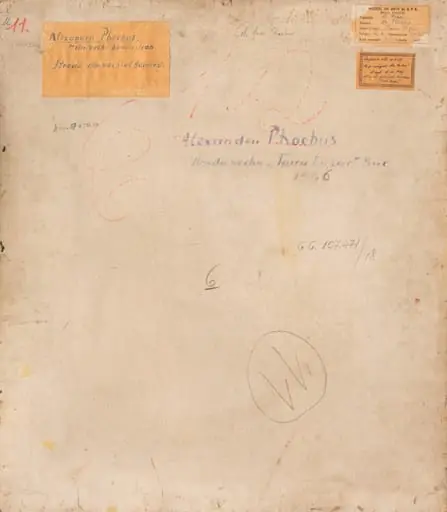
MĂNĂSTIREA BIZANTINĂ VALADON DIN SALONIC - GRECIA, attributed to Alexandru Phoebus (1931), presents a paradoxical visual identity. At its core, the work is an off-white, rough-textured paper with no discernible artistic rendering.
Subject & Meaning
The subject, ostensibly a Byzantine monastery, is entirely absent from the visual representation. The blankness and imperfections (stains, faint marks, central tear) suggest either an unfinished state, a printing error, or a conceptual approach prioritizing absence over representation.
Technique & Style
Technically, the piece appears to be a print or paper work, though its execution is marred by (or intentionally incorporates) flaws. The style, if intentional, could be seen as minimalist or anti-representational, contrasting sharply with traditional depictions of architectural subjects.
History & Provenance
Created in 1931 by Alexandru Phoebus, the work's history and ownership trail are not detailed here. Its condition and appearance imply it might not be a final or intended artwork, potentially being a test, draft, or accidental byproduct.
Context
Understanding the context in which Phoebus created this work is crucial. Early 20th-century art saw a surge in experimental practices. If intentional, this work could reflect Phoebus's engagement with such movements, though without further context, its status as a deliberate artistic statement is speculative.
Legacy
The legacy of this particular work is unclear due to its ambiguous nature. It does not appear to contribute significantly to Phoebus's recognized body of work or influence broader artistic trends, potentially being an anomaly or oversight in his catalog.
Artist & collection