Artwork
Travelers in Gigantic Caverns
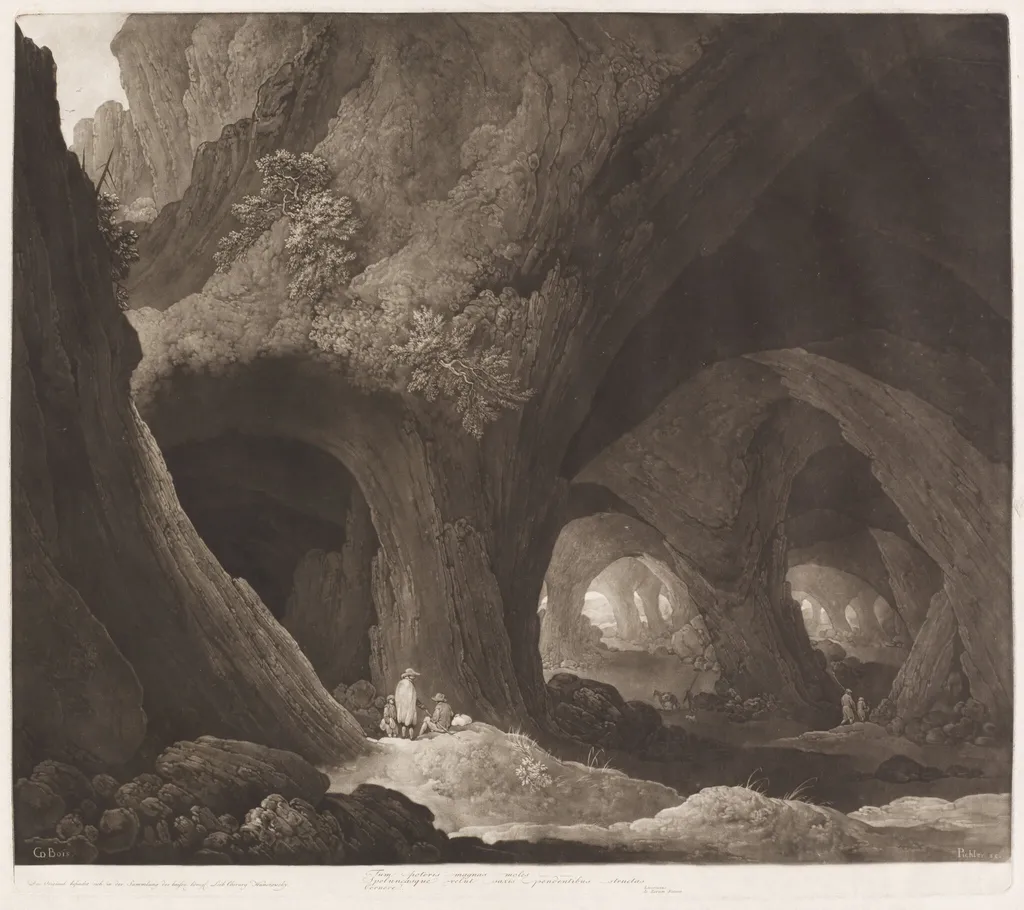
Travelers in Gigantic Caverns is an ink print by the Romanticist artist Johann Peter Pichler. It dates from 1800 and is held in the collection of the National Gallery of Art.
About this work
Overview
It is a proof state, lacking the eventual caption, suggesting it was an early impression made before final publication.
Travelers in Gigantic Caverns is a mezzotint print on wove paper, produced around 1800 by Johann Peter Pichler. It is a proof state, lacking the eventual caption, suggesting it was an early impression made before final publication. The work belongs to the printmaking tradition of late 18th-century Europe, where dramatic natural scenes were rendered with intricate tonal gradations to evoke atmosphere and scale.
Subject & Meaning
A small group of figures, dressed in period attire, stands within an immense subterranean space. Their scale emphasizes the cavern’s monumental architecture—massive rock formations resembling columns and arches. Sparse vegetation clings to the walls, hinting at nature’s slow reclamation of the underground. The figures appear contemplative, suggesting exploration or awe, but no narrative is given, leaving interpretation open to the viewer’s sense of wonder.
Technique & Style
Pichler employed mezzotint, a labor-intensive technique using a rocker to texture the plate, allowing subtle transitions between deep shadow and faint light. The print’s chiaroscuro enhances the cavern’s depth, with dim ambient light revealing only the contours of rock and figures. The style aligns with Romantic-era sensibilities, favoring mood and scale over precise detail, using tone to evoke mystery rather than clarity.
History & Provenance
The print was created in the early 19th century, likely as part of a series of imaginative landscapes. As a proof before caption, it predates the final published version, making it a rare variant. No documented early ownership is recorded, but such prints circulated among collectors interested in topographical and fantastical imagery, often used to illustrate travel literature or philosophical musings on nature.
Context
Produced during the height of Romanticism, the work reflects a cultural fascination with the sublime—nature’s grandeur and mystery. Caves and ruins were popular motifs, symbolizing time, decay, and human insignificance. Pichler’s image aligns with contemporaneous prints by artists like Piranesi and Füssli, who used scale and darkness to evoke emotional responses, moving beyond mere topography toward psychological depth.
Legacy
Though not widely reproduced or studied today, Travelers in Gigantic Caverns exemplifies the technical and thematic concerns of early 19th-century printmaking. Its preservation in institutional collections underscores its value as a specimen of Romantic visual culture. The work contributes to understanding how printmakers translated literary and philosophical ideas into intimate, tonal compositions for private contemplation.
Artist & collection


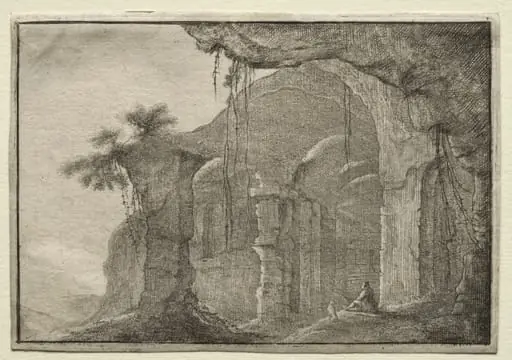 Ruins of an Amphitheatre
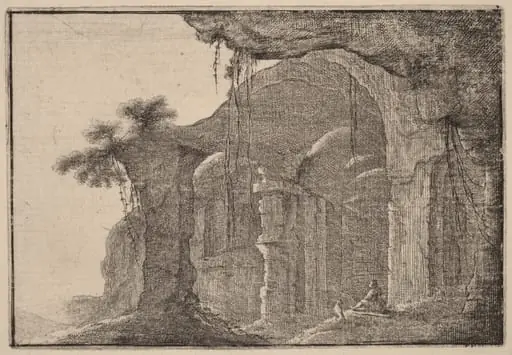 Ruins of an Amphitheater
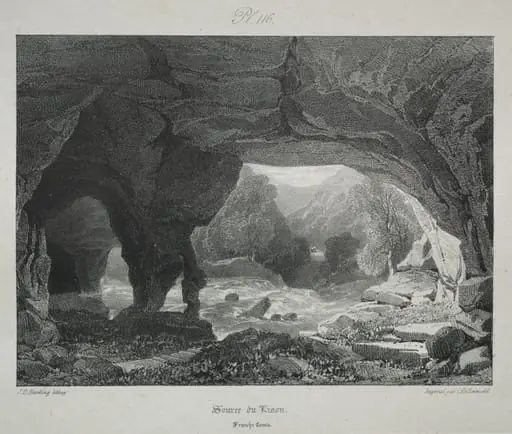 Voyages pittoresques et romantiques dans l'ancienne France. Franche-Comté: Source du Lison
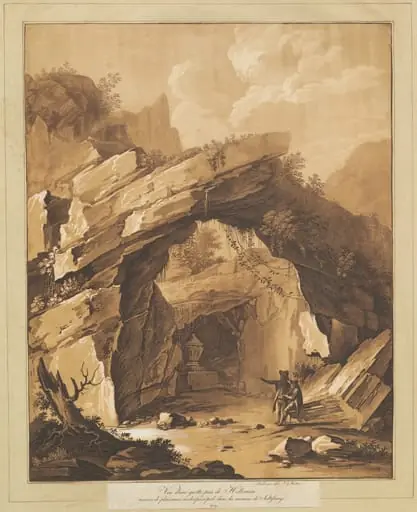 View of the Grotto by Heilbrunn, near Salzburg
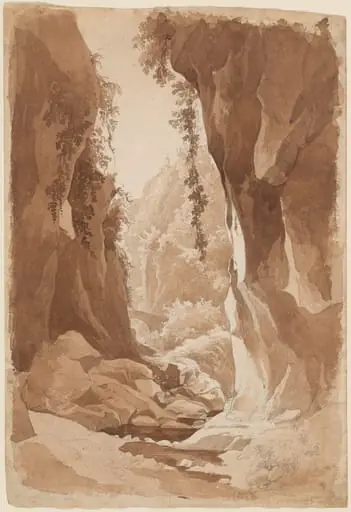 Cliffs Overhanging a River Gorge near Sorrento (recto)
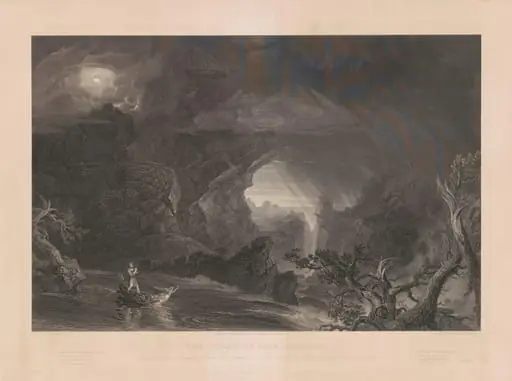 The Voyage of Life: Manhood
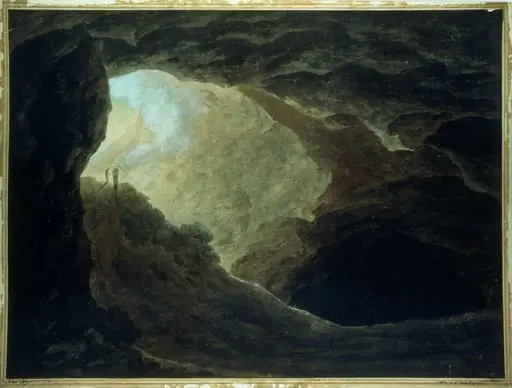 A Cavern in the Campagna, Rome
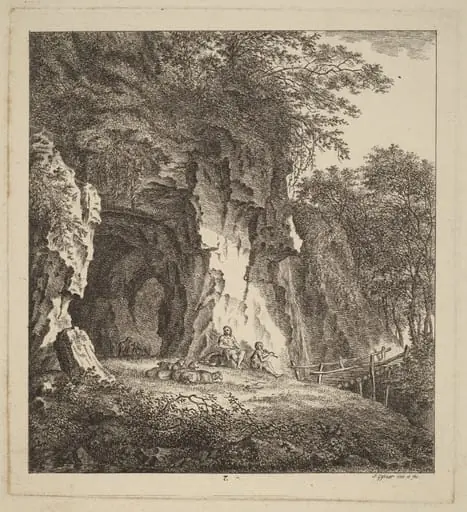 Two Shepherds in a Rocky Landscape
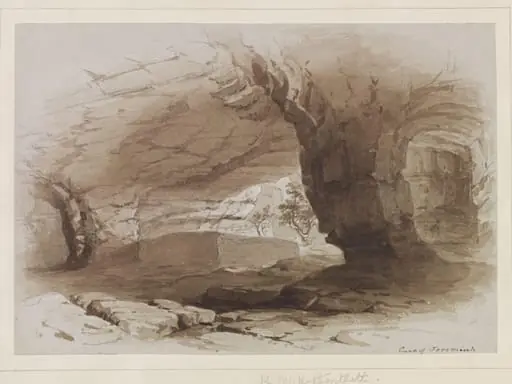 Cave of Jeremiah, Jerusalem
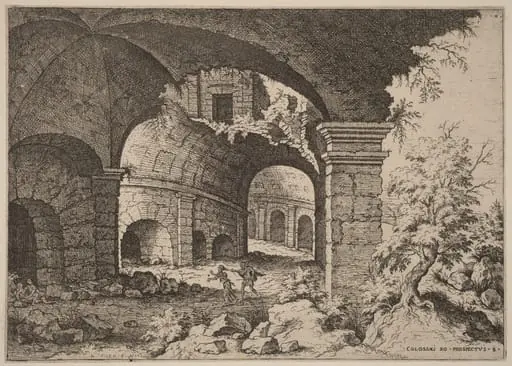 Eighth View of the Colosseum