Artwork
The Virgin and Child wiith four Saints
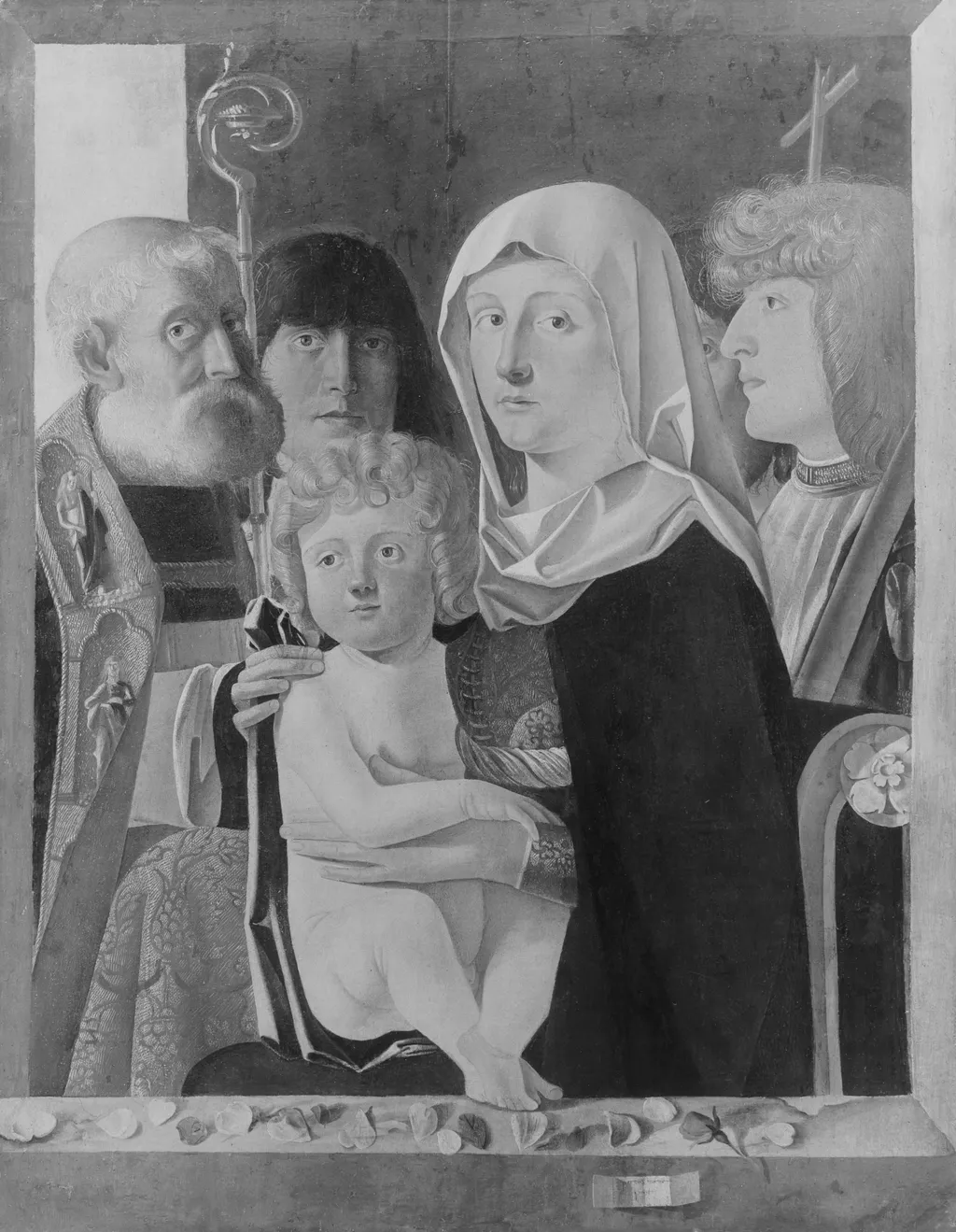
The Virgin and Child wiith four Saints is a paint painting by the Early Renaissance artist Pier Maria Pennacchi. It dates from 1496 and is held in the collection of the Gemäldegalerie Berlin.
About this work
Overview
Executed in 1496, this tempera panel represents Pier Maria Pennacchi’s contribution to early Renaissance devotional imagery. The composition assembles five figures in close proximity, creating an intimate tableau that reflects contemporary Trevisan workshop conventions.
Subject & Meaning
At the center stands the Virgin supporting the Christ Child, who balances an unidentified object. Flanking them are four saints: an elderly bishop identified by his crozier, a tonsured cleric, a female martyr distinguished by her white veil, and a robed youth glancing outward. Their collective presence suggests intercessory devotion within a private or semi-public setting.
Technique & Style
Pennacchi employs tempera on panel, modeling forms through controlled transitions of light and shadow—a method approximating early chiaroscuro. Drapery folds and facial contours are rendered with crisp linearity, while the compressed spatial arrangement emphasizes frontal immediacy over perspectival depth.
Read more
Documented in Treviso during the late fifteenth century, the painting entered the Gemäldegalerie Berlin’s collection by the twentieth century. Its attribution aligns with Pennacchi’s documented activity in Treviso’s cathedral and Venetian ecclesiastical projects, though some works from his circle remain debated.
Context
The work emerges from Treviso’s local artistic milieu, where Pennacchi produced frescoes and altarpieces for regional patrons. Its format and iconography reflect broader early Renaissance practices, balancing standardized saintly types with individualized facial expressions suited to private contemplation.
Artist & collection
Artist
Pier Maria Pennacchi (1464 – before 1515) was an Italian Renaissance painter primarily active in Treviso.

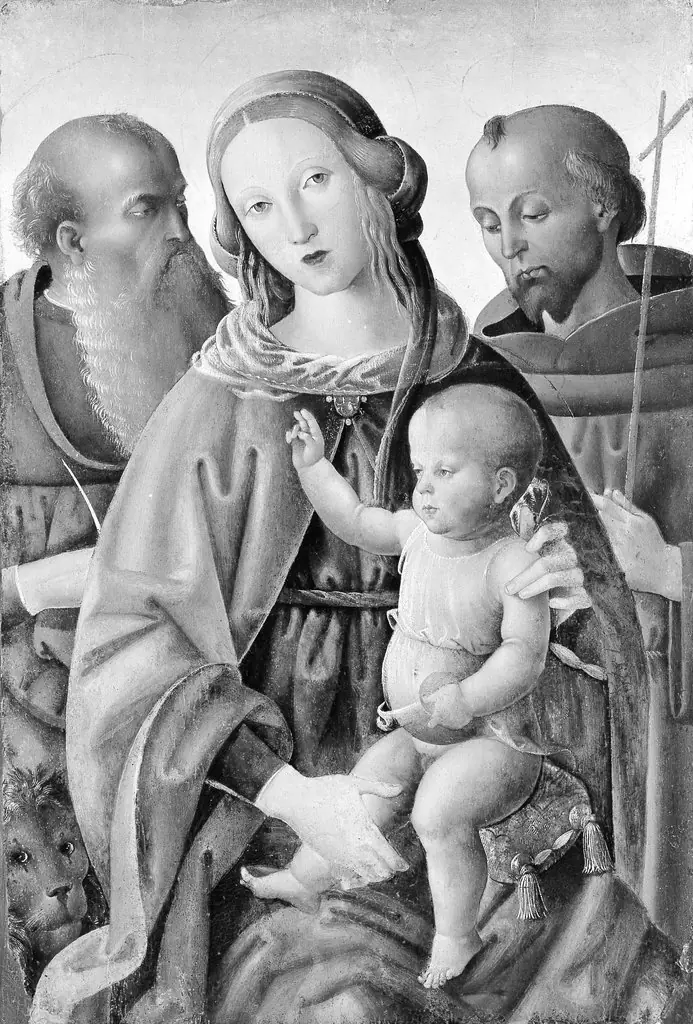 Madonna and Child with Saints Jerome and Francis
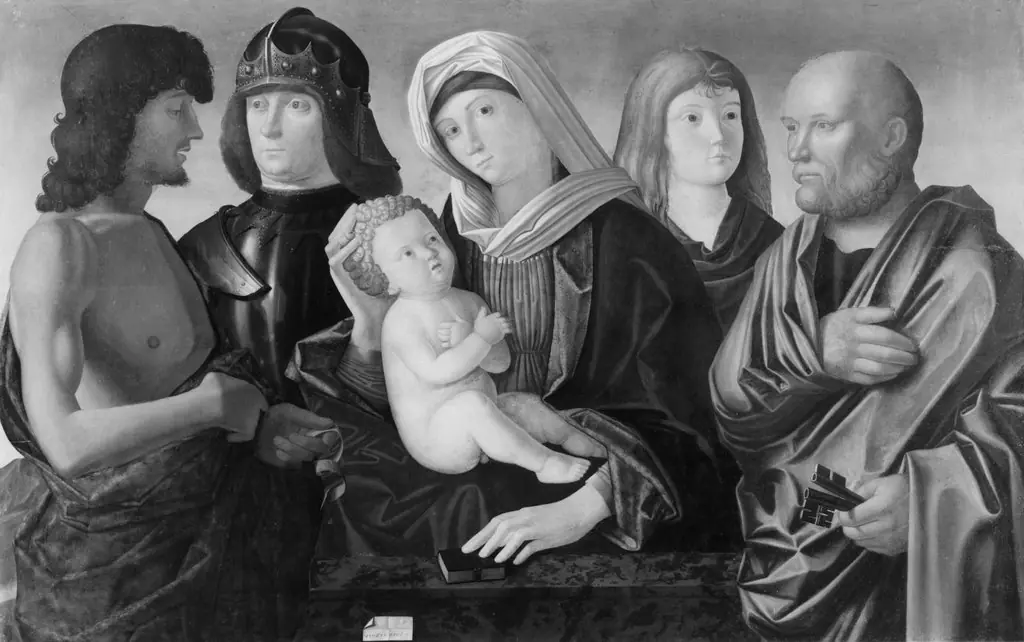 Sacred conversation
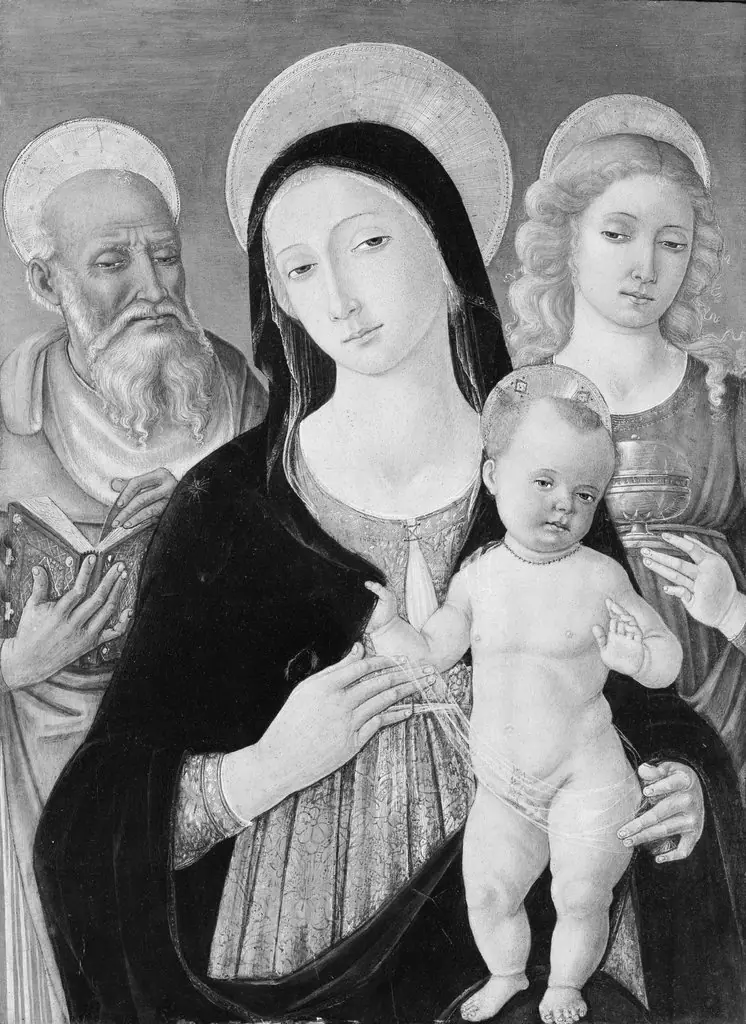 Madonna and Child with Saints Jerome and Mary Magdalen
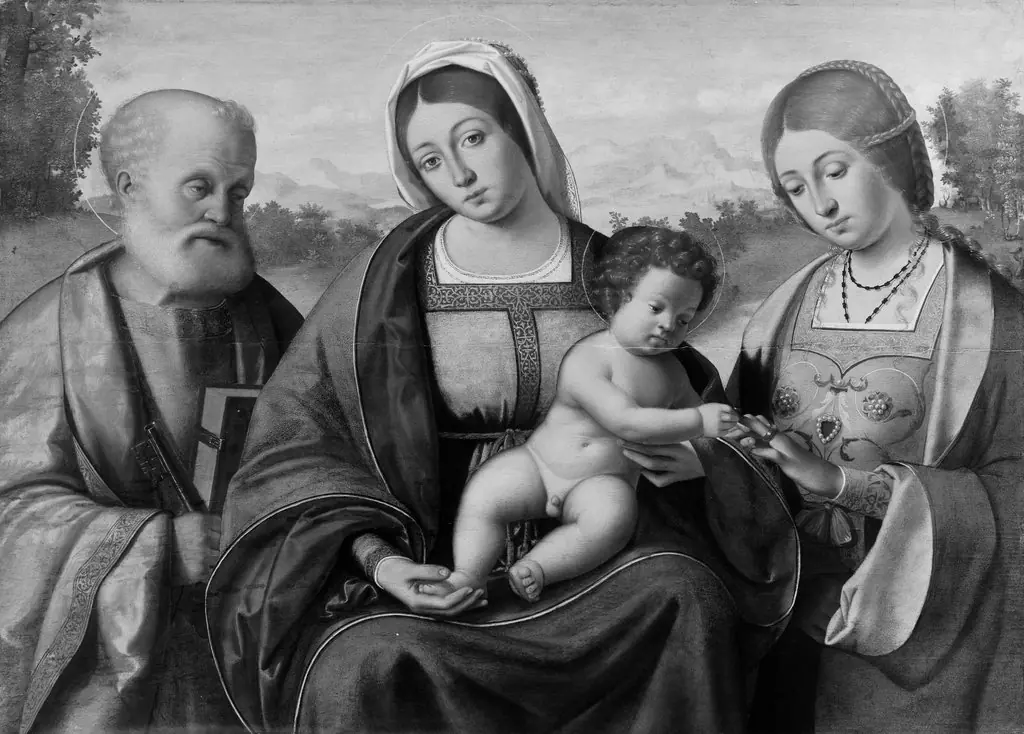 The engagement of Saint Catherine
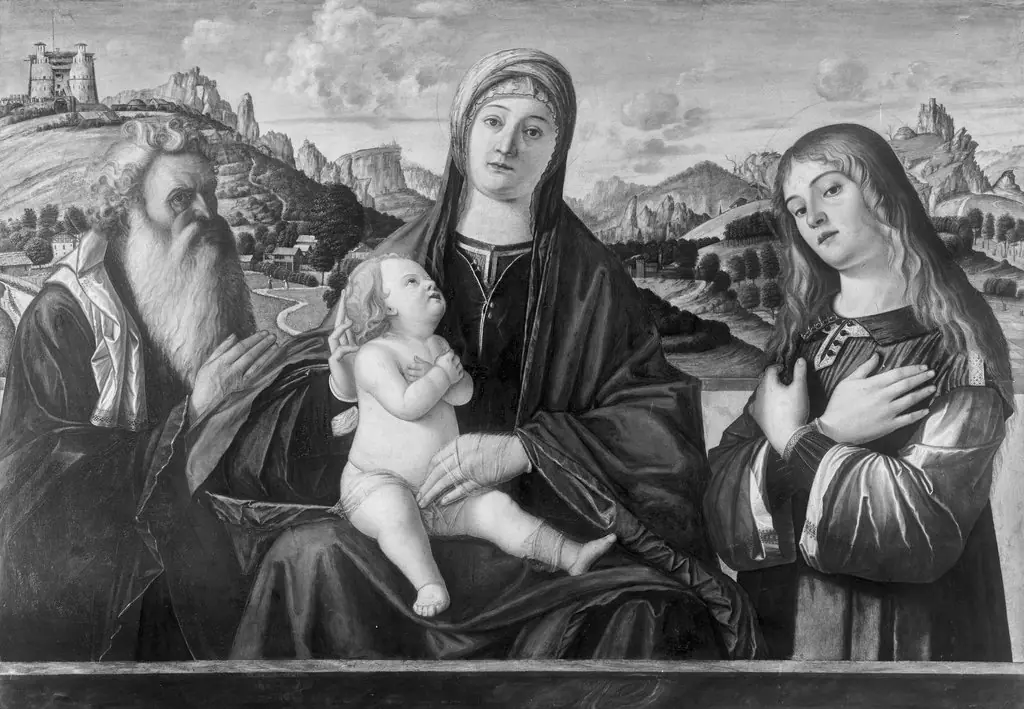 Madonna and Child with two Saints
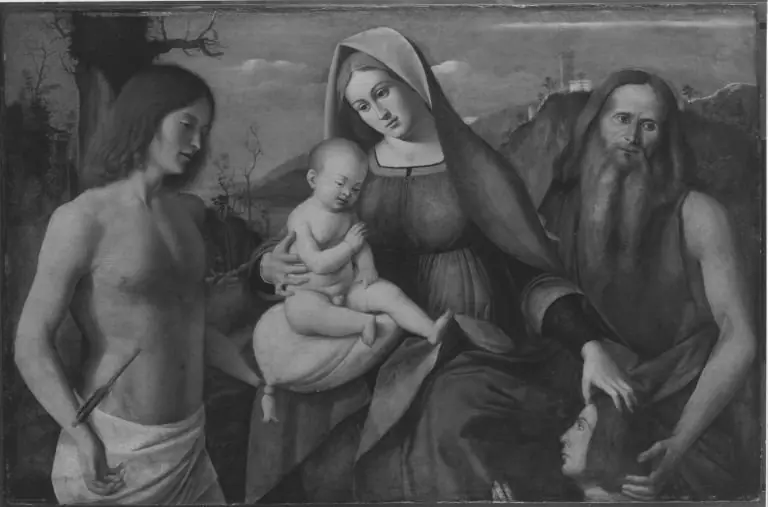 Madonna and Child, Saints Jeronimo, Sebastian und a donor
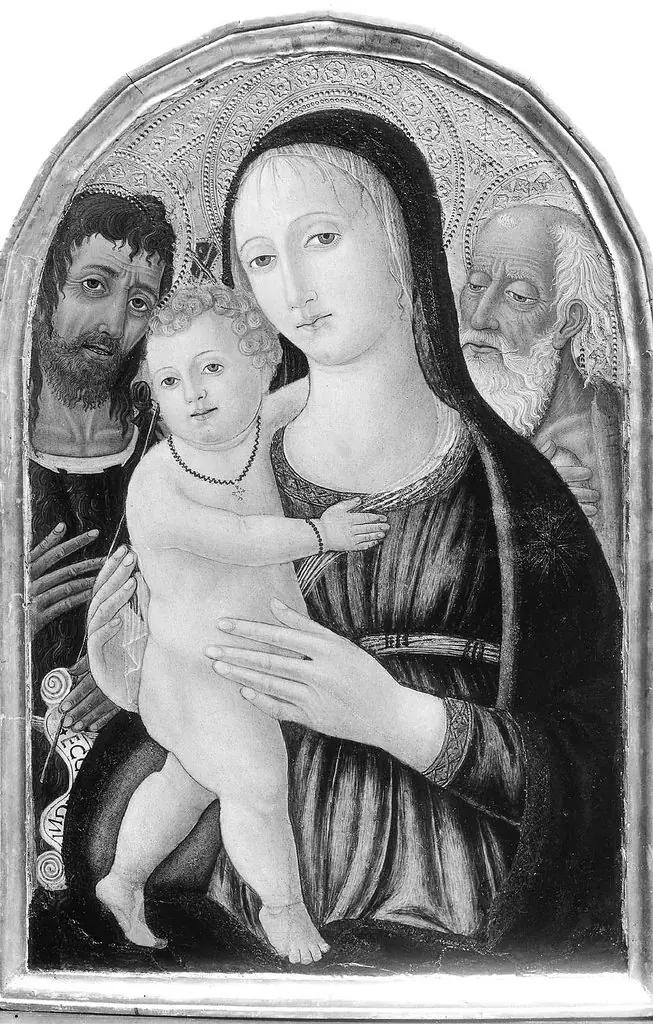 Virgin and Child with Saints Jerome and John the Baptist
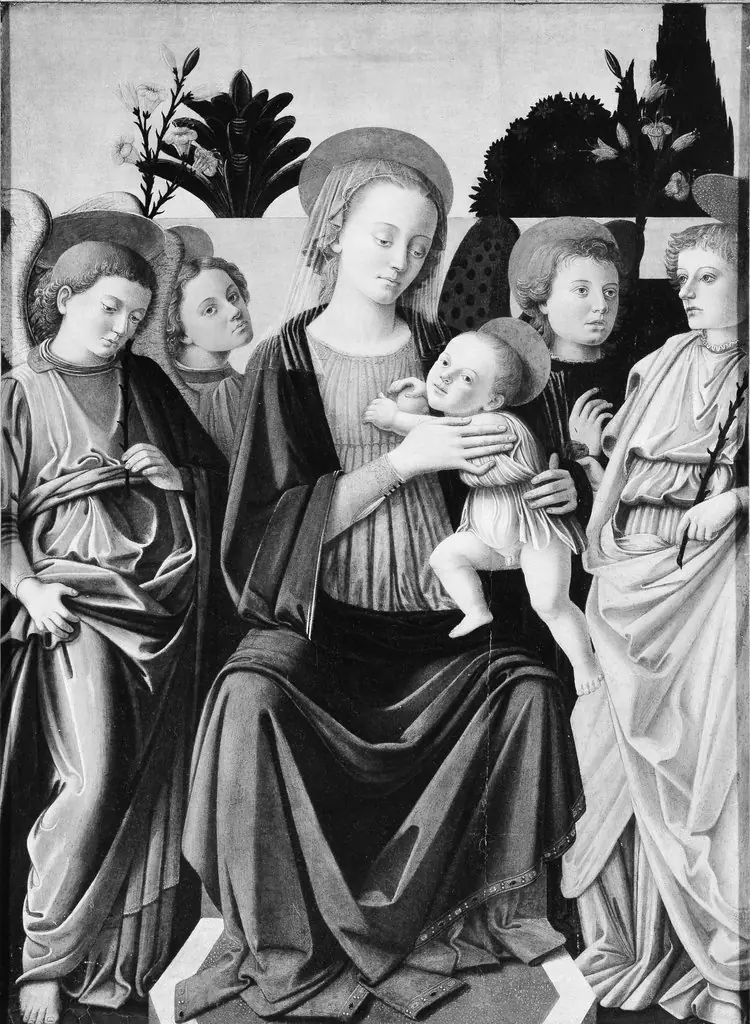 Madonna and Child with Angels
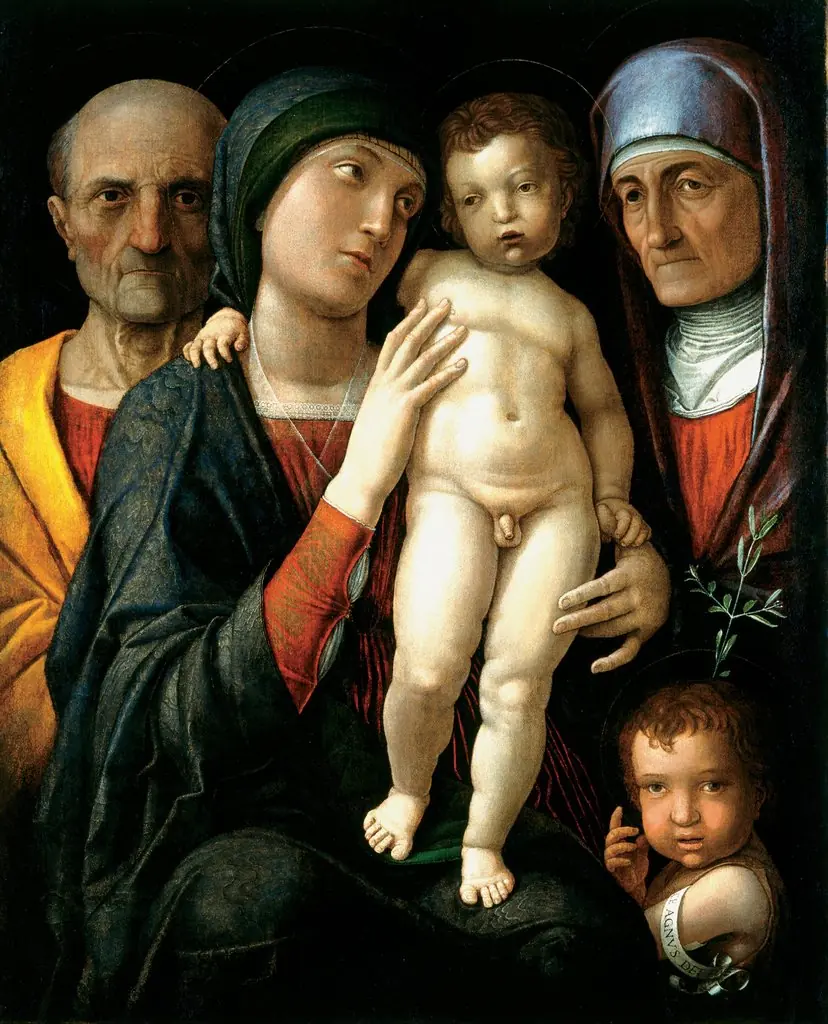 Holy Family with St. Elizabeth and St. John the Baptist as a Child