Artwork
Adoration of the Child
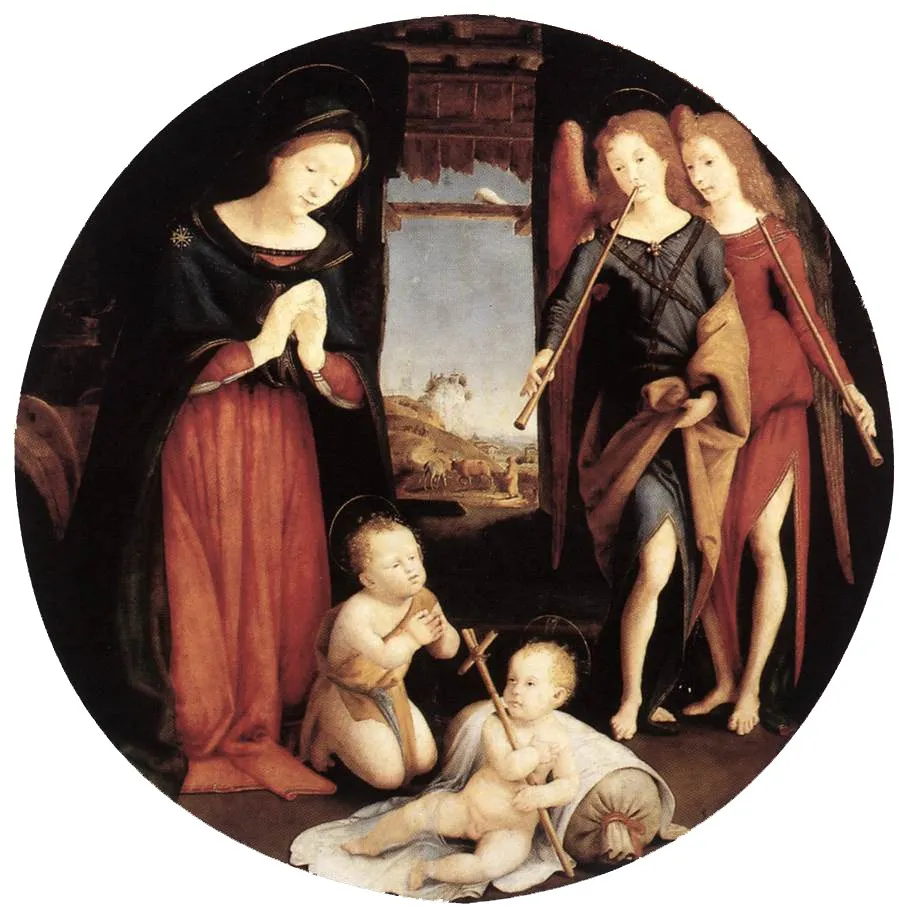
Adoration of the Child is an oil painting by the High Renaissance artist Piero di Cosimo. It dates from 1510 and is held in the collection of the Galleria Borghese.
About this work
Overview
Painted in 1510 by Piero di Cosimo, this oil-on-panel work depicts the Adoration of the Christ Child. It resides in the Galleria Borghese in Rome. The composition centers on a quiet moment of reverence, with figures arranged in a calm, intimate grouping. The scene avoids dramatic intensity, favoring stillness and contemplation, characteristic of the artist’s late style.
Subject & Meaning
The Virgin Mary kneels in prayer before the infant Jesus, who sits on a white cloth, symbolizing purity. Two angels flank the child—one playing a flute, the other holding a small cross—hinting at both earthly joy and future sacrifice. The scene reflects a devotional tradition emphasizing maternal tenderness and divine humility, common in early 16th-century Florentine piety.
Technique & Style
Piero di Cosimo employed delicate brushwork and soft transitions between tones to create a hazy, atmospheric effect.
Piero di Cosimo employed delicate brushwork and soft transitions between tones to create a hazy, atmospheric effect. The figures are rendered with gentle contours, their forms subtly integrated into the landscape. The palette is muted, dominated by earth tones and pale hues, enhancing the tranquil mood. The background’s distant hills and architecture are rendered with loose, almost sketch-like strokes.
History & Provenance
The painting entered the Borghese collection in the early 17th century, likely acquired by Cardinal Scipione Borghese, a noted patron of the arts. Its presence in the collection suggests it was valued for its quiet spirituality rather than grandeur. No significant alterations or reworkings are documented, and it has remained in the gallery since its acquisition.
Context
Created during the High Renaissance, the work diverges from the monumental compositions of Raphael or Michelangelo. Instead, it reflects a more personal, introspective strain of religious art emerging in Florence. Piero’s interest in nature and symbolic detail aligns with humanist interests of the time, even as his style retained elements of earlier Gothic sensibility.
Legacy
Though not widely reproduced or celebrated in mainstream art history, the painting exemplifies a quieter, lyrical approach to sacred themes in early 16th-century Italy. It remains a quiet testament to Piero di Cosimo’s unique ability to blend naturalism with poetic stillness, influencing later artists who favored intimate devotion over theatrical spectacle.
Artist & collection

Artist
Piero di Cosimo, also known as Piero di Lorenzo, was an Italian Renaissance painter, who continued to use an essentially Early Renaissance style into the 16th century.

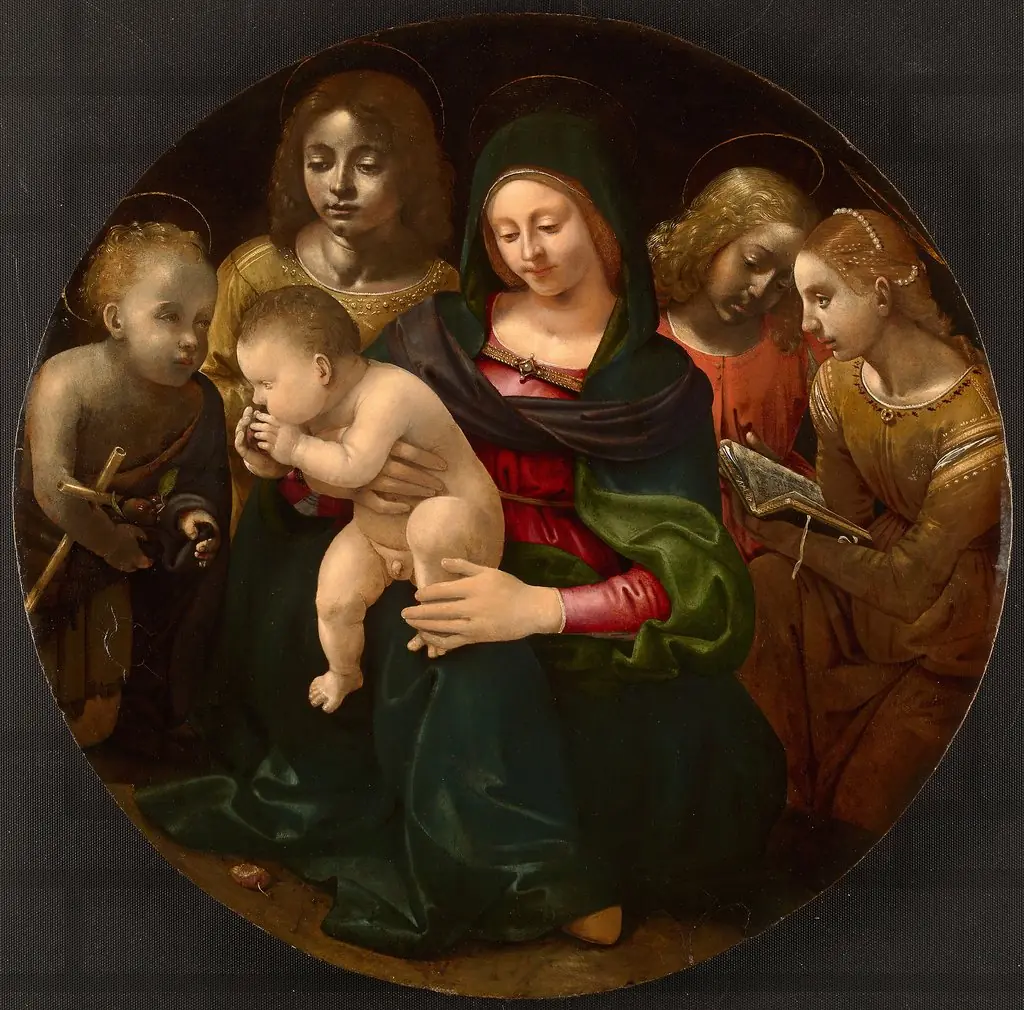
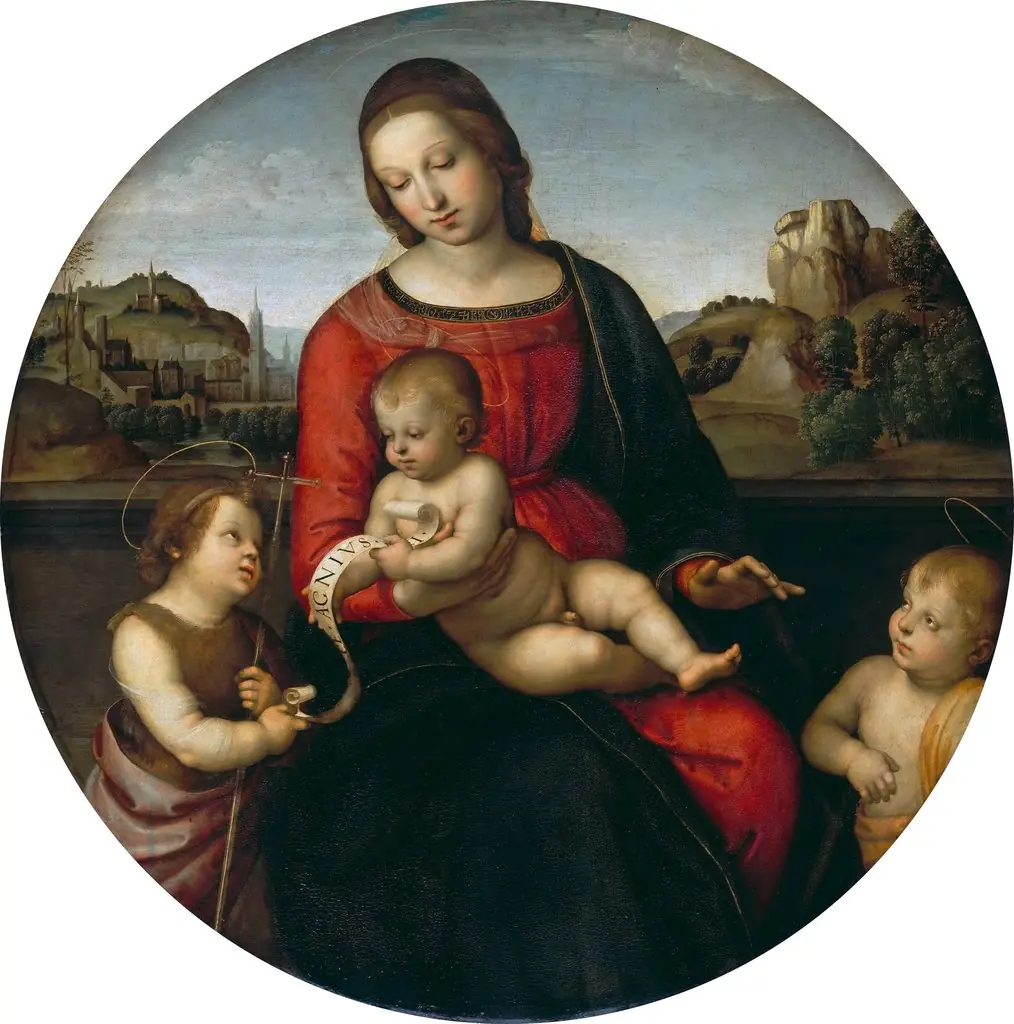 Terranuova Madonna
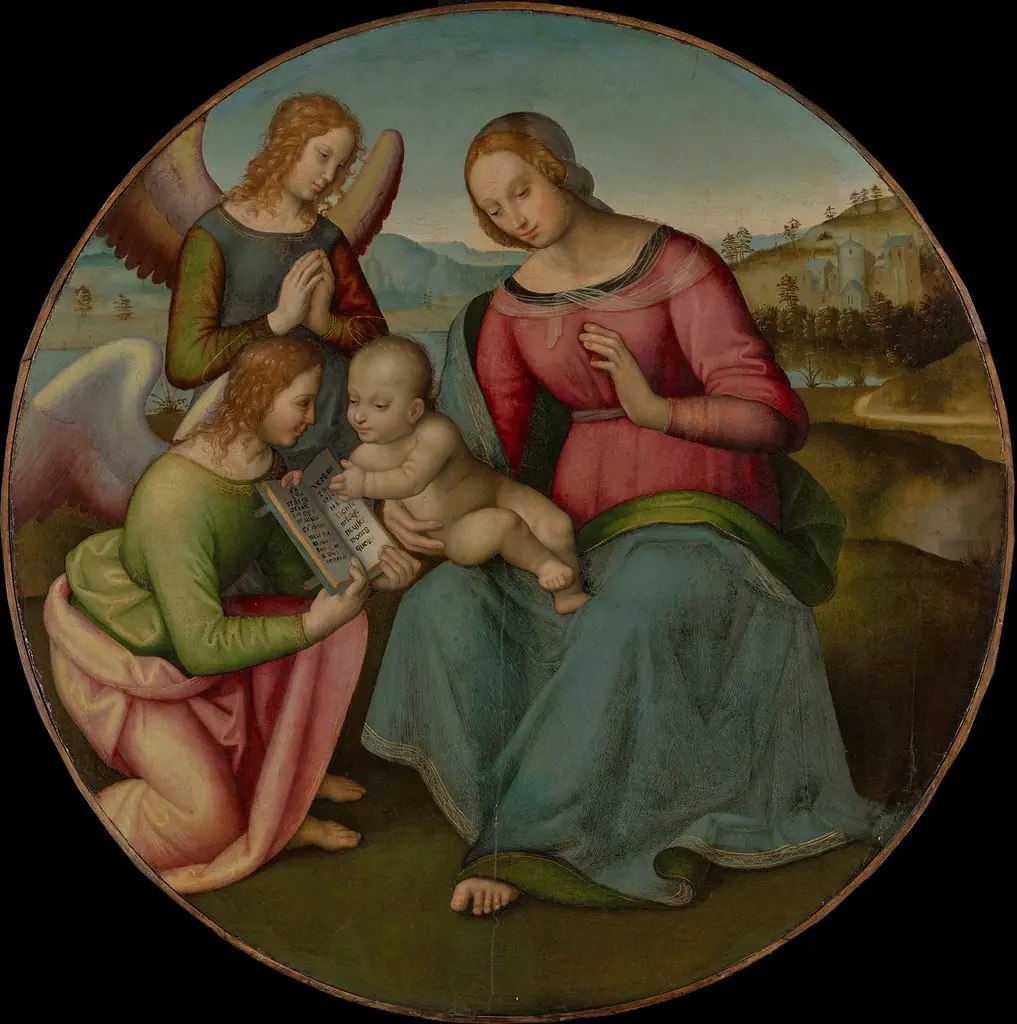 The Virgin and Child with two Angels
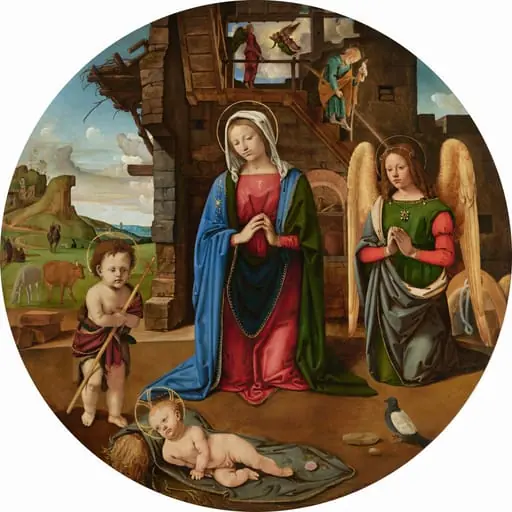
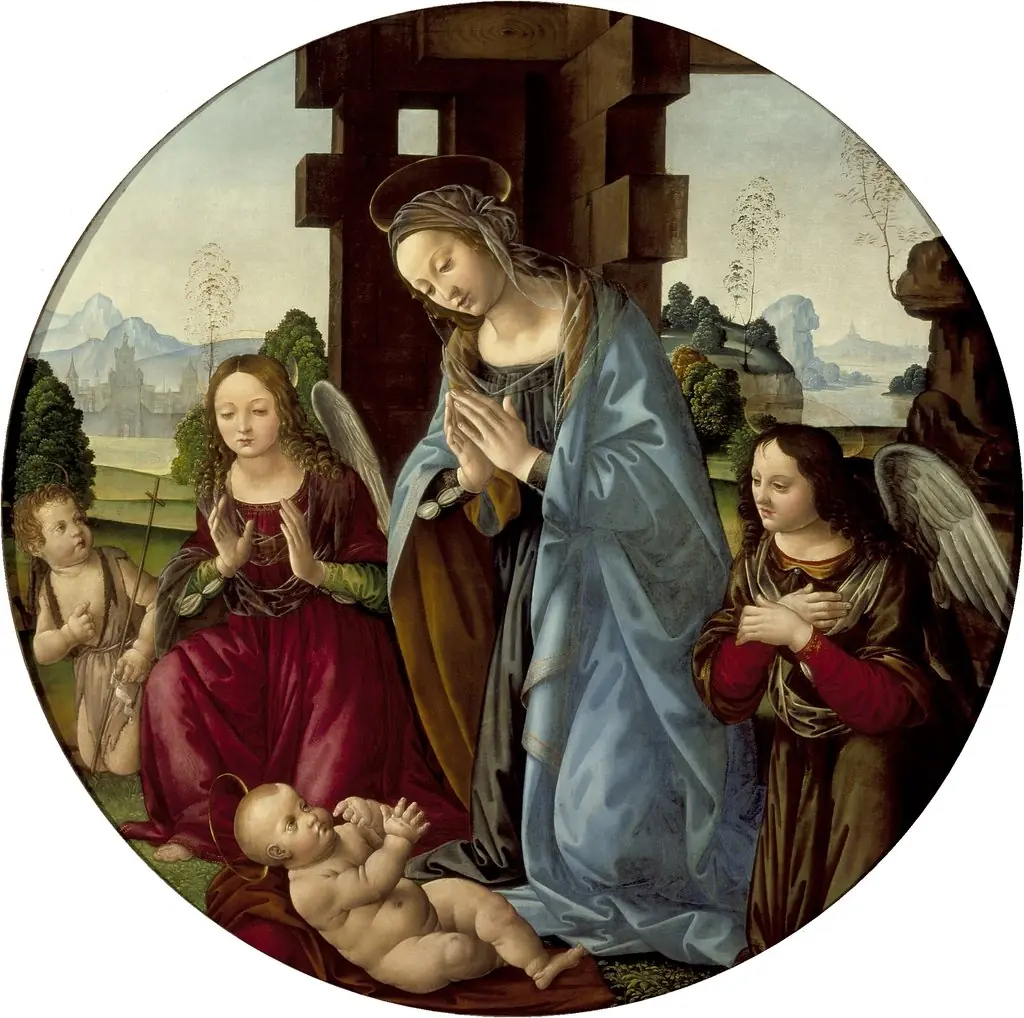 Virgin Adoring the Christ Child with St. John the Baptist and Two Angels
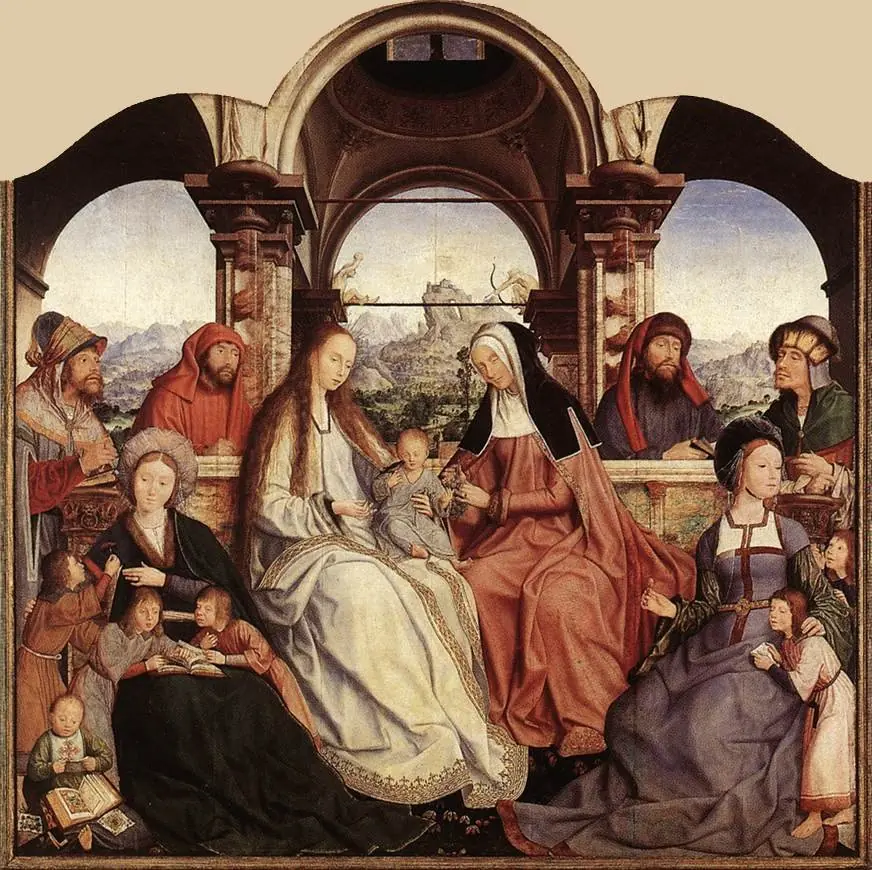 De H. Maagschap
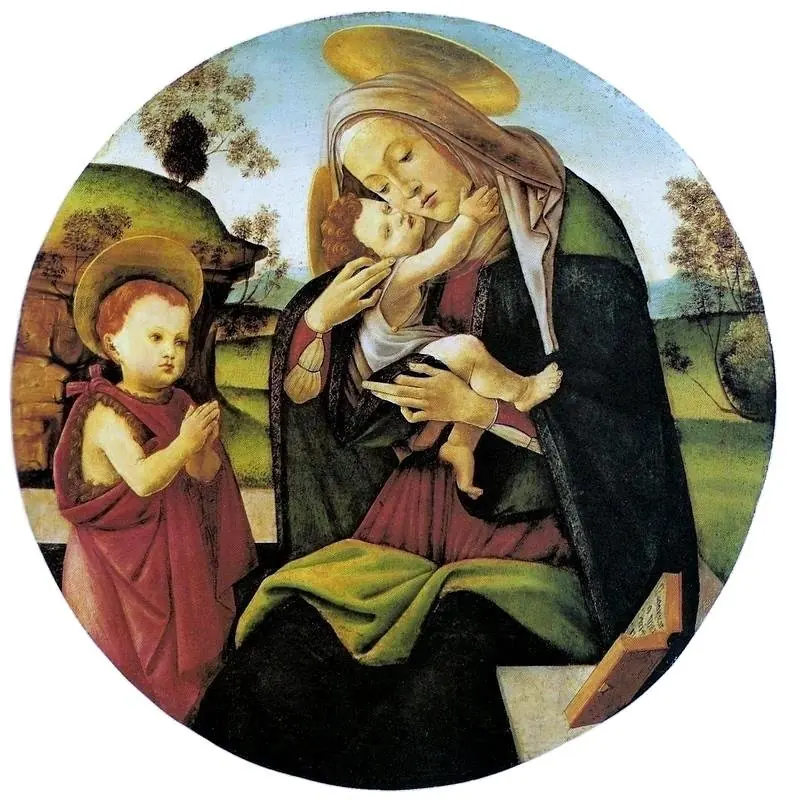 Virgin and Child with the Infant John the Baptist
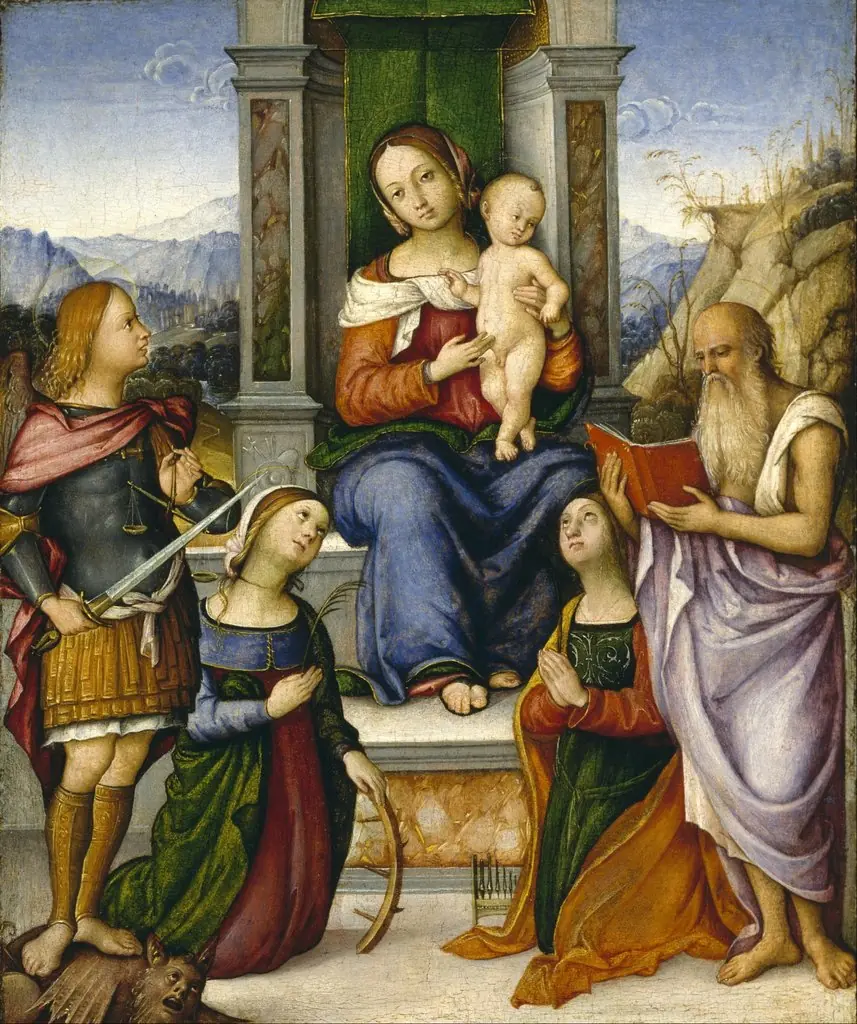 The Virgin and Child Enthroned with Saints Michael, Catherine of Alexandria, Cecilia, and Jerome
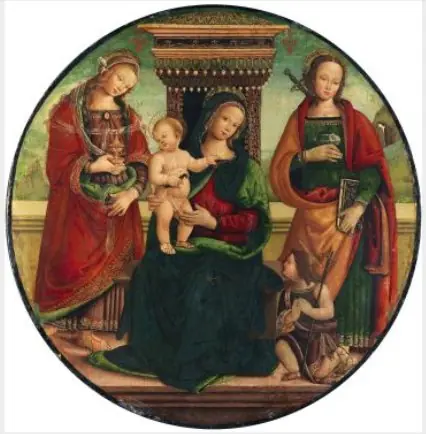 The Virgin and Child with Saints
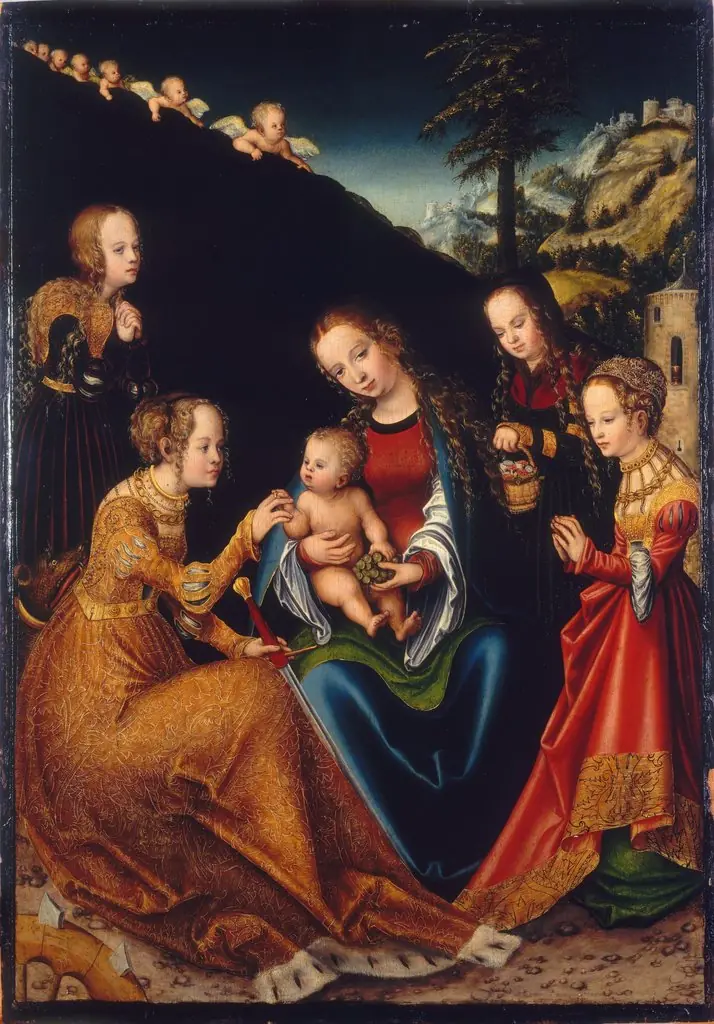 The Mystic Marriage of Saint Catherine of Alexandria with Saints Dorothy, Margaret and Barbara
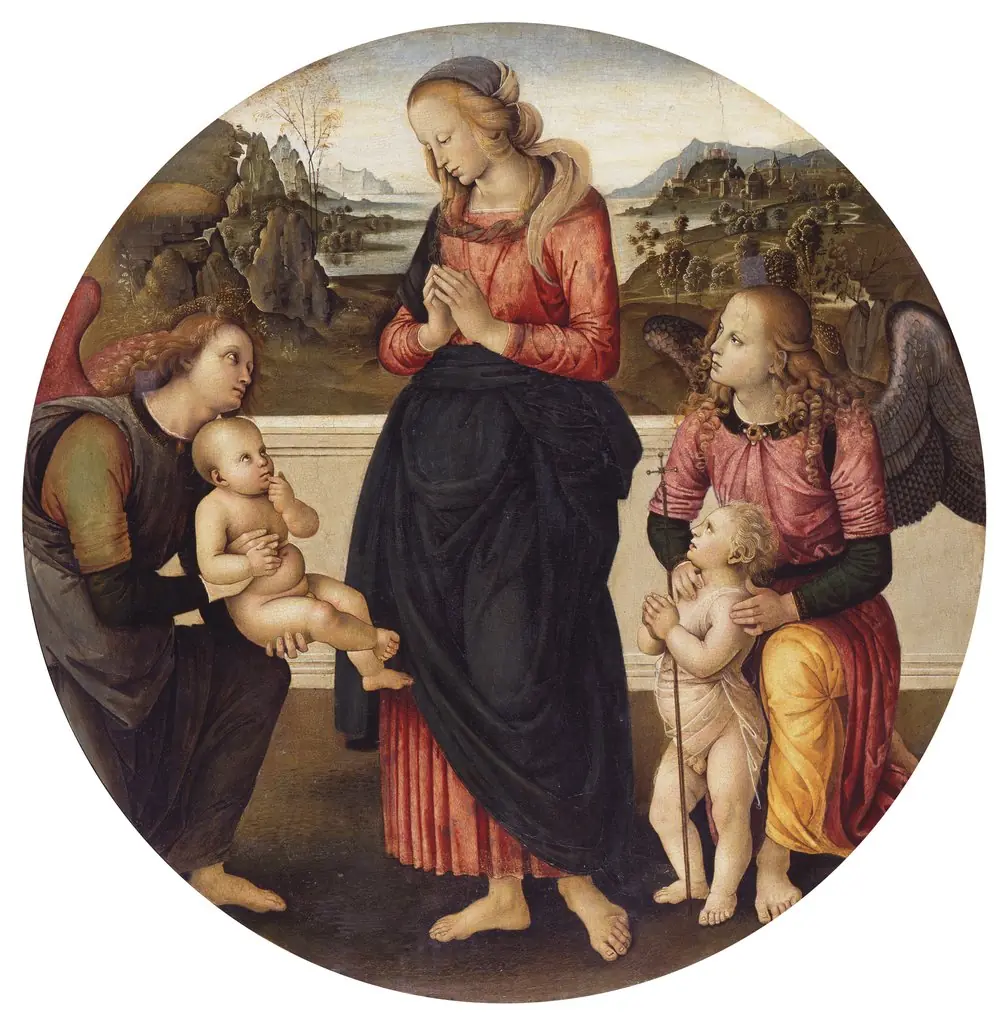 The Virgin Adoring the Child with John the Baptist as a Child and two Angels
 The Virgin and Child with Two Angels
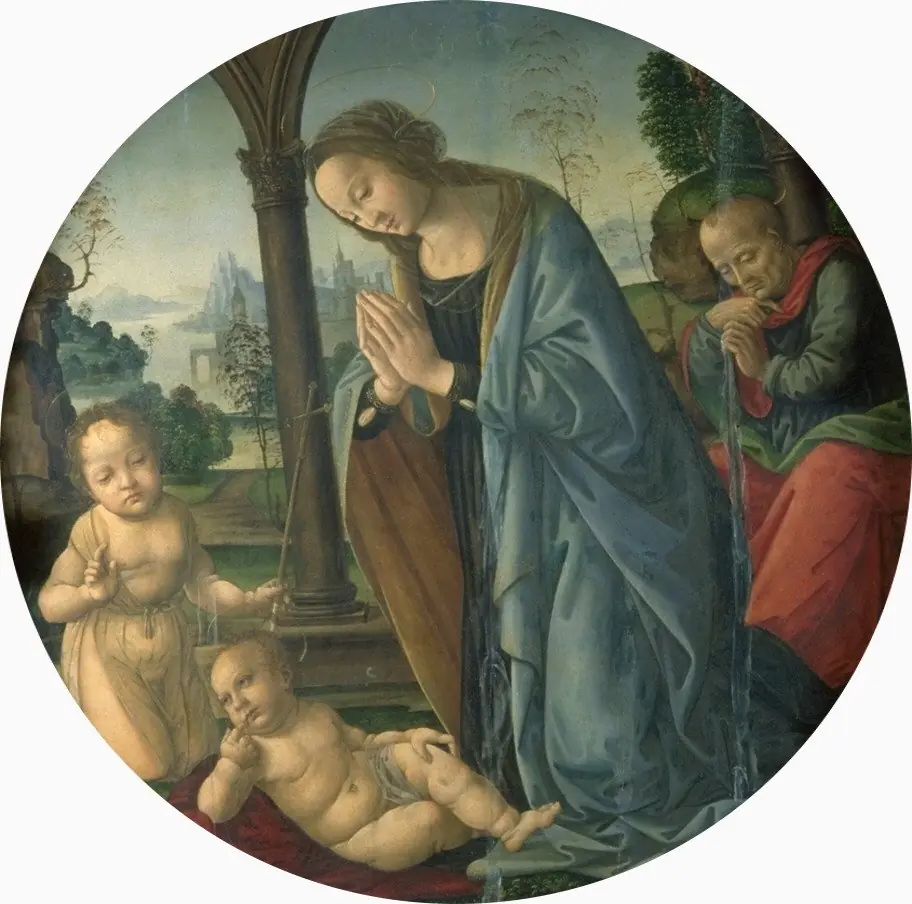 The Holy Family and Infant St. John
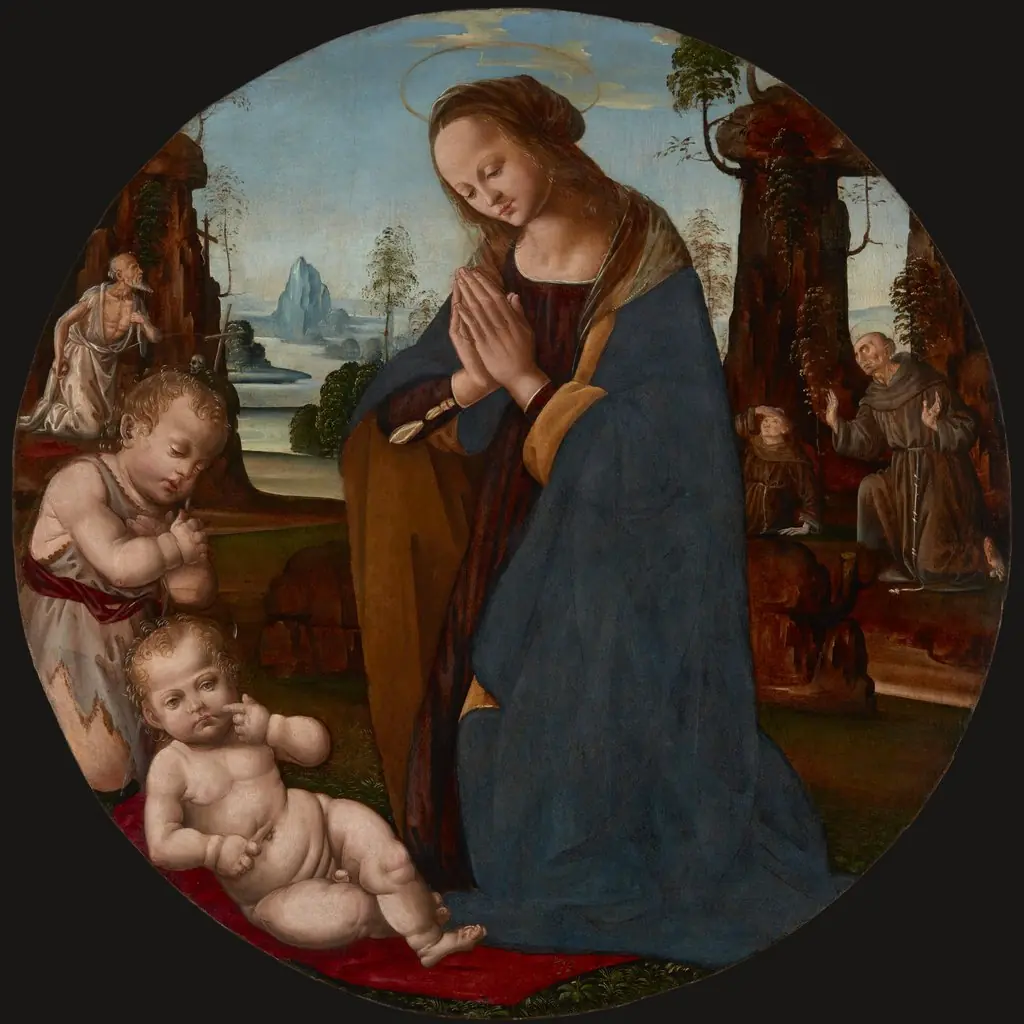 Adoration of the Child with Young St John the Baptist – Tondo