Artwork
Summer: Diana Surprised at her Bath by Actaeon
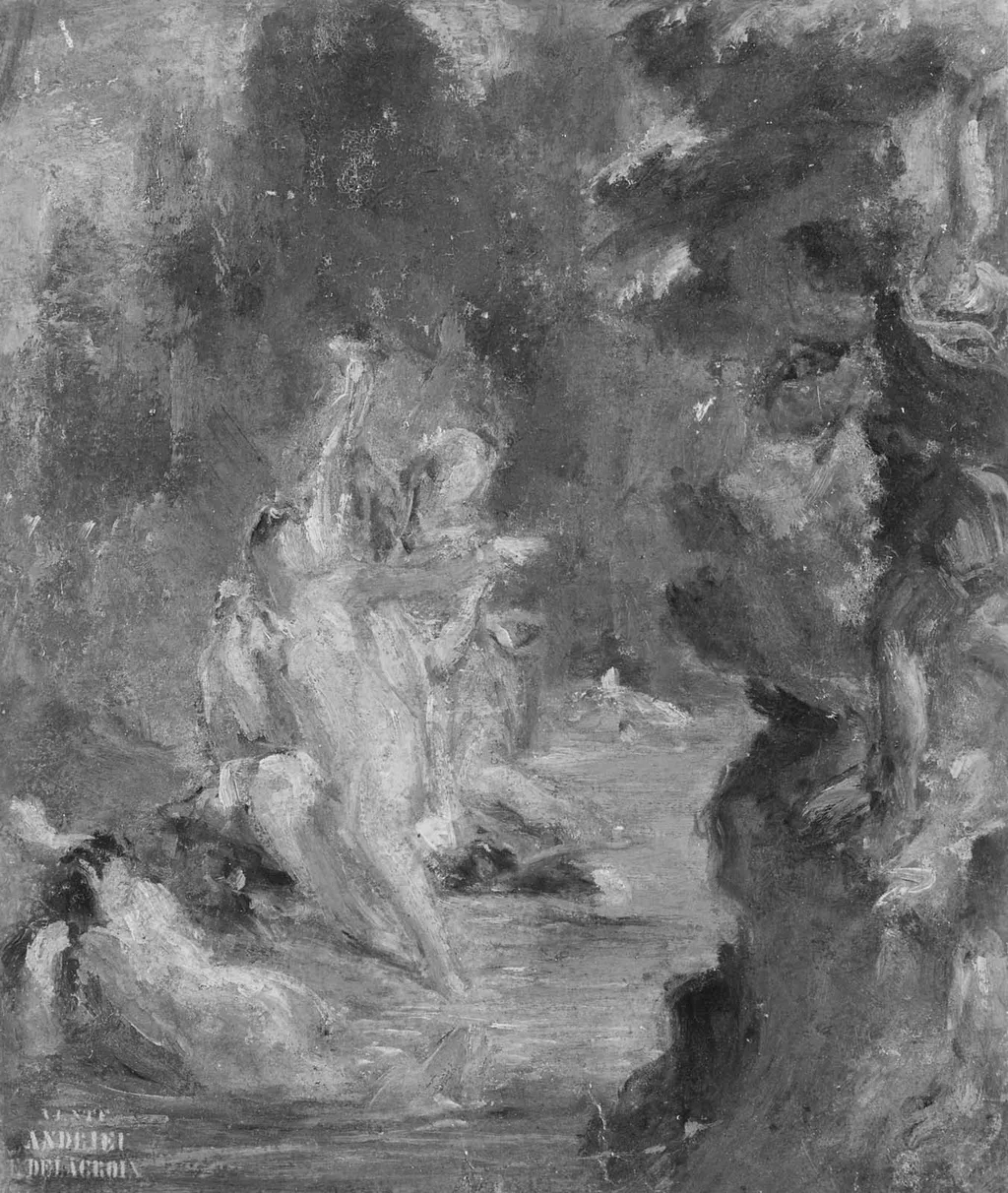
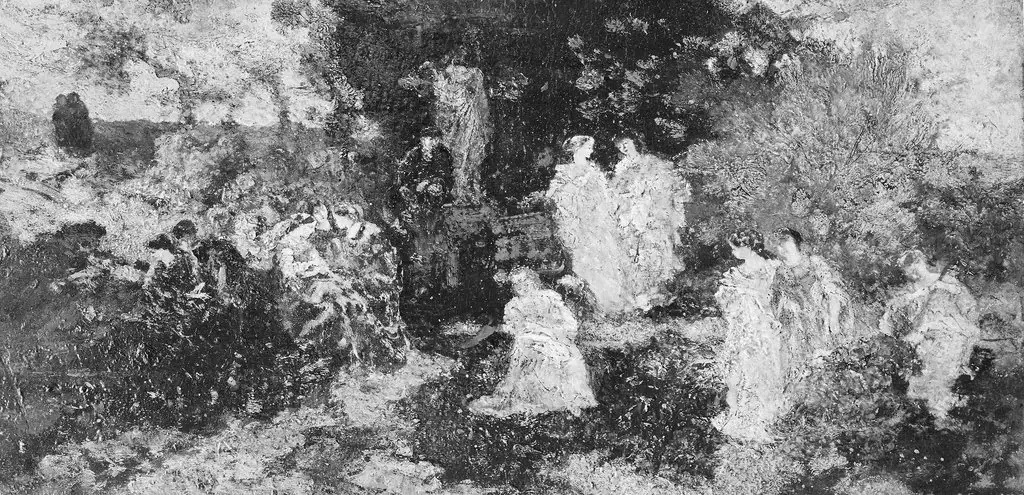
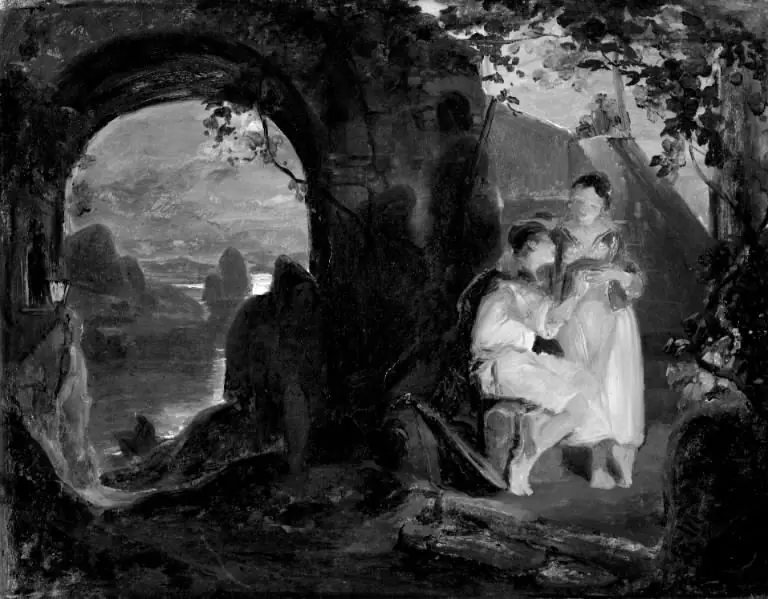
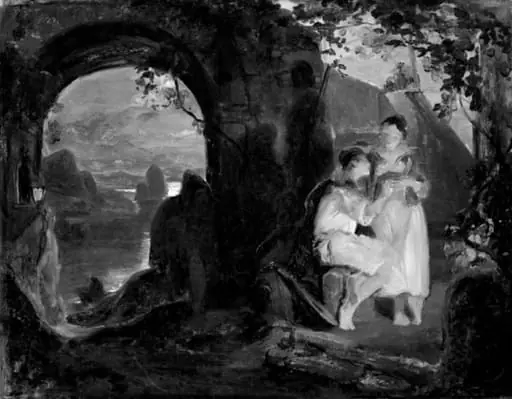
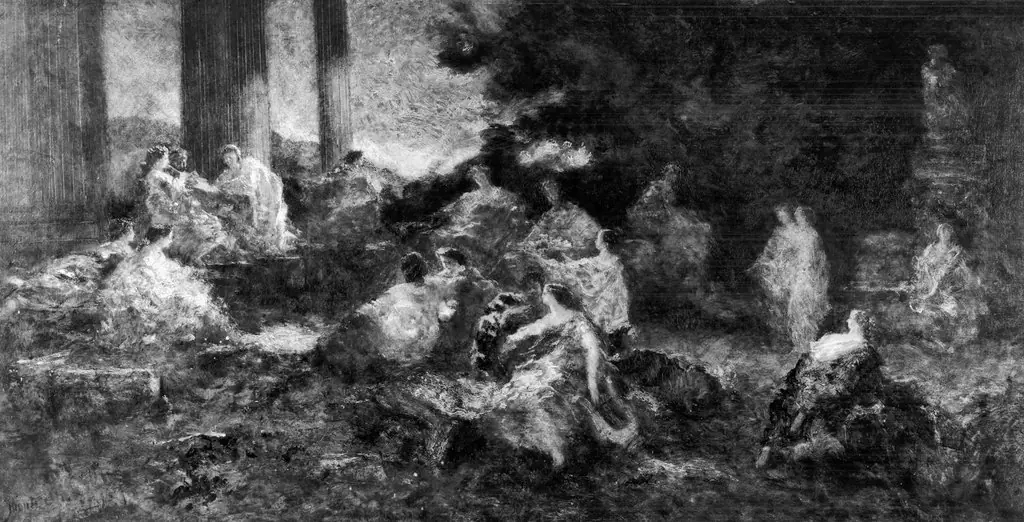
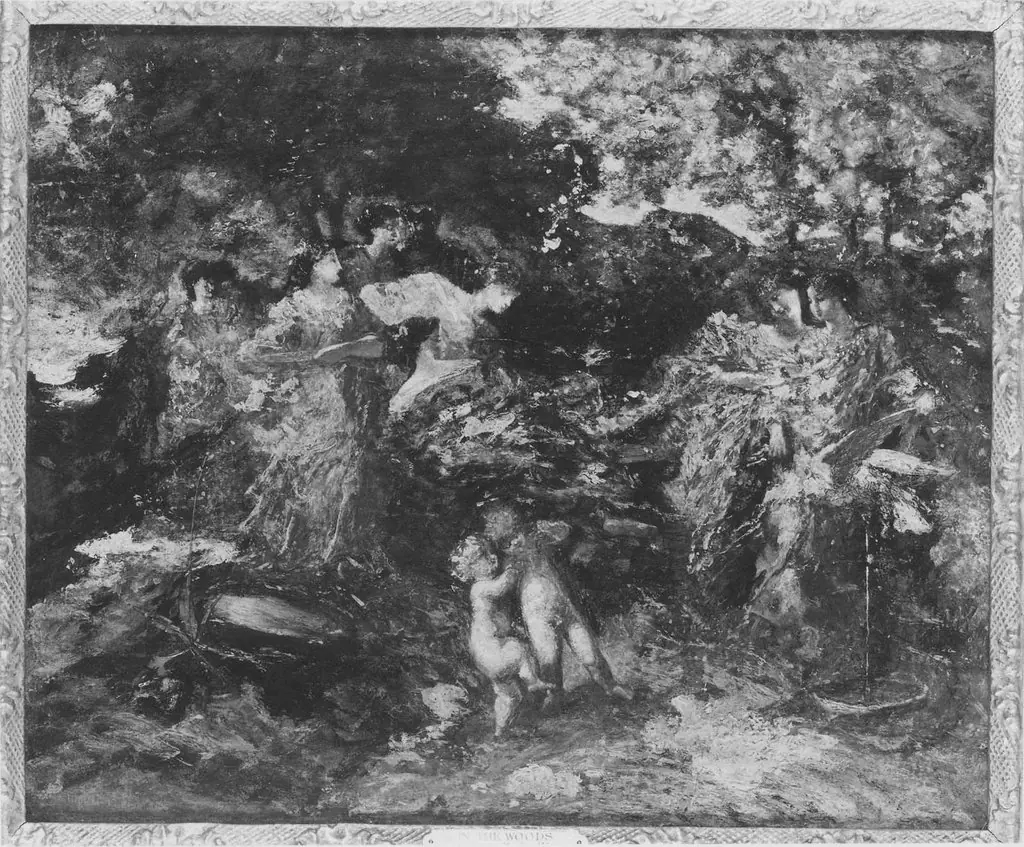
Summer: Diana Surprised at her Bath by Actaeon is an unspecified painting by Pierre Andrieu. It dates from 1866 and is held in the collection of the Museum of Fine Arts Boston.
About this work
Overview
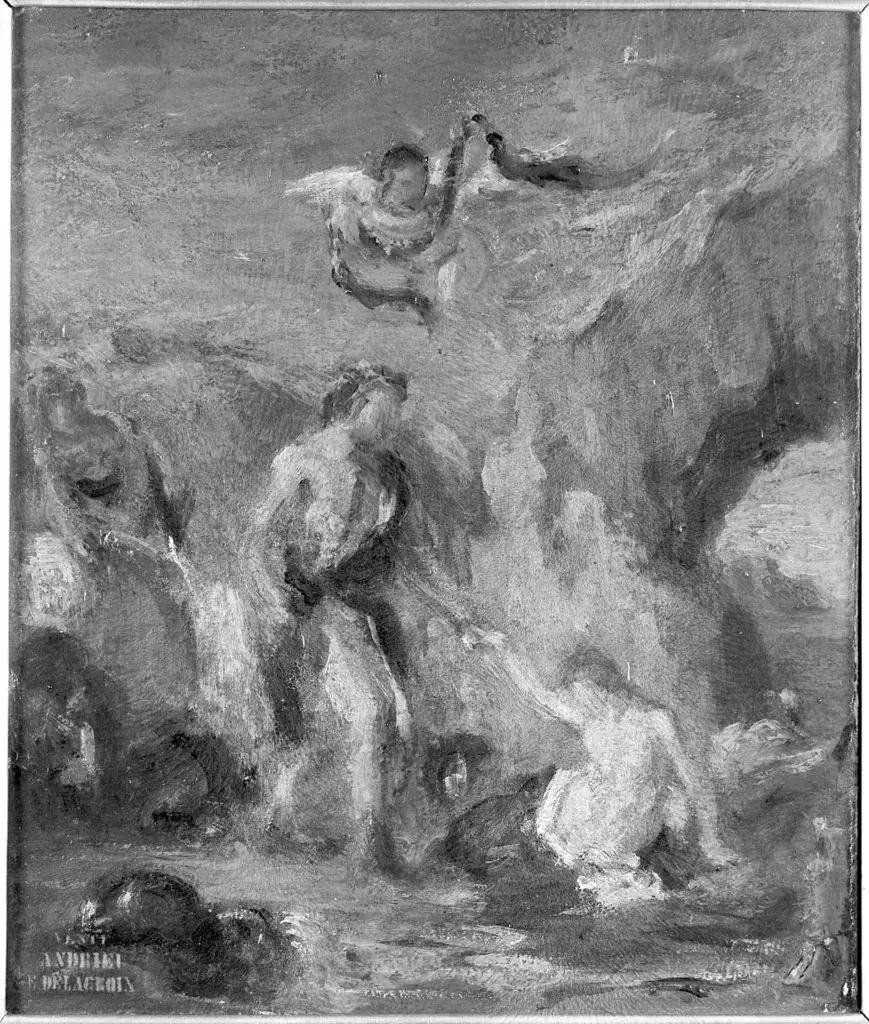
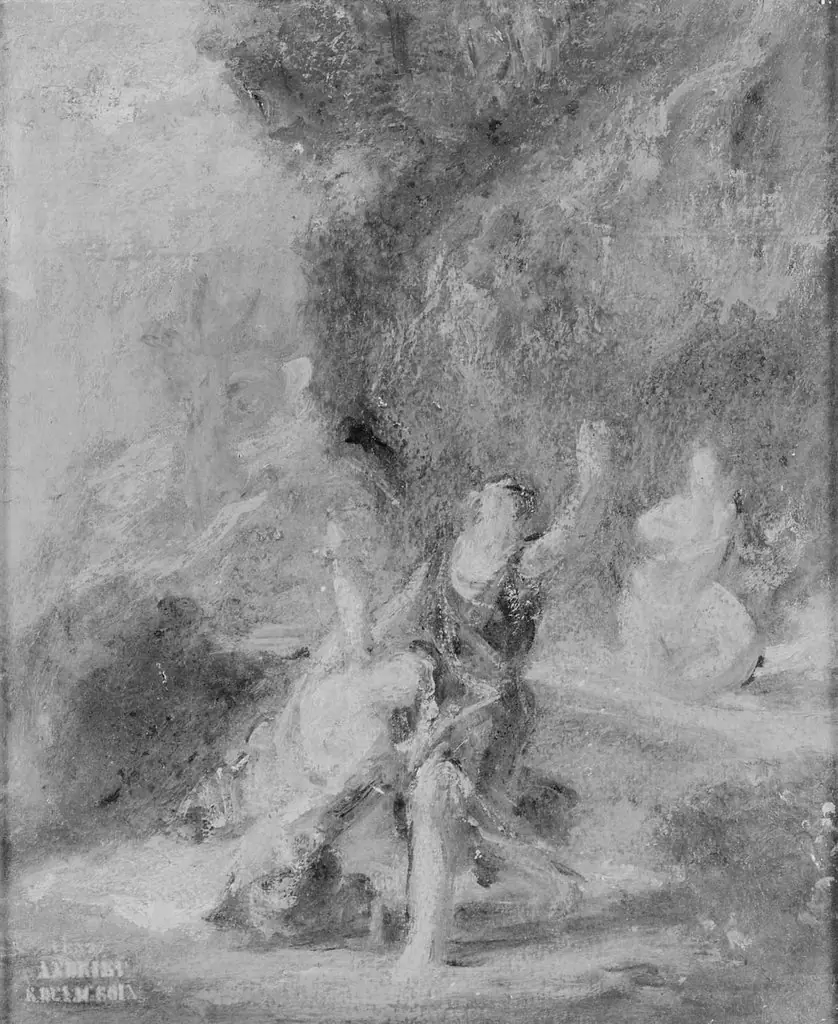
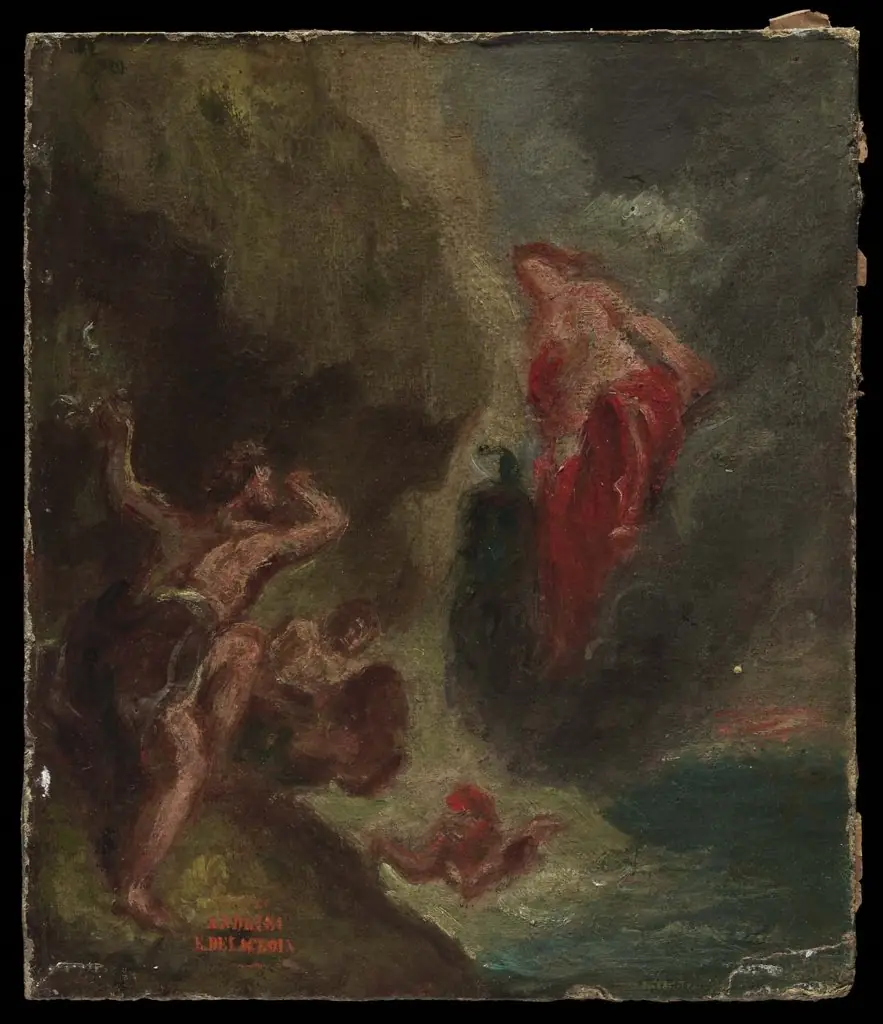
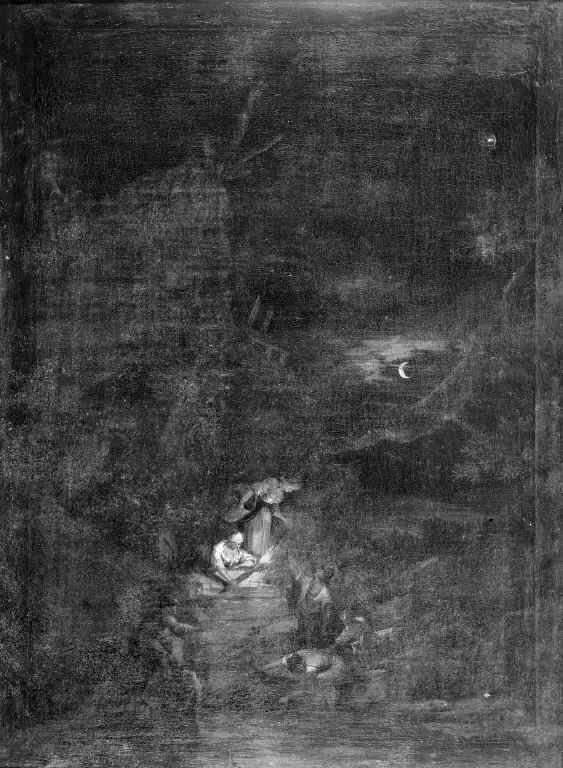
Painted around 1866 by Pierre Andrieu, this work illustrates a moment from Ovid’s Metamorphoses in which Actaeon stumbles upon the goddess Diana bathing. Executed in oil, the painting emphasizes emotional tension over narrative clarity. It resides in the Museum of Fine Arts, Boston, where its subdued palette and atmospheric handling distinguish it from more polished academic works of the period.
Subject & Meaning
The moment carries weight beyond mere surprise—it signals divine retribution, as the myth foretells Actaeon’s transformation and death for his transgression.
The scene captures the instant of violation and shock central to the myth: Actaeon, a mortal hunter, inadvertently witnesses Diana, the virgin goddess of the hunt, in her private ritual. Her hunched posture suggests vulnerability, while his raised arms convey startled hesitation. The moment carries weight beyond mere surprise—it signals divine retribution, as the myth foretells Actaeon’s transformation and death for his transgression.
Technique & Style
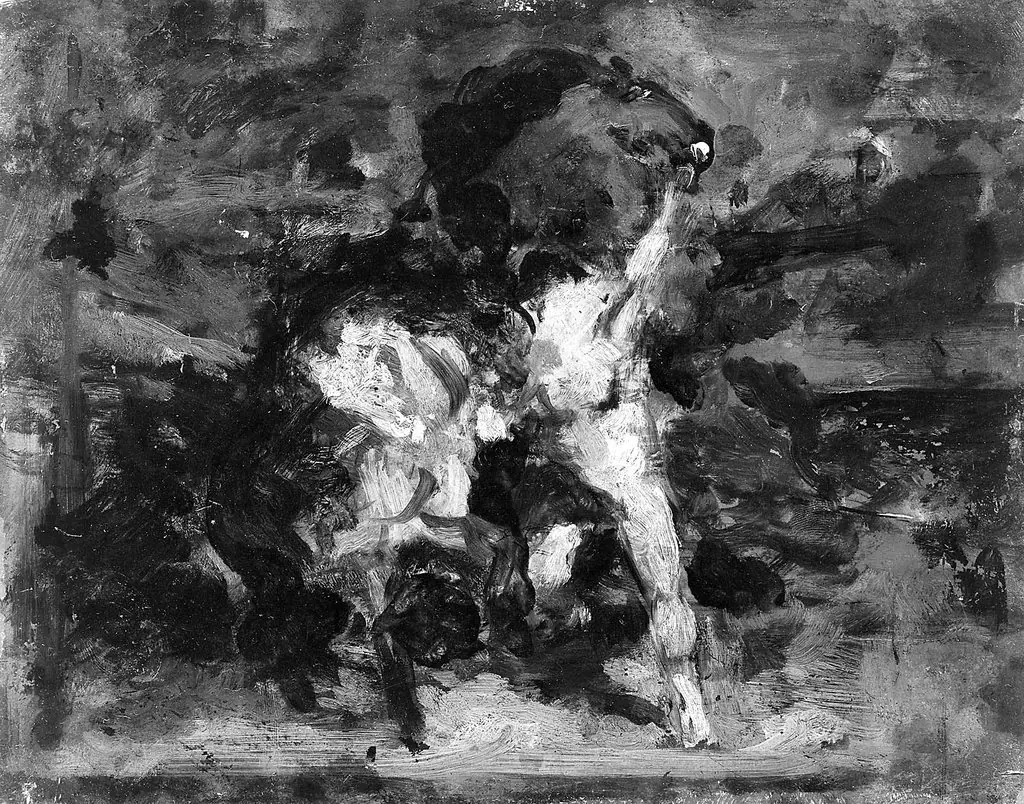
Andrieu employs thick, expressive brushwork to dissolve forms into a dim, enveloping atmosphere. The figures emerge from shadow with minimal facial detail, prioritizing gesture and posture over individualized features. Stark contrasts between light and dark—chiaroscuro—heighten the drama, anchoring the viewer’s attention on the interaction between the two figures while obscuring their surroundings in near-abstract gloom.
History & Provenance
The painting entered the Museum of Fine Arts, Boston’s collection in the late 19th century, likely acquired during a period of increased interest in French academic and mythological subjects. Its attribution to Andrieu, a lesser-known student of Ingres, reflects a broader 19th-century fascination with classical themes rendered through a more intimate, emotionally charged lens than grand historical painting typically allowed.
Context
Created during the height of French academic painting, this work diverges from the polished clarity favored by the Salon. Andrieu’s focus on mood, loose brushwork, and psychological tension aligns more closely with emerging realist and proto-impressionist tendencies. It reflects a quiet shift in artistic priorities—away from idealized myth toward the rawness of human and divine encounter.
Legacy
Though not widely exhibited or reproduced, the painting stands as an example of how 19th-century artists reinterpreted classical myths with psychological nuance. Its emphasis on atmosphere over detail anticipates later explorations of emotion in modern art. In Boston’s collection, it remains a quiet testament to the enduring power of myth when stripped of grandeur and rendered in shadow.
Own this work as a print
Artist & collection