Artwork
Untitled
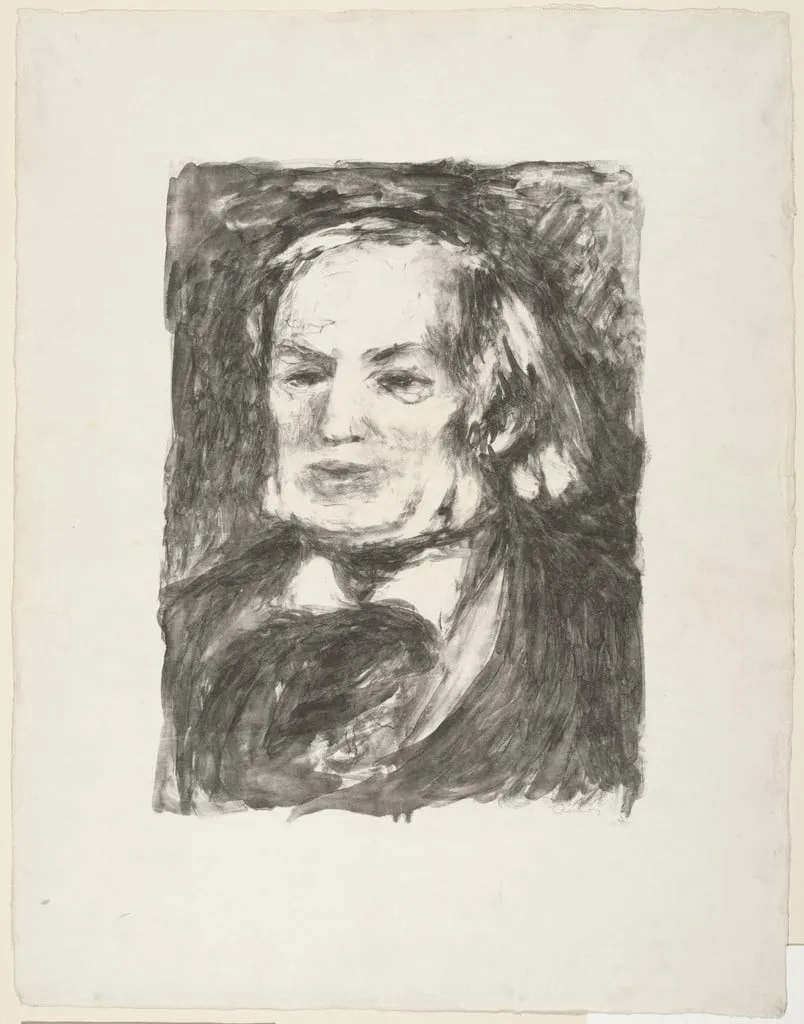
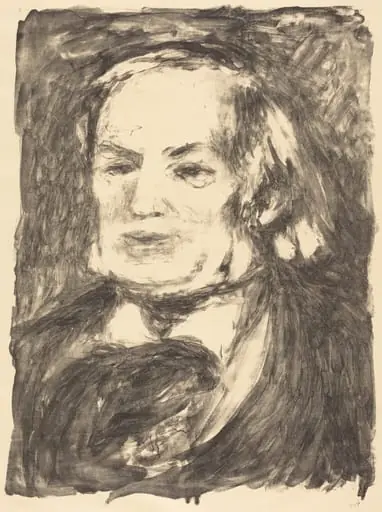
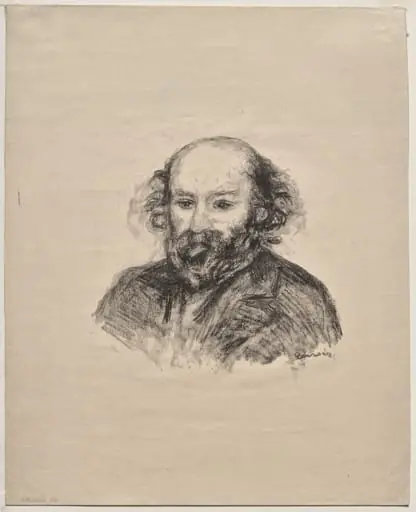
Untitled is an ink print by Auguste Renoir. It dates from 1900 and is held in the collection of the Museum of Modern Art.
About this work
Overview
Created around 1900, this lithograph by Pierre-Auguste Renoir is a restrained, intimate study executed in a spontaneous, sketch-like manner.
Created around 1900, this lithograph by Pierre-Auguste Renoir is a restrained, intimate study executed in a spontaneous, sketch-like manner. It resides in the collection of The Museum of Modern Art. The work’s minimal detail and rapid linework suggest it was made as a quick observational exercise rather than a polished portrait, reflecting Renoir’s interest in capturing fleeting visual impressions through the immediacy of printmaking.
Subject & Meaning
The figure is partially concealed by a dark, enveloping shawl, revealing only the eyes, nose, and the suggestion of a collar. The anonymity of the subject invites contemplation rather than identification. The focus on minimal facial exposure and the absence of context shift attention to the interplay of light and shadow, emphasizing mood over narrative or individual identity.
Technique & Style
Renoir employed lithography, a printmaking process allowing direct drawing on stone with greasy materials, enabling swift, fluid marks. The lines are loose and unrefined, with broad tonal contrasts and little modeling. The absence of fine detail and the textured, almost gestural quality of the surface reflect an emphasis on immediacy and tactile expression, aligning with the artist’s broader interest in capturing transient visual sensations.
History & Provenance
The work dates from the final decade of Renoir’s career, a period when he increasingly turned to graphic media despite physical limitations. It entered The Museum of Modern Art’s collection in the 20th century, likely through acquisition or donation. Its status as a print allowed for multiple impressions, though this particular impression remains a singular record of the artist’s hand in a private, experimental mode.
Context
In the early 20th century, Renoir explored printmaking as a way to continue working despite arthritis. Lithography suited his need for direct, tactile engagement with the medium. This piece aligns with broader trends among Post-Impressionists who valued the expressive potential of sketch-like forms over polished finish, using printmaking to bridge drawing and painting in a more accessible format.
Legacy
This lithograph exemplifies Renoir’s late engagement with graphic arts as a means of personal expression. Its unpolished quality has influenced later artists seeking authenticity in spontaneous mark-making. Though not widely exhibited, it remains a quiet testament to his enduring curiosity about form, light, and the limits of representation in print.
Artist & collection
Artist
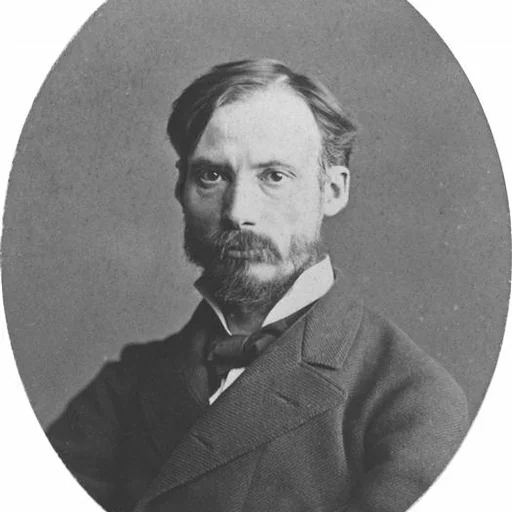
Pierre-Auguste Renoir was born on 25 February 1841 in Limoges, the son of a tailor and a seamstress.