Artwork
Paysage du Midi et deux enfants
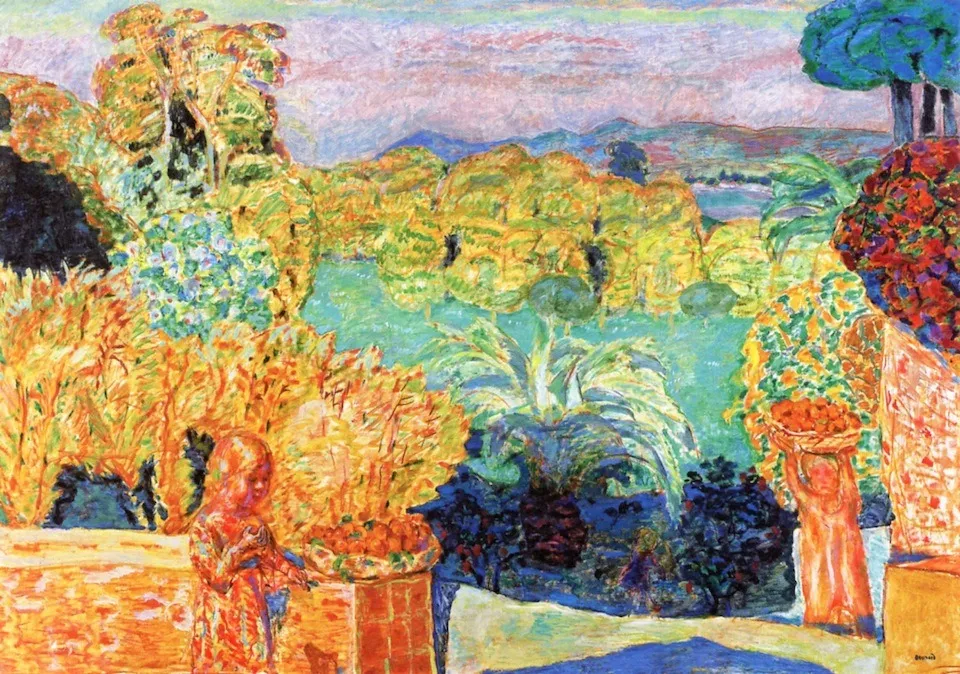
Paysage du Midi et deux enfants is an oil painting by the Post-Impressionist artist Pierre Bonnard. It dates from 1917 and is held in the collection of the Art Gallery of Ontario.
About this work
Overview
Painted in 1917, this oil work by Pierre Bonnard depicts a garden in southern France, capturing the quiet rhythm of a domestic landscape.
Painted in 1917, this oil work by Pierre Bonnard depicts a garden in southern France, capturing the quiet rhythm of a domestic landscape. The painting resides in the Art Gallery of Ontario, part of a broader body of work from Bonnard’s mature period. Its composition balances intimate foreground details with expansive, layered greens in the distance, reflecting the artist’s interest in everyday environments infused with sensory richness.
Subject & Meaning
The scene centers on a cultivated garden, featuring potted plants and a classical statue, suggesting a private, lived-in space. Two children are present, their small figures integrated into the foliage, evoking a sense of quiet observation rather than narrative action. The absence of clear focal points invites contemplation, aligning with Bonnard’s tendency to portray domestic life as a harmony of light, color, and subtle movement.
Technique & Style
Bonnard employed thick, expressive brushwork and a palette dominated by varied greens, punctuated by touches of blue, yellow, and earth tones. The paint is applied with deliberate texture, creating a tactile surface that enhances the feeling of lush vegetation. Depth is suggested not through linear perspective but through chromatic gradation and overlapping planes, characteristic of his Post-Impressionist approach.
History & Provenance
Created during Bonnard’s time in the south of France, the painting reflects his retreat from urban life and immersion in natural surroundings. It entered the Art Gallery of Ontario’s collection in the mid-20th century, following its acquisition from a private European collection. Its journey to Canada underscores the international recognition of Bonnard’s work beyond France during the early 1900s.
Context
Painted in the aftermath of World War I, the work stands apart from the era’s turmoil, focusing instead on tranquility and renewal. Bonnard, associated with the Nabis group, continued to explore intimate interiors and gardens as sites of emotional resonance. This piece aligns with contemporaneous works by artists like Matisse and Vuillard, who similarly elevated domestic scenes through color and composition.
Legacy
The painting exemplifies Bonnard’s enduring influence on modern landscape painting, particularly in how color and texture convey mood over literal representation. Its presence in a major Canadian institution ensures continued exposure to audiences unfamiliar with his broader oeuvre. Scholars note its quiet innovation in redefining garden painting as an atmospheric, psychological space rather than a topographical record.
Artist & collection
Artist
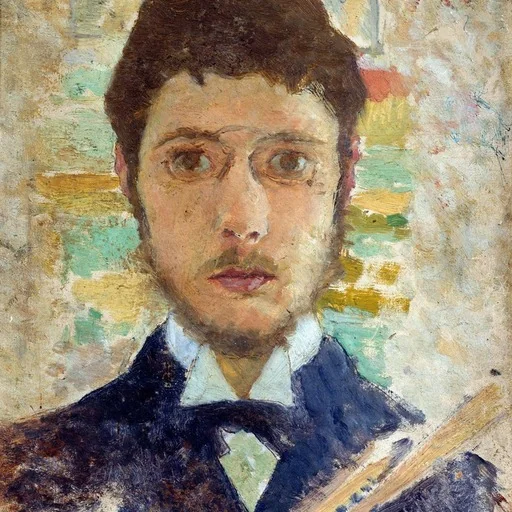
Pierre Bonnard was a French painter, illustrator and printmaker, known especially for the stylized decorative qualities of his paintings and his bold use of color.

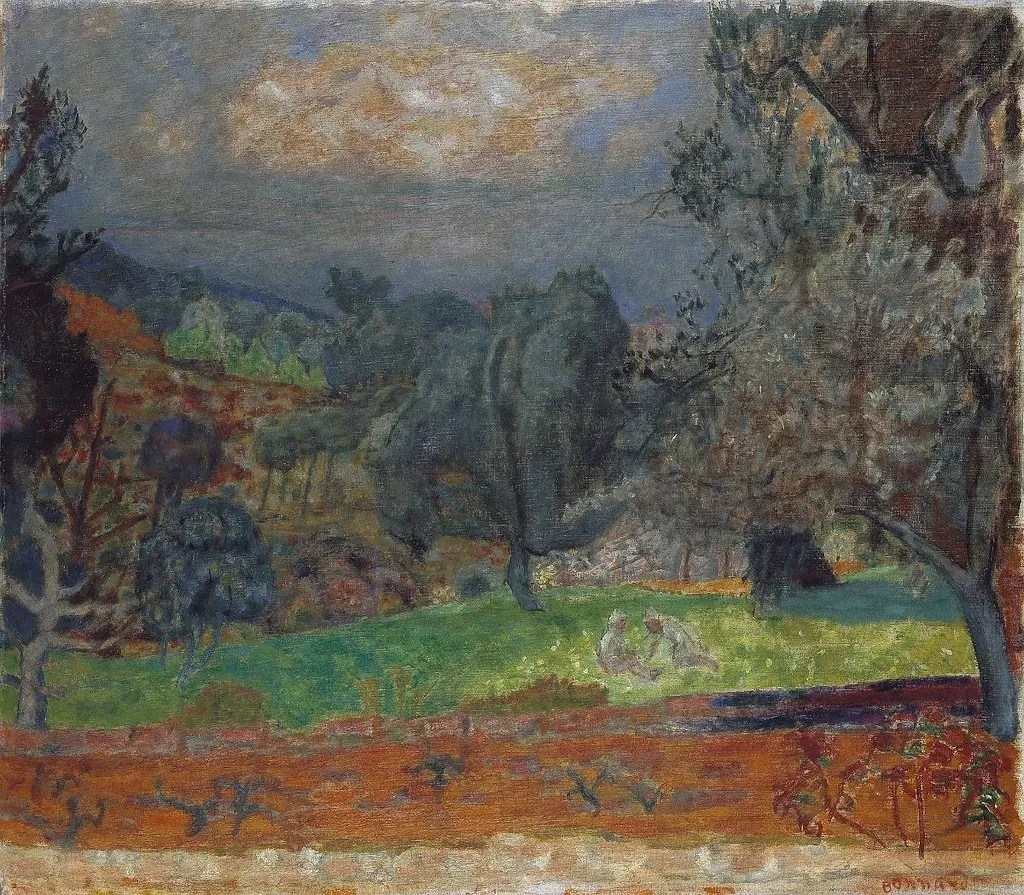 Paysage au soleil couchant. Le Cannet
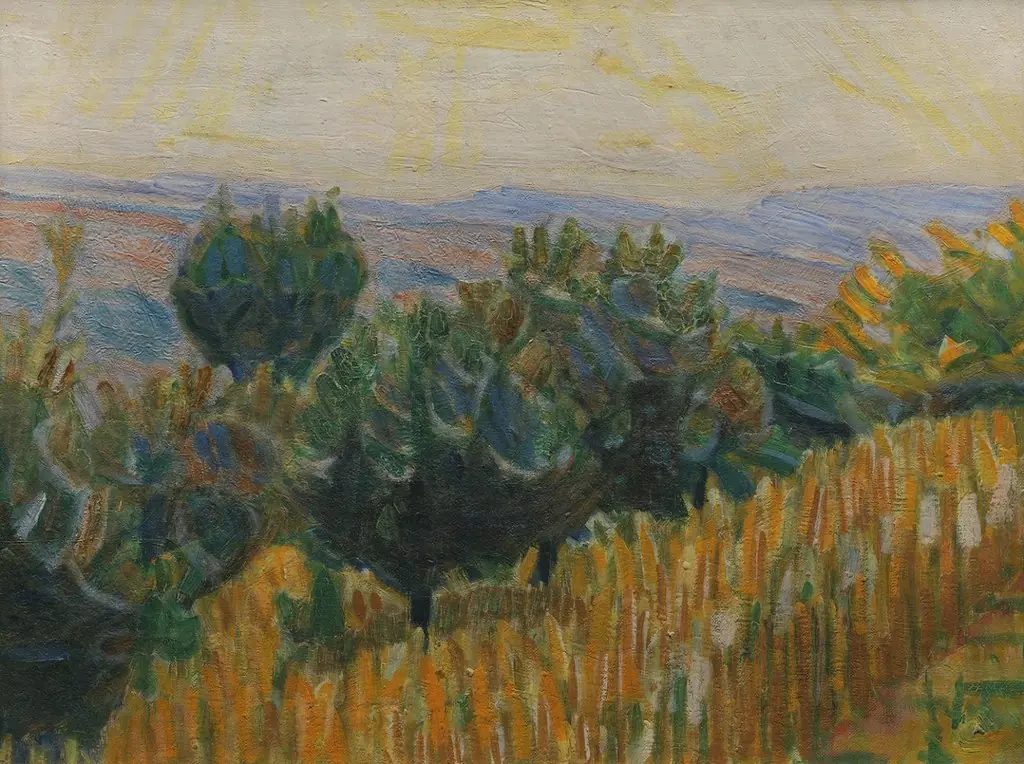 The Vine against the Light. A wheat field in the foreground. Villa Linda, Florence
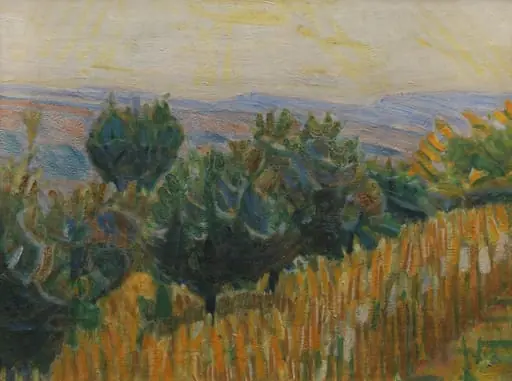 The Vine against the Light. A wheat field in the foreground. Villa Linda, Florence
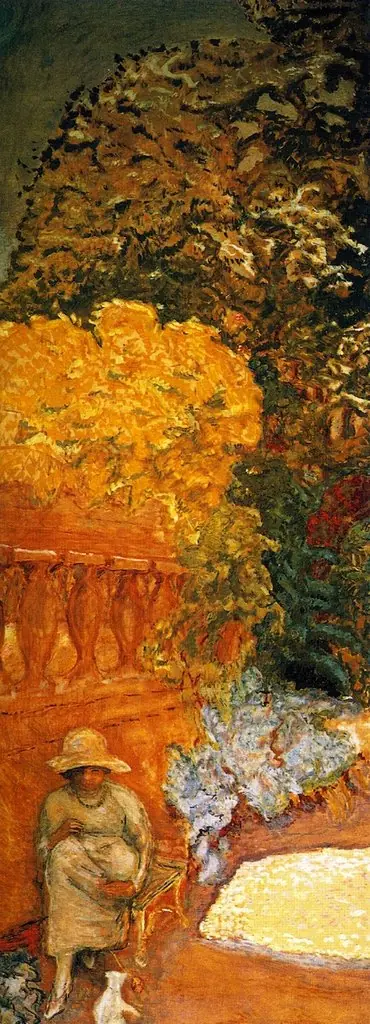 Mediterranean. Triptych (left panel)
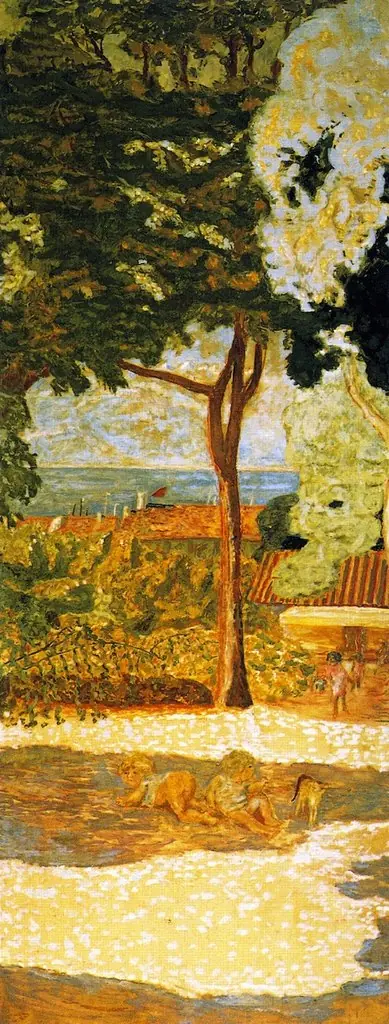 The Mediterranean. Triptych (central panel)
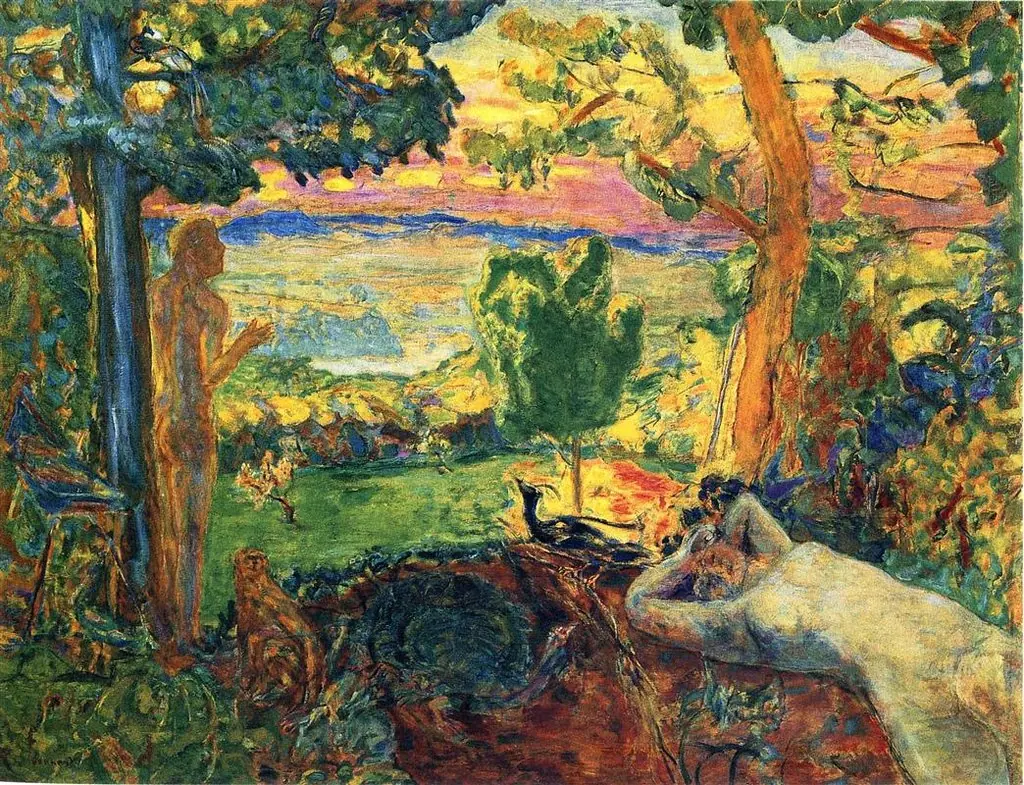 Earthly Paradise
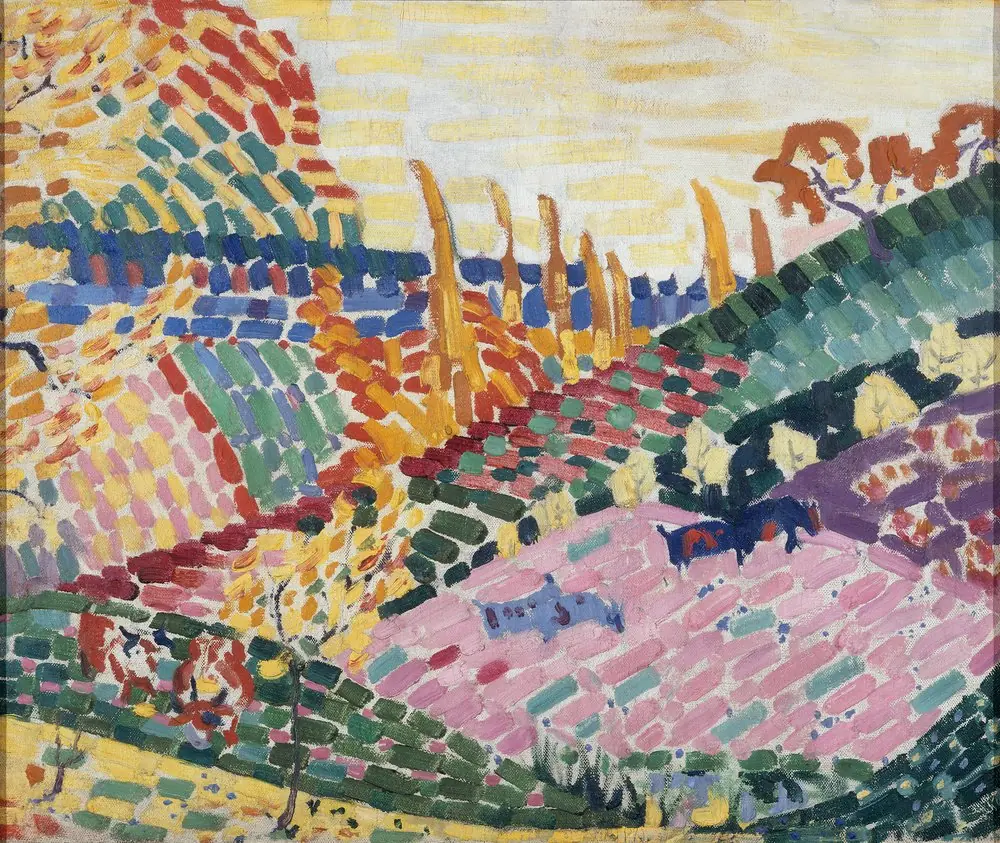 Landscape with Cows
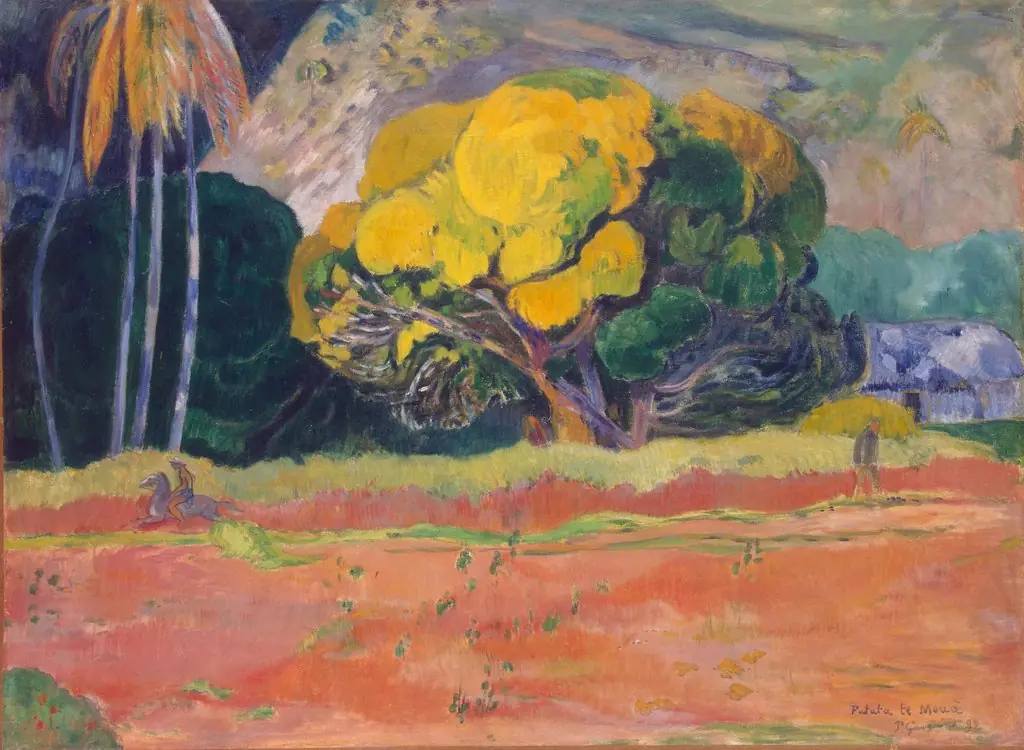 Fatata Te Moua (At the Foot of a Mountain)
 Ouă roșii
 The Farm at Lezaven, Finistère
 La Rose du Ciel, Cassis
 Paysage d'Automne