Artwork
The Judgment of Midas
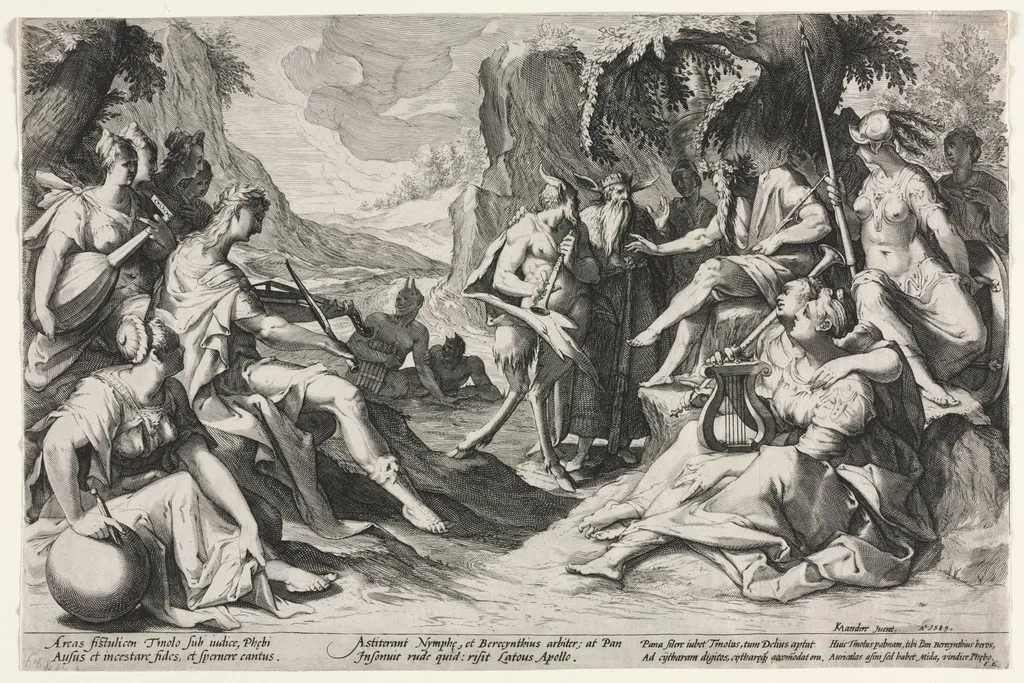
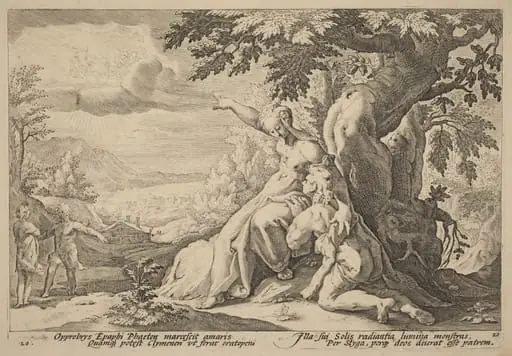
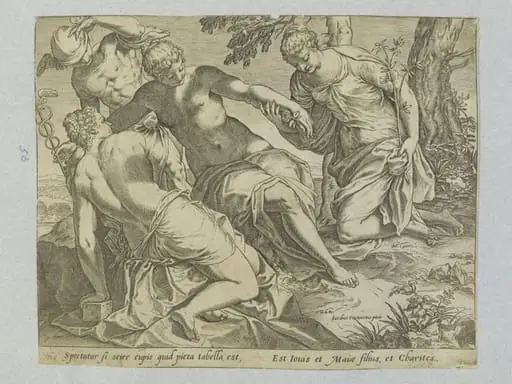
The Judgment of Midas is a print by the Renaissance artist Nicolaes Clock. It dates from 1589 and is held in the collection of the Cleveland Museum of Art.
About this work
Overview
The print aligns with the stylistic currents of Haarlem, where Karel van Mander’s influence as both artist and writer helped shape artistic discourse.
This print, attributed to Nicolaes Clock, depicts the mythological scene of Midas’s judgment, a subject drawn from classical antiquity. Though Clock is less documented than his contemporaries, his work reflects the broader Dutch engagement with mythological themes during the late 16th and early 17th centuries. The print aligns with the stylistic currents of Haarlem, where Karel van Mander’s influence as both artist and writer helped shape artistic discourse.
Subject & Meaning
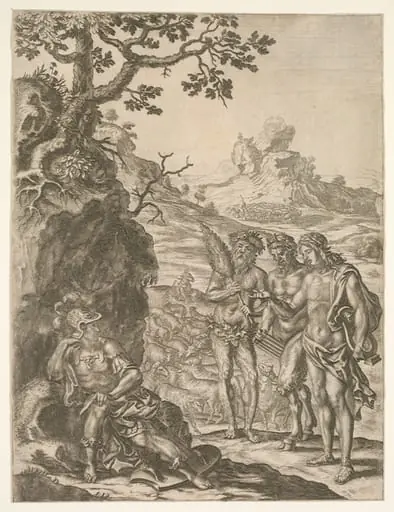
The scene illustrates the moment when King Midas is judged by the god Apollo for preferring the music of Pan over his own. The narrative, rooted in Ovid’s Metamorphoses, conveys a moral about artistic superiority and hubris. Clock’s interpretation emphasizes the tension between the two musicians and the king’s hesitant gesture, capturing the myth’s psychological weight without overt drama.
Technique & Style
The print employs fine, controlled line work characteristic of Northern Mannerist engraving traditions. Details in drapery and facial expression suggest familiarity with the work of Hendrick Goltzius and his circle, though Clock’s handling is more restrained. The composition is tightly framed, focusing attention on the central figures and their interaction, typical of small-scale narrative prints of the period.
History & Provenance
Nicolaes Clock was active in the Netherlands during the early 1600s, likely in Haarlem, where artistic networks centered on van Mander and Goltzius flourished. While few of Clock’s works survive, this print is among the few attributed to him with reasonable certainty. Its existence suggests a modest but active print market for mythological subjects among local collectors and artists.
Context
The print emerged during a period when Dutch artists increasingly turned to classical mythology as a vehicle for intellectual and aesthetic expression. Van Mander’s writings, particularly Het Schilder-boeck, codified these themes and encouraged artists to engage with ancient narratives. Clock’s work fits within this trend, reflecting a broader cultural shift toward humanist subjects in Northern European art.
Legacy
Though Clock’s oeuvre is limited, this print contributes to the understanding of minor artists who operated within the influential Haarlem circle. It demonstrates how even lesser-known engravers helped disseminate classical themes through accessible formats, bridging the gap between elite humanist culture and broader public taste in early modern Dutch society.
Own this work as a print
Artist & collection