Artwork
Man Seated on the Ground, Seen from Behind (recto); Sketch (verso)
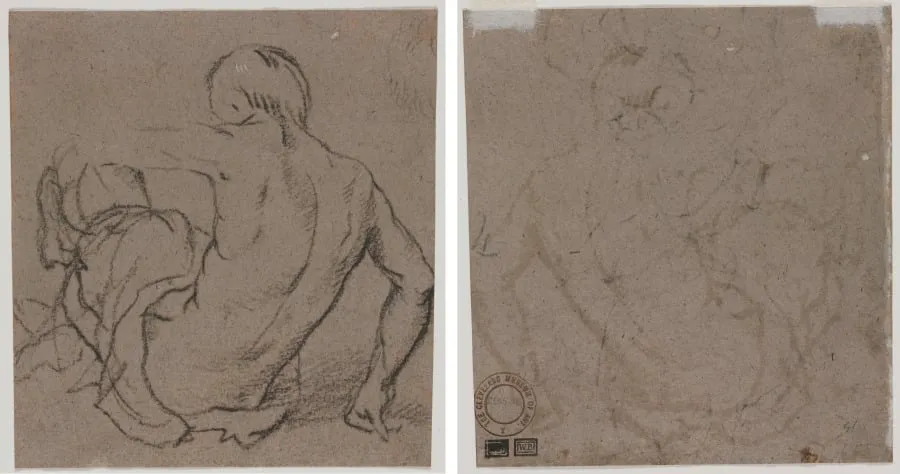
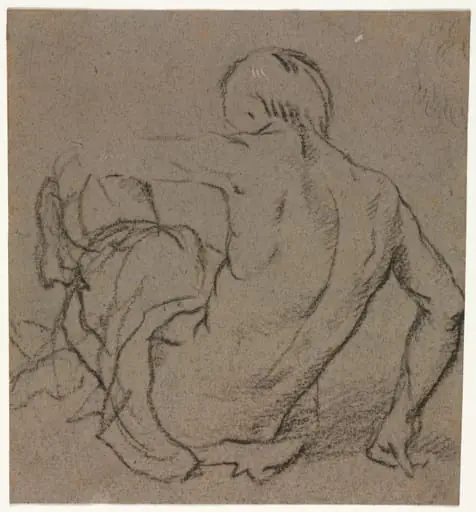
Man Seated on the Ground, Seen from Behind (recto); Sketch (verso) is a drawing by the Renaissance artist Unknown. It dates from 1504 and is held in the collection of the Cleveland Museum of Art. Man Seated on the Ground, Seen from Behind is a drawing depicting a figure in a casual, seated pose with their back to the viewer.
About this work
Overview
Man Seated on the Ground, Seen from Behind is a drawing depicting a figure in a casual, seated pose with their back to the viewer. Executed in quick, loose lines, the work conveys a sense of spontaneity. The recto features the main subject, while the verso, though blank of imagery, exhibits pronounced paper texture, suggesting an experimental or preparatory purpose.
Subject & Meaning
The subject, a person sitting on the ground with one hand on their knee and disheveled hair, is rendered without emphasis on identity or narrative, implying the drawing's focus is on capturing a moment or posture rather than portraying a specific individual or theme.
Technique & Style
Characterized by hasty, expressive lines, the drawing indicates a rapid execution, possibly as a study or sketch.
Characterized by hasty, expressive lines, the drawing indicates a rapid execution, possibly as a study or sketch. The loose technique and emphasis on capturing a pose align with observational or preparatory drawing practices. A suggested comparison to sfumato technique implies a potential interest in capturing subtle, nuanced forms, though this work's primary characteristic is its sketchy immediacy.
History & Provenance
No specific historical or provenance details are provided for this drawing, highlighting its presentation as a standalone work rather than one contextualized by its creation or ownership history.
Context
While direct contextual information is lacking, the drawing's style and the mention of sfumato suggest a broader artistic context that values expressive, quickly captured observations, potentially linking to Renaissance or later European drawing traditions that emphasized study and technique.
Legacy
The work's legacy is not explicitly outlined, but its style and the reference to sfumato may indicate its contribution to or reflection of artistic practices that prioritize capturing the human form in informal, observational settings.
Artist & collection

 Domestic Scene
 Giacomo and Cardinal Marco, investing Andrea, Abbot of San Zeno, with his Benefice
 The Nymph of Fontainebleau
 Portrait of a Woman
 Madonna and Child with Saints in the Enclosed Garden
 Venus and Minerva
 Family Group of Four on Sofa
 Wall painting from Room H of the Villa of P. Fannius Synistor at Boscoreale
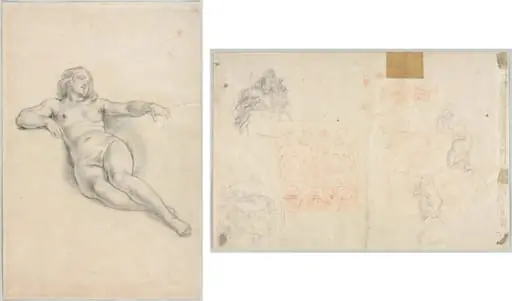 Reclining Female Nude (recto); Various Sketches of Figures and Plants (verso)
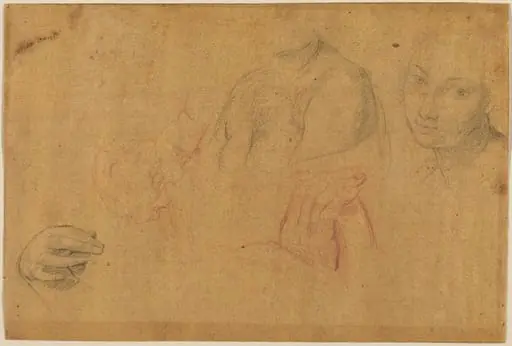 Sketches of Heads and Hands
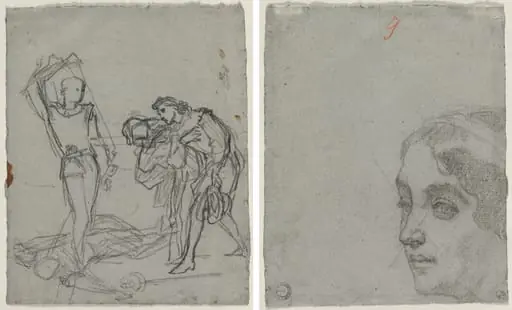 Duel after the Masked Ball (recto); Head of a Woman (verso)
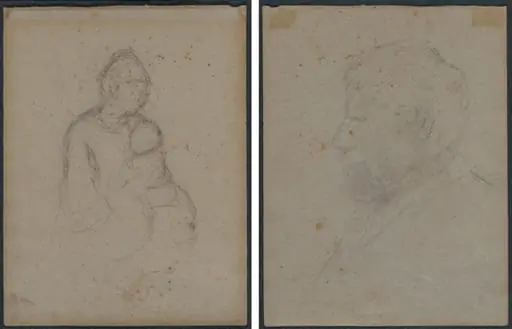 Mother and Child (recto); Profile Bust of a Man (verso)
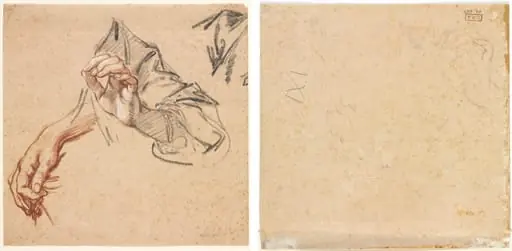 Study of Hands (recto); Sketch of a Hand (verso)
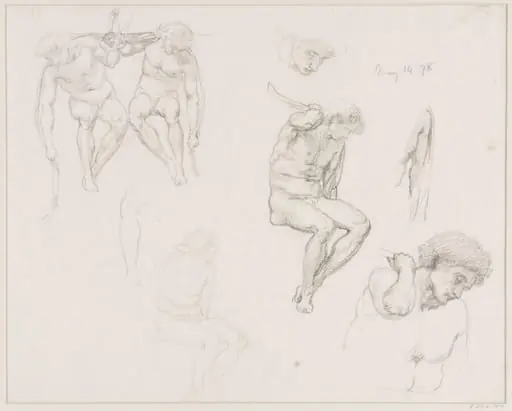 Figure studies and a head fot the mosaic decoration of the dome of St. Paul's Cathedral
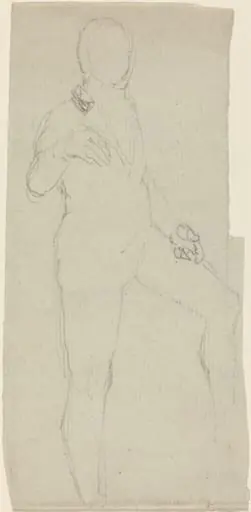 Male Figure in Contemporary Dress
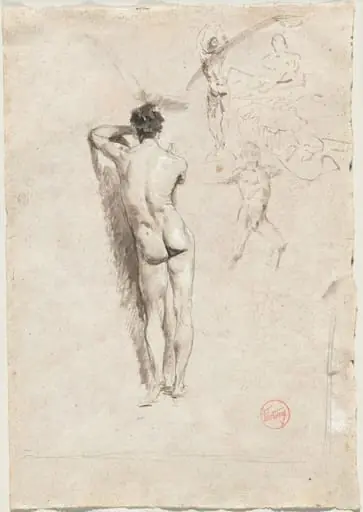 Study of a Male Nude and Other Studies
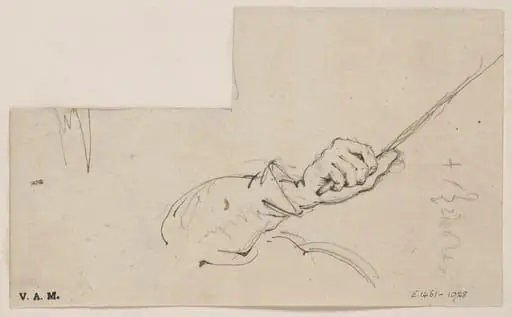 An arm and hand holding a stick
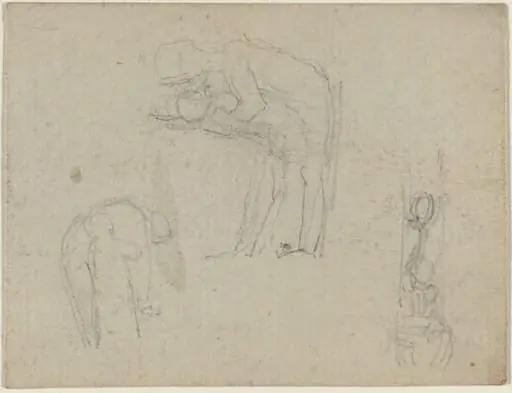 Three Groups of Figures
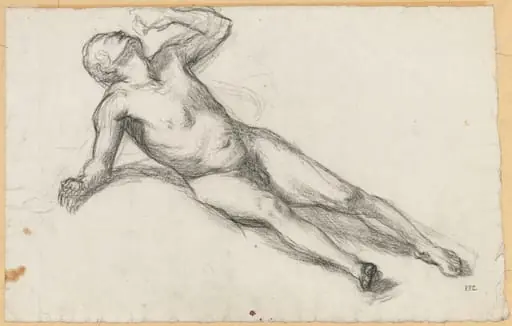 Study for The War
 Man Seated on the Ground, Seen from Behind (recto)