Artwork
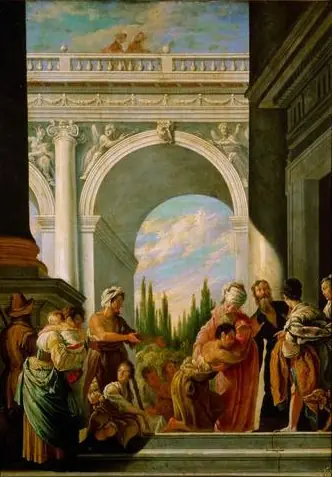
Apostles Peter and John Healing the Sick
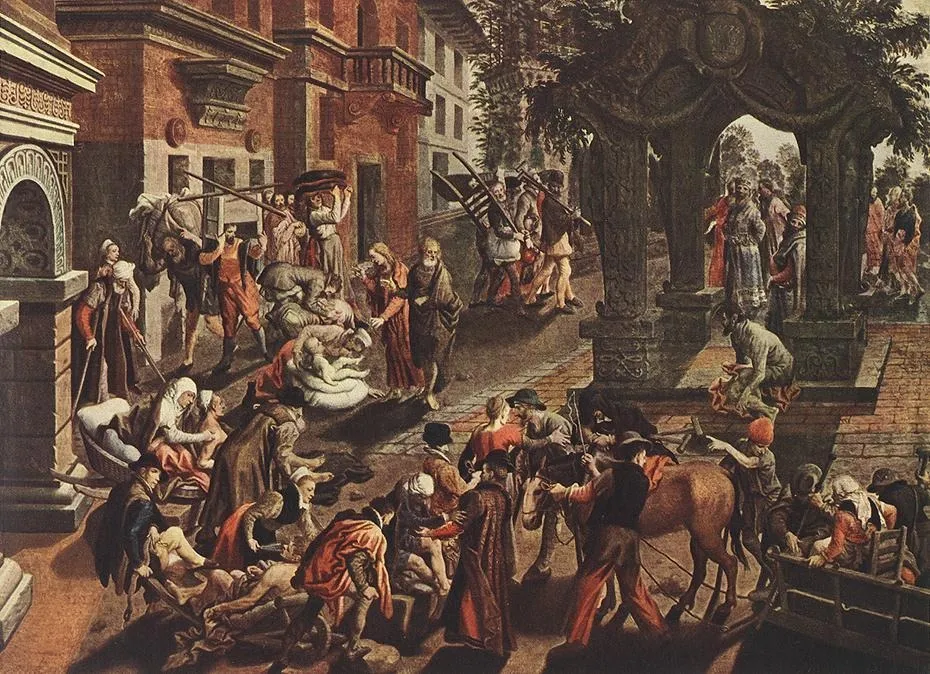
Apostles Peter and John Healing the Sick is an oil painting by the Mannerist artist Pieter Aertsen. It dates from 1575 and is held in the collection of the Hermitage Museum.
About this work
Overview
Aertsen, active in both Amsterdam and Antwerp, merged sacred narrative with vivid urban life, a hallmark of his approach.
Painted in 1575 by Pieter Aertsen, this oil-on-panel work depicts a biblical episode from the Acts of the Apostles. Aertsen, active in both Amsterdam and Antwerp, merged sacred narrative with vivid urban life, a hallmark of his approach. The painting resides in the State Hermitage Museum and exemplifies his tendency to embed religious themes within densely populated, everyday settings, bridging devotional imagery and genre realism.
Subject & Meaning
The scene illustrates Peter and John healing the sick at the Temple gate, as described in Acts 3. Though the apostles are subtly integrated among the crowd, their presence is implied through the reactions of the afflicted and onlookers. The focus shifts from divine intervention to human response—suffering, care, and observation—reflecting a humanist interpretation of faith grounded in observable social behavior rather than overt miracle.
Technique & Style
Aertsen employed oil paint to render intricate details of clothing, facial expressions, and architectural elements with precision. The composition is crowded yet carefully structured, with figures arranged in layered planes. Warm earth tones dominate, enhancing the tactile realism of stone, fabric, and skin. The inclusion of mundane elements—horses, stretchers, balconies—creates a narrative depth that prioritizes lived experience over idealized sacred space.
History & Provenance
Commissioned during Aertsen’s later years, the painting reflects his mature style developed after years in Antwerp and Amsterdam. It entered the collection of the State Hermitage Museum in the 18th or 19th century, likely through imperial acquisitions of Northern European art. Its survival through centuries of political and cultural change underscores its significance as a document of 16th-century Dutch religious painting and civic realism.
Context
Created in the wake of the Protestant Reformation, the painting navigates Catholic devotional traditions within a predominantly Calvinist region. Aertsen’s choice to depict a miracle without overt symbolism allowed viewers to engage with the story on a human level, avoiding doctrinal confrontation. The bustling street setting mirrors contemporary urban life in the Low Countries, where commerce, religion, and daily hardship coexisted.
Legacy
Aertsen’s fusion of biblical narrative with detailed genre scenes influenced later Flemish and Dutch painters, including his nephew Joachim Beuckelaer and eventually Rembrandt. His emphasis on ordinary people within sacred stories helped shape the evolution of Dutch realism. The painting stands as an early example of how religious subjects could be rendered with psychological and social nuance, paving the way for secular genre painting in the 17th century.
Artist & collection
Artist
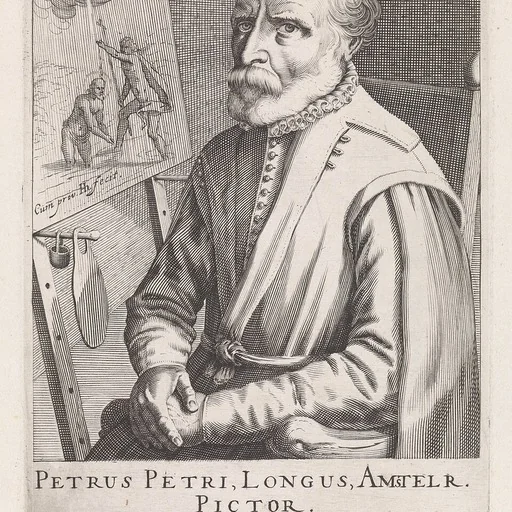
Pieter Aertsen (1508 in Amsterdam – 2 June 1575 in Amsterdam), called Lange Piet ("Tall Pete") because of his height, was a Dutch painter in the style of Northern Mannerism.

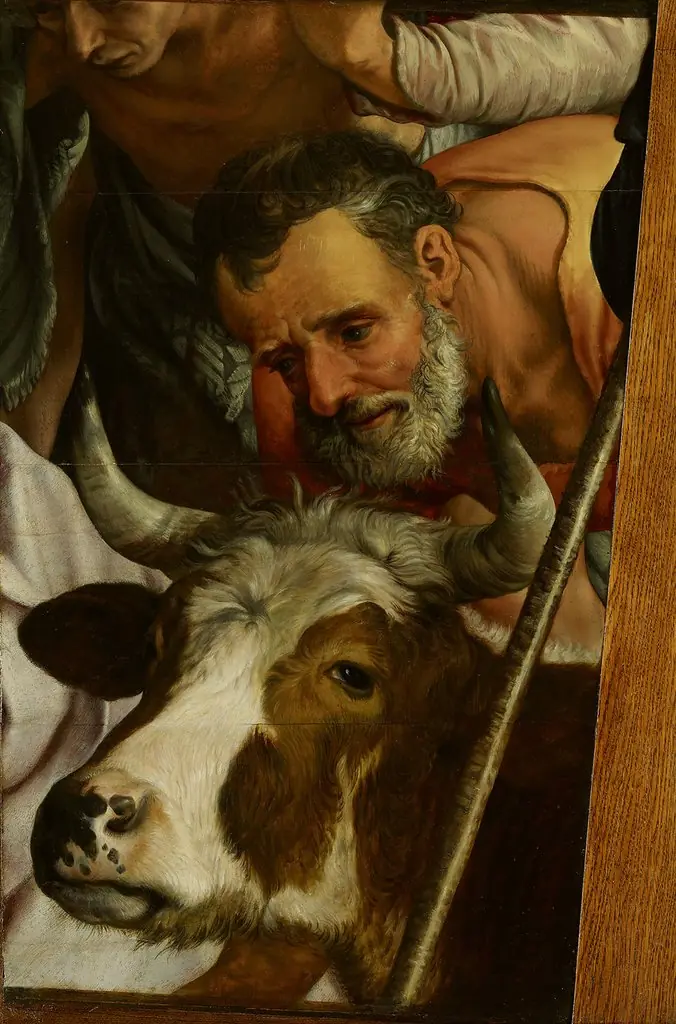
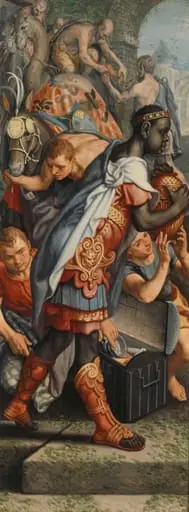
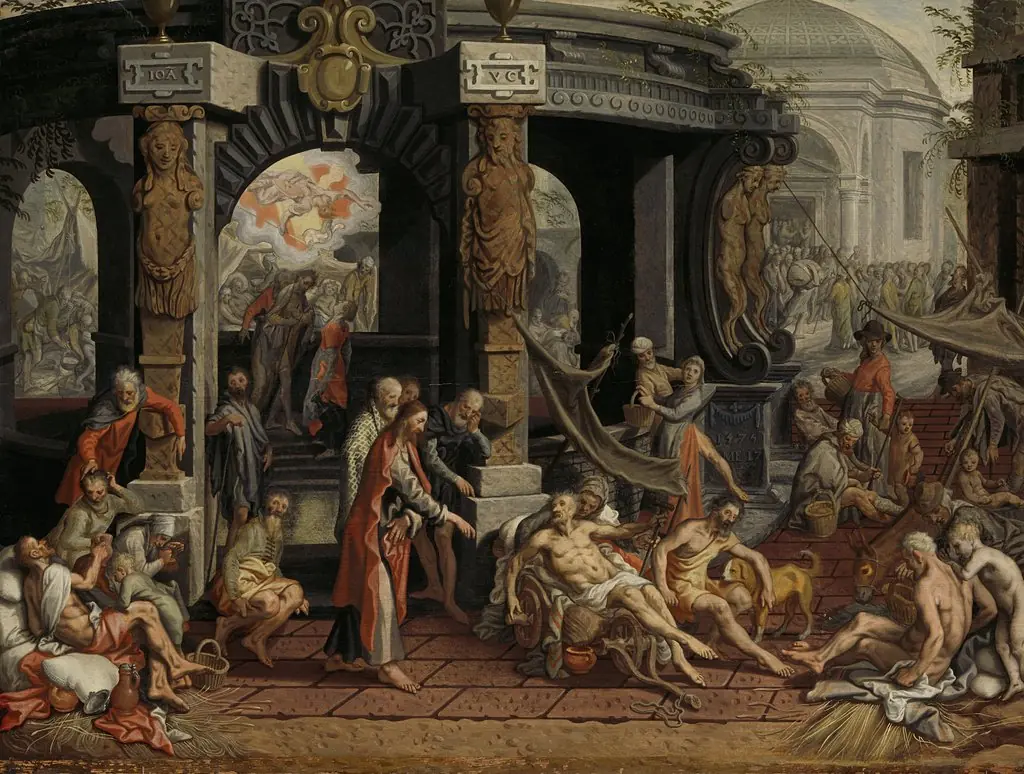 The Healing of the cripple of Bethesda
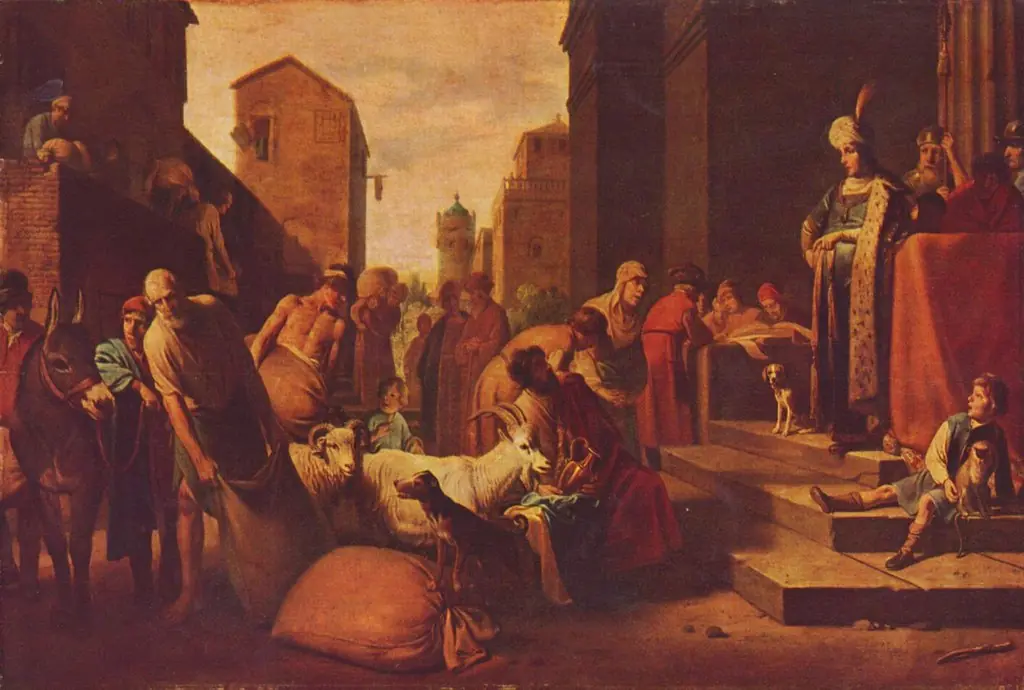 Joseph Selling Grain in Egypt
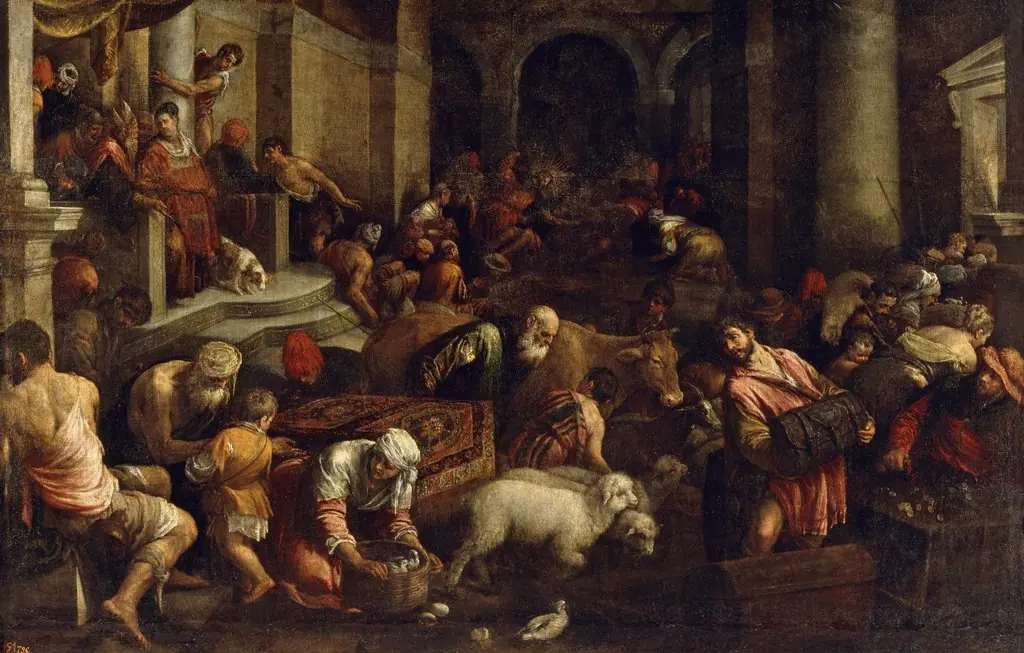 Expulsion of the Merchants from the Temple
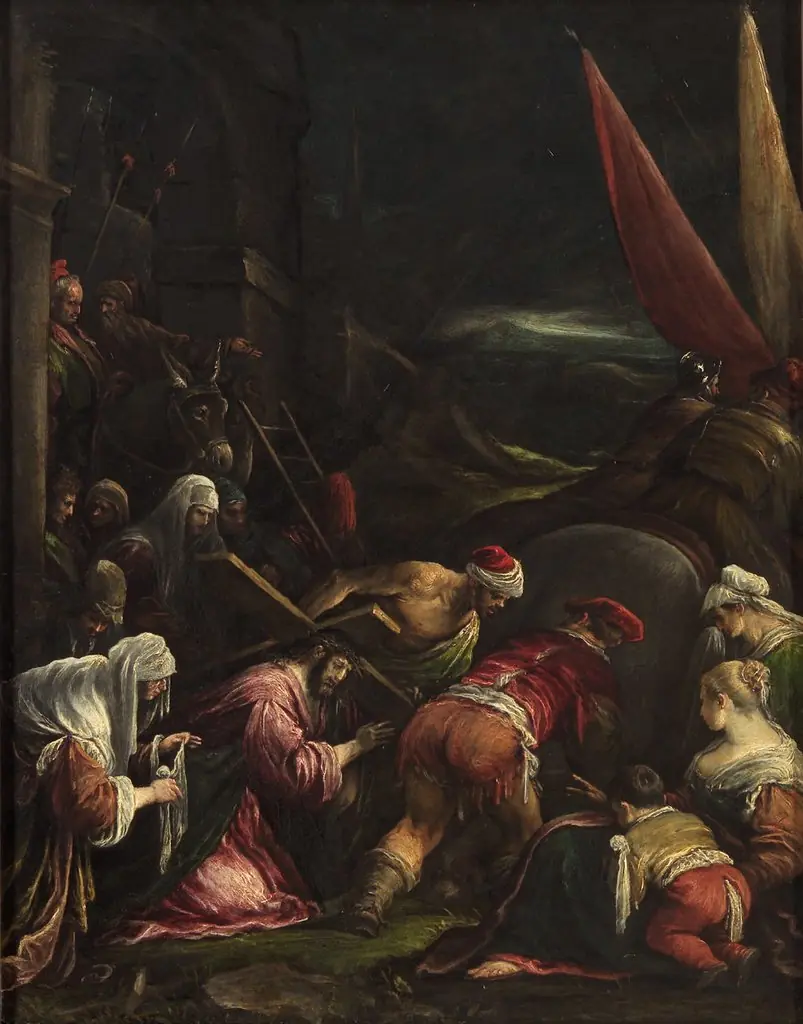 Christ Carrying the Cross meets with Veronica
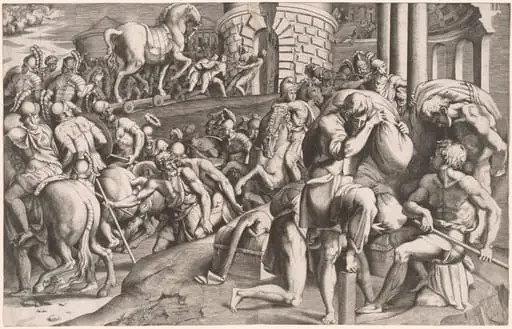 The Trojans Hauling the Wooden Horse into Troy
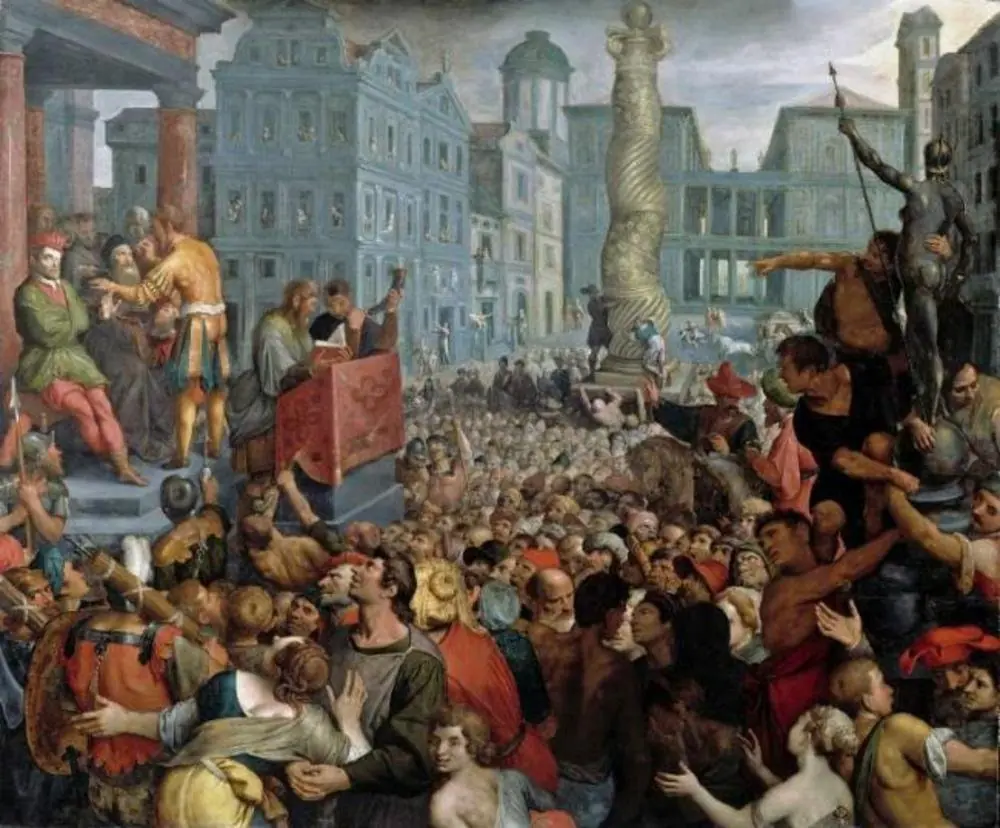 The Judgement of Zaleucus
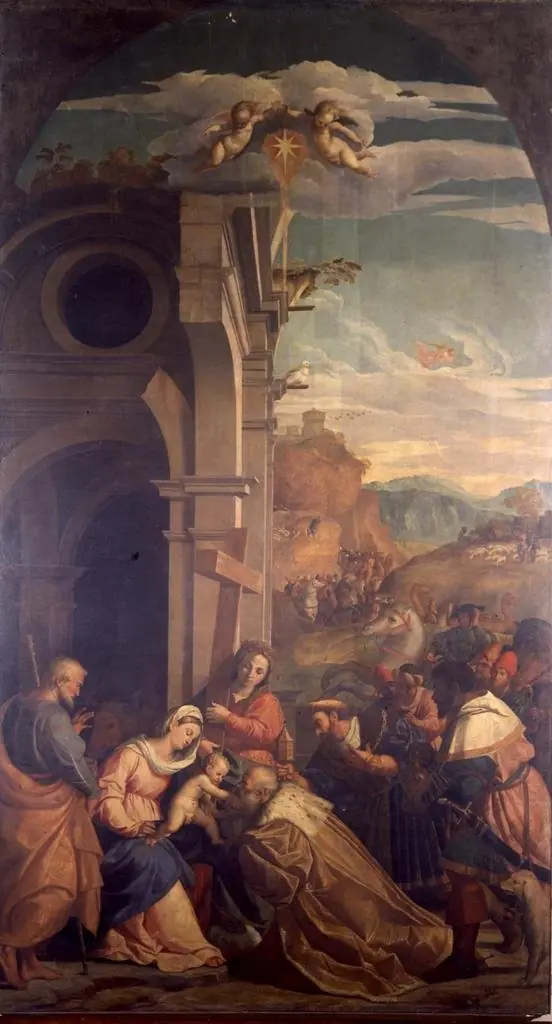 Adoration of the Magi with Saint Helena
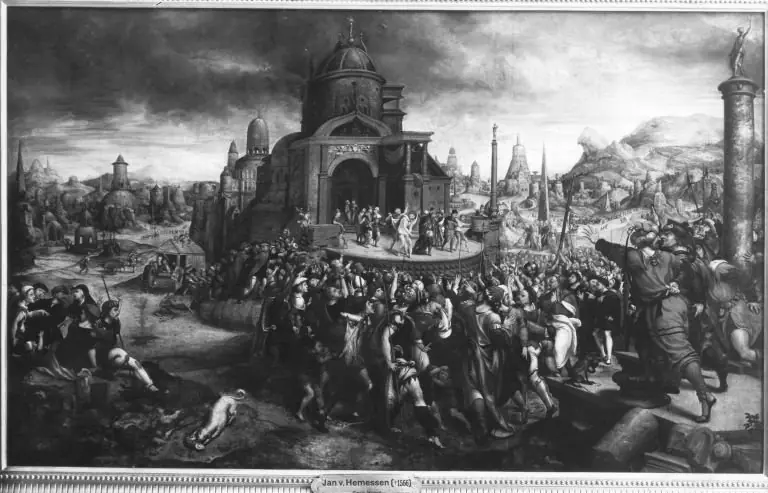 Ecce homo
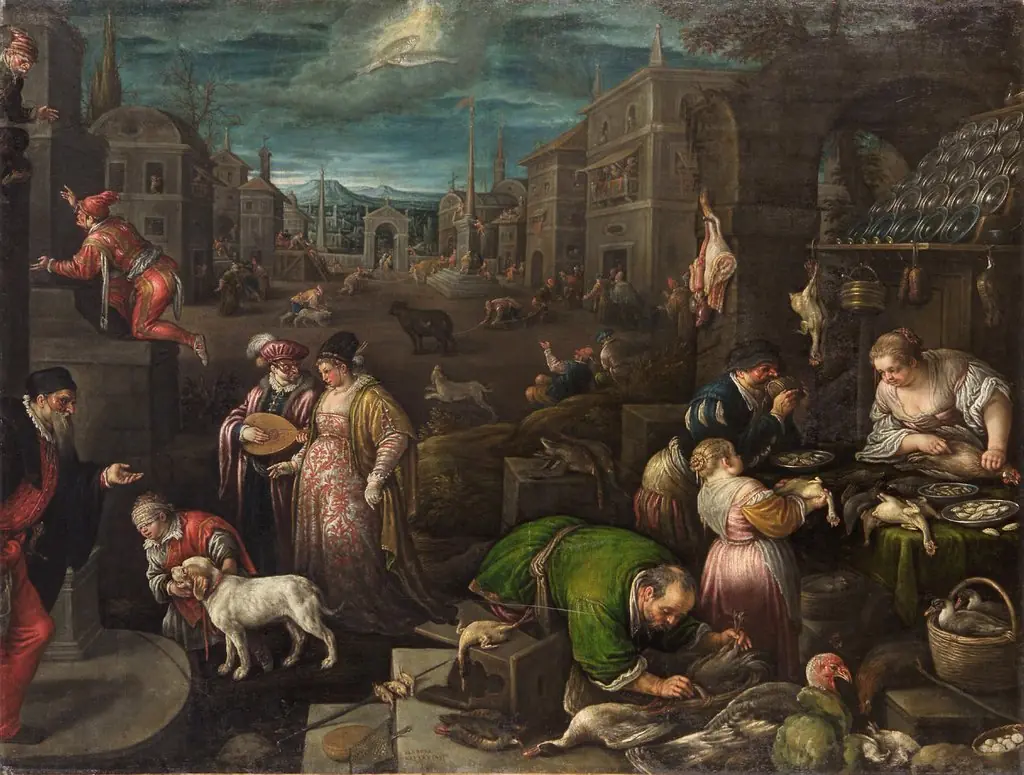 Februar
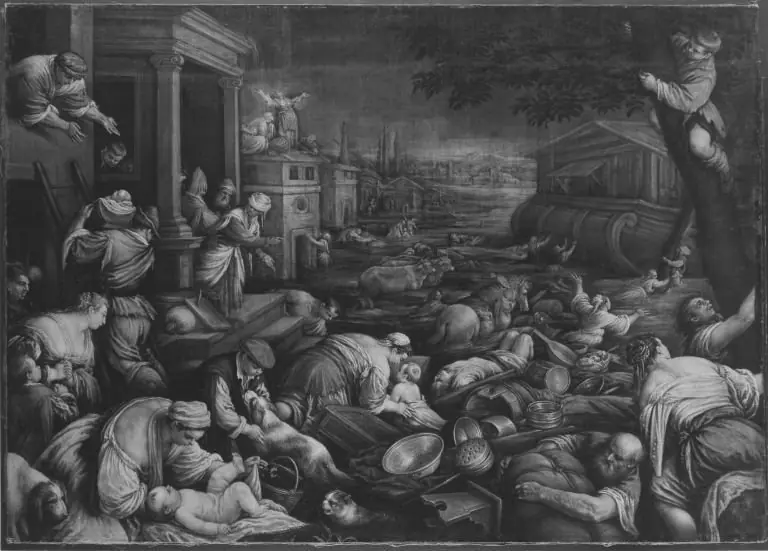 Die Sintflut (Werkstattkopie)
 Gleichnis vom verlorenen Sohn
 De werken van barmhartigheid