Artwork
The Egg-girl
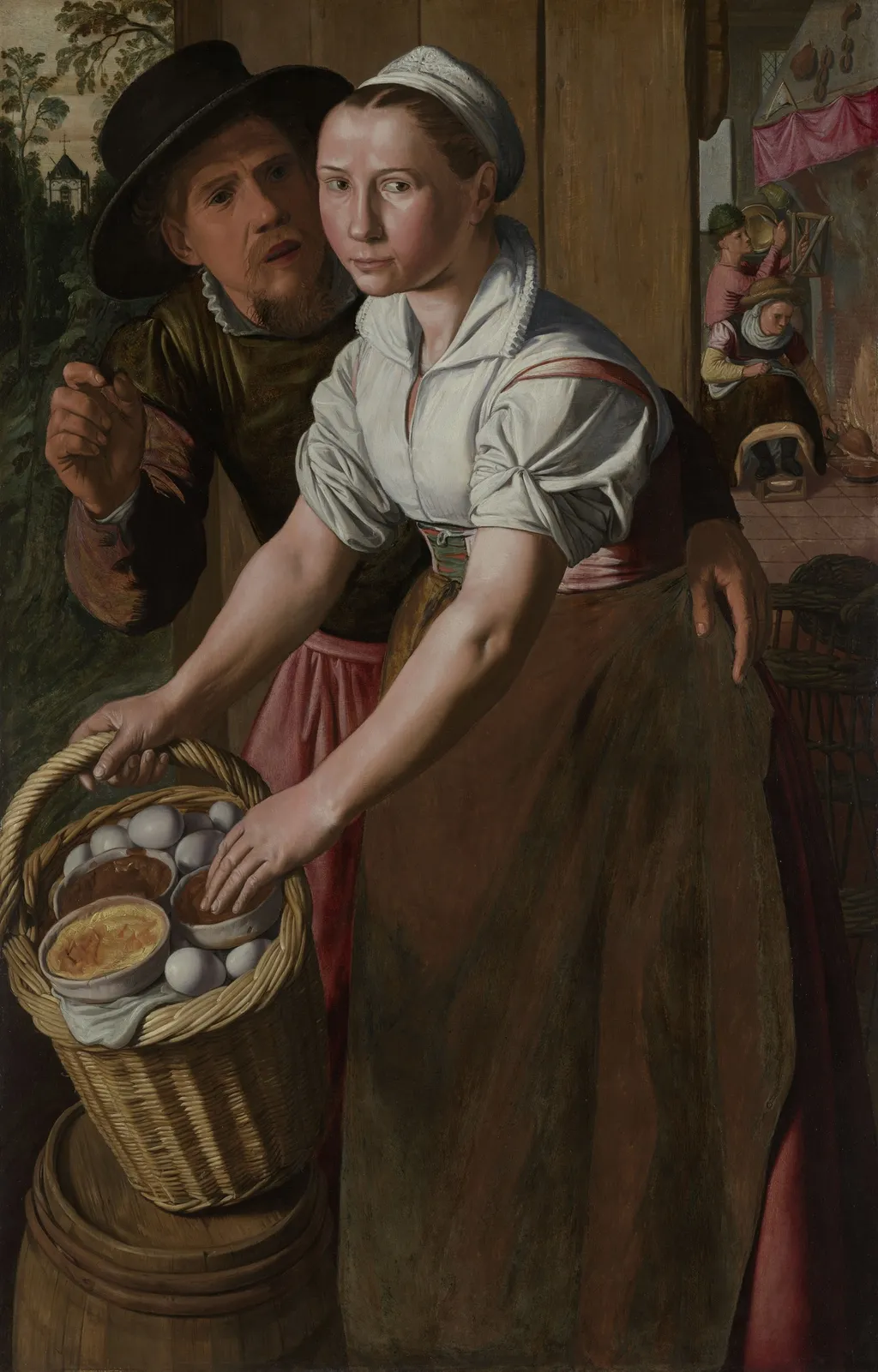
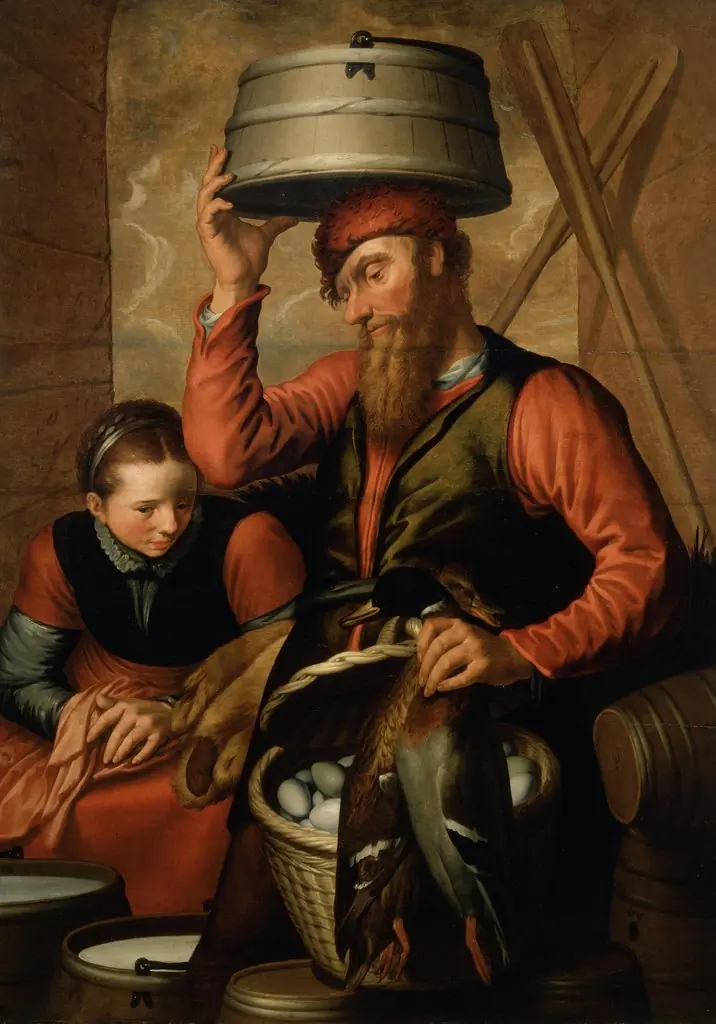
The Egg-girl is an oil painting by Pieter Aertsen. It dates from 1573 and is held in the collection of the Royal Museum of Fine Arts Antwerp.
About this work
Overview
The work reflects his interest in merging the mundane with deeper symbolic layers, a hallmark of his approach to composition and narrative.
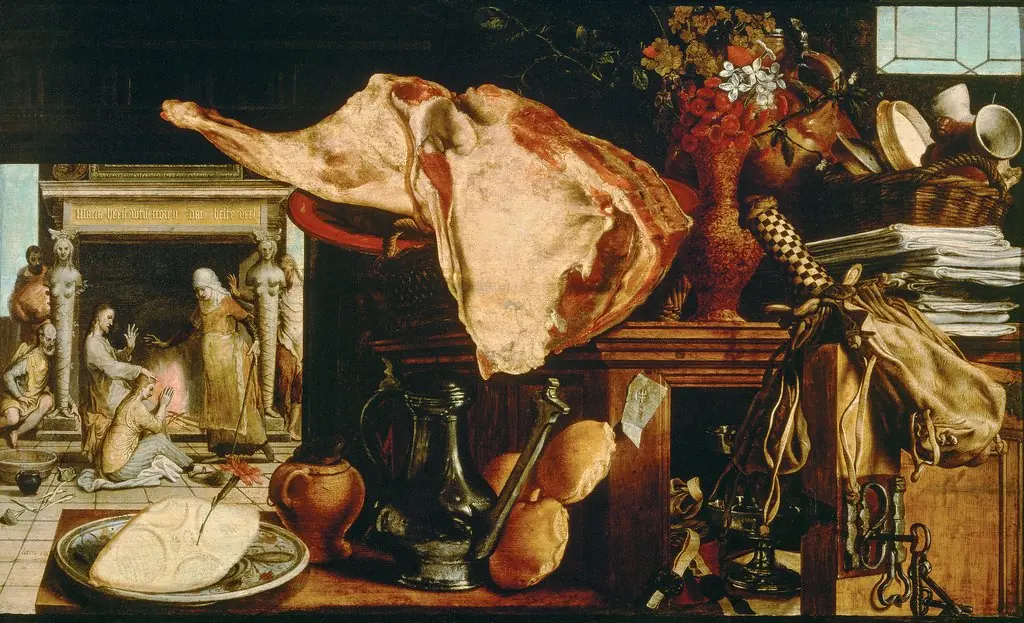
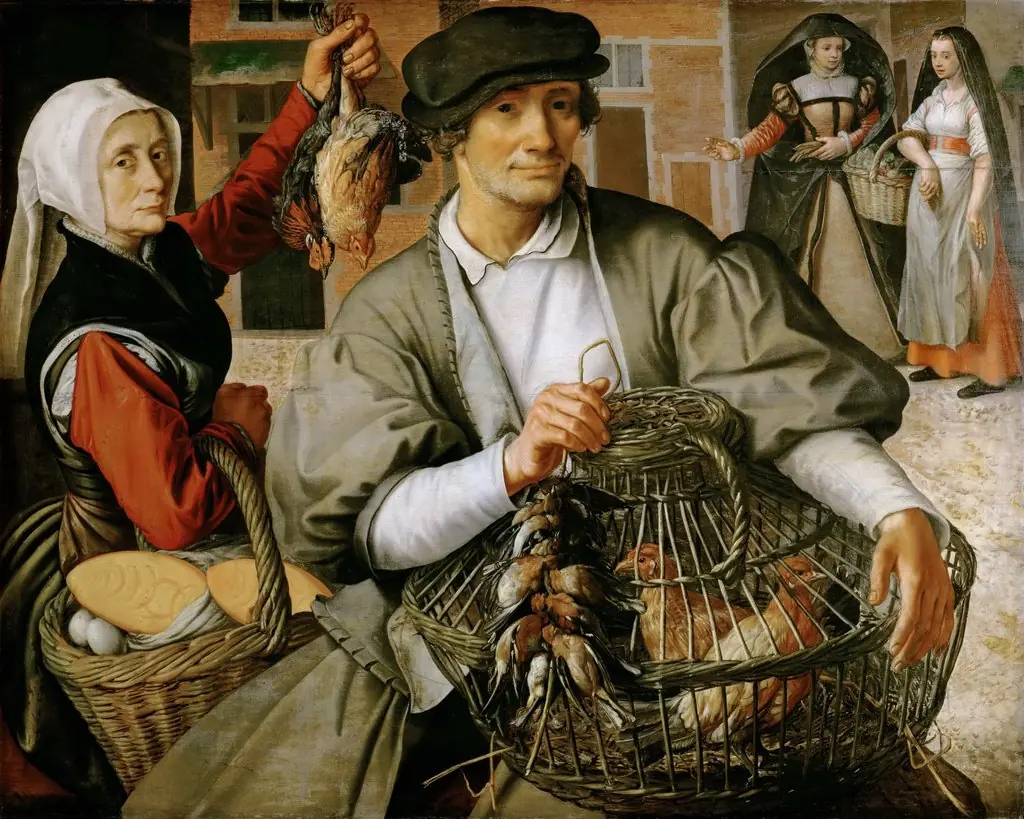
Painted in 1573 by Pieter Aertsen, *The Egg-girl* is an oil-on-panel genre scene that captures a quiet moment of domestic labor. Aertsen, active in Amsterdam and Antwerp, was among the first in the Northern Renaissance to elevate ordinary market and kitchen activities into the subject of large-scale paintings. The work reflects his interest in merging the mundane with deeper symbolic layers, a hallmark of his approach to composition and narrative.
Subject & Meaning
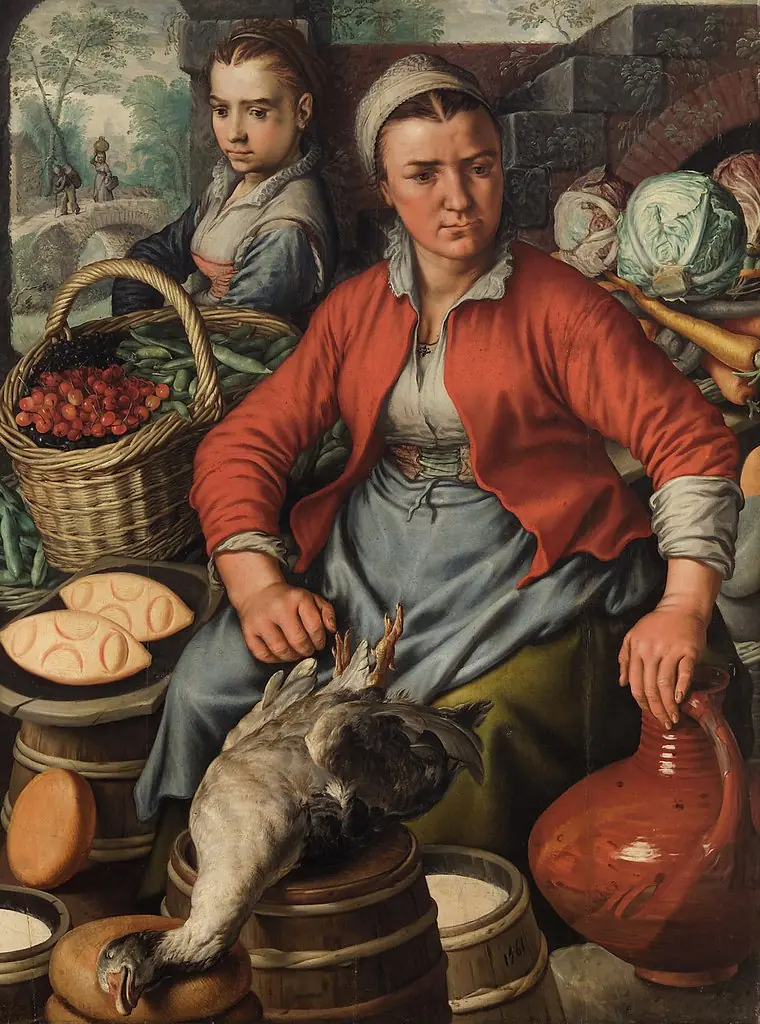
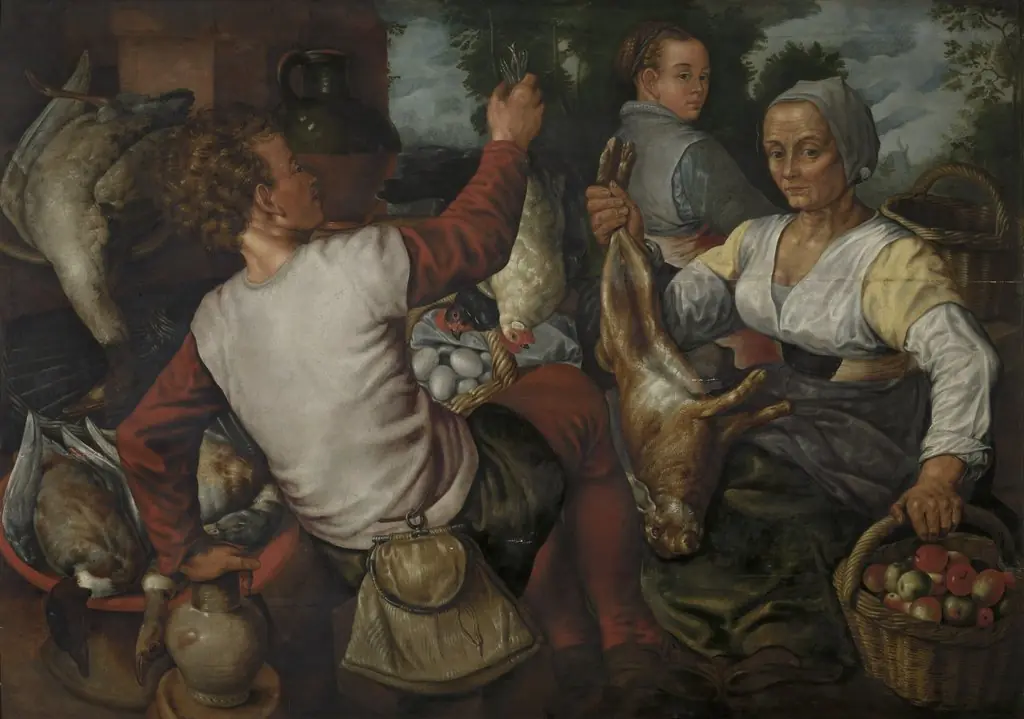
The painting centers on a young woman holding a basket of eggs and ceramic bowls, her posture suggesting diligent work. Beside her, a man in dark attire observes or perhaps assists, his presence introducing a subtle social dynamic. While the scene appears straightforward, the inclusion of everyday objects—eggs, vessels, food—may allude to themes of sustenance, labor, or even Christian symbolism tied to fertility and sacrifice, common in Aertsen’s layered imagery.
Technique & Style
Aertsen employed oil paint with meticulous attention to texture, rendering the roughness of baskets, the sheen of ceramic, and the softness of fabric with quiet realism. The foreground figures are sharply defined, while the background dissolves into a hazy market or kitchen interior, directing focus to the woman’s labor. His use of light and detail reflects Northern Renaissance traditions, yet his arrangement of objects and figures anticipates later still-life conventions.
History & Provenance
Created during Aertsen’s mature period, the painting entered the collection of the Royal Museum of Fine Arts Antwerp in the 19th century, where it remains today. Its survival through centuries of political and religious upheaval in the Low Countries underscores its enduring value as a document of 16th-century daily life. No early records of its commission or ownership are known, but its presence in a major public collection confirms its recognized significance.
Context
In mid-16th-century Antwerp, a thriving commercial center, artists like Aertsen responded to growing urban audiences by depicting scenes of trade and domesticity. His work diverged from religious or mythological themes dominant in earlier art, instead offering visual narratives rooted in the lives of common people. This shift aligned with broader cultural changes, including the rise of a merchant class and the increasing value placed on secular observation.
Legacy
Aertsen’s integration of still-life elements into genre scenes influenced later Dutch painters such as Jan Steen and Pieter de Hooch. *The Egg-girl* exemplifies his role in redefining subject matter in Northern art, moving beyond allegory to emphasize the dignity of everyday tasks. Though not widely celebrated in his time, his approach laid groundwork for the development of Dutch genre painting in the 17th century.
Own this work as a print
Artist & collection
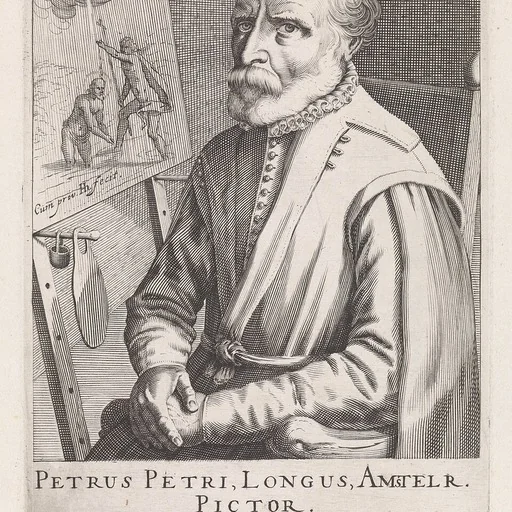
Artist
Pieter Aertsen (1508 in Amsterdam – 2 June 1575 in Amsterdam), called Lange Piet ("Tall Pete") because of his height, was a Dutch painter in the style of Northern Mannerism.