Artwork
The baptism of the eunuch
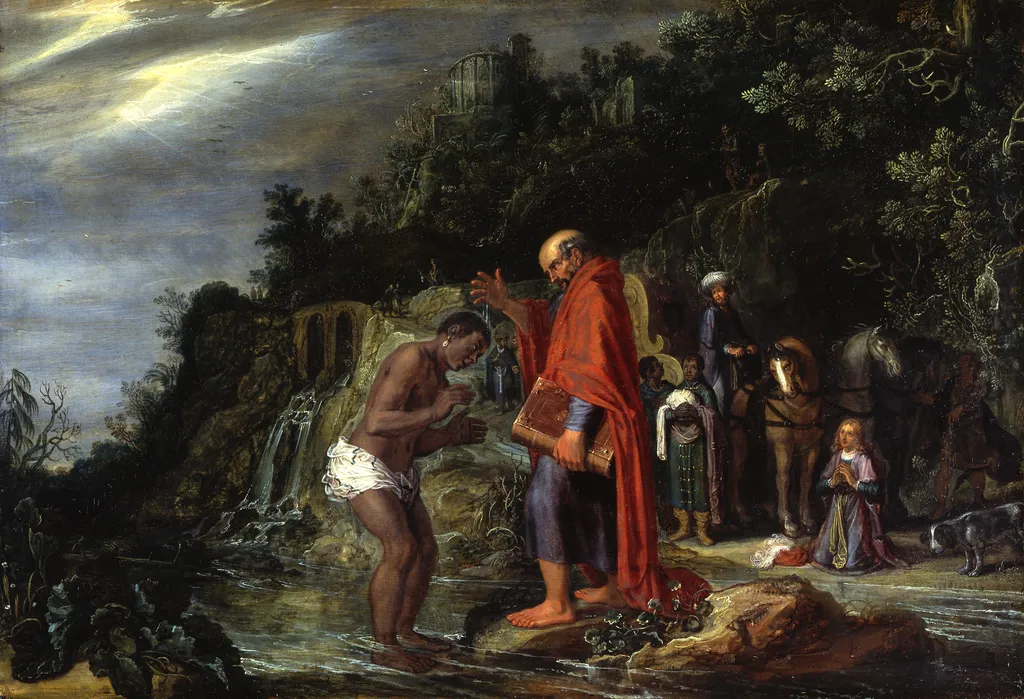
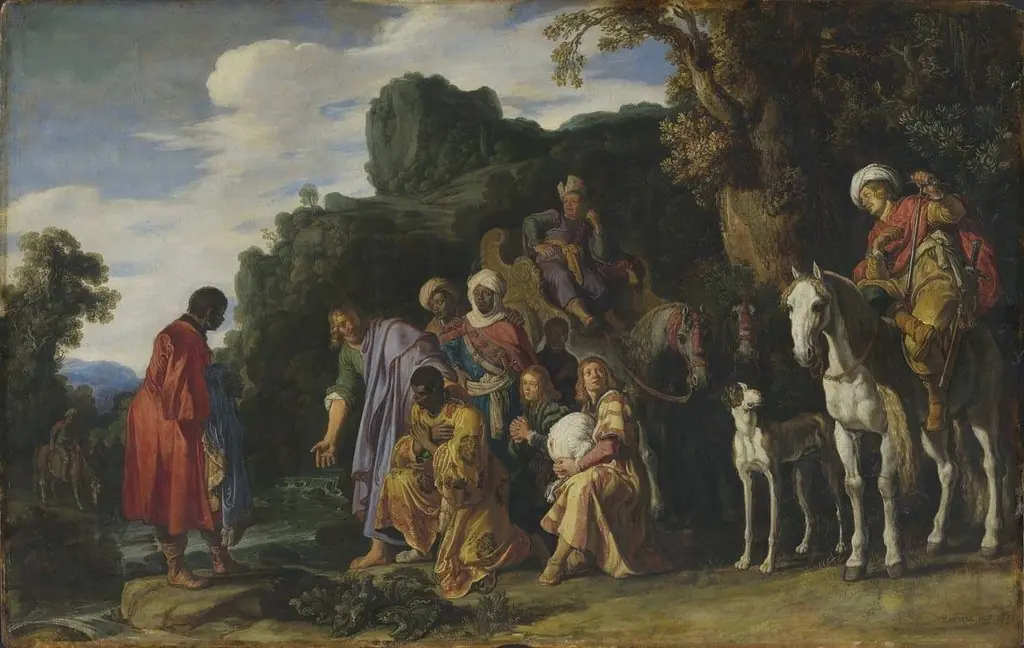
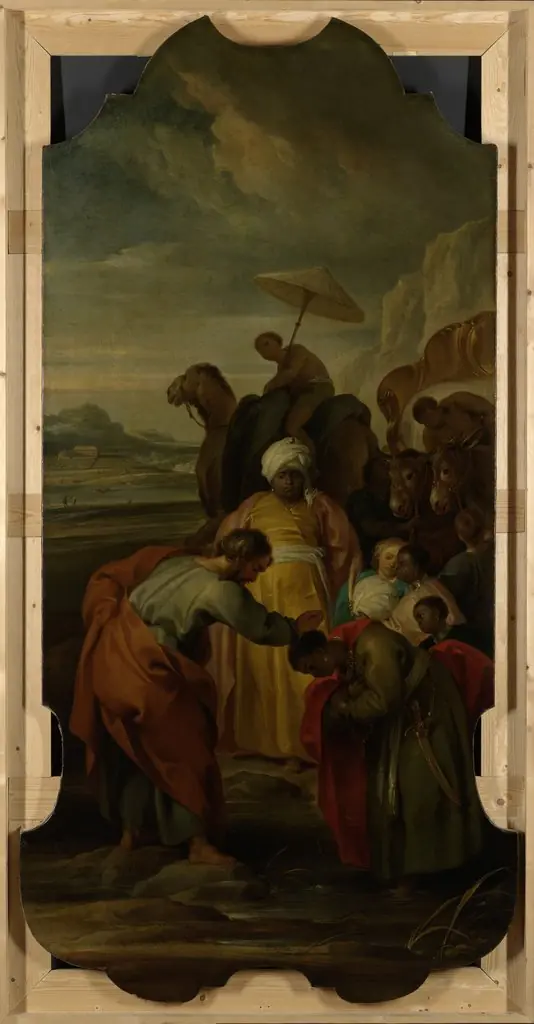
The baptism of the eunuch is a paint painting by the Early Baroque Italian artist Pieter Lastman. It dates from 1608 and is held in the collection of the Gemäldegalerie Berlin.
About this work
Overview
Lastman, known for his dramatic storytelling and attention to human expression, rendered this biblical episode with emotional intensity.
Painted in 1608 by Pieter Lastman, *The Baptism of the Eunuch* is an early 17th-century Dutch religious narrative work that reflects the influence of Italian Baroque sensibilities. Lastman, known for his dramatic storytelling and attention to human expression, rendered this biblical episode with emotional intensity. The painting is part of the collection at the Gemäldegalerie in Berlin, where it remains a key example of Northern European engagement with biblical themes during the period.
Subject & Meaning
The scene illustrates Acts 8:26–39, in which Philip, a disciple, baptizes a high-ranking Ethiopian official, or eunuch, after explaining the Christian gospel to him. The moment captures spiritual awakening and inclusion, as a foreigner is welcomed into the faith. Lastman emphasizes the physicality of the act—the eunuch’s submerged form, Philip’s raised hand—conveying both ritual and transformation. The onlookers, including horses and attendants, frame the event as a public revelation.
Technique & Style
Lastman employs chiaroscuro to heighten the drama, directing light toward the central figures amid a shadowed landscape. His brushwork captures texture in fabric, skin, and rock, while the color palette—dominated by the eunuch’s white loincloth and Philip’s crimson robe—creates visual contrast. The composition is tightly focused, with figures arranged diagonally to guide the viewer’s gaze from the water to the blessing hand, reinforcing the narrative’s emotional core.
History & Provenance
Commissioned during Lastman’s mature period, the painting entered the Berlin collection in the 18th century, likely through royal or ecclesiastical acquisition. It has remained in the Gemäldegalerie since at least the early 1800s, with no record of significant relocation. Its survival in good condition reflects its early recognition as a significant work by a teacher of Rembrandt, whose own early style was shaped by Lastman’s approach to biblical drama.
Context
In early 17th-century Amsterdam, religious painting flourished amid Protestant reform, which discouraged ornate church art but encouraged personal devotion through narrative imagery. Lastman’s work responded to this climate by focusing on intimate, psychologically charged biblical moments. His synthesis of Italian compositional dynamism with Northern attention to detail positioned him as a bridge between continental trends and Dutch realism.
Legacy
Though less widely known today than his pupil Rembrandt, Lastman’s influence on Dutch narrative painting was foundational. *The Baptism of the Eunuch* exemplifies his role in shaping the visual language of biblical scenes for a generation of artists. His emphasis on gesture, expression, and emotional immediacy became standard in Dutch history painting, leaving a quiet but enduring mark on the evolution of Baroque art in the Netherlands.
Own this work as a print
Artist & collection
Artist
Pieter Lastman (1583–1633) was a Dutch painter. Lastman is considered important because of his work as a painter of history pieces and because his pupils included Rembrandt and Jan Lievens. In his paintings Lastman paid…