Artwork
Untitled
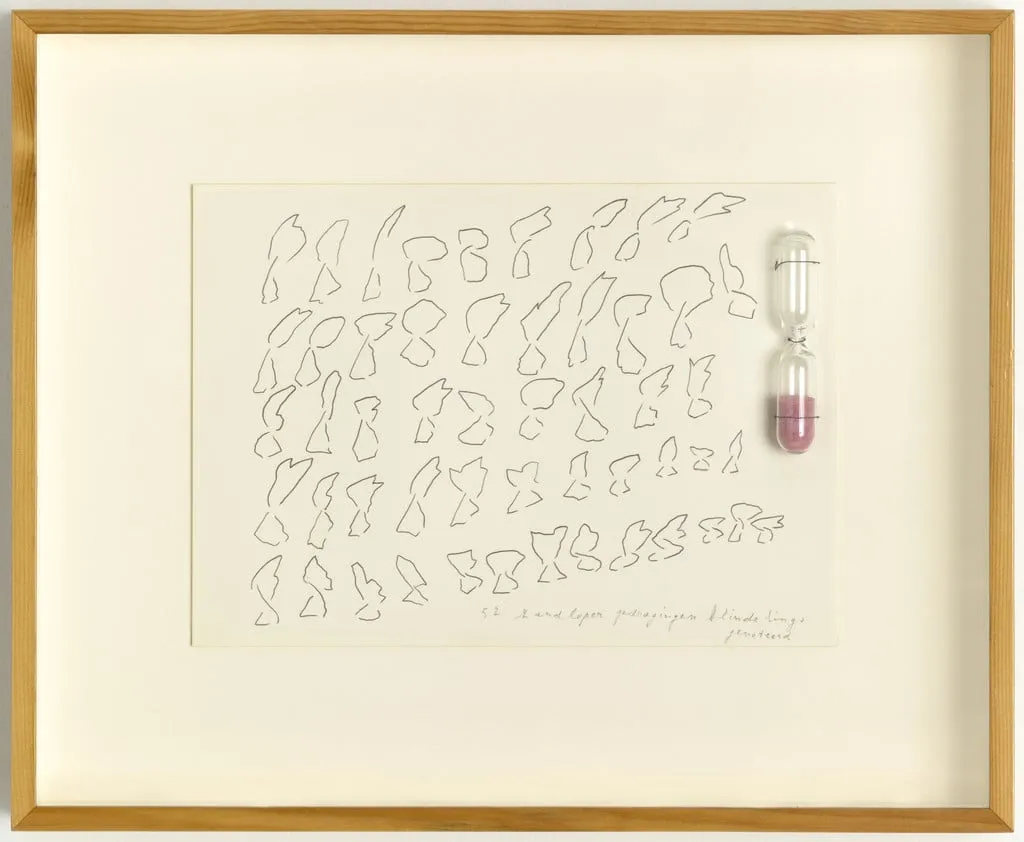
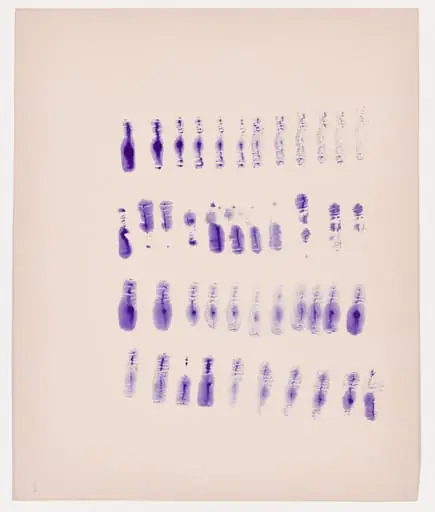
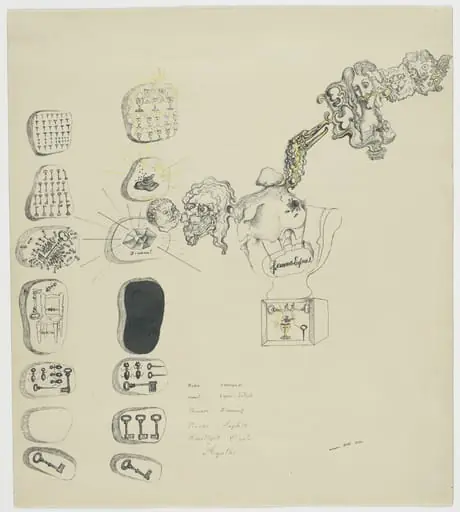
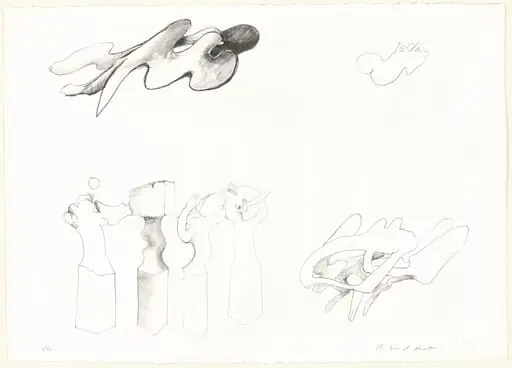
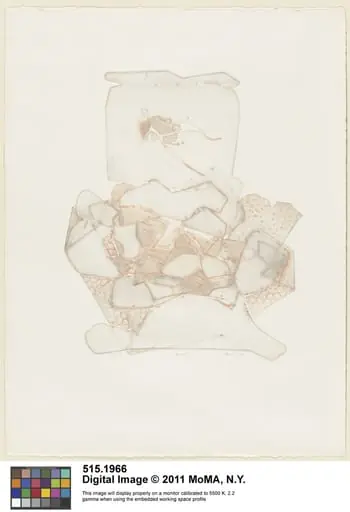
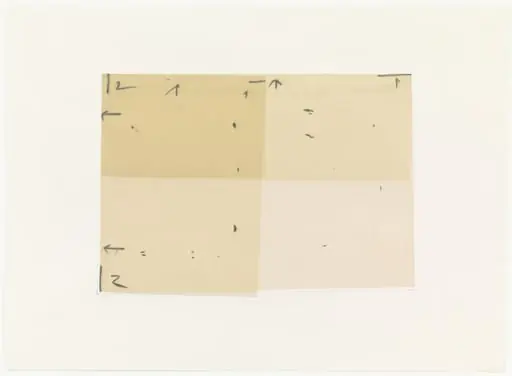
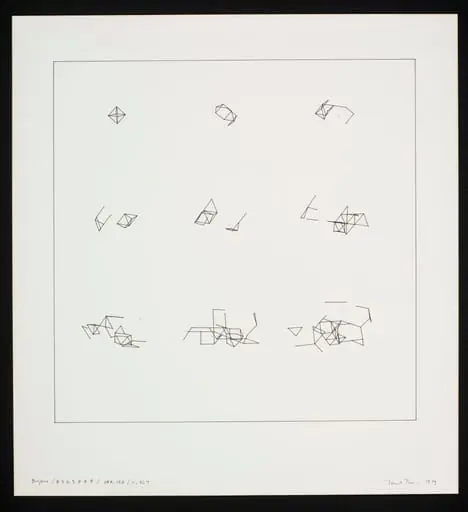
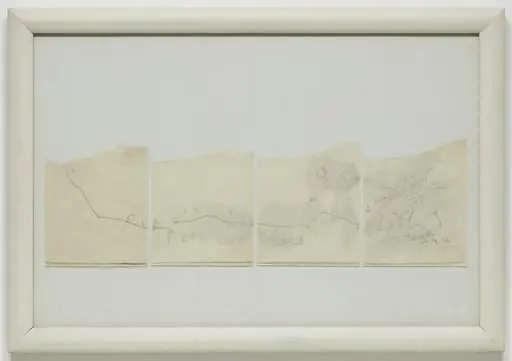
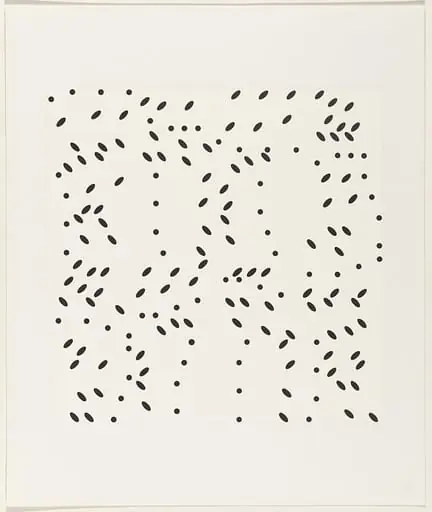
Untitled is a graphite drawing by Pieter Laurens Mol. It dates from 1973 and is held in the collection of the Museum of Modern Art.
About this work
Overview
Pieter Laurens Mol created this 1973 pencil drawing on paper, incorporating an actual hourglass and wire as integral components. The work is mounted in the artist’s custom frame and resides in The Museum of Modern Art’s collection. Unlike conventional drawings, it blends mark-making with physical timekeeping, transforming the act of drawing into a durational performance.
Subject & Meaning
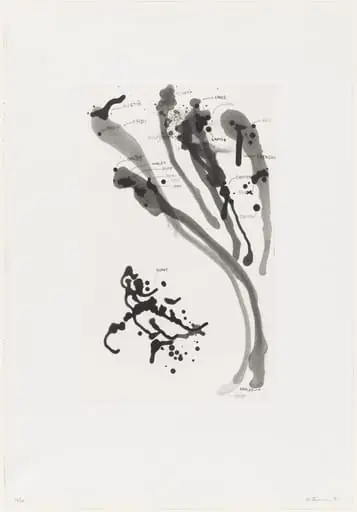
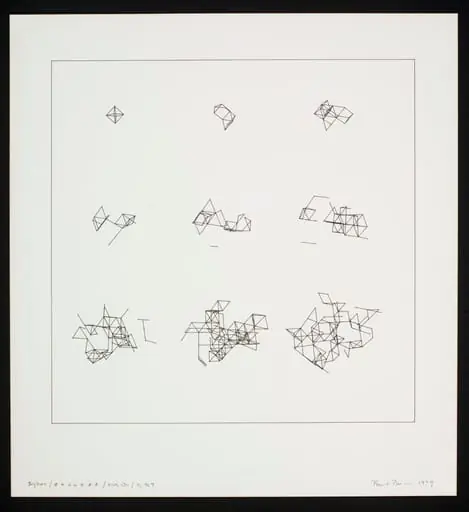
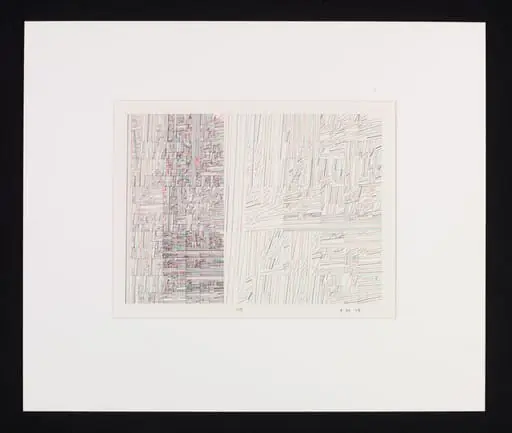
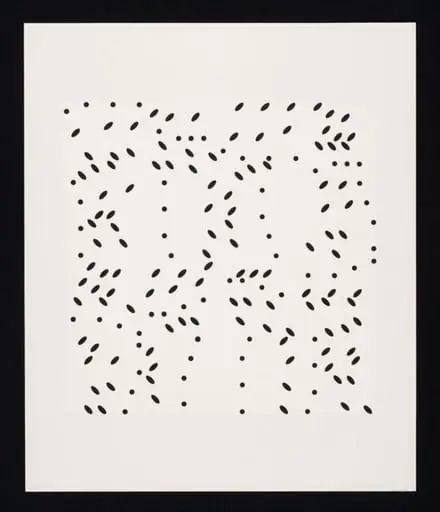
The drawing features irregular, fragmented shapes resembling distorted figures or decaying script, arranged in a loose grid.
The drawing features irregular, fragmented shapes resembling distorted figures or decaying script, arranged in a loose grid. These forms suggest erosion, instability, or the dissolution of structure. The embedded hourglass, with its pink sand, functions as both image and mechanism—its gradual emptying leaves traces on the paper, making time’s passage visible and inseparable from the artwork’s formation.
Technique & Style
Mol used pencil to render uneven, hesitant lines that evoke impermanence. The hourglass, affixed with wire, dripped sand directly onto the surface during execution, creating accidental smudges and deposits. This method merges controlled drawing with uncontrolled physical processes, rejecting precision in favor of material spontaneity and the influence of elapsed time.
History & Provenance
Completed in 1973, the work entered The Museum of Modern Art’s collection shortly after its creation. It reflects Mol’s broader practice of integrating mundane objects into art, emphasizing process over finished form. Its preservation in the artist’s original frame underscores his intention to maintain the work’s physical and temporal integrity as a single, unified object.
Context
Mol’s approach aligned with post-1960s conceptual and process-based art movements that questioned traditional mediums. By embedding a functioning hourglass into his drawing, he extended the boundaries of drawing into time-based sculpture, echoing contemporaries who used duration, gravity, and decay as artistic tools rather than metaphors.
Legacy
The work exemplifies Mol’s commitment to art as an embodied, temporal experience. Its inclusion in MoMA’s collection affirms its significance within the history of experimental drawing. Later artists have cited it as an early example of how everyday objects can transform passive observation into active engagement with time and materiality.
Artist & collection