Artwork
Lagerszene
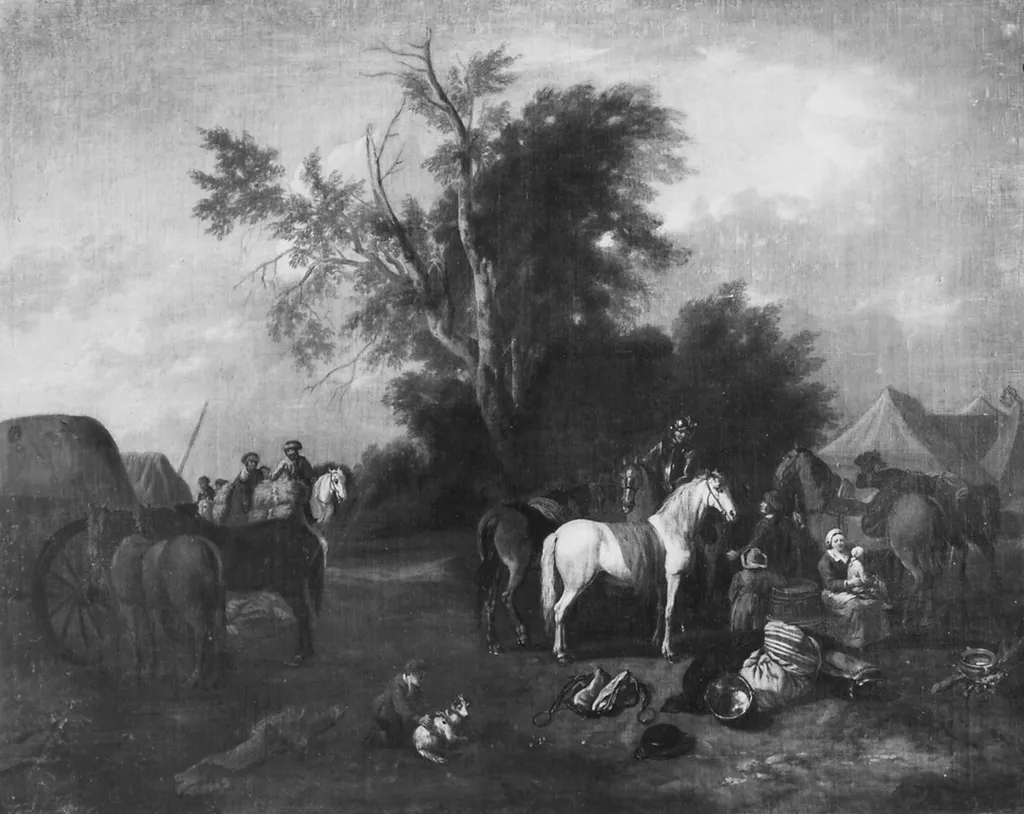
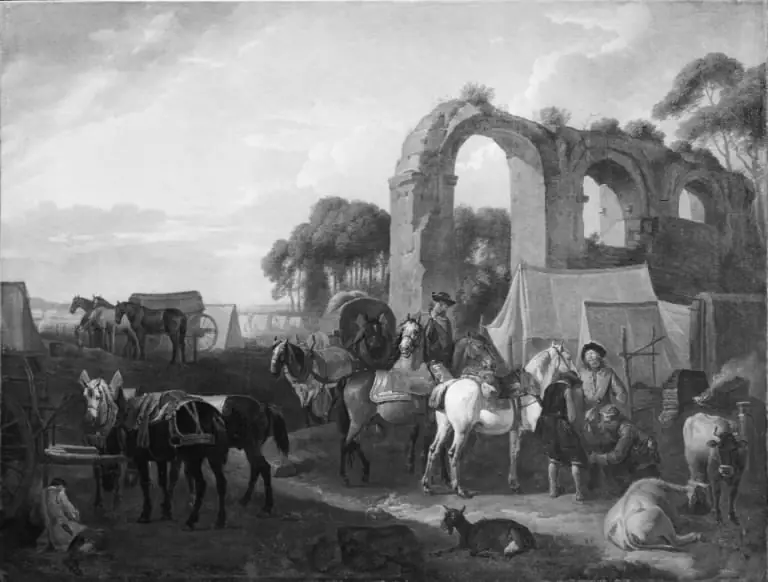
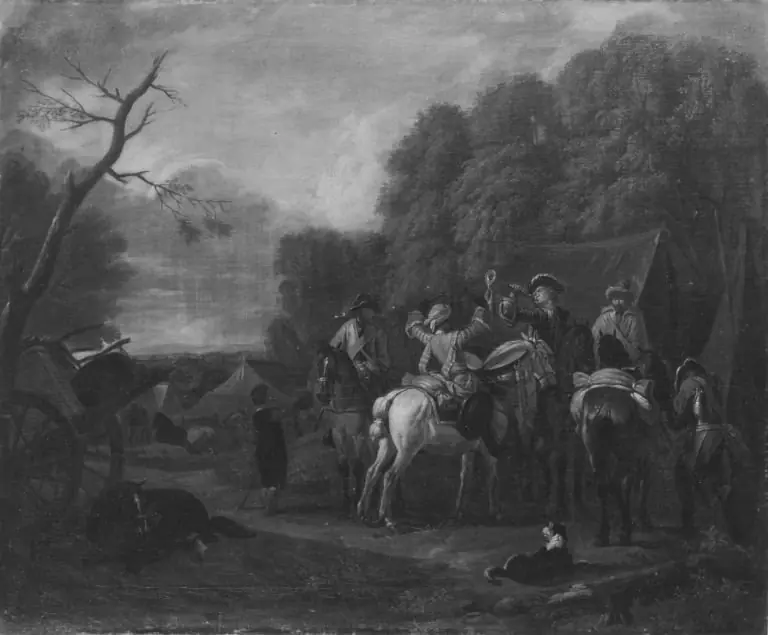
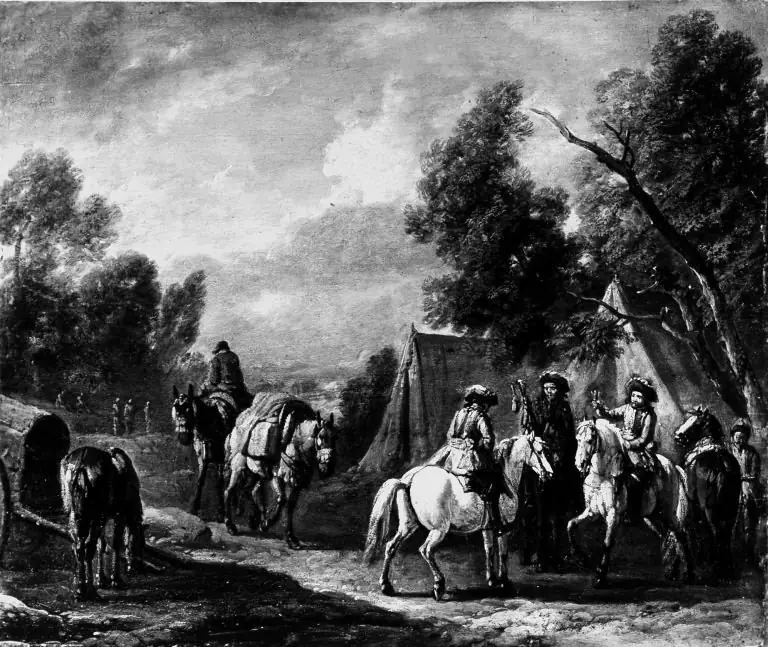
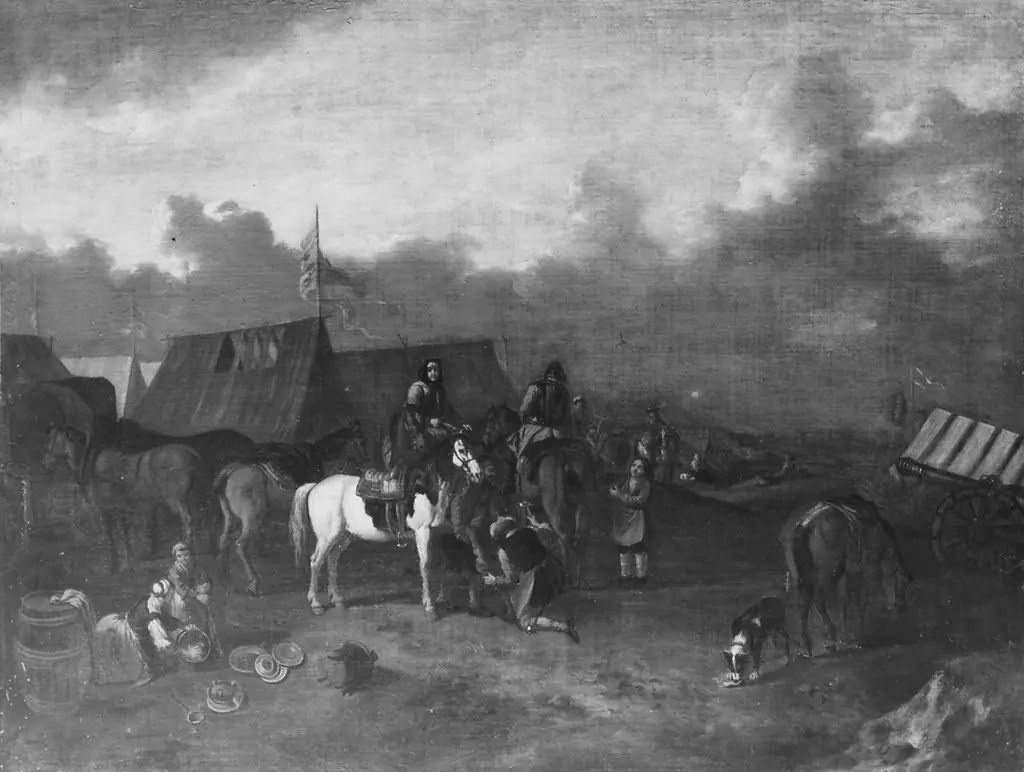
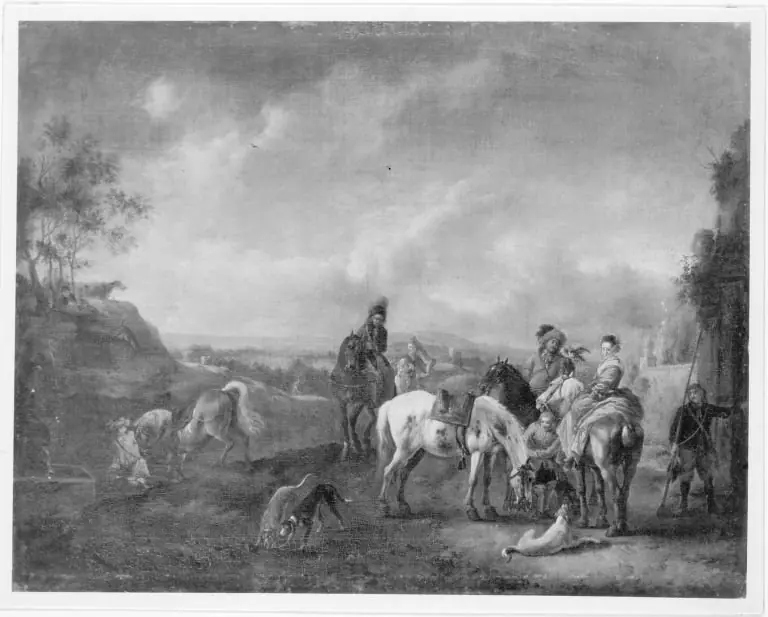
Lagerszene is an unspecified painting by Pieter van Bloemen. It dates from 1698 and is held in the collection of the Kunsthistorisches Museum.
About this work
Overview
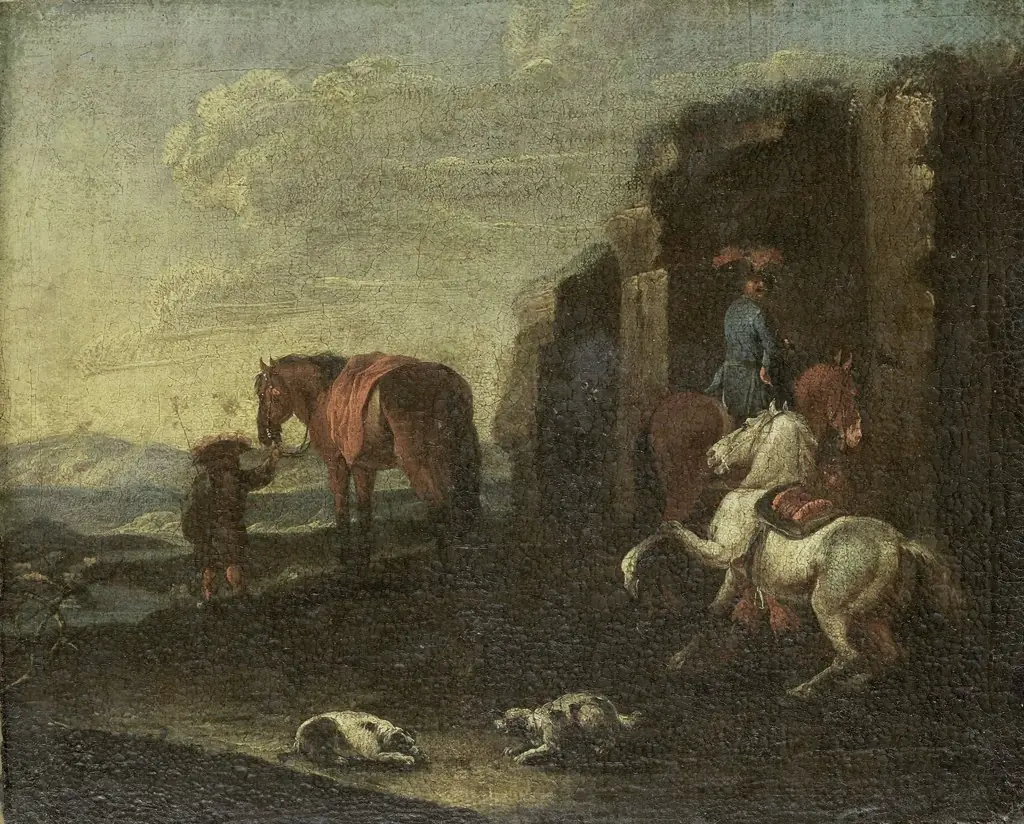
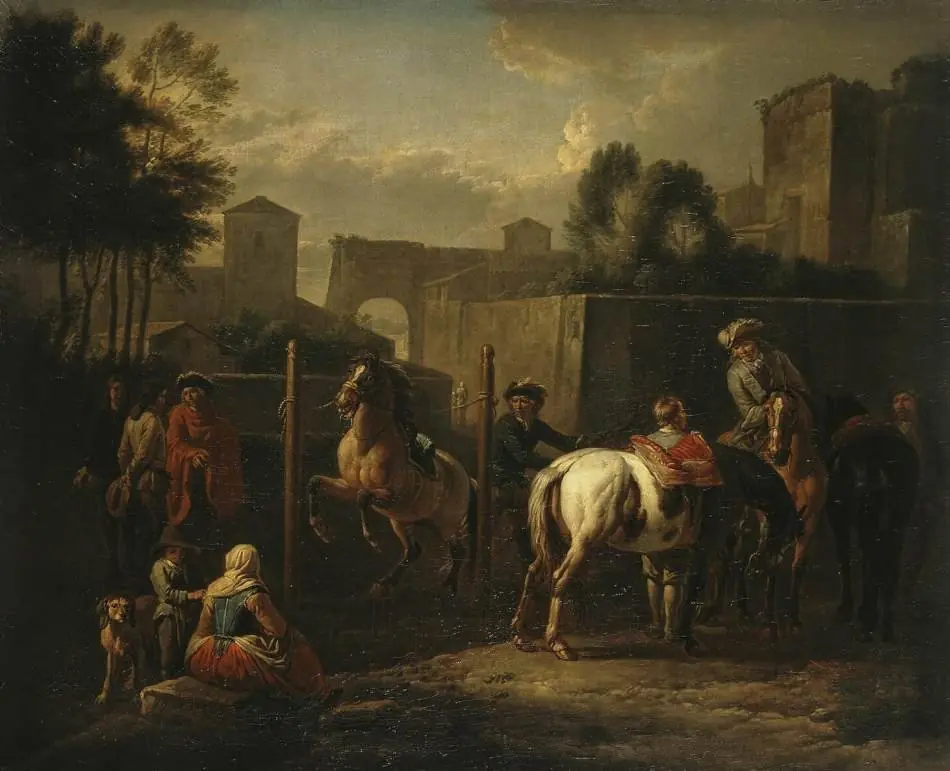
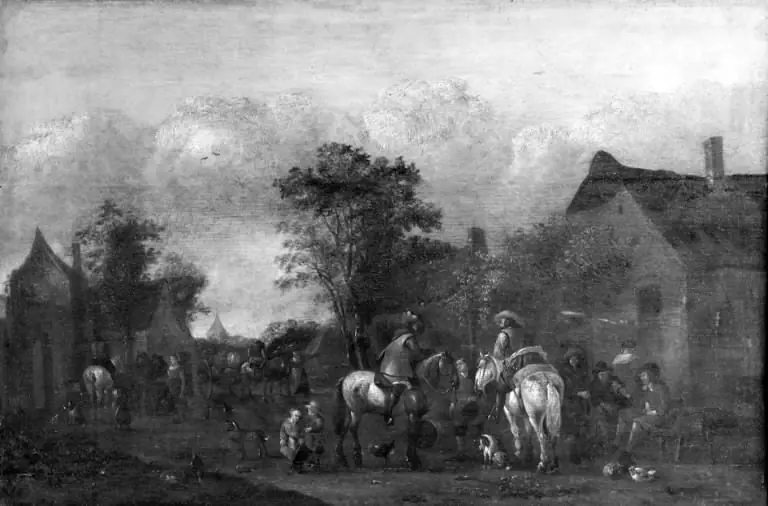
The composition centers on a group of horses and riders in a wooded landscape, suggesting a pause between marches rather than active combat.
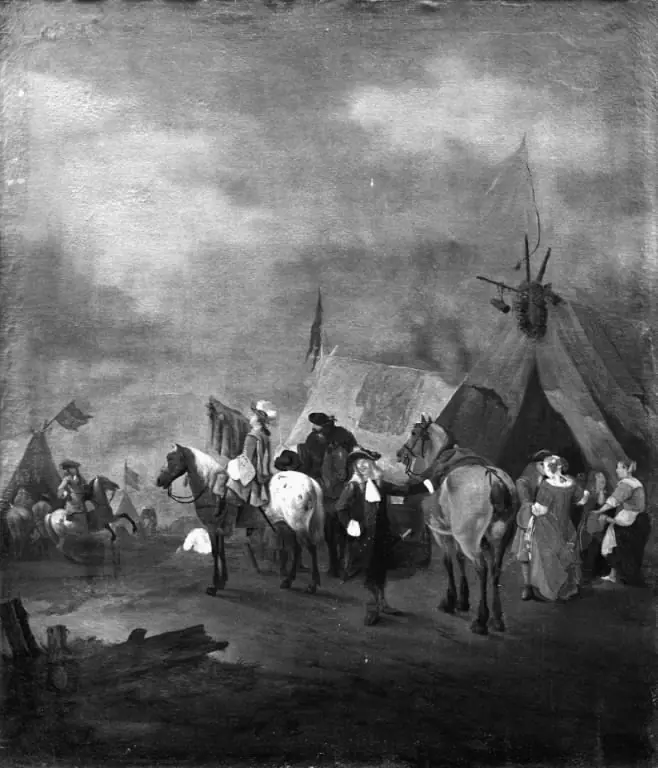
Painted around 1698 by Flemish artist Pieter van Bloemen, *Lagerszene* captures a moment of rest within a military encampment. Van Bloemen, known for his precise rendering of animals and outdoor scenes, combines topographical detail with quiet narrative tension. The composition centers on a group of horses and riders in a wooded landscape, suggesting a pause between marches rather than active combat. The work is held in the Kunsthistorisches Museum, Vienna, as part of its collection of Northern European genre painting.
Subject & Meaning
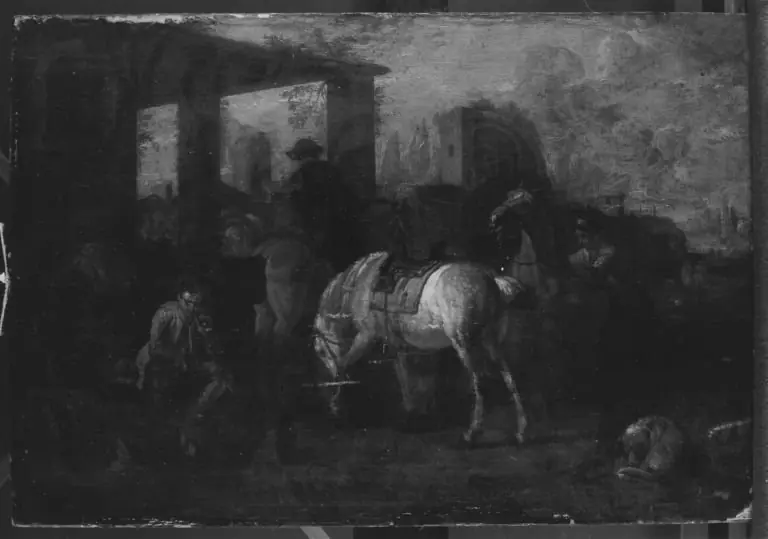
The scene depicts soldiers and their mounts in a temporary encampment, likely during a campaign in southern Europe. Figures are engaged in mundane activities—tending to horses, adjusting gear, or conversing—emphasizing the rhythm of military life over dramatic action. The white horse at the center draws attention without dominating the scene, symbolizing order amid chaos. The absence of overt conflict suggests a meditation on the quiet intervals of war, a recurring theme in van Bloemen’s work.
Technique & Style
Van Bloemen employs fine brushwork to distinguish textures: the sheen of horsehide, the weave of woolen garments, and the dappled light filtering through trees. His palette favors earth tones with subtle contrasts, enhancing spatial depth without theatricality. Figures and animals are rendered with anatomical accuracy, arranged dynamically to suggest motion without narrative climax. The composition balances naturalism with a structured layout, typical of Flemish tradition adapted to Italianate landscapes.
History & Provenance
Created in the late 17th century, *Lagerszene* entered the Kunsthistorisches Museum’s collection in the 19th century, likely through imperial acquisitions. Van Bloemen’s reputation as a specialist in equine and pastoral scenes ensured his works were sought after by collectors in Austria and the Low Countries. The painting’s survival in good condition reflects its consistent recognition within institutional holdings, though it has never been widely exhibited outside Vienna.
Context
Van Bloemen worked during a period when Flemish artists increasingly turned to Italianate landscapes and military subjects influenced by travel and patronage. His depictions of encampments aligned with broader European interest in the daily realities of soldiers, distinct from grand battle paintings. The presence of Italianate architecture and terrain in the background reflects the artist’s familiarity with southern Europe, possibly gained through his own travels or through the circulation of prints and sketches.
Legacy
Though not widely known outside specialist circles, van Bloemen’s approach to animal and genre scenes influenced later 18th-century painters of military and equestrian subjects. His focus on observational detail over heroism contributed to a quieter, more humanized portrayal of war. *Lagerszene* remains a representative example of his ability to elevate everyday moments into sustained visual narratives, preserving a nuanced view of 17th-century military life.
Artist & collection
Artist
Pieter van Bloemen, also known as Standaart (bapt. 17 January 1657 – 6 March 1720), first name also spelled Peter or Peeter, was a Flemish painter, draughtsman and printmaker. He was a gifted landscape and animal artist…