Artwork
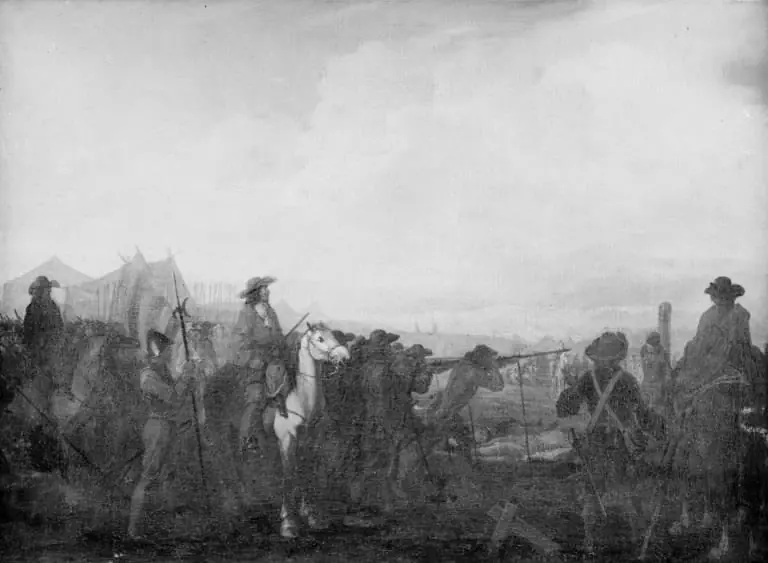
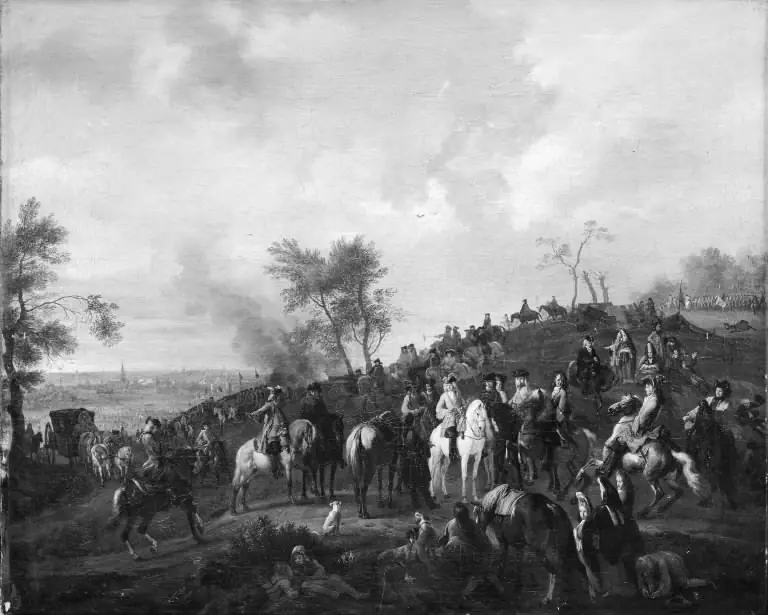
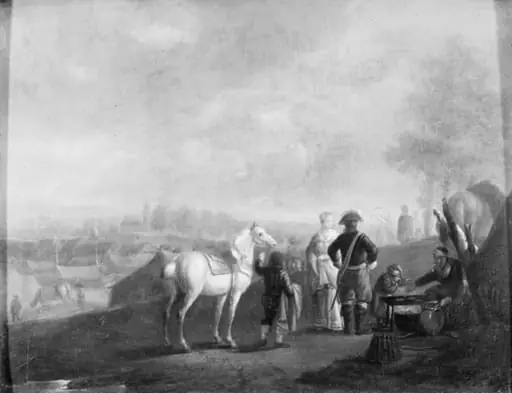
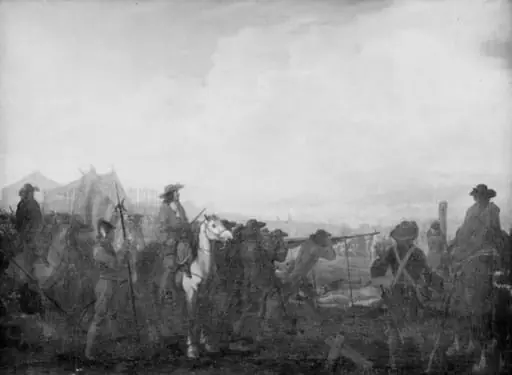
Lagerszene
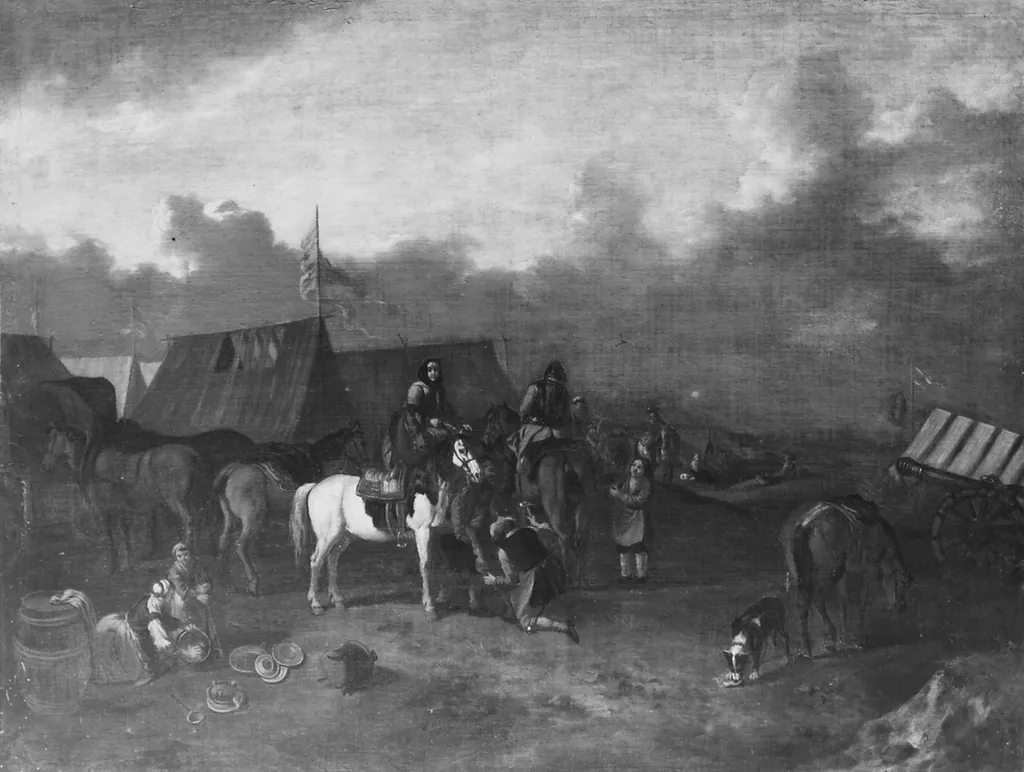
Lagerszene is an unspecified painting by Pieter van Bloemen. It dates from 1698 and is held in the collection of the Kunsthistorisches Museum.
About this work
Overview
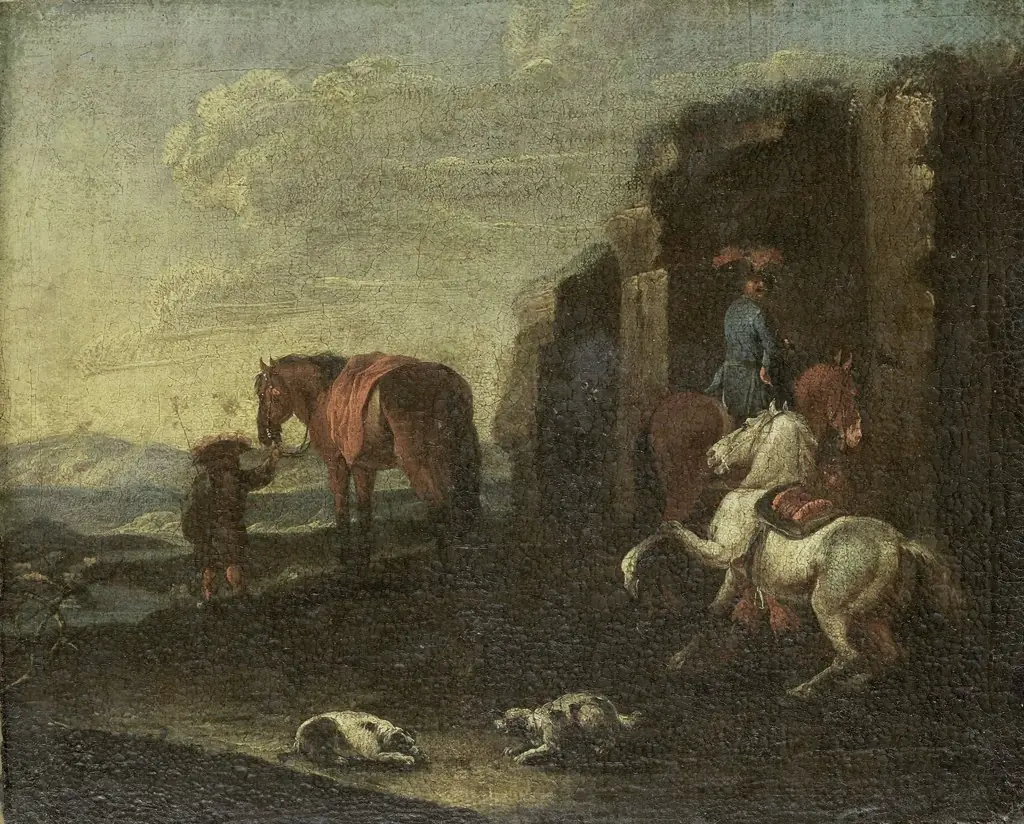
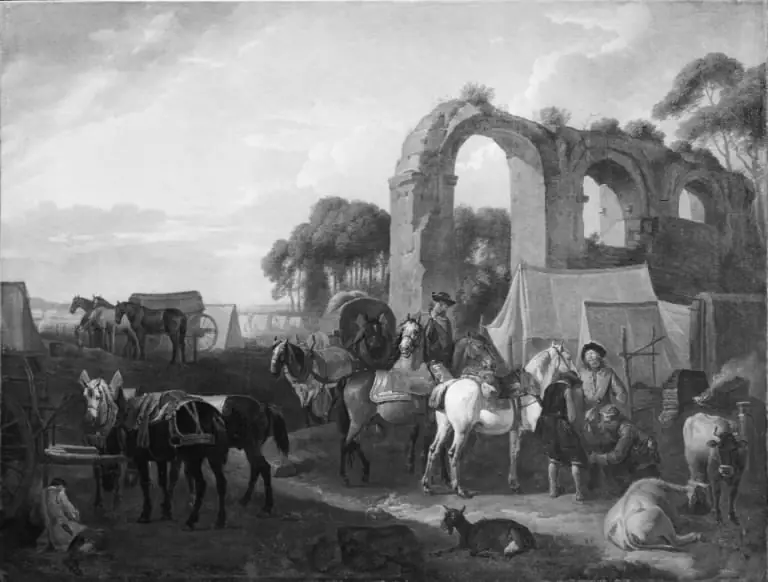
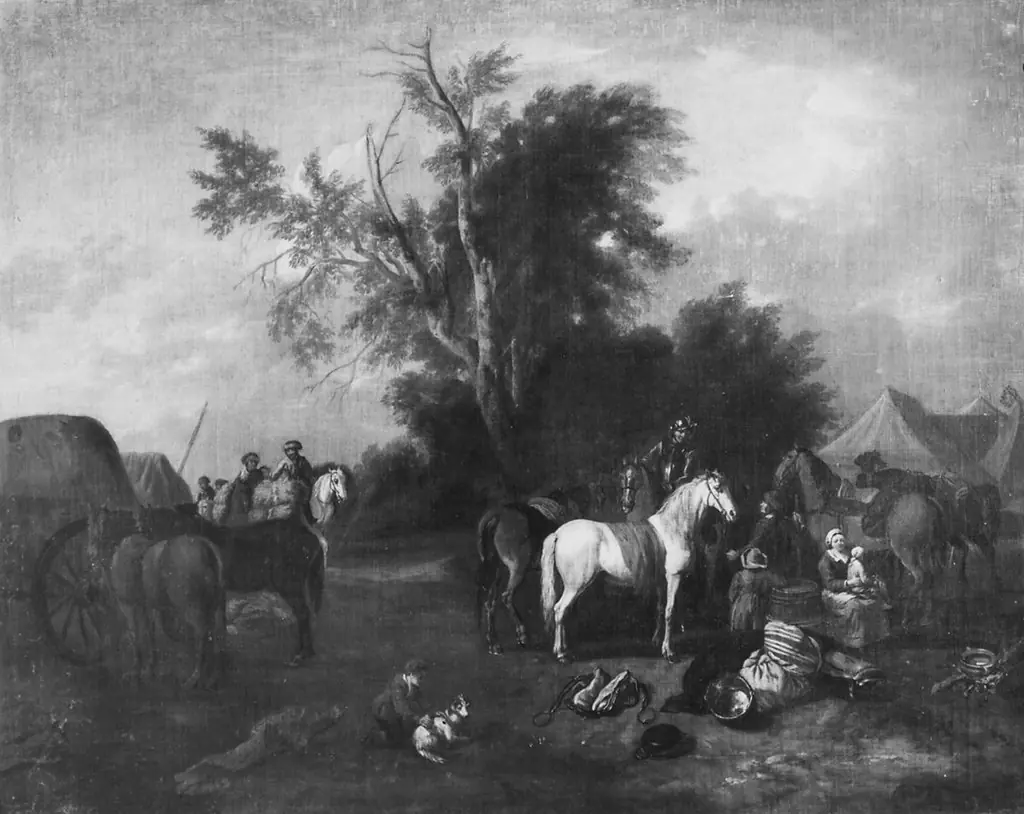
Painted around 1698 by the Flemish artist Pieter van Bloemen, *Lagerszene* captures a moment of rest and preparation within a military or traveling encampment.
Painted around 1698 by the Flemish artist Pieter van Bloemen, *Lagerszene* captures a moment of rest and preparation within a military or traveling encampment. Van Bloemen, known for his detailed depictions of animals and outdoor scenes, rendered this work with a keen eye for naturalism and spatial depth. The painting is part of the Kunsthistorisches Museum’s collection, reflecting its significance within late 17th-century Flemish genre painting.
Subject & Meaning
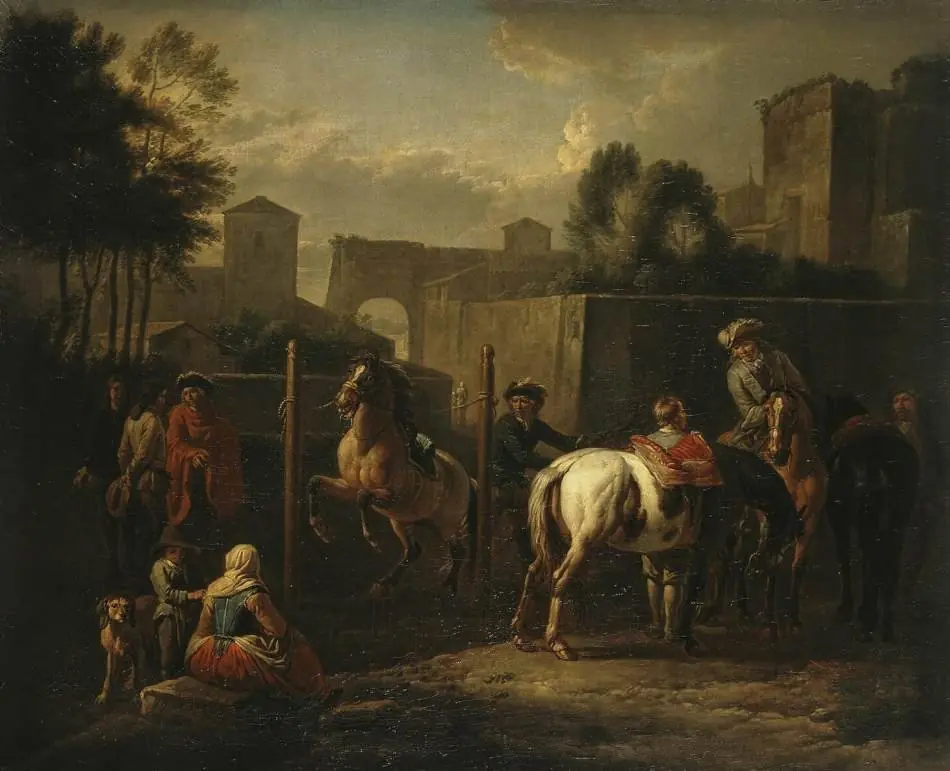
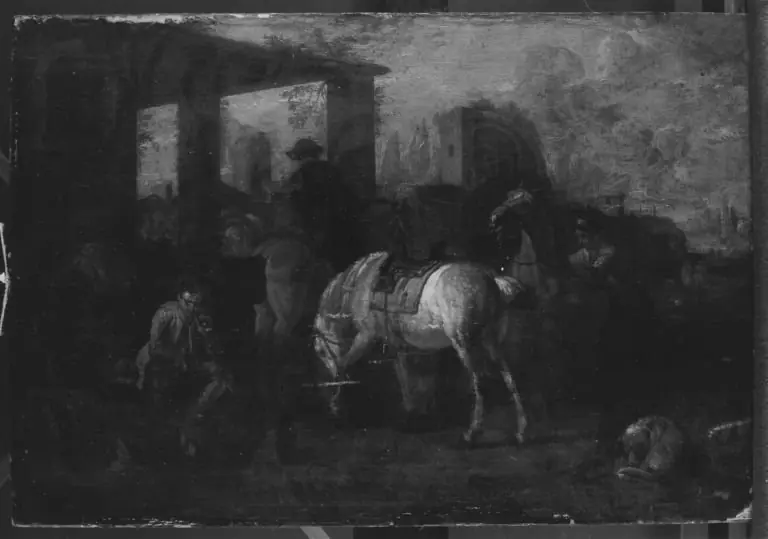
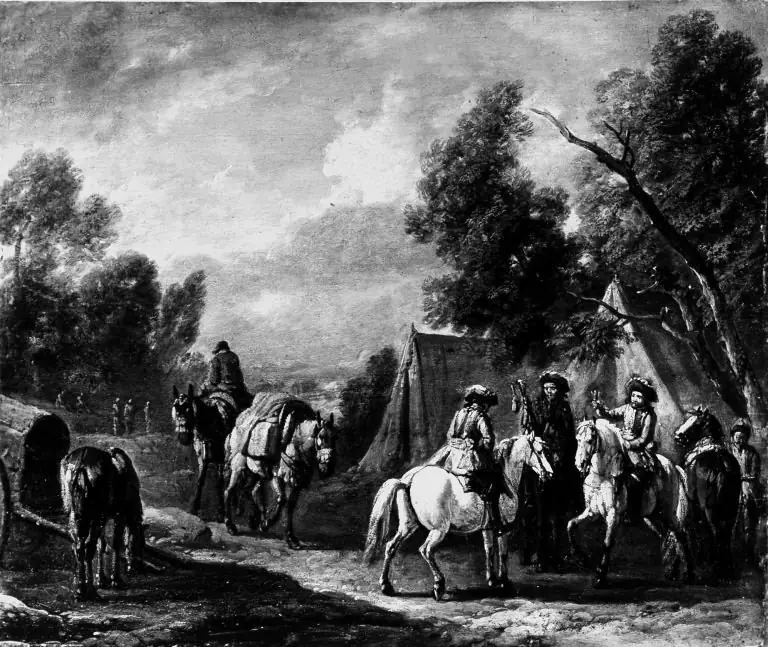
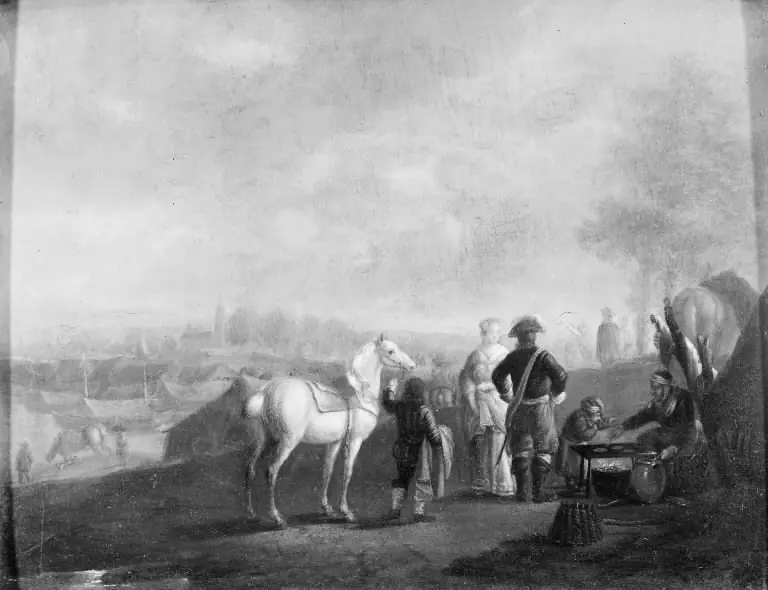
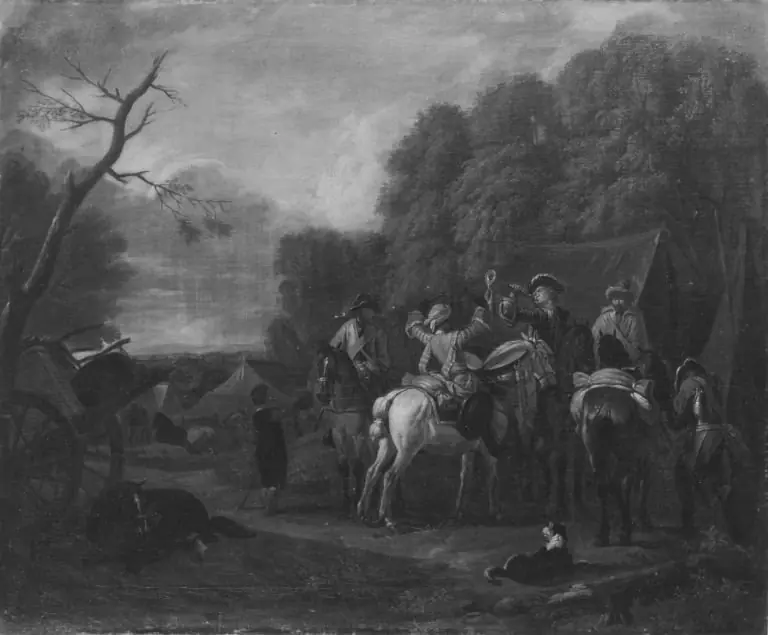
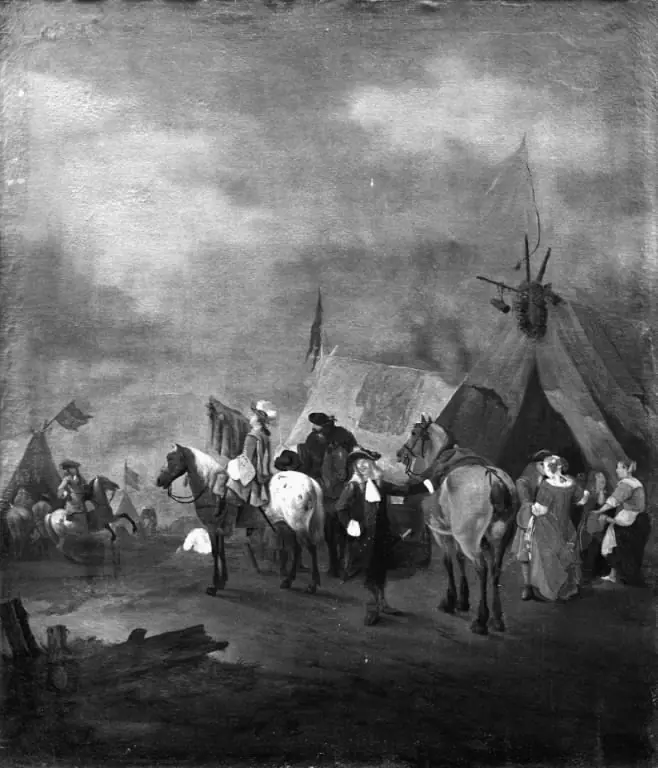
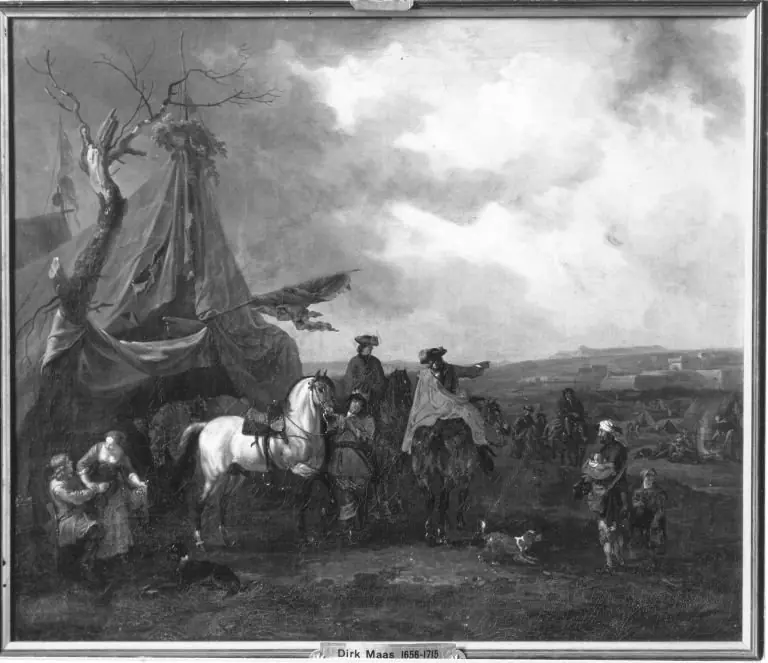
The scene portrays a transient encampment, likely associated with cavalry or a traveling party, where figures and animals pause between journeys. A central rider on a white horse, dressed in dark clothing, commands attention, while surrounding figures engage in quiet tasks—drinking, sitting, or tending to gear. The presence of a dog, barrels, and scattered objects suggests daily life in motion, conveying a sense of temporary order amid movement rather than formal ceremony.
Technique & Style
Van Bloemen employed subtle chiaroscuro to model forms and define spatial relationships, guiding the viewer’s eye toward the central horse and rider. The brushwork is precise yet unobtrusive, particularly in the rendering of animal anatomy and fabric textures. Landscape elements are rendered with loose, atmospheric strokes, balancing detail in the foreground with a soft, receding background that enhances the scene’s sense of depth and realism.
History & Provenance
The painting entered the Kunsthistorisches Museum’s collection in Vienna, likely through imperial or aristocratic acquisition during the 18th century. Van Bloemen’s reputation as a specialist in equestrian and Italianate scenes made his works desirable among collectors of military and pastoral subjects. Its preservation in a major European museum underscores its enduring value as an example of Flemish genre painting from the late Baroque period.
Context
In the late 17th century, Flemish artists increasingly turned to scenes of everyday life beyond religious or mythological themes. Van Bloemen’s focus on horses and encampments aligned with broader European interests in military organization and travel. His Italianate influences—seen in the landscape and lighting—reflect the tastes of patrons who admired the classical harmony of southern European scenery, even when depicting northern subjects.
Legacy
Van Bloemen’s attention to animal behavior and naturalistic composition influenced later genre painters in the Low Countries. *Lagerszene* exemplifies a quiet shift in 17th-century art toward observational realism, where the dignity of ordinary moments replaced overt narrative drama. The work remains a reference for studies of equestrian painting and the depiction of transient spaces in early modern visual culture.
Artist & collection
Artist
Pieter van Bloemen, also known as Standaart (bapt. 17 January 1657 – 6 March 1720), first name also spelled Peter or Peeter, was a Flemish painter, draughtsman and printmaker. He was a gifted landscape and animal artist…