Artwork
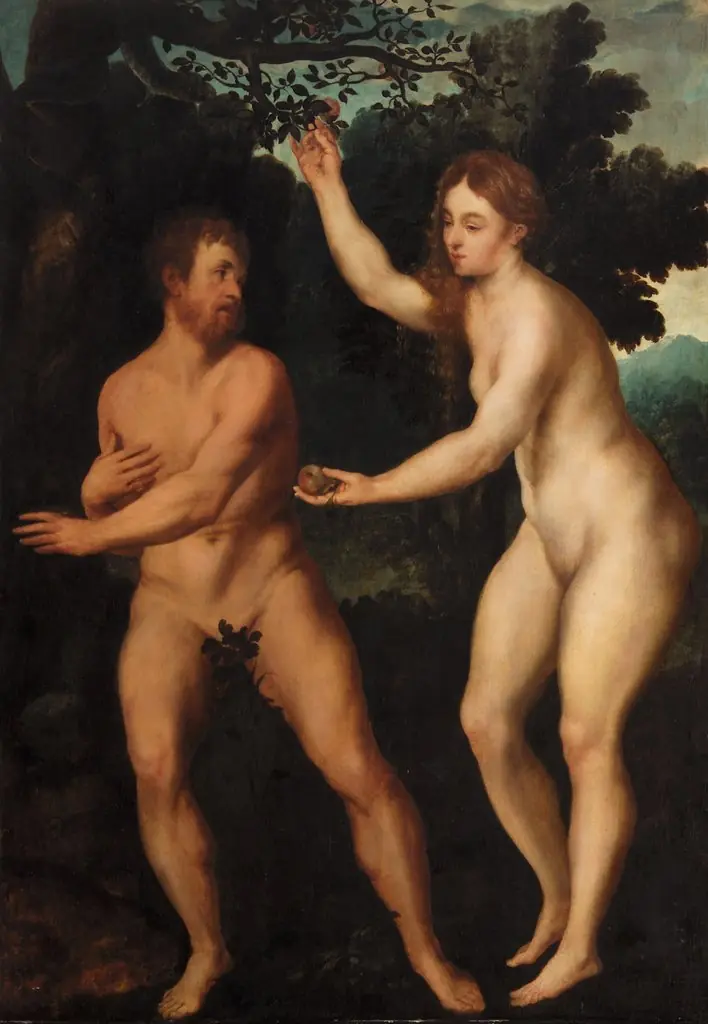
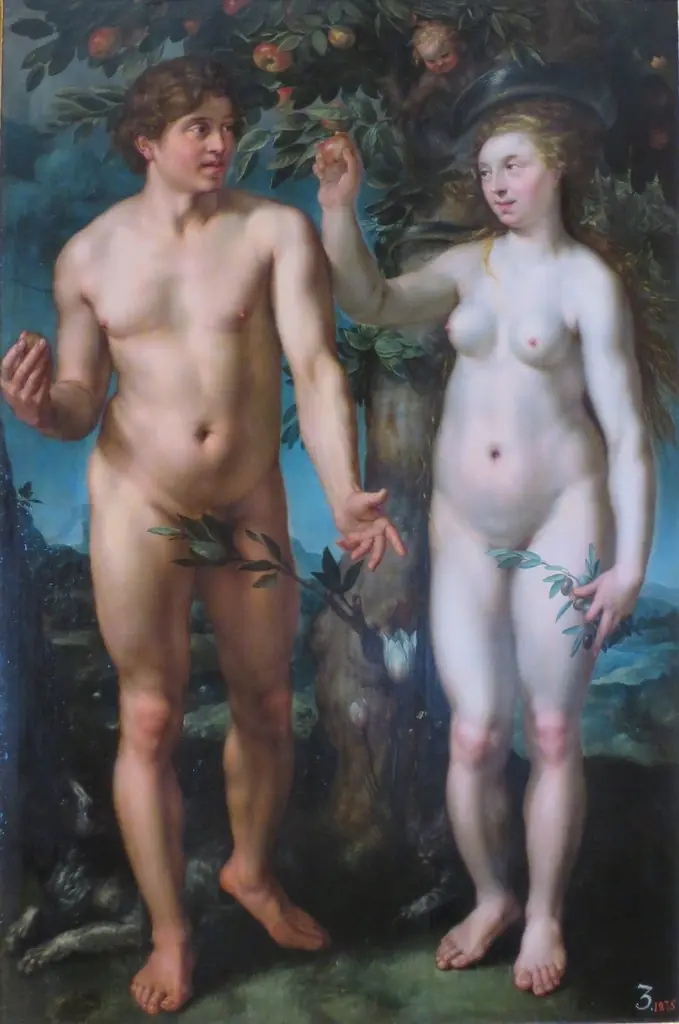
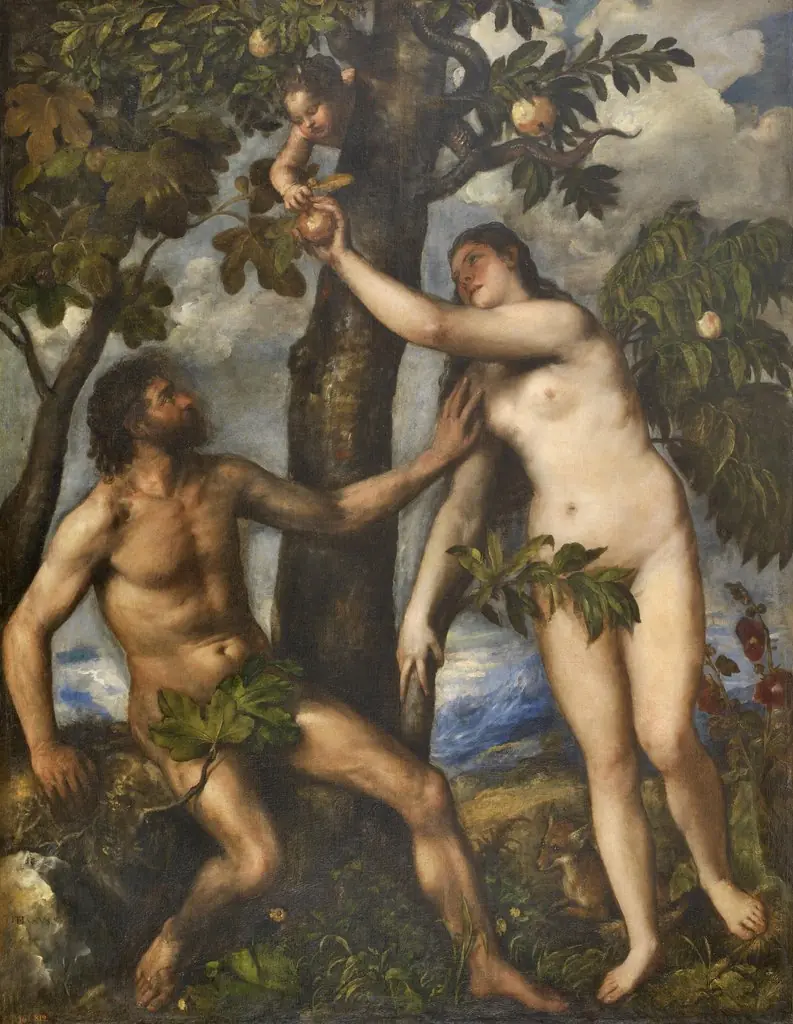
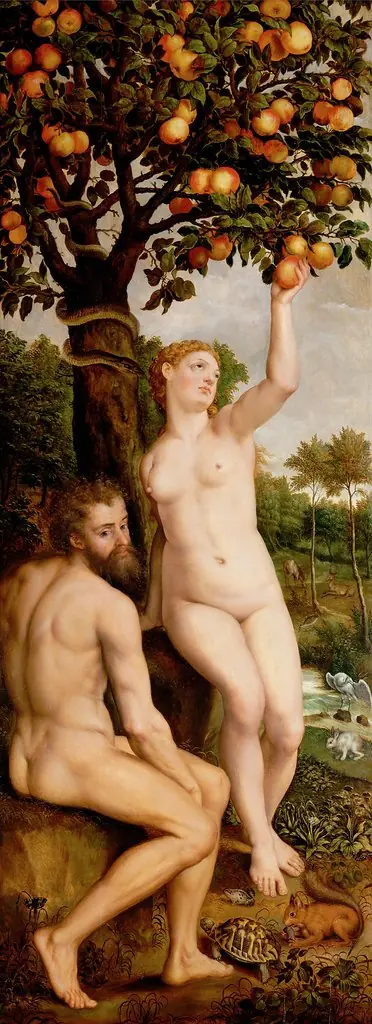
Adam and Eve receive from the forbidden fruit
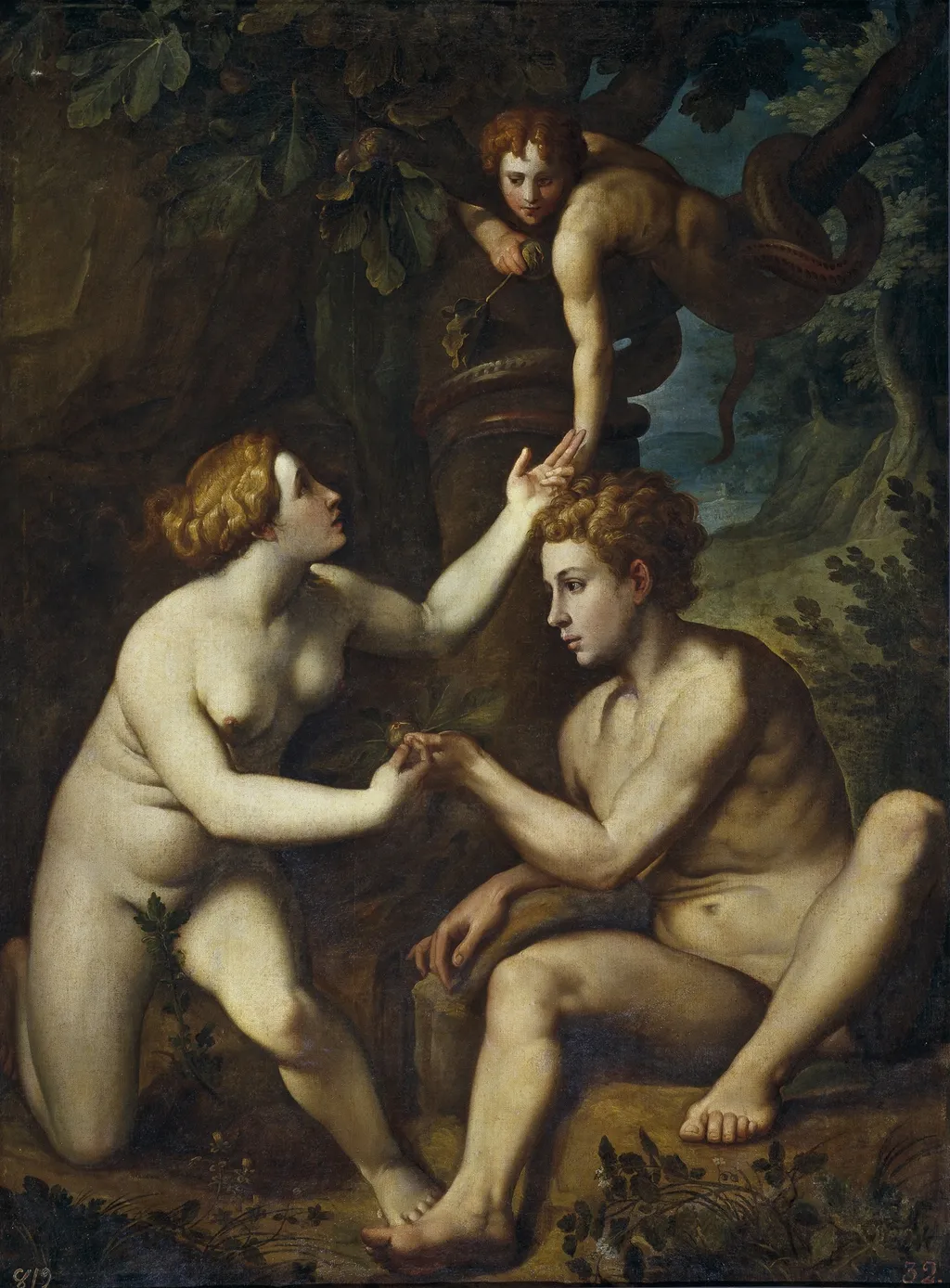
Adam and Eve receive from the forbidden fruit is an oil painting by the Mannerist artist Pietro Facchetti. It dates from 1554 and is held in the collection of the Museo del Prado.
About this work
Overview
Created in 1554 by the Roman-based Italian painter Pietro Facchetti, this oil on canvas presents the biblical moment when Adam and Eve are offered the forbidden fruit. Executed within the Mannerist aesthetic, the work resides today in the Museo del Prado’s collection.
Subject & Meaning
At the composition’s centre, the nude figures of Adam and Eve face one another, their hands extended toward a fruit that symbolizes the impending loss of innocence. A serpent coils on a nearby branch, underscoring the theme of temptation and the tension that precedes the act of transgression.
Technique & Style
Facchetti employs a pronounced chiaroscuro, using stark contrasts of light and shadow to model the bodies and give them a three‑dimensional presence. The elongated poses and elegant gestures reflect the Mannerist preference for artificiality over naturalism, while the oil medium allows for subtle colour transitions across flesh and foliage.
History & Provenance
Born into modest circumstances in Mantua, Facchetti apprenticed with Lorenzo Costa the Younger before relocating to Rome, where he joined the workshop of Scipione da Gaeta. Though chiefly known for portraiture, he produced this religious scene, which later entered the Prado’s holdings, where it remains on public display.
Context
The painting emerges during a period when Italian artists were exploring heightened emotional expression and complex compositions beyond High Renaissance balance. Facchetti’s choice of a biblical narrative aligns with Counter‑Reformation demands for didactic imagery, while his Mannerist treatment reflects contemporary artistic experiments in form and space.
Own this work as a print
Artist & collection

Artist
Pietro Facchetti (1539 – 27 February 1613) was an Italian painter of the late Renaissance, mainly active in Rome.