Artwork
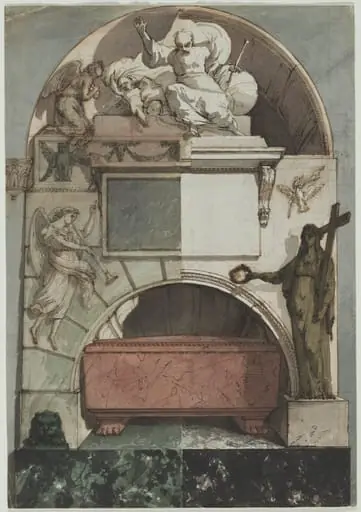
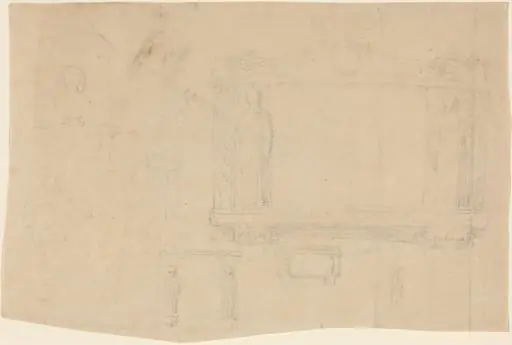
Design for a Fresco of an Artist's Tomb in the Certosa of Bologna (recto); Architectural Drawing of Columns (verso)
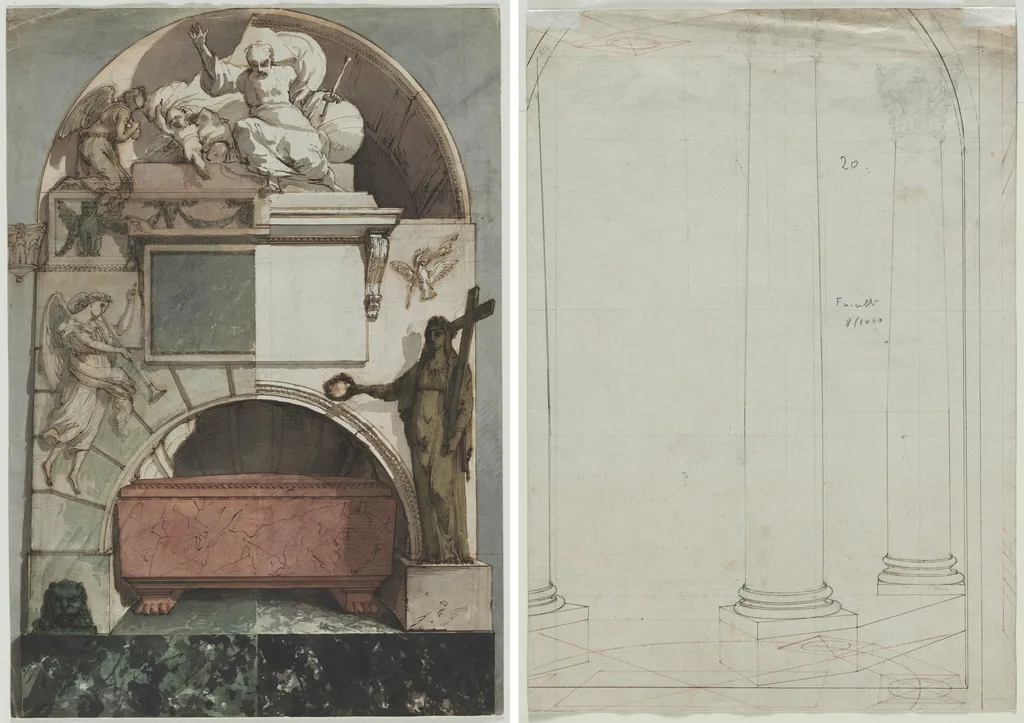
Design for a Fresco of an Artist's Tomb in the Certosa of Bologna (recto); Architectural Drawing of Columns (verso) is a drawing by the Romanticist artist Pietro Fancelli. It dates from 1815 and is held in the collection of the Cleveland Museum of Art.
About this work
Overview
The recto presents a compositional plan for a funerary scene, while the verso features architectural elements likely used to contextualize the fresco’s setting.
Created around 1815 by Pietro Fancelli, this double-sided drawing serves as a preparatory study for a fresco intended for the Certosa of Bologna. The recto presents a compositional plan for a funerary scene, while the verso features architectural elements likely used to contextualize the fresco’s setting. Executed in ink and wash, the work reflects Fancelli’s role as a designer of monumental decorative programs, bridging drawing and painted wall surfaces.
Subject & Meaning
The scene depicts a tomb within an arched niche, centered on a red sarcophagus covered by a dark drape. A figure above holds a cross, while another observes from a ledge; two angels hover nearby, and a draped statue crowns the monument. A semicircular backdrop contains additional figures, including one bearing a scroll, suggesting themes of mourning, divine witness, and commemoration. The composition conveys solemnity and spiritual reflection, typical of funerary art in monastic contexts.
Technique & Style
Fancelli employed ink and wash to define forms with precision and depth, using varied line weight to distinguish figures from architecture. The architectural elements—columns, steps, and arches—are rendered with measured clarity, indicating his training in perspective and spatial planning. The drawing’s layered composition balances human figures with structural framing, demonstrating a methodical approach to translating three-dimensional space onto a flat surface for eventual mural execution.
History & Provenance
The drawing was produced as part of Fancelli’s commissions for decorative projects in Bologna’s Certosa, a Carthusian monastery known for its artistic patronage. It remained in the artist’s circle before entering private collections and eventually the Cleveland Museum of Art’s holdings. Its dual-sided nature suggests practical use in studio practice, where preparatory sketches were reused or annotated for multiple purposes.
Context
In early 19th-century Italy, artists like Fancelli were frequently engaged to design frescoes for religious and commemorative spaces. The Certosa of Bologna, with its tradition of elaborate funerary monuments, provided a fitting setting for such works. Fancelli’s drawings reflect the period’s revival of classical forms and the continued importance of mural decoration in conveying theological narratives within sacred architecture.
Legacy
This drawing exemplifies the transitional role of preparatory studies in large-scale decorative projects, preserving the artist’s conceptual process before execution. While the fresco itself was never completed, the sketch endures as evidence of Fancelli’s contribution to Bolognese artistic culture and the broader practice of architectural-figural integration in Neoclassical mural design.
Artist & collection


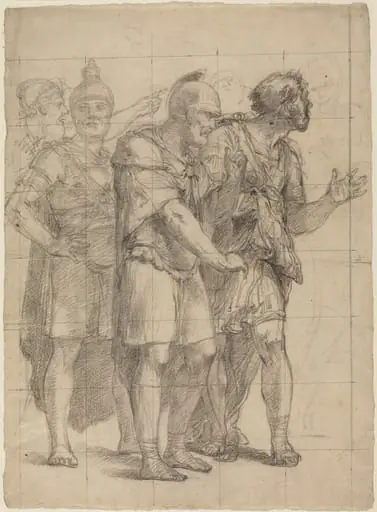 Four Standing Warriors
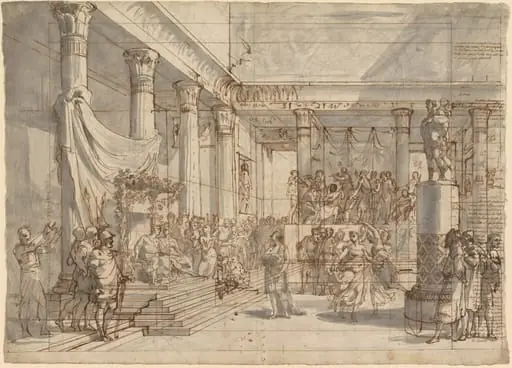 Timotheus Playing the Lyre before Alexander and Thaïs in the Hall of the Palace at Persepolis
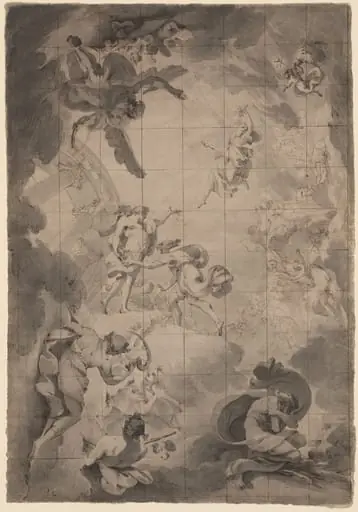 Studies of Aurora and Apollo
 Women Dancing
 Two Standing Courtiers
 Design for a Fresco of an Artist's Tomb in the Certosa of Bologna (recto)
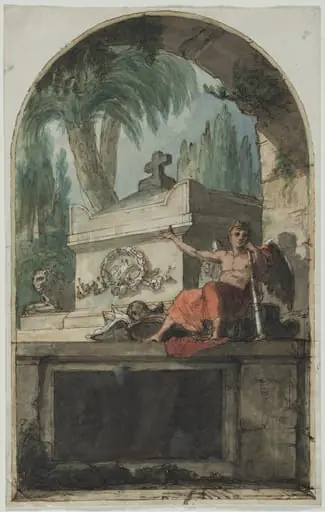 Design for a Fresco of the Tomb of Vincenzo Martinelli (1737-1807) in the Certosa of Bologna
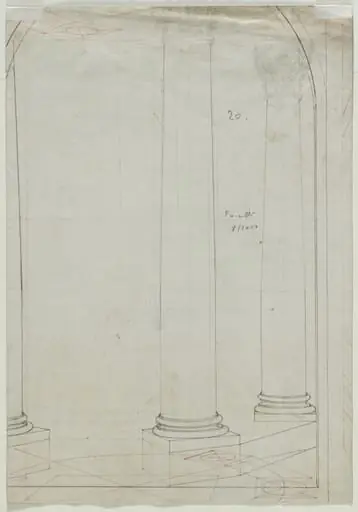 Architectural Drawing of Columns (verso)
![Designs for Monuments [recto and verso], by John Flaxman](https://artifactworldgallery.com/img/john-flaxman--designs-for-monuments-recto-and-verso--d8870bd37cddf1cb-w320.webp) Designs for Monuments [recto and verso]
Designs for Monuments [recto and verso] Un Hebreo, from Christ Shown to the People (recto); Design for a Wall Decoration with Pasted-in Sketches after Raphael (verso)
 Design for a Wall Decoration with Pasted-in Sketches after Raphael (verso)
 Design for a Chalice (recto) Architectural Plan (verso)
 Designs for Monuments