Artwork
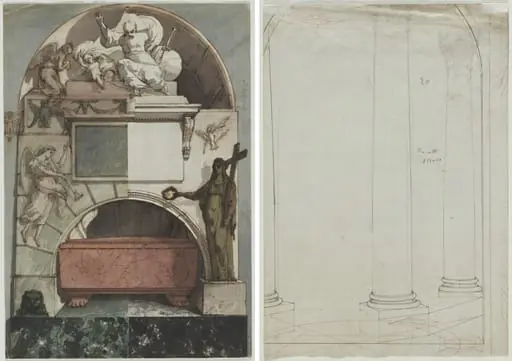
Design for a Fresco of an Artist's Tomb in the Certosa of Bologna (recto)
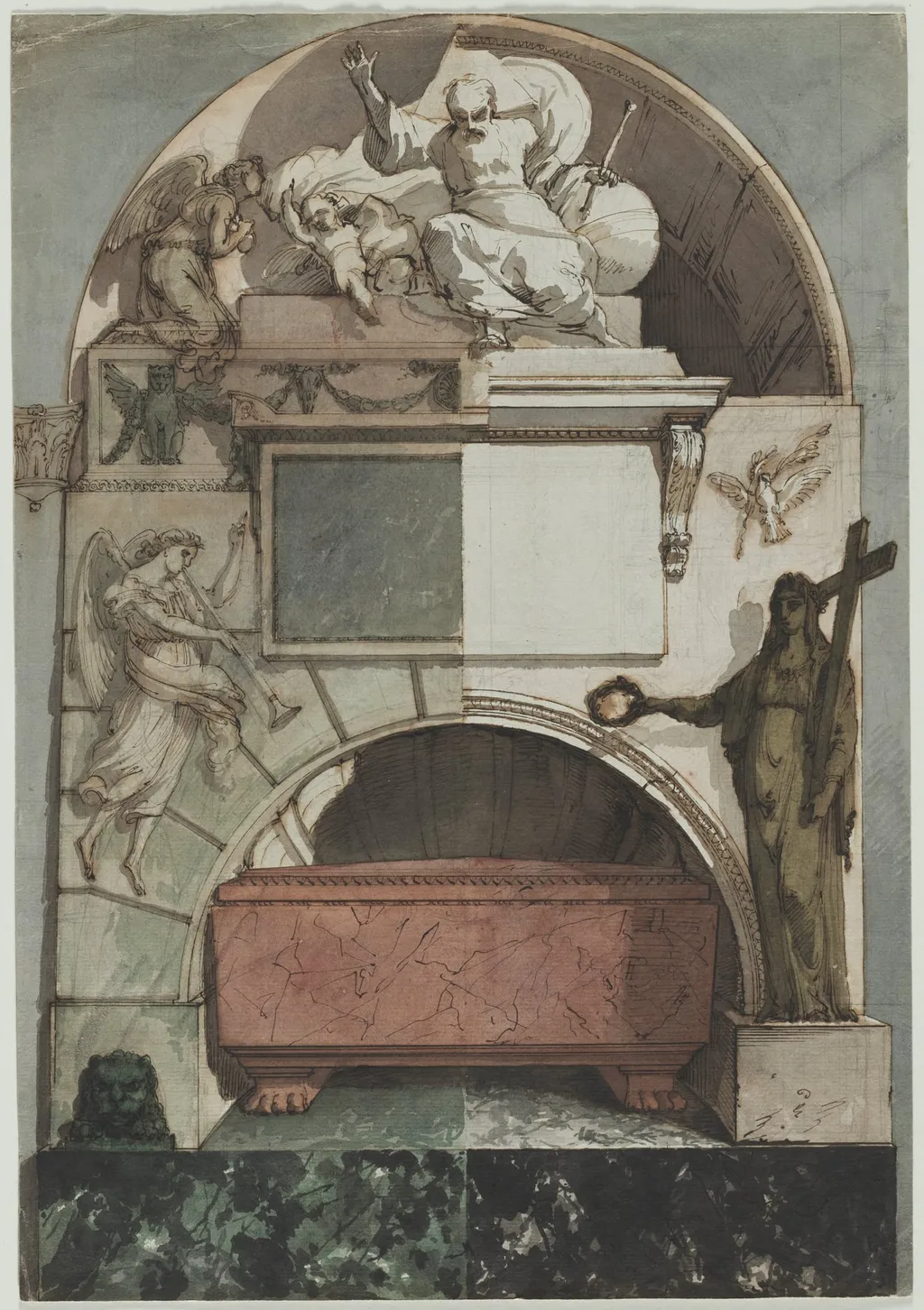
Design for a Fresco of an Artist's Tomb in the Certosa of Bologna (recto) is a drawing by the Romanticist artist Pietro Fancelli. It dates from 1815 and is held in the collection of the Cleveland Museum of Art.
About this work
Overview
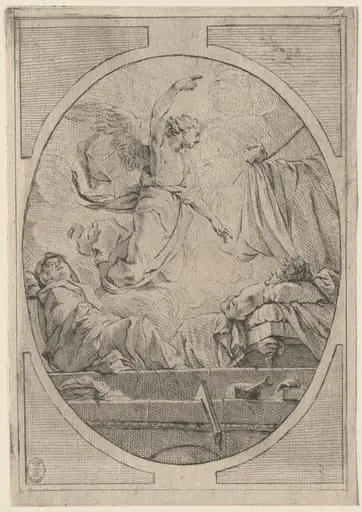
Pietro Fancelli’s preparatory drawing, dated around 1815, outlines a proposed fresco for an artist’s tomb in the Certosa of Bologna. Executed on paper, the composition is preserved in the collection of the Cleveland Museum of Art. The sketch functions as a visual plan, indicating the placement of figures, architectural elements, and symbolic motifs intended for the final wall painting.
Subject & Meaning
A translucent, hovering figure clutching a scroll presides above, perhaps representing the deceased’s legacy or a divine messenger.
At the centre of the design lies a fractured sarcophagus, suggesting the passage of time or the fragility of earthly remembrance. A translucent, hovering figure clutching a scroll presides above, perhaps representing the deceased’s legacy or a divine messenger. Flanking angels perform gestures—pointing upward, bearing a cross, and gazing downward—conveying themes of salvation, judgment, and contemplation within the funerary context.
Technique & Style
Fancelli employs a chiaroscuro scheme, using stark contrasts of light and shadow to model the forms and create spatial depth. The sketch is rendered in fine pen and wash, allowing quick delineation of architectural details such as the cracked sarcophagus, a green decorative panel, a diminutive urn, and a dove. These elements are rendered with precise line work, indicating the artist’s intent for a richly layered fresco.
History & Provenance
The drawing was produced in the early nineteenth century as part of a commission for the Certosa di Bologna, a Carthusian monastery noted for its elaborate tombs. After remaining in private hands, the work entered the Cleveland Museum of Art’s collection, where it is catalogued as a study for an unrealized fresco. Its acquisition reflects the museum’s focus on European preparatory drawings.
Context
Fancelli worked within the late Baroque and early Neoclassical traditions prevalent in Bologna, where tomb monuments often combined allegorical figures with architectural framing. The design reflects contemporary funerary iconography, integrating celestial beings and symbolic objects to articulate the deceased’s artistic identity and spiritual aspirations.
Artist & collection


 Four Standing Warriors
 Timotheus Playing the Lyre before Alexander and Thaïs in the Hall of the Palace at Persepolis
 Studies of Aurora and Apollo
 Women Dancing
 Two Standing Courtiers
 Design for a Fresco of an Artist's Tomb in the Certosa of Bologna (recto); Architectural Drawing of Columns (verso)
 Design for a Fresco of the Tomb of Vincenzo Martinelli (1737-1807) in the Certosa of Bologna
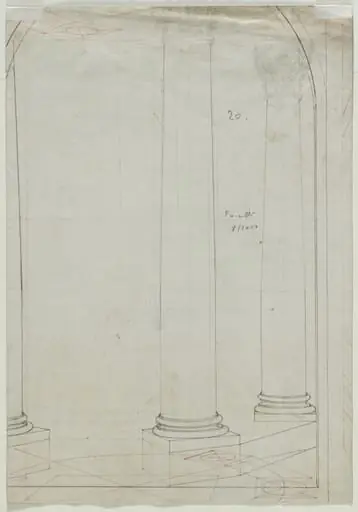 Architectural Drawing of Columns (verso)