Artwork
Design for a Fresco of the Tomb of Vincenzo Martinelli (1737-1807) in the Certosa of Bologna
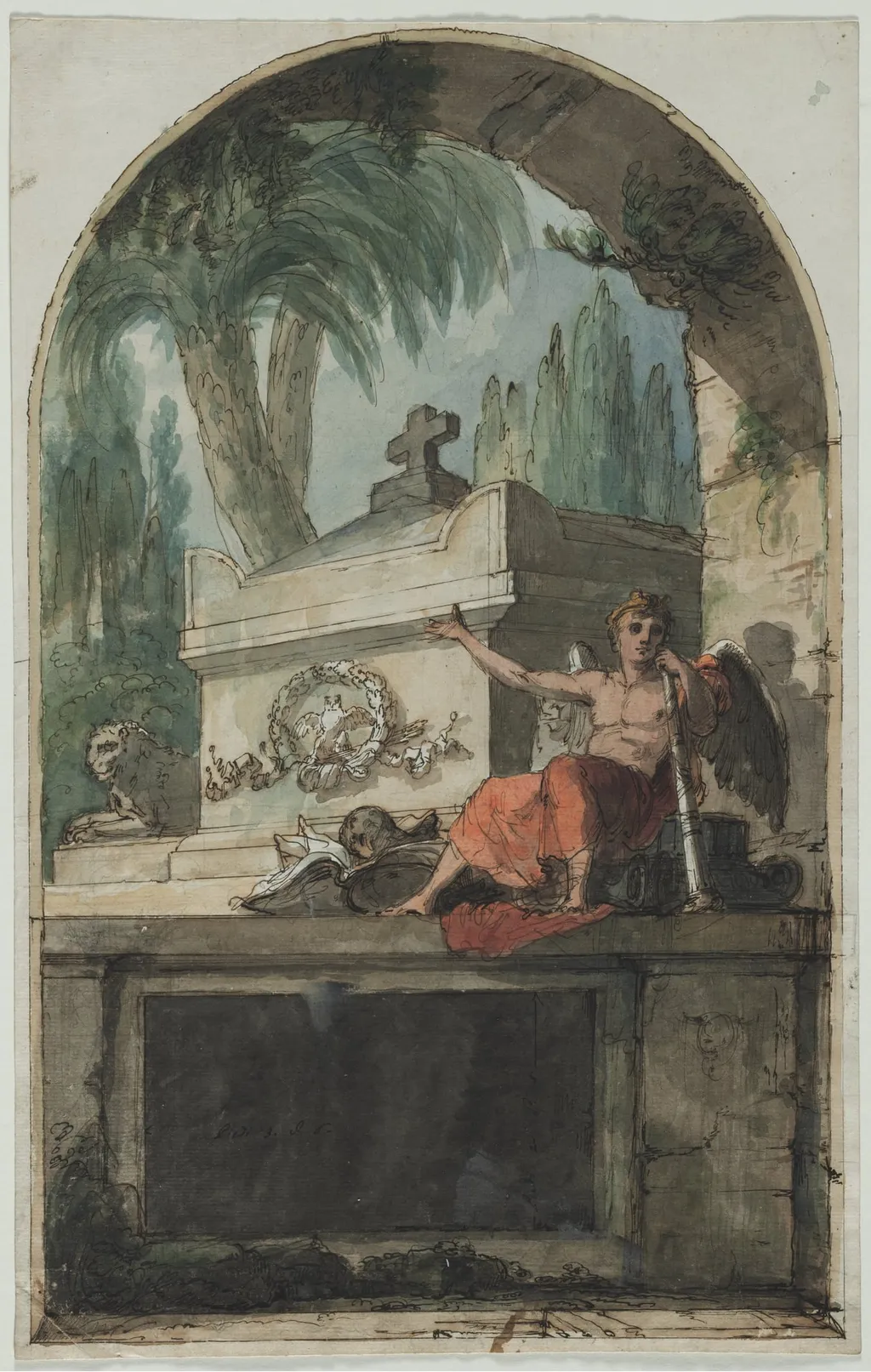
Design for a Fresco of the Tomb of Vincenzo Martinelli (1737-1807) in the Certosa of Bologna is a drawing by the Romanticist artist Pietro Fancelli. It dates from 1815 and is held in the collection of the Cleveland Museum of Art.
About this work
Overview
The work is now held in the collection of The Cleveland Museum of Art, where it stands as a testament to early 19th-century commemorative art in northern Italy.
This drawing by Pietro Fancelli, dated around 1815, serves as a preparatory design for a fresco intended for the tomb of Vincenzo Martinelli in the Certosa of Bologna. Executed in pen and ink with wash, it reflects the artist’s role as a designer of funerary monuments. The work is now held in the collection of The Cleveland Museum of Art, where it stands as a testament to early 19th-century commemorative art in northern Italy.
Subject & Meaning
The central figure is a winged, crowned individual seated atop a tomb, dressed in a red robe and holding a staff. Though resembling an angel or saint, the imagery draws from classical and allegorical traditions rather than strict religious iconography. The tomb is marked by a cross and a laurel wreath, symbols of eternal rest and honor. The composition conveys a solemn meditation on mortality and remembrance, blending Christian and Hellenistic motifs common in post-Enlightenment funerary art.
Technique & Style
Fancelli employed fine pen lines and graded ink washes to model form and suggest depth, with delicate rendering of drapery and foliage. The composition is carefully balanced, emphasizing the figure’s stillness against a softly detailed natural background. While rooted in Neoclassical clarity, the emotional gravity and symbolic richness align with emerging Romantic sensibilities, favoring introspection over rigid formalism.
History & Provenance
The drawing was created as a proposal for Martinelli’s tomb in the Certosa of Bologna, a Carthusian monastery known for its elaborate funerary monuments. Though the fresco was never executed, the design survives as a key document of Fancelli’s practice as a designer of tomb monuments. It entered the Cleveland Museum of Art’s collection through established European art markets in the 20th century.
Context
In early 19th-century Bologna, funerary art increasingly merged classical allegory with personal commemoration. Fancelli, trained in the Accademia di Belle Arti, worked within this tradition, responding to patrons’ desires for dignified, symbolic memorials. His designs reflect broader European trends where death was no longer depicted with stark realism but through idealized, emotionally resonant imagery.
Legacy
Though the fresco was never realized, this drawing preserves Fancelli’s vision for a monument that sought to elevate mourning into a poetic act. It offers insight into the collaborative process between artists and patrons in post-Napoleonic Italy, where art served both commemorative and cultural functions. The work remains a quiet example of how personal loss was translated into enduring visual language.
Artist & collection


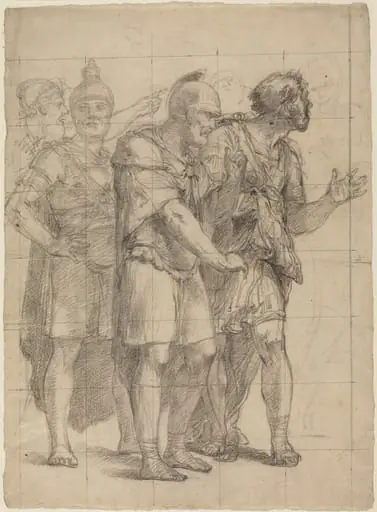 Four Standing Warriors
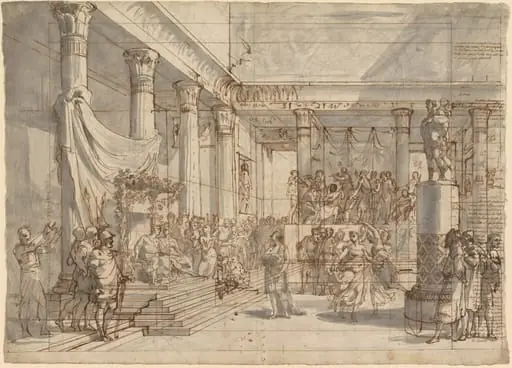 Timotheus Playing the Lyre before Alexander and Thaïs in the Hall of the Palace at Persepolis
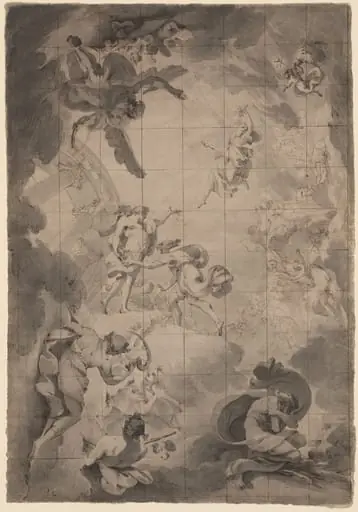 Studies of Aurora and Apollo
 Women Dancing
 Two Standing Courtiers
 Design for a Fresco of an Artist's Tomb in the Certosa of Bologna (recto)
 Design for a Fresco of an Artist's Tomb in the Certosa of Bologna (recto); Architectural Drawing of Columns (verso)
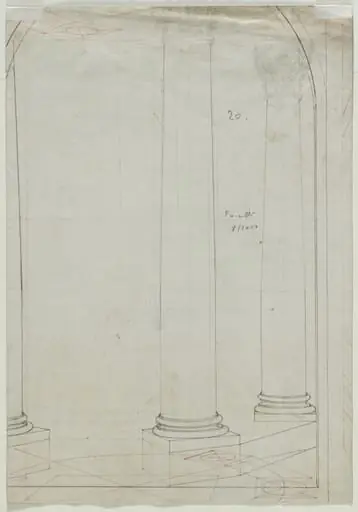 Architectural Drawing of Columns (verso)
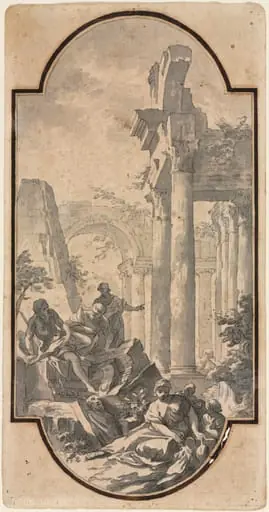 Figures Near the Ruins of a Corinthian Temple (recto)
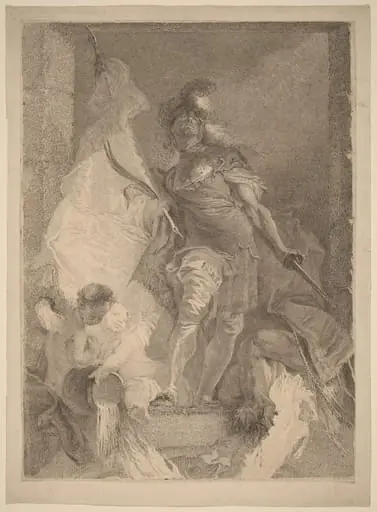 Saint Florian
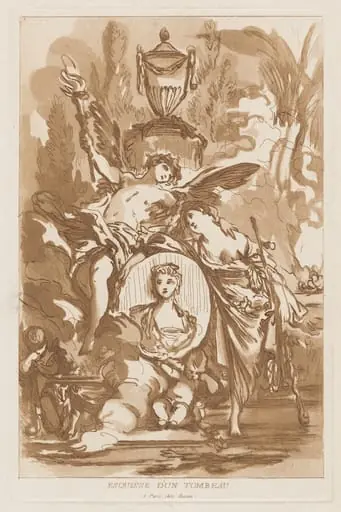 Esquisse d’un tombeau (Sketch for a Tomb)
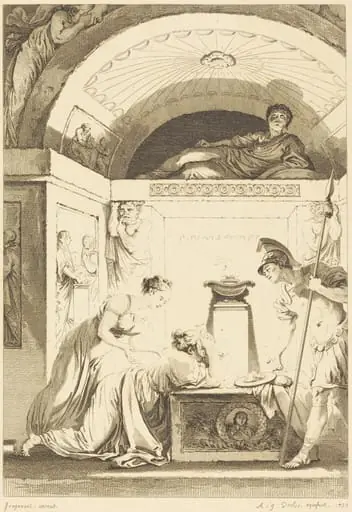 La matrone d'Ephese
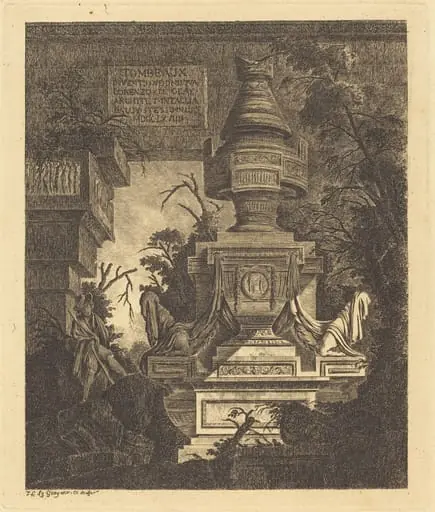 Frontispiece for "Views of Tombs"
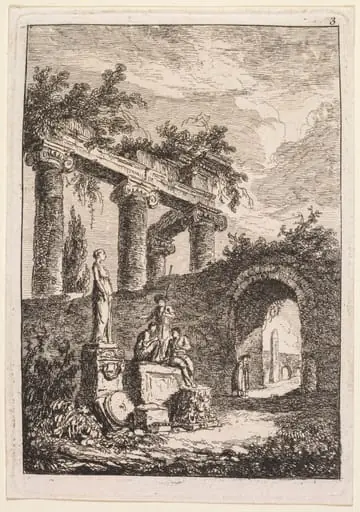 The Statue in Front of Ruins
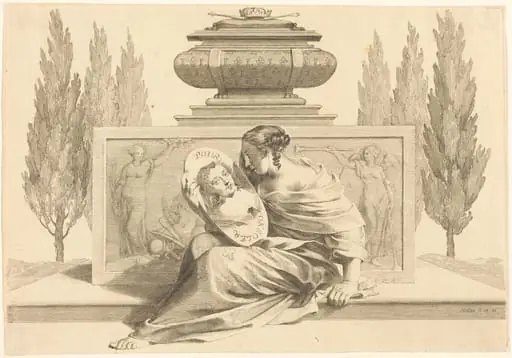 Allegory in Honor of Anne of Austria
 Personification of Architecture with the Genius of the Fine Arts
 Jacob's Ladder
 Roman Ruins with a Sepulchre
 The Disciples at the Tomb