Artwork
Four Male Figures
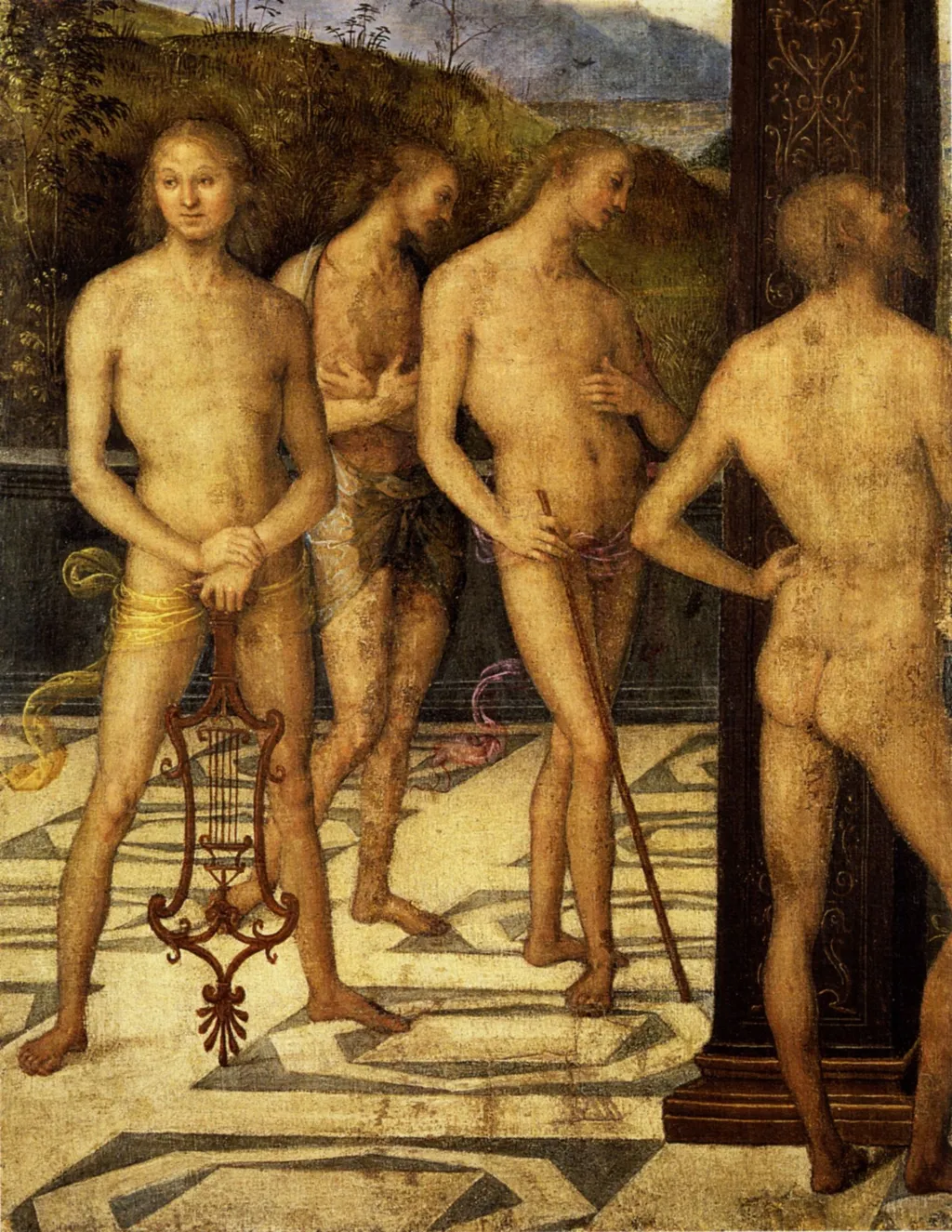
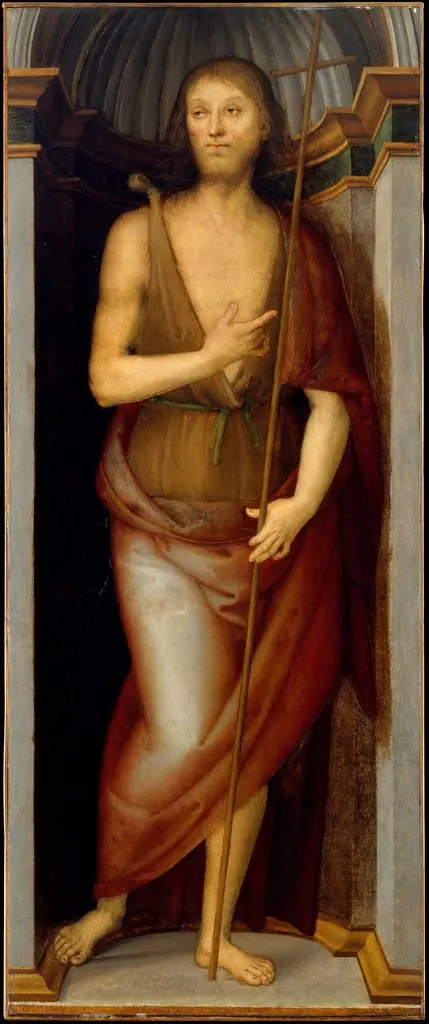
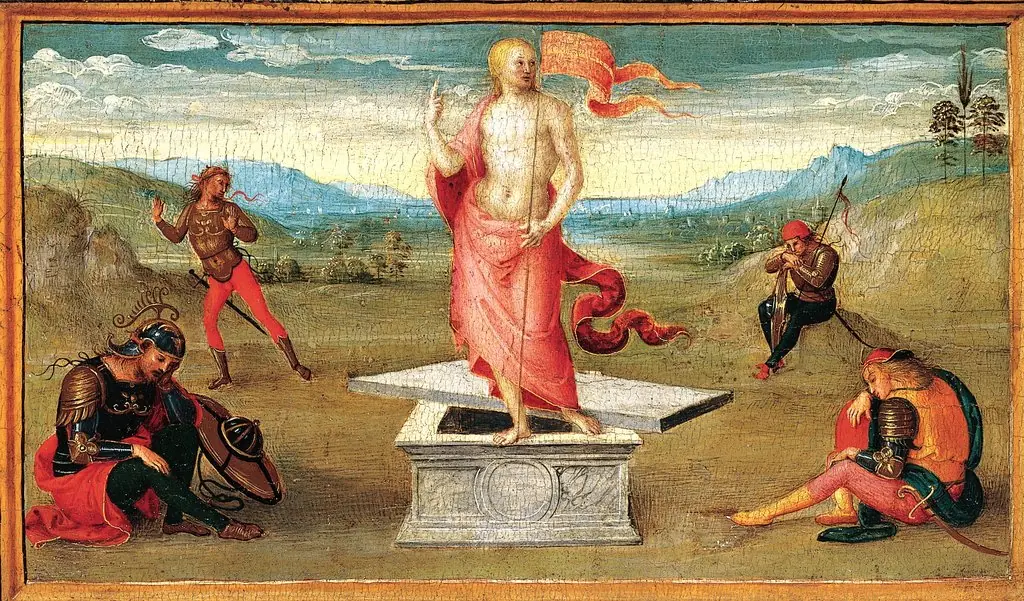
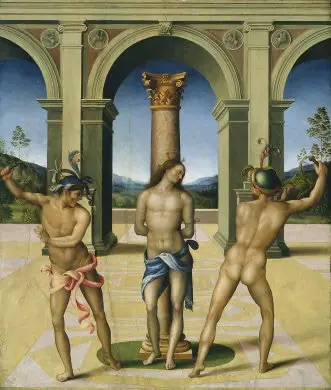
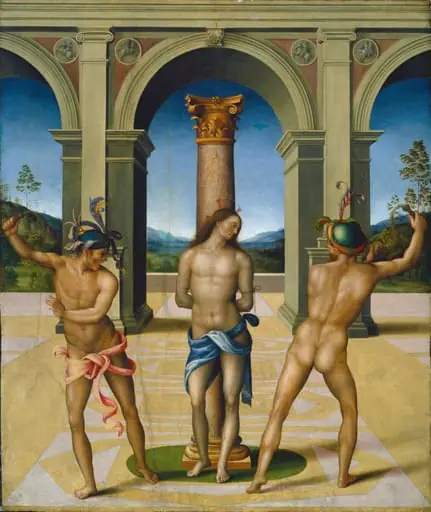
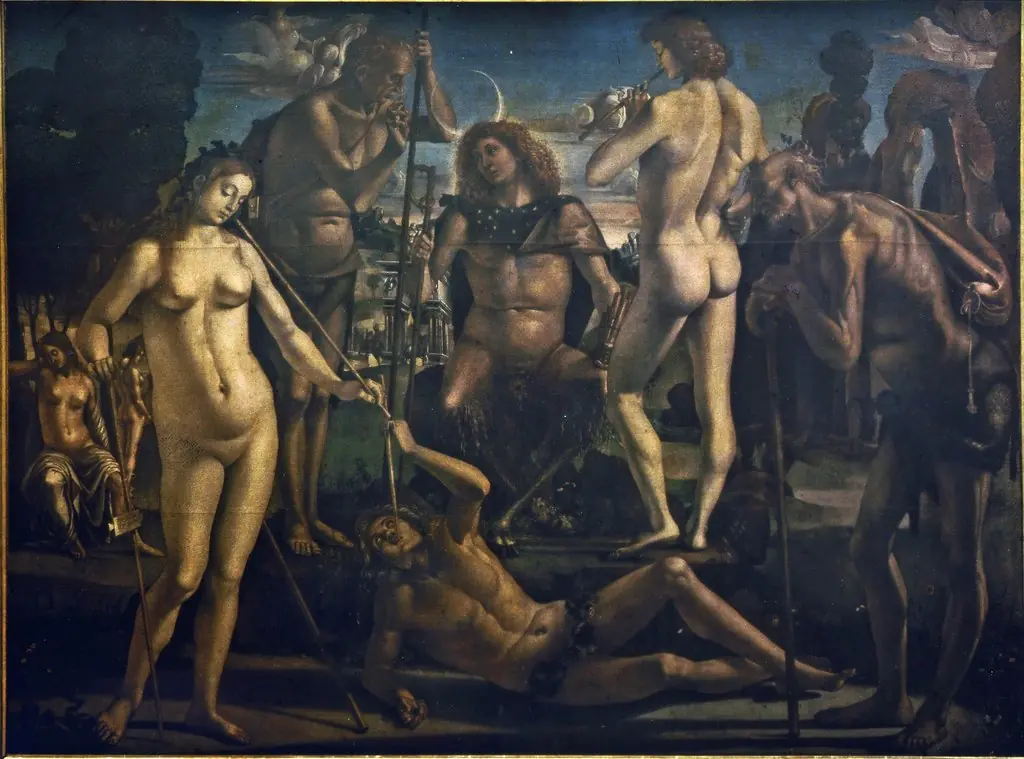
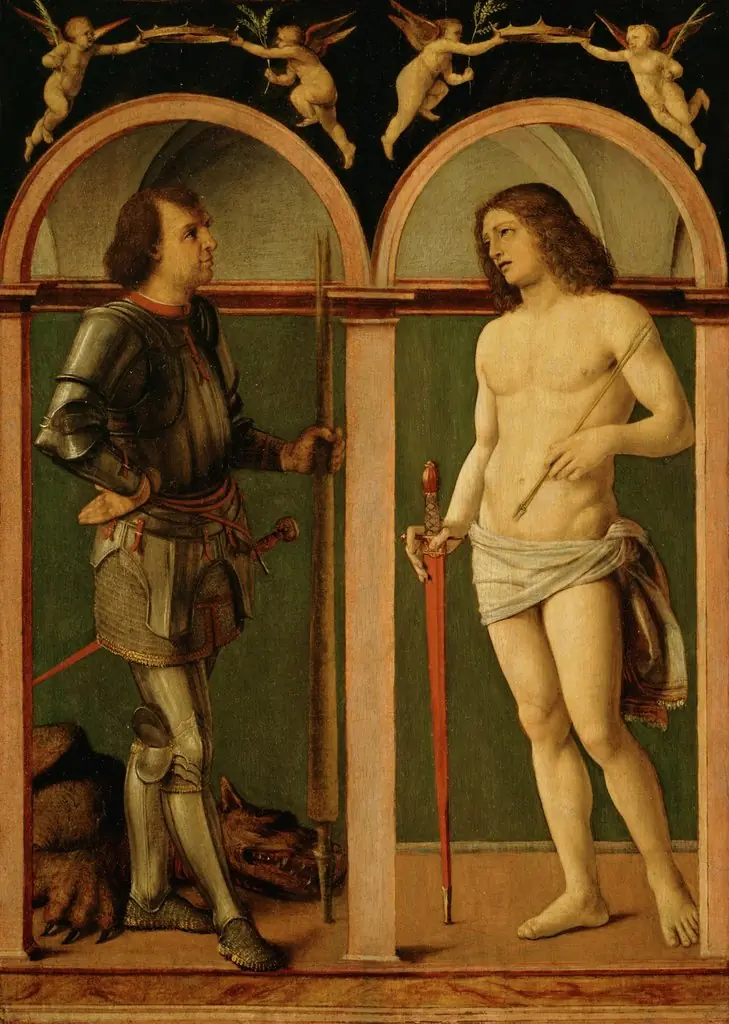
Four Male Figures is an oil painting by the Early Renaissance artist Pietro Perugino. It dates from 1505 and is held in the collection of the National Galleries Scotland.
About this work
Overview
Created in 1505, *Four Male Figures* is an oil painting by the Umbrian Renaissance artist Pietro Perugino. The work is part of the early Renaissance corpus and is currently displayed in the Scottish National Gallery. It presents a small group of nude men arranged within a modestly detailed landscape, rendered in a restrained palette of earth tones.
Subject & Meaning
The composition features four standing figures on a patterned tiled surface. Three of the men direct their gaze toward a central figure positioned before a tall, dark column adorned with carved motifs. The arrangement suggests a narrative focus on the interaction between the central figure and his observers, though no explicit mythological or biblical identification is provided.
Technique & Style
Perugino employs oil on panel to achieve soft modeling of flesh and subtle transitions of light across the muted brown and green hues. The background recedes into gentle hills and sparse trees, while the geometric floor pattern adds a sense of order. The restrained coloration and calm spatial arrangement anticipate compositional principles later refined in the High Renaissance.
History & Provenance
The painting entered the collection of the Scottish National Gallery, where it remains on view. Its provenance prior to acquisition by the museum is not extensively documented, but the work has been recognized as an early example of Perugino’s mature style, produced shortly before his most influential period as a teacher to Raphael.
Context
Perugino, a leading figure of the Umbrian school, was instrumental in shaping the visual language of the early 16th‑century Italian art scene.
Perugino, a leading figure of the Umbrian school, was instrumental in shaping the visual language of the early 16th‑century Italian art scene. His teaching of Raphael links this work to a lineage that would dominate the High Renaissance. The painting’s modest scale and quiet composition reflect the transitional aesthetic between the medieval tradition and the emerging emphasis on balanced, naturalistic representation.
Own this work as a print
Artist & collection
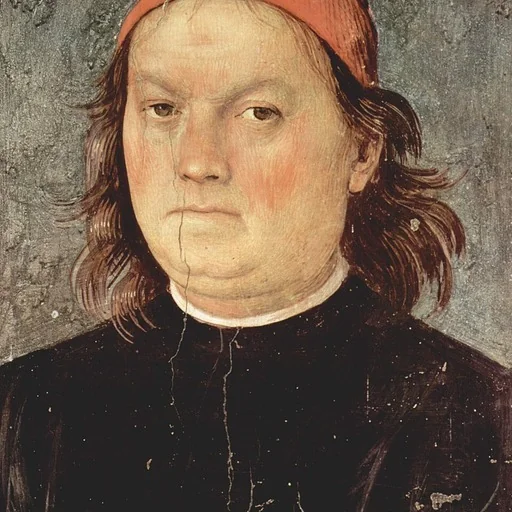
Artist
Pietro Perugino (US: PERR-ə-JEE-noh, -oo-; Italian: ; born Pietro Vannucci or Pietro Vanucci; c.